

Fast, Reliable Blown-In Insulation Across Canyon Lake
Blown-in insulation in Canyon Lake, TX typically runs $1.80-$3.40 per square foot of attic floor, with most lake cabin retrofits falling between $2,400 and $5,800 depending on whether we’re topping up existing material or insulating a bare 1960s attic for the first time. Our crews dispatch from the San Antonio office and usually reach Canyon Lake properties within 45 minutes to an hour, including the rural acreage off FM 306 and the steep hillside lots above the north shore. We’ve worked on enough pier-and-beam cabins and metal-roofed retreats here to know that Canyon Lake insulation isn’t a standard attic job - the Hill Country heat, the lake humidity, and the legacy of Winter Storm Uri all change what “done right” looks like. Call (830) 529-7780 for a written price before any work starts.
Why Topside Attic Insulation Boerne Is Canyon Lake’s Preferred Blown-In Insulation Company
We’ve sealed and insulated over 9,000 homes since 2016, and a growing share of them are Canyon Lake cabins being converted from weekend use to full-time living. The pattern is consistent: a family buys a 1970s lake place near Startzville or Cranes Mill, spends one winter with frozen pipes and $800 electric bills, then calls us to fix what the original builder never planned for.
Our reviews from Canyon Lake customers tend to mention the same things - that we showed up when scheduled, that the written price matched the final invoice, and that the before-and-after blower-door numbers proved the difference. One homeowner on Skyline Drive put it plainly: “They found air leaks I didn’t know existed and showed me the photos.” That’s the Haven Standard. Written scope, written price, documented record.
Response time matters on lake properties, especially when a freeze is forecast and exposed supply lines are at risk. We answer calls with a live person 24/7, and our crews carry the materials to handle most Canyon Lake jobs in a single trip - no waiting on cellulose delivery while another cold front rolls through Comal County.
The local knowledge runs deeper than zip codes. We know which hillside lots above Canyon Lake Marina have the cantilevered decks with open chases, which neighborhoods built before 1985 never had wall insulation to begin with, and why a metal roof in the Hill Country demands different attic strategy than composite shingles in San Antonio. That specificity is what keeps attic top-ups from turning into moisture problems six months later.
Our Blown-In Insulation Services in Canyon Lake
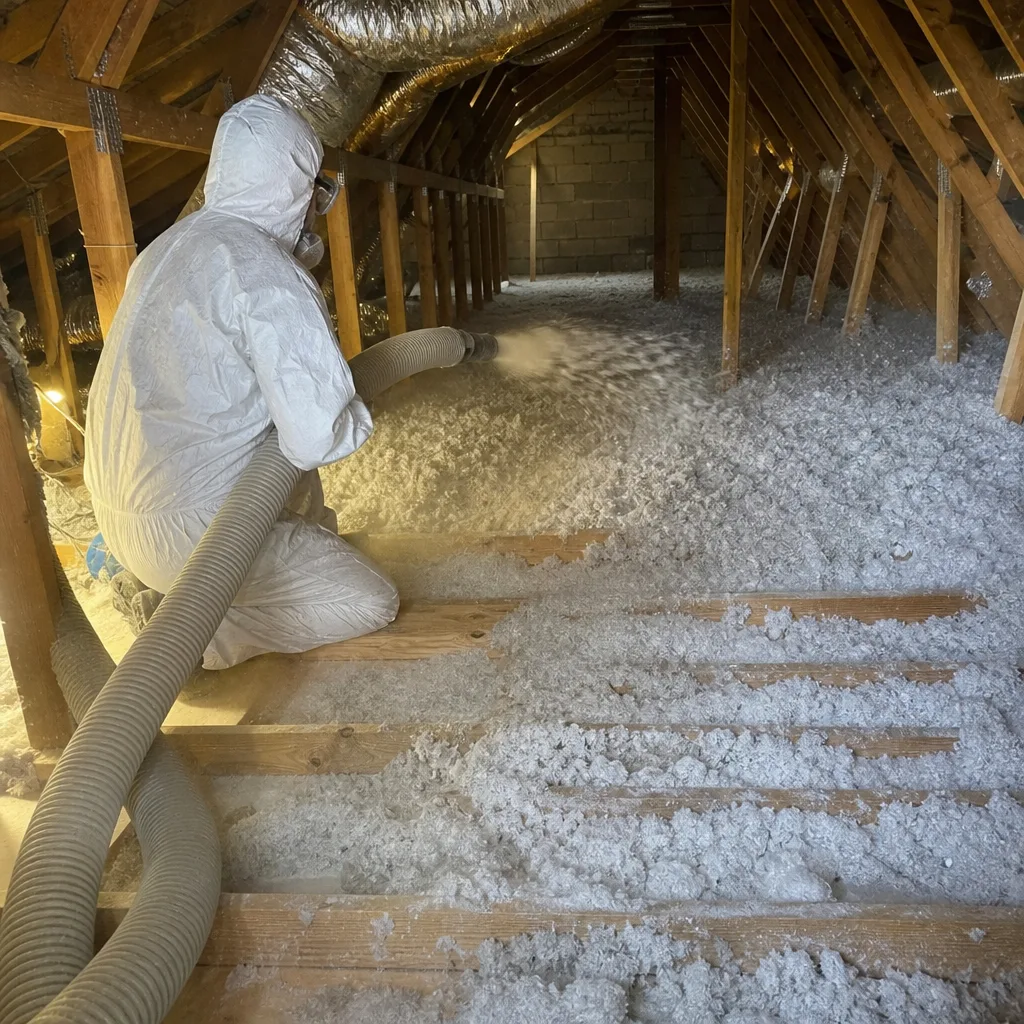
Blown-In Cellulose
We use GreenFiber cellulose for most Canyon Lake attic retrofits because it handles the Hill Country’s combination of extreme heat and elevated humidity better than you’d expect from a loose-fill material. Cellulose is treated with borate fire retardant and pest resistance - useful on lake properties where carpenter ants find their way into pier-and-beam spaces. For a typical 1,200-square-foot cabin attic near Hancock, we’ll blow 16 to 20 inches for an R-49 thermal barrier, but only after we’ve sealed the top plates, can lights, and penetrations. Blown-in cellulose over an unsealed attic floor is just expensive air filtration. Our Blown-In Insulation team won’t do it.
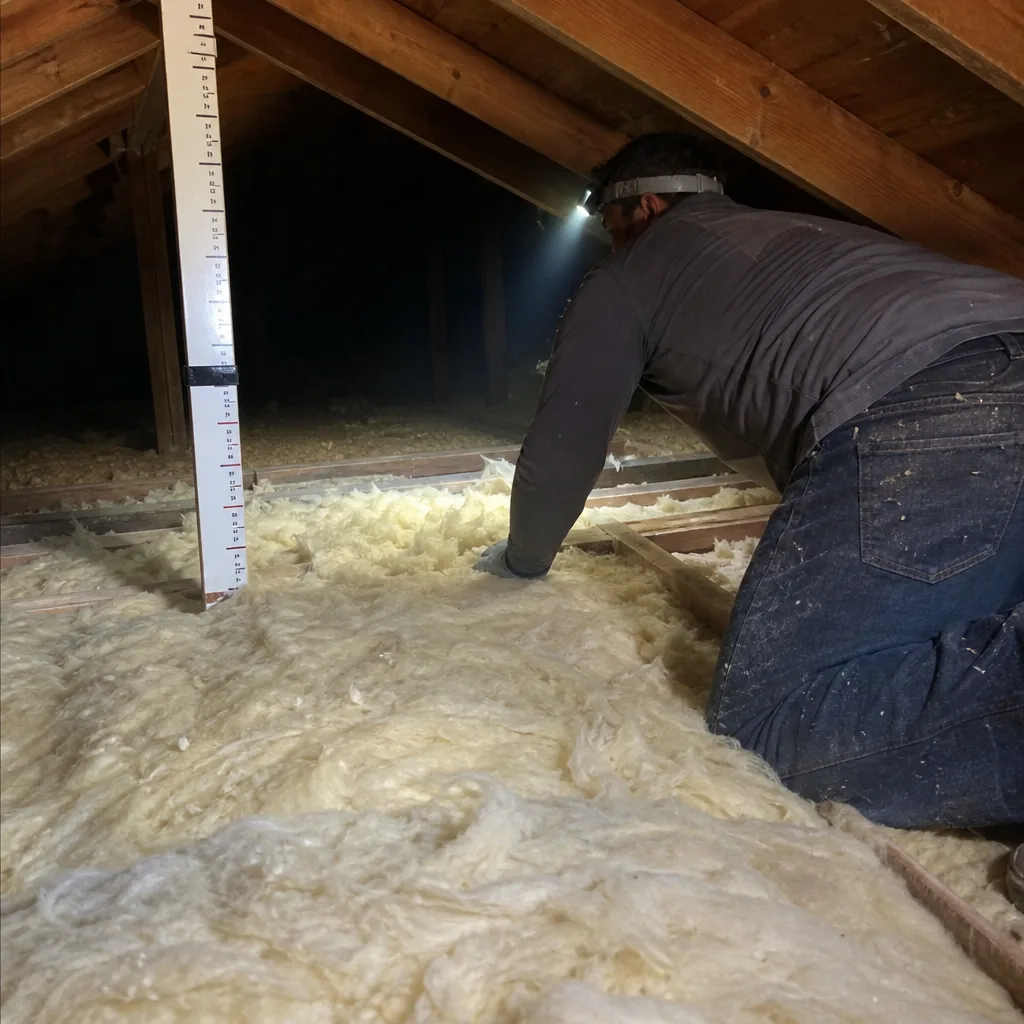
Blown-In Fiberglass
Knauf fiberglass loose-fill is our choice for attics with complex geometry or where we need to avoid any compression risk around baffle vents. The 140°F summer temperatures in Canyon Lake attics push insulation to its limits, and fiberglass doesn’t settle or lose R-value when moisture fluctuates the way some materials can. We see a lot of metal-roofed homes in the Startzville area where radiant heat gain is the primary enemy - fiberglass paired with proper air sealing and baffle ventilation creates a consistent thermal boundary without the condensation issues that can plague misinstalled cellulose under hot metal.
Dense-Pack Wall Insulation
This is where Canyon Lake’s housing stock gets specific. Those original 2×4 walls in 1960s and 70s vacation cabins were built with no insulation, maybe a sheet of reflective foil if the owner splurged. Dense-packing - blowing cellulose at 3.5 to 4.0 pounds per cubic foot until it reaches a semi-rigid consistency - fills every stud bay without removing drywall. We drill access holes at the top and bottom of each cavity, pack the wall full, and patch with matching texture. On hillside cabins with cantilevered decks, we pay special attention to the exterior chases where deck joists extend past the foundation - these are thermal bypasses that standard wall insulation misses, and in Canyon Lake they’re common enough that we check for them on every dense-pack quote.
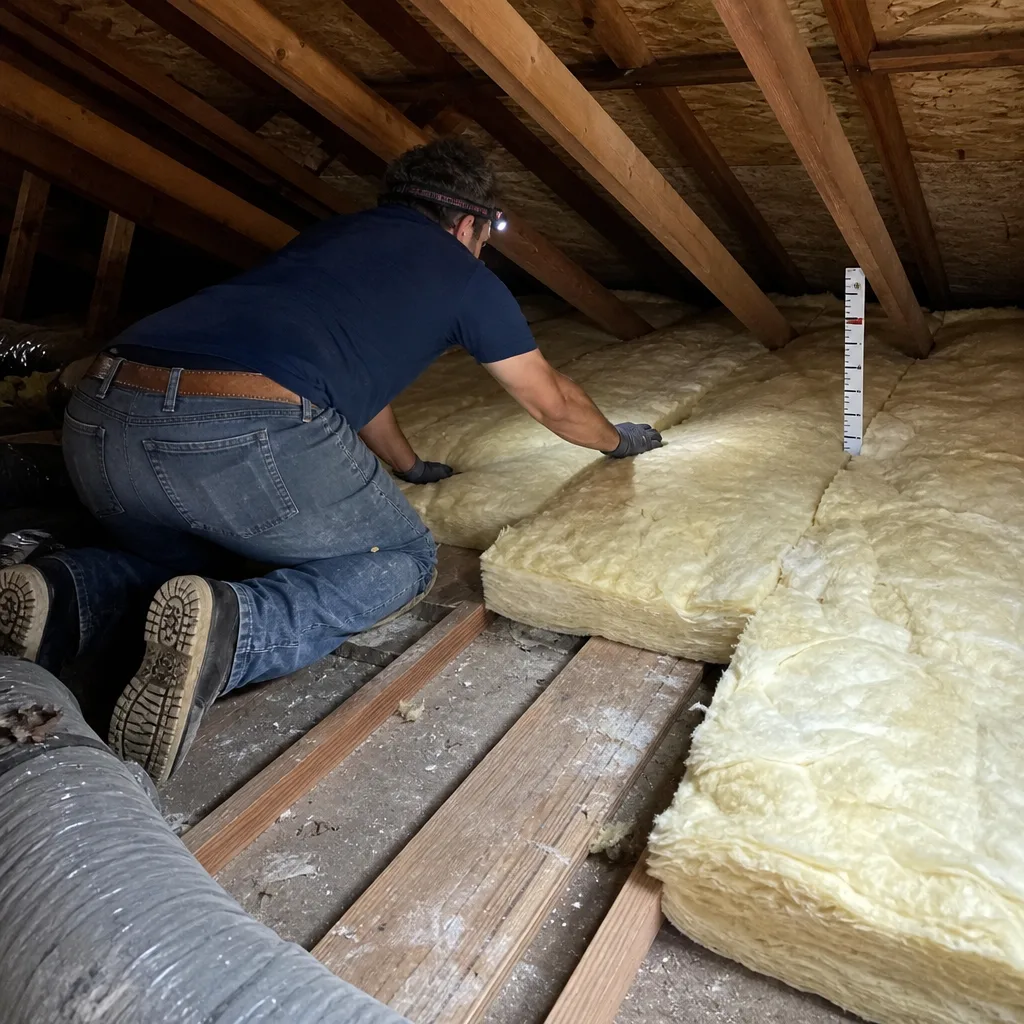
Blown-In Top-Up
Not every Canyon Lake job needs a full gut. Some of the 2010s-era builds near the south shore were insulated to code at construction but have settled or compressed over a decade of Texas summers. A blown-in top-up adds 4 to 8 inches of material over existing fiberglass or cellulose, bringing the attic back to R-38 or R-49. But we test first. If the original insulation is mold-compromised from a roof leak or compressed by storage boards, adding more material on top is wasted money. We pull core samples, inspect with photos, and give you a written scope that says exactly what we’re adding and why. The 365-Day Done Right Promise applies either way.
What happens when you call
- 1
A real person answersNo phone trees - you reach a local pro.
- 2
You get an upfront price rangeHonest numbers before anyone is dispatched.
- 3
A background-checked tech heads outLicensed & insured, dispatched right away.
- 4
You approve before work beginsNothing starts until you say go.
Trusted Brands We Service in Canyon Lake
We source blown-in materials from Owens Corning, Knauf, and GreenFiber - no proprietary lock-in that limits your options or inflates the price. Our San Antonio warehouse stocks cellulose and fiberglass in the densities and bag weights we use most often on Hill Country jobs, which means Canyon Lake customers aren’t waiting on a freight delivery while freeze season approaches. For the spray-foam components we pair with blown-in work on rim joists and crawlspaces, we carry Icynene and Demilec open-cell and closed-cell products. Every material spec is listed in the written scope before work starts, including the manufacturer, the installed R-value, and the coverage depth.
Common Blown-In Insulation Problems We See in Canyon Lake Homes
- Attic top-ups without vapor management under metal roofs. The Hill Country’s metal roofing looks sharp and lasts decades, but in summer it radiates heat downward that can drive attic dew points past the condensation threshold. We’ve pulled into cabins near Canyon Lake Marina where a previous contractor blew 12 inches of cellulose over unsealed drywall, and six months of summer humidity had compressed it to 6 inches of damp mat. We remove the compromised material, seal the ceiling plane, and reinstall with proper baffle ventilation.
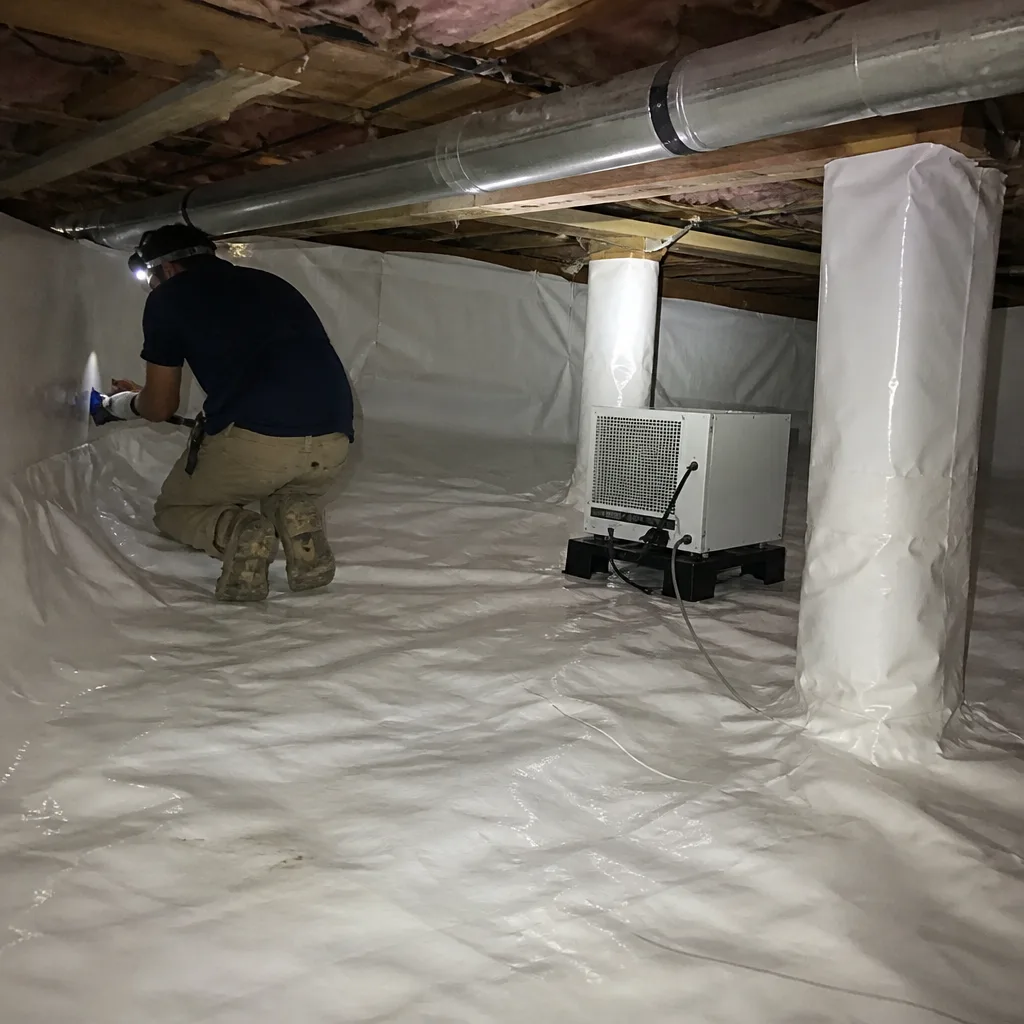
- Insulated attics over unsealed pier-and-beam crawlspaces. The attic gets R-49 and the homeowner feels virtuous, but the supply lines still run through 40-degree outside air under the floor. Winter Storm Uri proved what happens next. We treat the building envelope as a system - attic, walls, and crawlspace - because Canyon Lake’s steep limestone lots don’t forgive partial fixes.
- Dense-packed walls with missed cantilevered-deck chases. A hillside cabin on Skyline Drive gets beautiful views and brutal thermal bypasses where the deck structure extends past the conditioned envelope. Exterior air flows behind the new wall insulation through these chases, rendering the dense-pack nearly pointless. We map the thermal boundary with infrared before we quote, then seal the chases with rigid foam and closed-cell spray before any blown-in work begins.
- Original 1960s-80s cabin construction with no insulation at all. These seasonal builds were never meant for January occupancy. The framing is often 2×4 walls, 2×6 rafters, and an attic floor that was storage space, not a thermal barrier. Converting them to year-round use without addressing the whole envelope - attic, walls, rim joists, and exposed plumbing - produces uncomfortable winters and catastrophic freeze risk. We’ve done enough of these retrofits to know the sequence that actually works.
Pricing for Blown-In Insulation in Canyon Lake, TX
Most blown-in attic jobs in Canyon Lake run between $2,400 and $5,800 for a typical 1,200- to 2,000-square-foot lake cabin or hillside home. Blown-in cellulose in an open attic averages $1.80-$2.60 per square foot installed; fiberglass runs $2.20-$3.40 per square foot depending on the R-value and access difficulty. Dense-pack wall insulation for a 1,000-square-foot cabin with 2×4 construction typically falls between $3,200 and $5,400, including patching and texture match. Blown-in top-ups over existing material start around $1,400 and rarely exceed $3,000 unless we’re correcting prior work.
What moves the price: steep roof pitches that require scaffolding, removal of compromised existing insulation, crawlspace air sealing paired with attic work, and the access challenges of hillside lots with limited crew parking. We don’t guess. Every quote includes a blower-door test - a pressurization reading that shows, in one number, how much air your building envelope is losing - and a written scope with line-item pricing. The price you approve is the price you pay. Call (830) 529-7780 for a written estimate; estimates are free, and we offer a Free Second Opinion on any competing quote you bring us.
We Also Serve Cities Near Canyon Lake
Our crews work the full corridor from Bulverde down through Schertz and Universal City, with regular runs to Boerne for acreage properties and rural builds. If you’re outside Canyon Lake city limits but within Comal County or northern Bexar, we likely already have your neighborhood in our route rotation. Canyon Lake remains our focus for lake-property retrofit work, but the same crew, same materials, and same Haven Standard apply across the service area.
Serving Canyon Lake, TX - Our Local Coverage Area
We’re based in the Canyon Lake area and know this community well. Use the map below to see our service coverage - if you’re nearby, we can almost certainly help.
FAQs - Blown-In Insulation in Canyon Lake
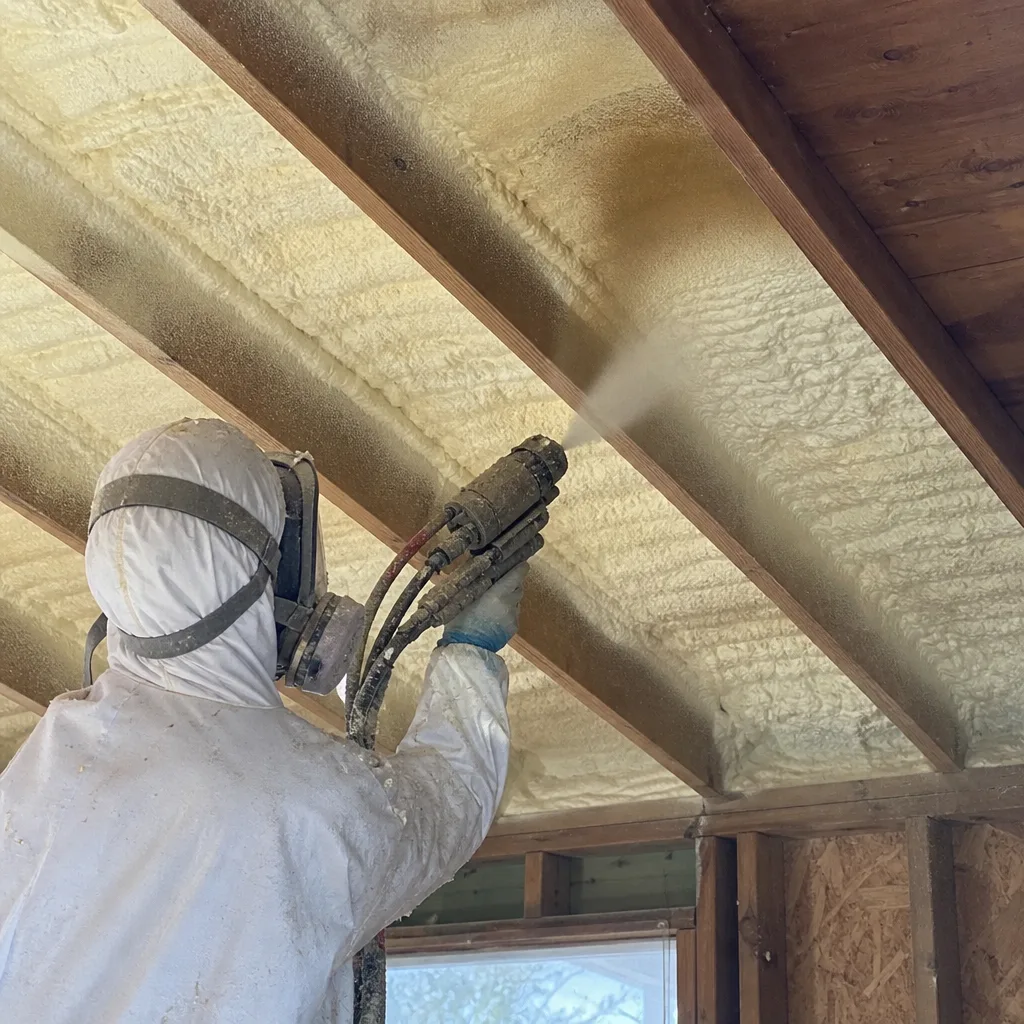
Yes, and in that order. The open pier-and-beam crawlspaces on Canyon Lake’s hillside lots are where supply lines freeze first, and an insulated attic won’t protect plumbing that’s fully exposed to outside air. We typically seal the rim joists with closed-cell spray foam, wrap exposed supply lines, and only then address the attic - treating the envelope as a system, not a checklist. Call (830) 529-7780 and we’ll walk through your specific crawlspace configuration; estimates are free.
Yes, dense-packing is our standard approach for these conversions, and we’ve done dozens in the Canyon Lake area. The 2×4 stud bays in 1970s cabin construction are usually empty - no insulation, no vapor barrier, sometimes just a sheet of foil facing. We drill minimal access holes, pack cellulose to 3.5 pounds per cubic foot until the cavity is full and rigid, then patch and texture match. The R-value gain is modest with 2×4 depth, but the air-sealing effect of dense-pack cellulose often matters more than the insulation value alone. We were called to a vacation cabin near Canyon Lake Marina being converted to full-time residence where the homeowner had spent two winters with frozen pipes in the open pier-and-beam space. Our crew dense-packed the original 2×4 walls with GreenFiber cellulose, blew 18 inches of Knauf fiberglass into the attic to handle the 140°F summer loads, and wrapped every exposed supply line and sealed the rim joists with closed-cell foam before the next freeze. The homeowner reported the cabin held heat through a January cold snap for the first time since the 1970s.
It changes the ventilation strategy and sometimes the material choice. Metal roofs radiate heat downward more aggressively than composite shingles, which can drive attic temperatures past 140°F and push moisture through ceiling penetrations if the attic isn’t properly vented. We use baffle vents to maintain soffit-to-ridge airflow, and we often recommend fiberglass over cellulose in metal-roof attics where summer humidity spikes are most extreme. Every Canyon Lake metal-roof job gets a pre-installation moisture assessment; we won’t blow material over a ceiling plane that isn’t properly sealed against vapor drive.
Most Canyon Lake attics need R-38 to R-49 to manage the Hill Country’s thermal swing - that’s 12 to 18 inches of fiberglass or 14 to 20 inches of cellulose, depending on the material and whether we’re starting from bare joists or topping up existing insulation. But the attic R-value alone won’t prevent frozen pipes in an unsealed crawlspace. For year-round occupancy, we specify the full envelope: attic insulation to R-49, dense-packed walls where accessible, rim-joist sealing with closed-cell foam, and pipe wrap on exposed supply lines. The blower-door test before and after work proves the result in CFM50 - a single number that shows exactly how much less conditioned air you’re losing. Call (830) 529-7780 for a written scope with the specific depths and R-values for your cabin.
Yes. We regularly work properties off FM 306, FM 2673, and the ranch roads north of Cranes Mill where the lots are five acres and up. The access challenges are real - steep drives, limited turnaround space, and sometimes no paved surface to the structure - but our crews carry the equipment to handle remote installs without multiple trips. We coordinate dispatch from the San Antonio office and schedule Canyon Lake rural jobs with buffer time for access and setup. If we can get a truck to your cabin, we can insulate it. Call (830) 529-7780 to confirm routing and get a written estimate.
Written by Wes Okafor, Owner at Envelope Insulation Co., serving Canyon Lake under The Haven Standard since 2016.