

Fast, Reliable Spray Foam Insulation Across Windcrest
Spray foam insulation in Windcrest, TX typically costs $2.80-$5.40 per square foot installed, and most ranch-home attics in this market run $3,200-$6,800 for a complete open-cell roofline treatment. We’re familiar with Windcrest’s streets because we’ve worked them block by block - from the brick ranches near Glen Heights Drive to the homes tucked along Midcrown Drive and the neighborhoods bordering Walzem Road. Our crews are dispatched from our San Antonio office, which means we can usually be on-site in Windcrest within 45 minutes of your call. That matters when you’re running a blower-door test in July and the attic is reading 145°F. Call (830) 529-7780 and you’ll reach a live person, 24/7.
Why Topside Attic Insulation Boerne Is Windcrest’s Preferred Spray Foam Insulation Company
We’ve sealed and insulated more than 9,000 homes since 2016, and a dense cluster of them sit right here in Windcrest. The reason is straightforward: this city’s housing stock is almost perfectly uniform. When you’ve treated one 1962 brick ranch off Crestway Drive, you’ve seen the attic conditions of the next four houses on the block. That repetition builds efficiency, and we pass that through as tighter scheduling and more accurate material counts.
Our Windcrest customers leave reviews that mention the same things: the written price that arrived before any work started, the blower-door numbers they could show their neighbor, and the photo record they received the same day the crew left. We don’t chase stars; we document results. Under Haven Standard Clause 1, every job gets a flat price, written scope, and written warranty before anyone lifts a tool.
Response time to Windcrest is typically same-day for estimates and within 24-48 hours for scheduled work. We don’t do callback windows measured in business days. A live person answers the phone, and your technician is background-checked, uniformed, and named in a text before they arrive.
Our Spray Foam Insulation Services in Windcrest
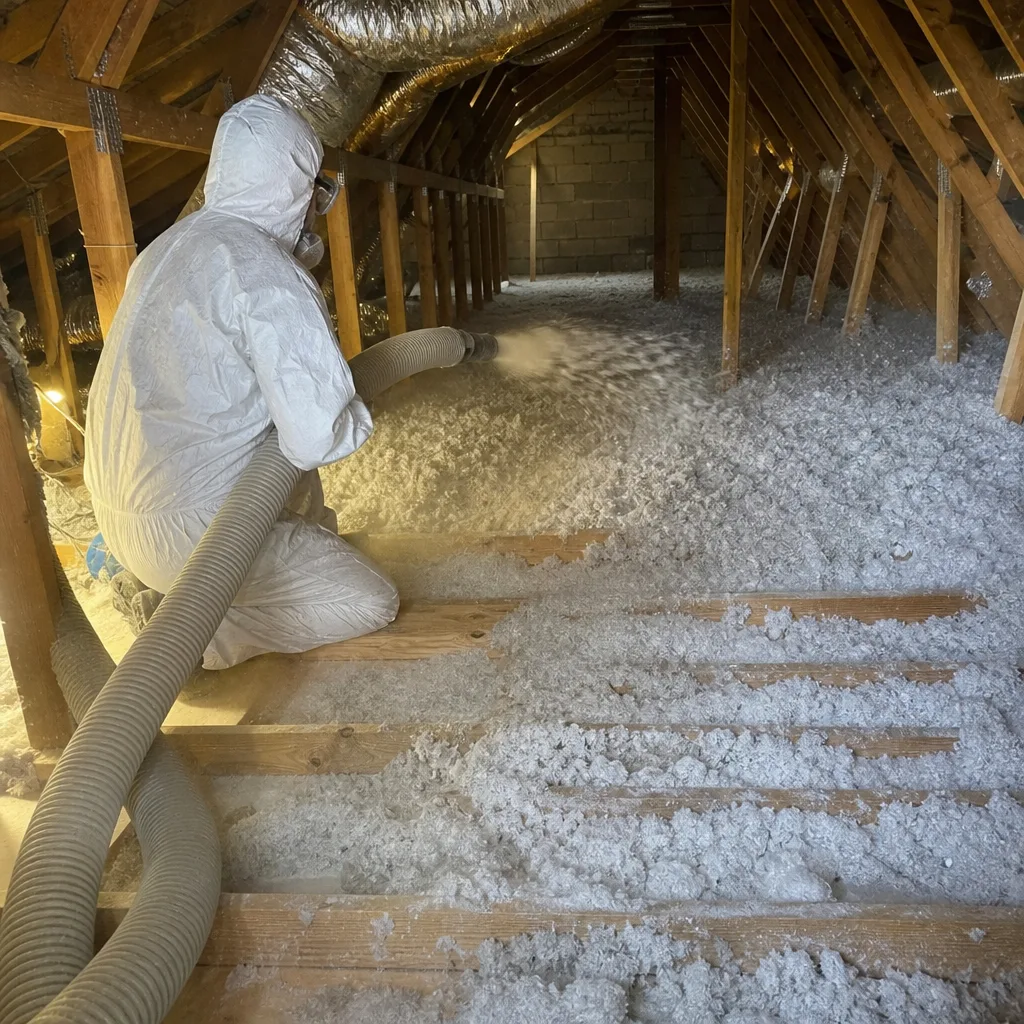
Open-Cell Spray Foam
Open-cell spray foam is the workhorse for Windcrest’s low-slope, unvented attics. The 1955-1975 ranch homes here were built with shallow roof pitches and minimal ventilation paths, which makes open-cell - a semi-permeable foam that allows some moisture diffusion - the right choice for roofline application. We remove the original compressed batts first. We never spray over failed insulation. Then we apply Icynene open-cell to the underside of the roof deck, creating a conditioned attic that stops the 140°F heat load from radiating through the ceiling plane. Most Windcrest open-cell attic jobs run $3.20-$4.80 per square foot of roofline.
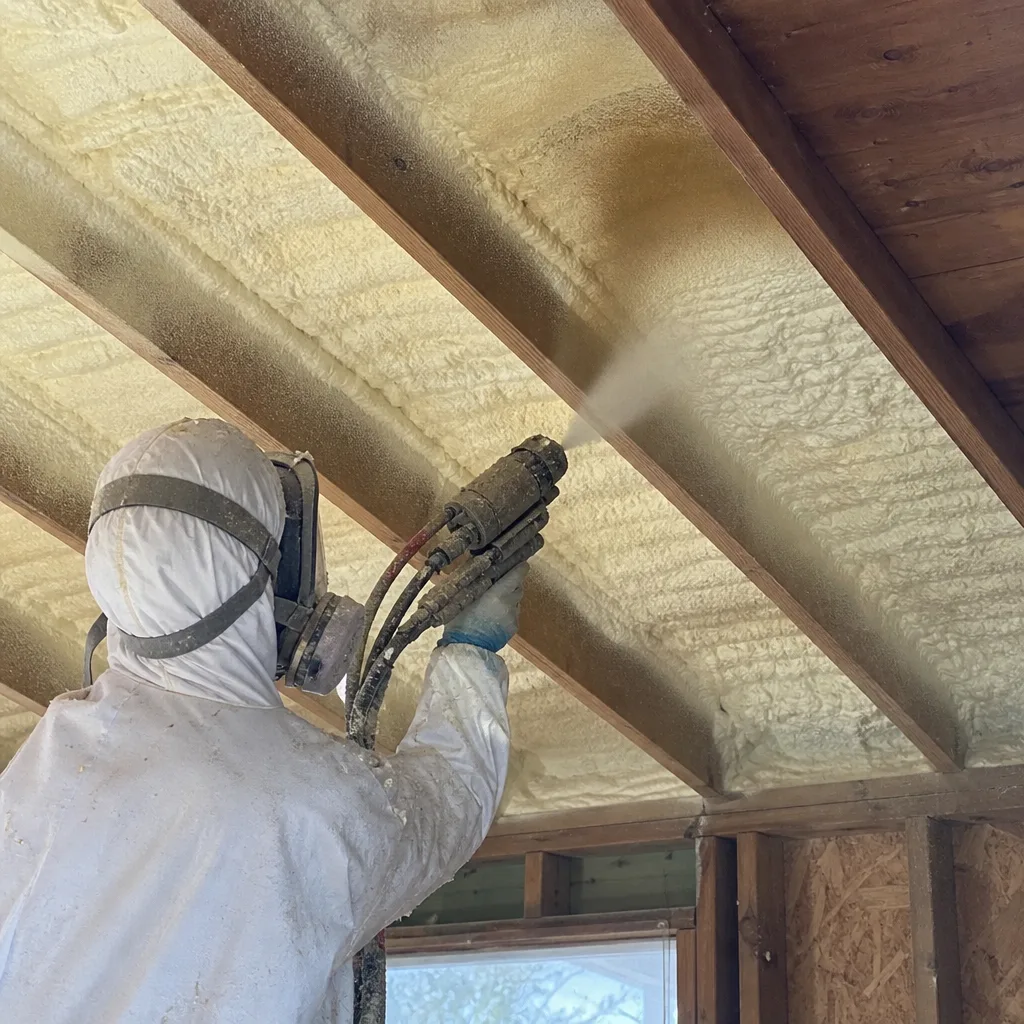
Closed-Cell Spray Foam
Closed-cell spray foam, at roughly R-7 per inch, is denser and vapor-impermeable. In Windcrest, we use it selectively: garage ceiling planes where the living space sits above, crawl space walls in homes that have them, and any area where structural rigidity or moisture blocking is the priority. The brick ranches on streets like Willmon Way and surrounding blocks rarely need full closed-cell attic treatment, but the garage-to-living-floor boundary is a different story. That thermal bridge is where closed-cell pays for itself. Expect $4.20-$5.40 per square foot when we specify closed-cell for a Windcrest job.
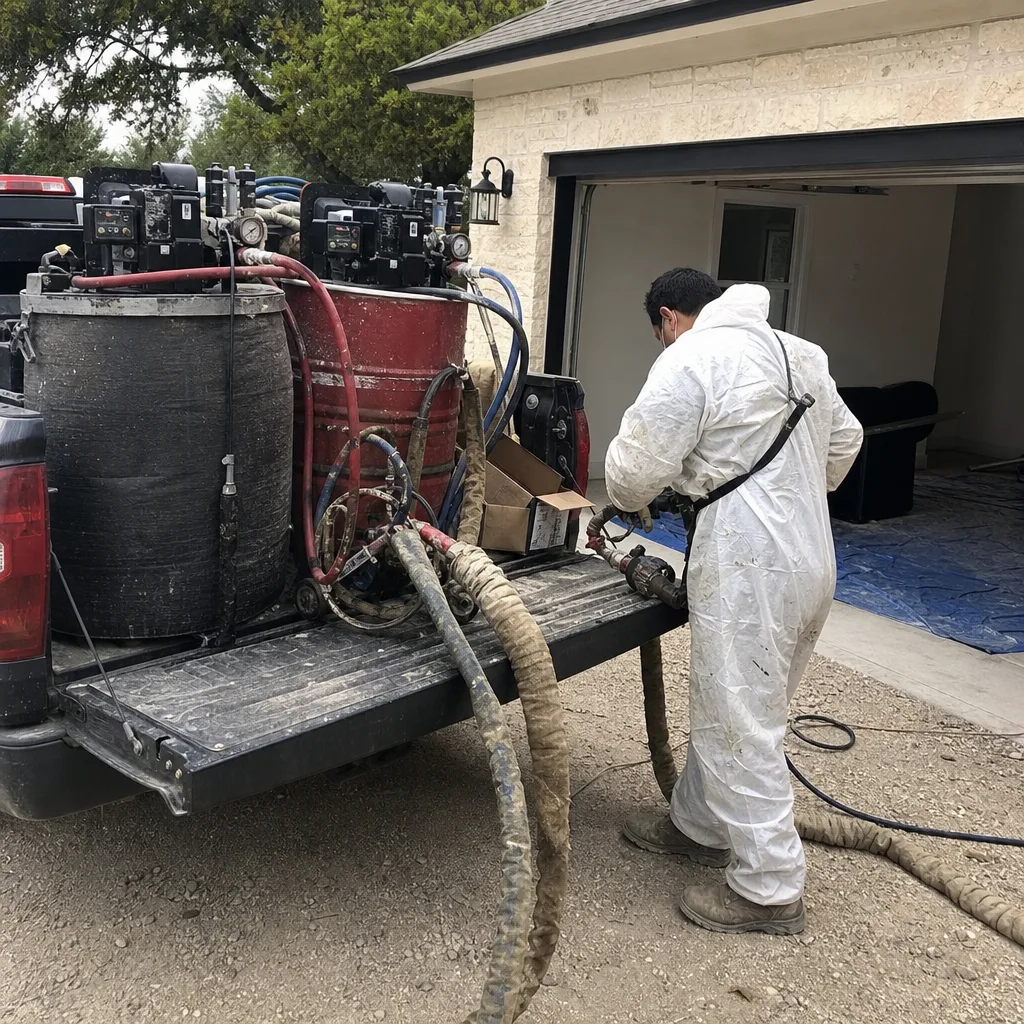
Rim Joist Spray Foam
This is where Windcrest’s uniform housing stock reveals its biggest hidden flaw. The rim joists - the band boards where the foundation meets the first floor - are almost always unsealed in these 1960s ranches. Humid San Antonio air pushes through those gaps year-round, feeding mold in summer and heat loss in winter. Our crews find this on nearly every Windcrest block. We apply open-cell spray foam to the rim joist after air-sealing the perimeter, typically at $800-$1,400 for a full ranch treatment. It’s the single most overlooked upgrade in this city’s housing stock.
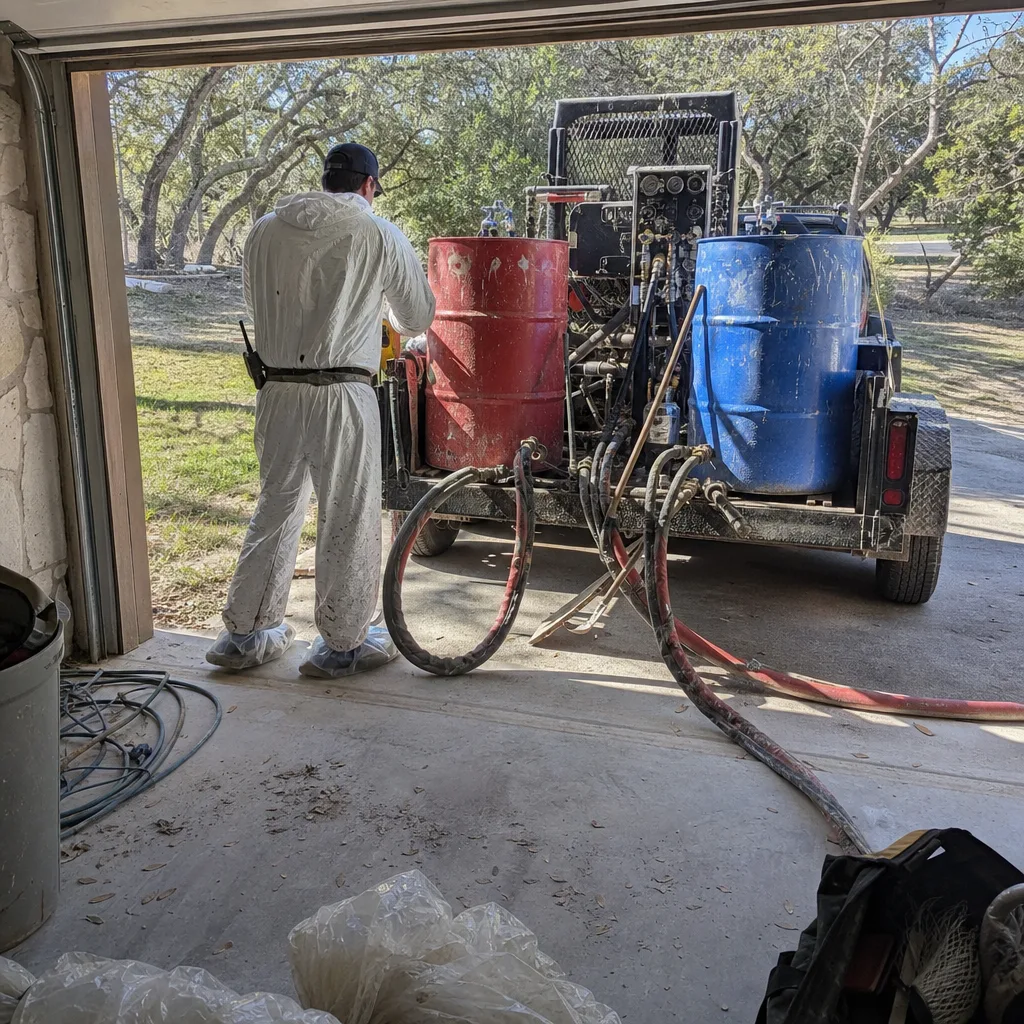
Garage Ceiling Spray Foam
Windcrest’s attached garages share a ceiling plane with conditioned bedrooms or living spaces in many floor plans. That ceiling is usually uninsulated drywall with a few can lights punching through - a direct thermal bypass. We treat the garage ceiling with closed-cell spray foam to create a continuous air barrier, then seal every penetration. This is standard scope on our Windcrest jobs because the HVAC load reduction is immediate and measurable. Most garage ceiling treatments here run $1,800-$3,200 depending on square footage and existing conditions.
What happens when you call
- 1
A real person answersNo phone trees - you reach a local pro.
- 2
You get an upfront price rangeHonest numbers before anyone is dispatched.
- 3
A background-checked tech heads outLicensed & insured, dispatched right away.
- 4
You approve before work beginsNothing starts until you say go.
Trusted Brands We Service in Windcrest
We source spray foam materials from Icynene, Demilec, and Owens Corning - no proprietary lock-in, no mystery chemicals. For Windcrest’s climate, we specify Icynene open-cell for attic rooflines because it performs predictably in the sustained heat and humidity of Bexar County summers. Demilec closed-cell goes where we need vapor impermeability and compressive strength. We stock local inventory for Windcrest jobs, which means no waiting on freight from out of state. The crew shows up with the right resin and catalyst for your scope, and the batch numbers are recorded in your job file.
Common Spray Foam Insulation Problems We See in Windcrest Homes
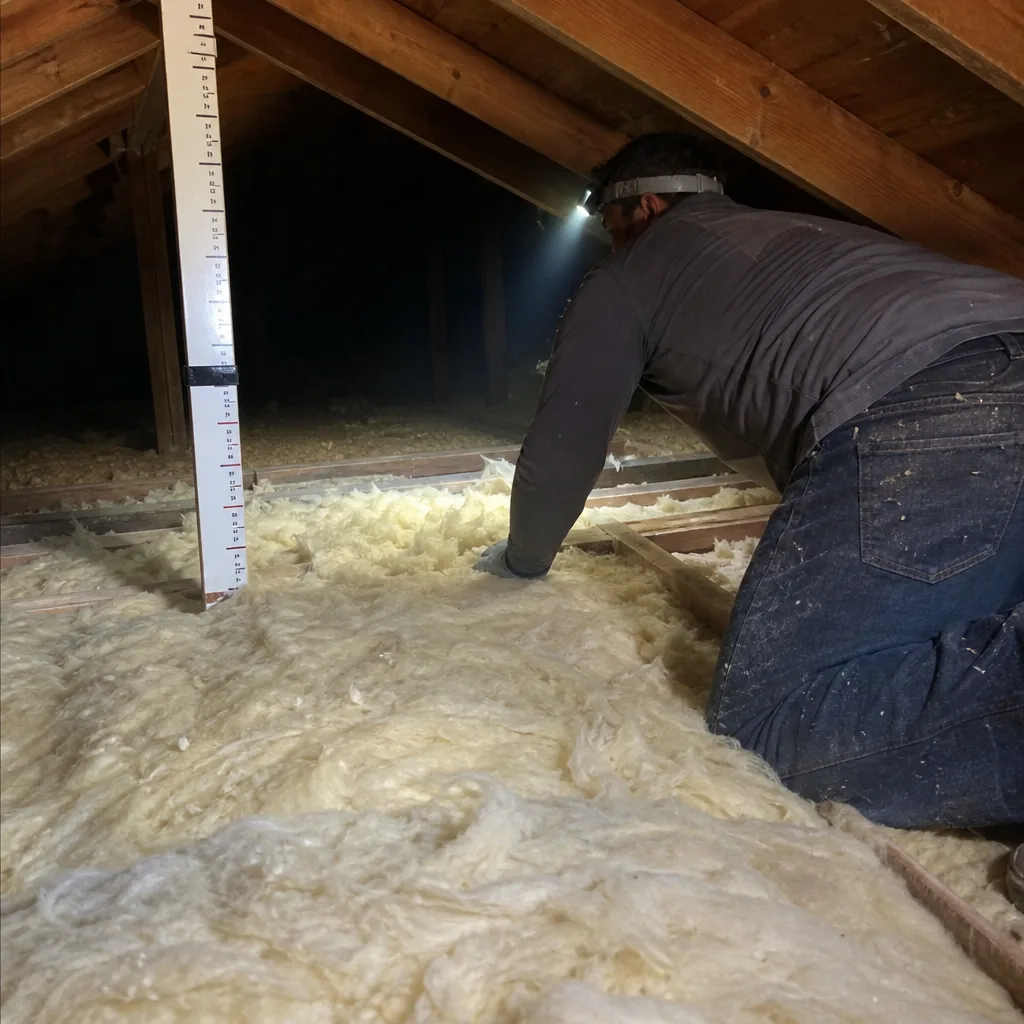
- Original fiberglass batts compressed to under R-11. The 1955-1975 insulation in Windcrest attics has had 50-70 years to settle. What reads as “insulated” on a home inspection is often a thin, dirty mat doing almost nothing. We pull it all before we spray.
- Unsealed rim joists creating year-round humidity paths. That gap between slab and sill plate is open to garage air, crawl space air, or exterior air. In Windcrest’s humid subtropical climate, it’s a mold incubator and an energy leak simultaneously.
- Pre-code wall cavities with zero insulation. The brick veneer on these ranches is just that - veneer. The 2×4 studs behind it often hold nothing but air. Spray foam on the attic roofline helps enormously, but the walls remain a thermal bypass until addressed.
- Garage ceiling planes treated as afterthoughts. Drywall, maybe a vapor barrier if you’re lucky, and a row of recessed cans. The room above pays for that shortcut every July afternoon when the garage hits 110°F.
Pricing for Spray Foam Insulation in Windcrest, TX
Here’s what spray foam insulation costs in the Windcrest market, based on the ranch-home profiles we see on every block:
| Application | Typical Range | Notes |
|---|---|---|
| Open-cell attic roofline (per sq ft) | $3.20-$4.80 | Most common Windcrest scope |
| Closed-cell garage ceiling (per sq ft) | $4.20-$5.40 | Thermal bridge over living space |
| Rim joist treatment (full home) | $800-$1,400 | Nearly always needed in 1960s ranches |
| Complete attic + rim joist package | $3,200-$6,800 | Typical 1,400-1,800 sq ft ranch |
What moves you within these ranges: existing insulation removal, accessibility of the attic, and whether the roof deck needs repair before foam application. Every Windcrest job starts with a written price - no work begins without it - and we offer a Free Second Opinion on any written estimate you’ve already received. Call (830) 529-7780 for your flat price.
We Also Serve Cities Near Windcrest
Our crews work throughout Bexar County and the Hill Country, including Windcrest neighbors in Boerne, Fair Oaks Ranch, Scenic Oaks, and Helotes. Scheduling is coordinated from our San Antonio office, with local routing that keeps drive time short and arrival windows reliable.
Serving Windcrest, TX - Our Local Coverage Area
We’re based in the Windcrest area and know this community well. Use the map below to see our service coverage - if you’re nearby, we can almost certainly help.
FAQs - Spray Foam Insulation in Windcrest
No. We remove all existing insulation before applying spray foam. Those original batts are compressed, dirty, and often harbor decades of dust and rodent activity. Spray foam needs a clean substrate to adhere properly, and covering failed insulation would trap moisture and compromise the air seal. We’ll haul the old material out as part of the scope. Call (830) 529-7780 for a written price on removal plus foam - estimates are free.
Because the rim joist was never addressed in the original construction, and most subsequent contractors skip it. In a 1960s Windcrest ranch, that band board sits open to garage air or exterior humidity. You can have a pristine attic roofline and still lose conditioned air through that gap. We find this on nearly every block. The rim joist is part of our standard scope because it’s part of the building envelope.
It makes exceptional sense. These homes were built with minimal or no mandatory insulation, so the performance gap between current code and existing conditions is enormous. The ROI on spray foam in a pre-code Windcrest ranch is typically 4-7 years, sometimes less if the HVAC system was already oversized and struggling. The before-and-after blower-door numbers we publish on every job let you verify that yourself.
Open-cell for the roofline in nearly every Windcrest attic we treat. The low-slope, unvented designs common here need a foam that allows some moisture diffusion, and open-cell at 3.5 inches delivers R-13 with proper permeability. Closed-cell is reserved for garage ceilings, crawl spaces, or specific structural needs. We’ll specify which your home needs in the written scope before any work starts.
Probably. That’s the advantage of Windcrest’s uniform housing stock. If your neighbor’s 1965 ranch on the same block needed open-cell on the roofline, rim joist sealing, and garage ceiling treatment, your 1965 ranch likely needs the same. We still inspect every home individually - the written scope is based on what we measure, not assumptions - but the material list and labor estimate are often remarkably consistent from house to house on these streets.
Written by Wes Okafor, Owner at Envelope Insulation Co., serving Windcrest and the greater San Antonio area under The Haven Standard since 2016.