
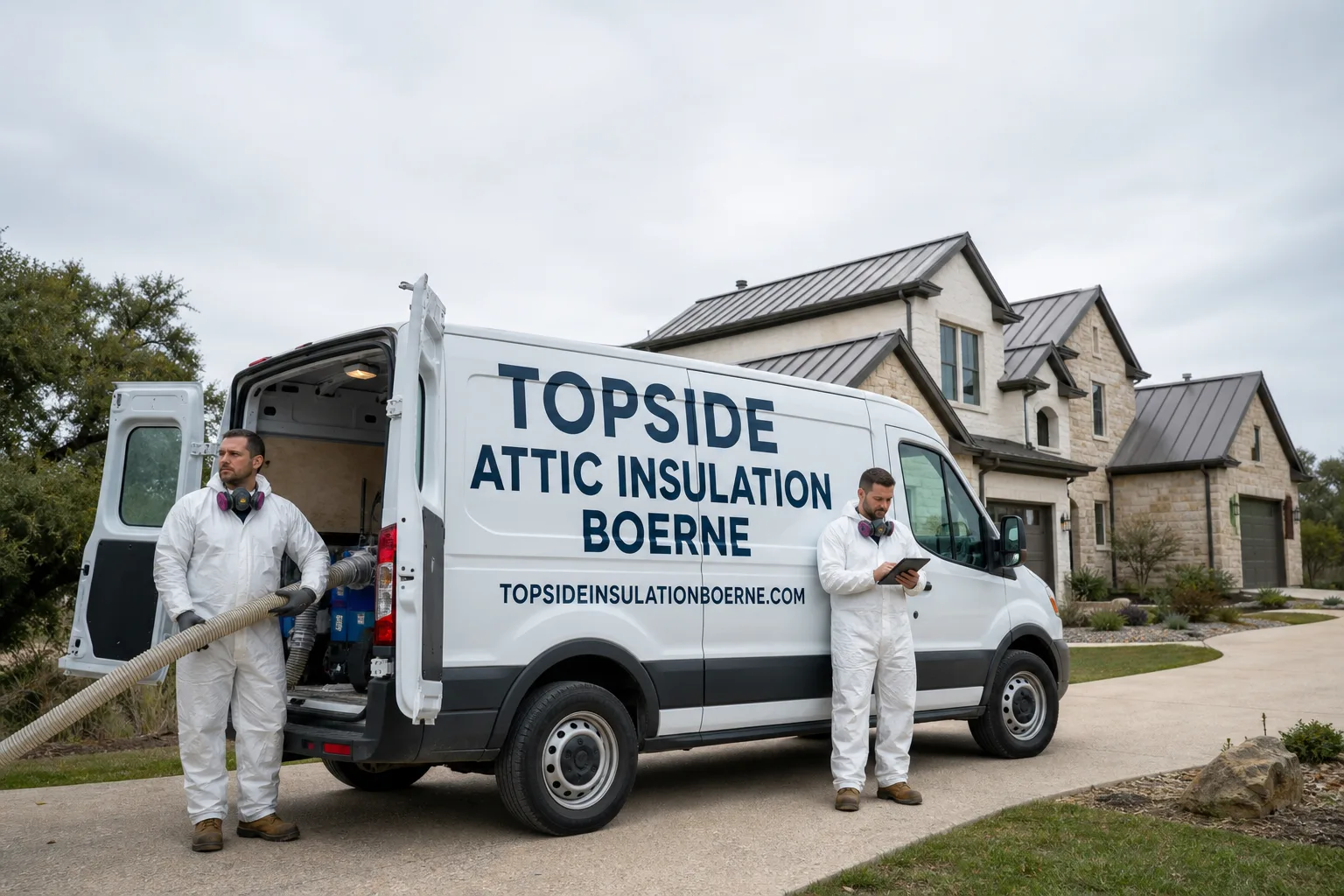
How Much Does Wall Insulation Cost in Boerne, TX?
Our Wall Insulation services in Boerne, TX typically cost between $1.50 and $4.25 per square foot of wall area, depending on the material, access method, and whether air sealing is done first. For an average Boerne home with 1,200 to 1,800 square feet of exterior wall area, most jobs land between $1,800 and $7,600 installed. Those numbers move based on whether you’re retrofitting an existing home or insulating new construction, and on which insulation material the wall cavity can actually accept.
If you’ve been getting quotes and the prices look wildly different from each other, that’s usually a sign that two contractors are quoting two different scopes – one is including air sealing and one is not. That gap matters more than most homeowners realize, and we’ll explain why below.
Wall Insulation Cost Breakdown for Boerne, TX (2026)
Below are per-square-foot installed price ranges for the Boerne market as of 2026. “Wall area” here means the total square footage of insulated wall cavity, not the square footage of your home’s floor plan.
| Insulation Type | Method | Cost Per Sq Ft (Installed) | Best For |
|---|---|---|---|
| Dense-pack cellulose | Blown-in (retrofit) | $1.80 – $2.60 | Existing wood-frame walls with no existing insulation |
| Dense-pack fiberglass | Blown-in (retrofit) | $1.60 – $2.40 | Retrofit walls; slightly lower moisture absorption than cellulose |
| Fiberglass batt (standard) | Open-wall install | $1.50 – $2.10 | New construction or gut-rehab with open studs |
| Mineral wool / Rockwool batt | Open-wall install | $2.20 – $3.10 | Open-wall projects where fire resistance and soundproofing matter |
| Open-cell spray foam | Sprayed in open cavity | $2.60 – $3.80 | Open walls where full air-sealing integration is the priority |
| Closed-cell spray foam | Sprayed in open cavity | $3.25 – $4.25 | Exterior sheathing upgrades; high-humidity or flood-zone walls |
| Injection foam (retrofit) | Injected through existing wall | $2.80 – $4.00 | Finished walls where drilling and patching is preferable to opening drywall |
What a Typical Boerne Job Actually Costs
A 1,600-square-foot single-story home in Boerne – common in neighborhoods like Herff Ranch, Esperanza, and The Preserve – usually has between 1,000 and 1,400 square feet of exterior wall cavity once you subtract windows, doors, and interior partitions. Using dense-pack cellulose blown in through drilled holes, that job typically runs $1,900 to $3,600 total. If the homeowner also wants the rim joists and top plates air-sealed before the blow, add $400 to $800 for that scope – and if you skip that step, you’ll pay to heat and cool the leakage indefinitely.
Larger homes in the Hill Country Estate areas north of Boerne on FM 289 – where 2,800-square-foot single-story builds on slab are common – can run $4,200 to $7,600 for a full retrofit, especially when injection foam is used to avoid opening the finished drywall on a high-finish interior.
Access Method Has More Impact Than the Material
The single biggest cost variable in a wall insulation project is how the crew gets the material into the cavity. Open-wall installs (during construction or full gut-rehabs) are the cheapest per square foot because there’s no drywall to drill through or patch. Retrofit blow-in through drilled holes adds labor and patching but avoids gutting a finished room. Injection foam through drilled holes tends to cost the most per square foot because the material and the injection process are both slower – but it’s often the right call when you have a tile backsplash, expensive paint, or custom millwork you don’t want to disturb.
In Boerne’s older neighborhoods – especially the homes along River Road and the historic blocks east of Main Plaza – stone veneer exterior walls complicate access further, because drilling through stone costs more than drilling through fiber-cement or wood lap siding. If your home has a stone or brick exterior, expect the retrofit quote to run 15 to 25 percent higher than the standard range above.
What Affects Wall Insulation Pricing in Boerne
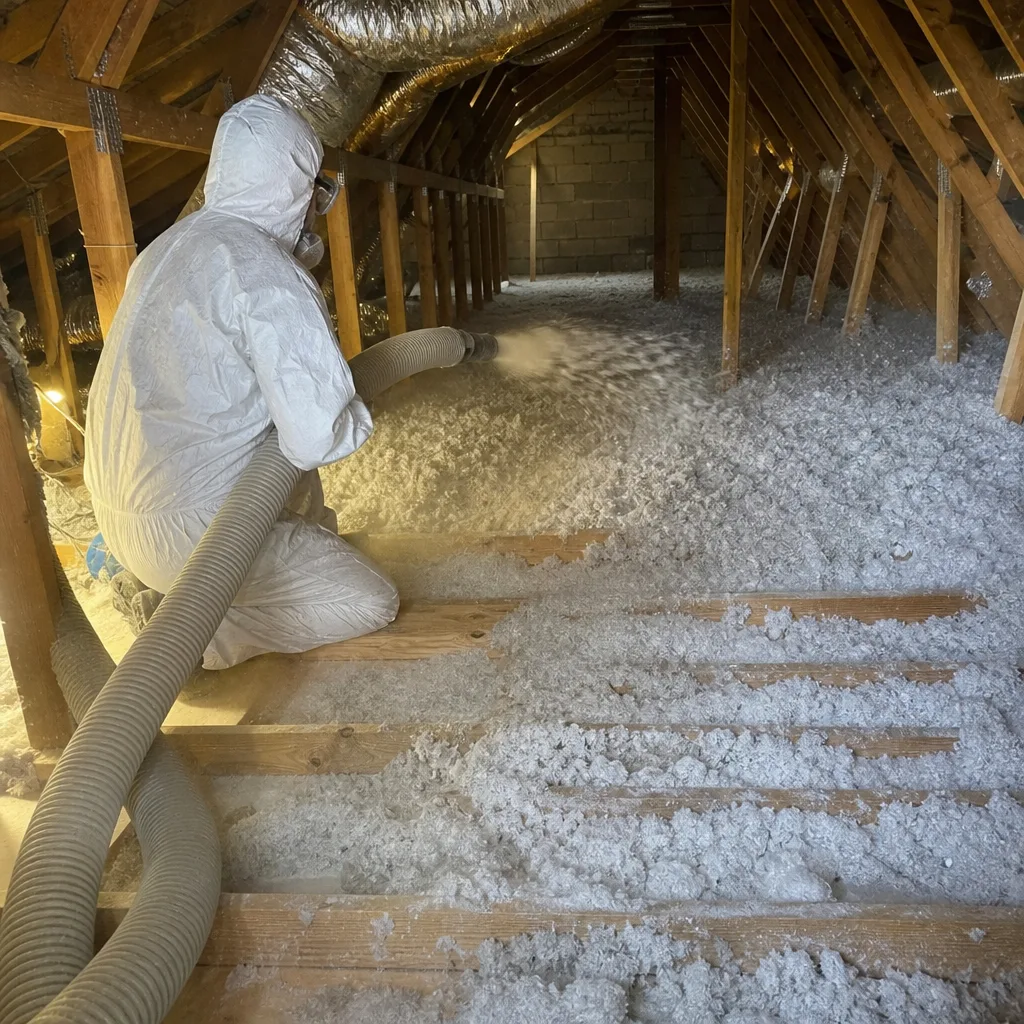
- Wall construction type: Standard 2×4 wood-frame walls (the most common in Boerne homes built after 1990) hold roughly 3.5 inches of insulation and accept any blown-in or batt product. Older 2×6 construction on some custom builds along Scenic Loop and FM 1621 gives you more cavity depth and a higher achievable R-value – but also more material to fill, which raises the project total even though the per-square-foot rate stays similar.
- Existing insulation condition: A significant share of homes in Boerne’s established subdivisions – Cordillera Ranch adjacents, Cascade Falls, La Ventana – were built in the late 1990s and early 2000s with fiberglass batts installed at R-11. If those batts have settled, shifted, or gotten wet from a slow roof leak, they have to come out before new insulation goes in. Removal and disposal adds $0.40 to $0.80 per square foot to the job.
- Air sealing scope: Boerne’s climate sits in IECC Climate Zone 2, which means summer cooling loads dominate the energy bill and air infiltration – not just conductive heat loss – is the primary problem. An R-13 wall that leaks air around every electrical outlet and switch plate underperforms an R-11 wall that’s been properly air-sealed. Quoting wall insulation without quoting air sealing first is like replacing a tire without checking the bead seal. We price these together because they belong together.
- Number of stories: Two-story homes require setting up on scaffolding or tall ladders for the upper exterior walls. That adds labor. It also means the drywall patch work on interior walls is overhead work rather than at-waist height, which is slower. Two-story homes typically run 8 to 15 percent more than an equivalent single-story footprint in Boerne’s market.
- Exterior finish material: Drilling through fiber-cement siding (James Hardie is everywhere in newer Boerne construction) is fast and patches cleanly. Drilling through thin-set stone veneer or full-bed limestone – common on custom builds in the FM 3351 corridor – requires carbide bits, slower drilling, and more careful patching. This alone can add $200 to $600 to a mid-size retrofit.
- Permitting: Boerne sits in Kendall County. Most insulation-only jobs (retrofit blow-in, batt replacement) don’t require a building permit in Kendall County’s unincorporated areas. Work inside Boerne city limits follows City of Boerne building codes and may require a permit if structural work accompanies the insulation scope. Always confirm with your contractor what’s included – a written scope from us names the permit status explicitly before work starts.
Boerne’s Climate Makes Wall Insulation a Different Calculation Than Most of Texas
Boerne sits at roughly 1,400 feet in the Texas Hill Country, which gives it a climate that’s meaningfully different from San Antonio’s urban heat island 30 miles south. Summer highs regularly hit 98-102°F, but overnight lows in the 60s are common from June through September – which means a well-insulated building envelope actually gets some help from nighttime ventilation that a home in Seguin or New Braunfels doesn’t get as reliably. The flip side: Boerne sees ice events two to four times per decade, and a home with empty or degraded wall insulation in those events is going to feel it in both comfort and heating bills.
The dominant issue in Boerne walls isn’t R-value deficiency – most homes built after 1995 have code-minimum batts. The issue is air infiltration through top plates, bottom plates, electrical penetrations, and around window rough openings. A blower-door test – a pressurization measurement that reads, in one number, how much air your building envelope is losing – routinely shows that Boerne homes in the 1,800 to 2,800 square foot range are losing three to five air changes per hour. The EPA’s target for a well-sealed home is below three. Getting from 4.5 ACH50 to 2.2 ACH50 through targeted air sealing, combined with fresh wall insulation, cuts cooling costs more reliably than upgrading HVAC equipment at twice the price.
We publish before-and-after blower-door numbers on every applicable job. That’s not marketing language – it means when our crew leaves your home in Boerne, you receive the pre-work CFM50 reading and the post-work CFM50 reading so you can verify the air sealing actually changed something. Most of the Boerne homeowners we’ve worked with have never seen those numbers before, and some of them were shocked at how leaky their 2008-built homes tested.
Sealed First, Then Insulated: Why the Order Matters in Boerne Walls
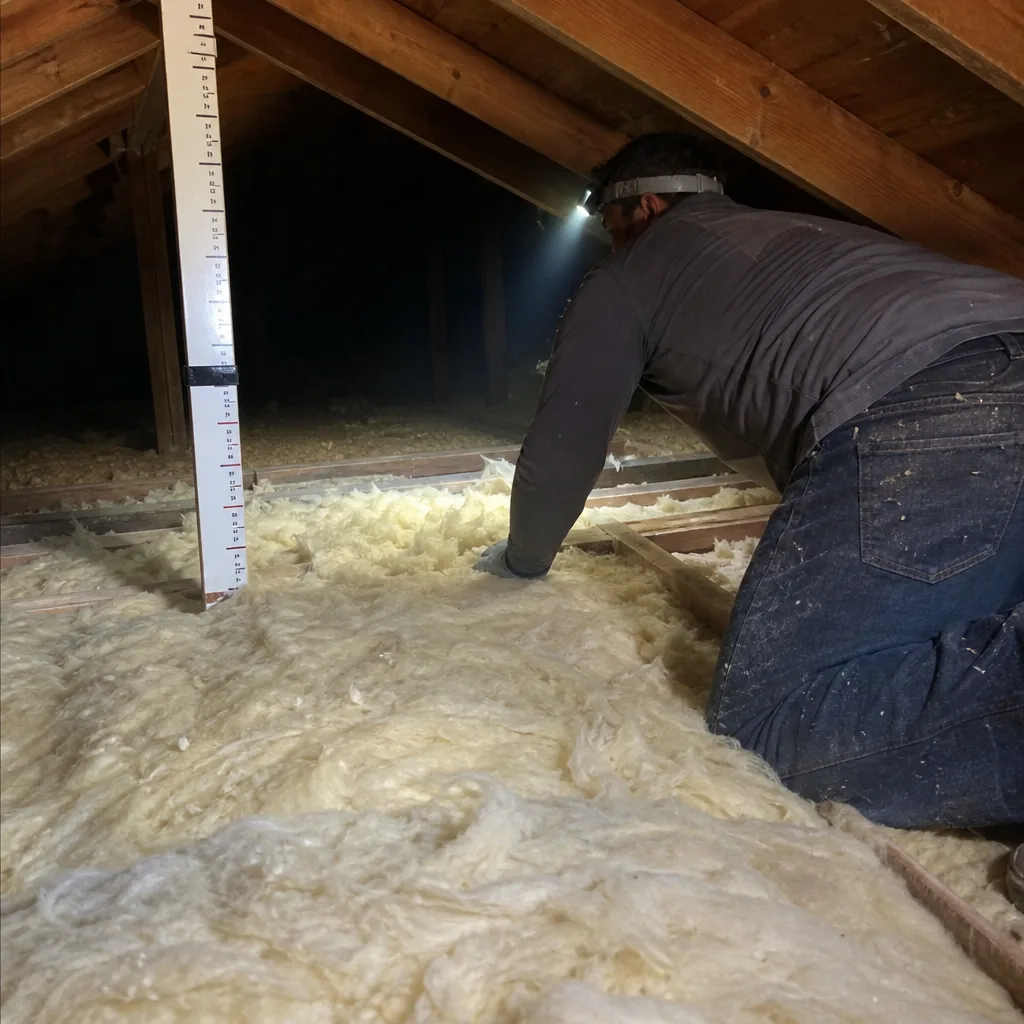
Envelope Insulation Co. operates under one rule that isn’t negotiable on any job: air sealing happens before insulation is added, not after. For wall projects specifically, this means we address top-plate penetrations, electrical boxes, plumbing rough-ins, and any visible gaps at the rim joist before a single bag of cellulose or a single batt goes into the cavity.
Why does the order matter? Because blown-in insulation – especially cellulose – is air-permeable. It slows airflow but doesn’t stop it. A wall cavity packed with R-13 cellulose and a quarter-inch gap at the top plate is still losing conditioned air every time the wind loads the building or your HVAC runs at full capacity. Spray foam applied directly to the gap first and then covered with blown-in insulation stops the leak. Blown-in insulation applied first and then spray foam on top of it from the attic side can miss the interface entirely.
The sequence isn’t theory. We’ve tested it with blower doors on several hundred Boerne-area homes since 2016, and the homes where sealing preceded insulation consistently test lower post-job than the homes we’ve re-done where a previous contractor reversed the order.
How to Save on Wall Insulation in Boerne
Combine Wall and Attic Work in One Mobilization
The biggest legitimate savings in wall insulation come from combining it with attic work in one crew visit. Mobilization – the cost of loading equipment, driving to Boerne, setting up, and breaking down – is a fixed overhead that gets spread across the whole job. A wall-only job and an attic-only job scheduled six months apart each carry their own mobilization cost. The same scope done in one visit typically saves $300 to $600 compared to two separate trips, because labor efficiency improves and setup time doesn’t double. If you’re already planning attic work, ask your estimator to quote the wall scope at the same time.
Get the Air Sealing Quoted Together, Not Separately
Some contractors quote air sealing as an add-on after you’ve agreed to the insulation price. We quote them together because they’re one scope. When you receive competing quotes, ask explicitly: “Is air sealing of electrical penetrations and top plates included in this number, or is that a separate line?” If it’s separate, add it in before you compare prices – otherwise you’re comparing different scopes.
Check for Utility Rebates Before Scheduling
CPS Energy (which serves parts of the greater San Antonio metro) and some Pedernales Electric Cooperative programs have offered rebates for air sealing and insulation improvements. Qualification requirements change annually, and a rebate available in 2024 may not exist in 2026 in the same form. Before you sign any contract, check with your utility provider directly. We can tell you what documentation a rebate program typically requires (blower-door test results, installed R-value certification, contractor license) so you’re not scrambling for paperwork after the job closes.
Don’t Over-Specify the Material
Closed-cell spray foam at $3.25 to $4.25 per square foot is the right answer for specific problems: moisture intrusion, structural uplift concerns, unvented wall assemblies. It is not the right answer for a straightforward retrofit of empty 2×4 stud bays in a 2003-built Boerne home. Dense-pack cellulose or dense-pack fiberglass at $1.80 to $2.60 per square foot achieves equivalent thermal performance in that application at a fraction of the cost. Matching material to problem is how you avoid overspending.
Use a Free Second Opinion Before Committing
If you have a written estimate from another contractor and the numbers don’t make sense, bring it to us. We offer a free second opinion on any written estimate – we’ll read through the scope with you and tell you exactly what’s priced, what’s missing, and whether the material specified matches the problem you’re trying to solve. There’s no obligation and no pressure. Call (830) 529-7780 to schedule that conversation, or use our contact form if you’d rather start with a text.
Get the Written Price Before Anyone Touches a Wall
Under Haven Standard Clause 1, every Envelope Insulation Co. job begins with a written price – flat price, written scope, written warranty – before any work starts. There are no “we’ll figure it out as we go” surprises on access difficulty or material costs. This protects you from scope creep and gives you a document to compare against competing bids line by line. A contractor who won’t give you a written price before starting work is not a contractor whose bill you’ll enjoy at the end of the project.
FAQs: Wall Insulation Cost in Boerne, TX
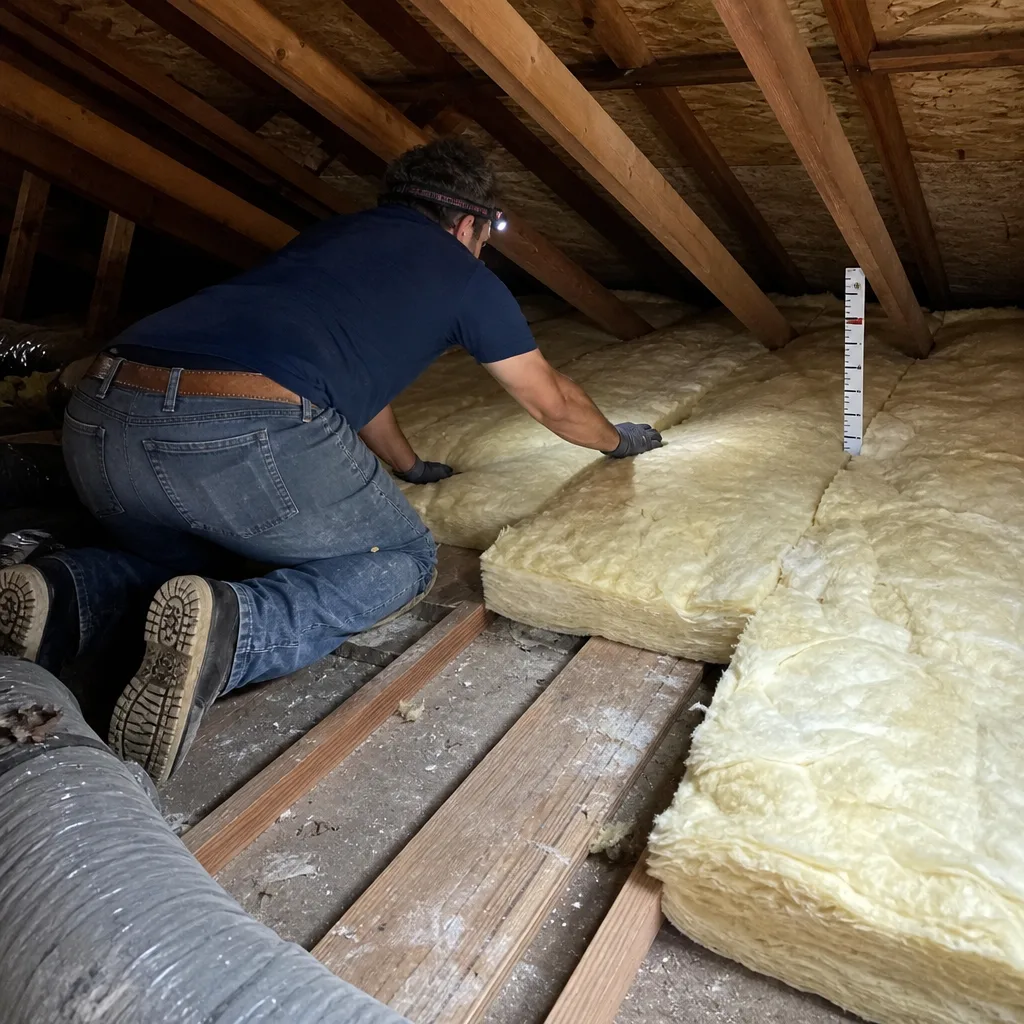
How much does wall insulation cost per square foot in Boerne?
Wall insulation in Boerne runs $1.50 to $4.25 per square foot of wall cavity area, installed. The low end of that range applies to standard fiberglass batt installation in open walls during new construction. The high end applies to closed-cell spray foam in open cavities or injection foam in finished walls with challenging exterior materials like stone. Most retrofit blow-in projects on typical Boerne wood-frame homes fall between $1.80 and $2.60 per square foot using dense-pack cellulose or dense-pack fiberglass. Call (830) 529-7780 and we’ll give you a written estimate with a flat price before any work starts.
How much does it cost to insulate the walls of a whole house in Boerne?
A whole-house wall insulation retrofit in Boerne typically costs $1,800 to $7,600 depending on square footage, material, and access method. A 1,400-square-foot single-story home in a neighborhood like Herff Ranch or Esperanza, retrofitted with dense-pack cellulose through drilled holes, usually runs $2,000 to $3,400. A larger two-story home in the 2,800 to 3,200 square foot range with stone veneer exterior and injection foam can reach $6,000 to $7,600. Those figures include air sealing of the wall assembly, which we treat as part of the scope rather than an optional add-on. For an exact number on your home, request a free written estimate at (830) 529-7780.
Is it worth insulating existing walls in a Boerne home that already has some insulation?
In most cases, yes – but a blower-door test first tells you where to spend the money. Homes built in Boerne between 1995 and 2010 typically have R-11 fiberglass batts in 2×4 walls, which means the R-value is roughly code-minimum from the build year. If those batts are intact and properly installed, adding more insulation to the same cavity isn’t possible without opening the wall. What those homes almost always lack is air sealing around electrical boxes, top plates, and window rough openings. In Boerne’s Climate Zone 2, fixing air leaks in existing walls typically delivers a faster payback than adding insulation R-value, because it’s infiltration driving the cooling load, not conduction. We test first, recommend second, and write the price before anyone touches anything.
How long does wall insulation last in Boerne’s heat?
Properly installed fiberglass and mineral wool batts last 80 to 100 years if they stay dry and aren’t mechanically disturbed. Dense-pack cellulose is rated similarly when installed at the correct density (typically 3.5 lb/ft³ in a retrofit wall). Spray foam – open-cell or closed-cell – adheres to the framing and doesn’t settle or shift; it’s generally considered permanent for the life of the structure. The failure modes in Boerne wall insulation are almost always moisture intrusion (from a slow roof leak or window flashing failure) or rodent nesting, not material degradation from heat. Our Wall Insulation in Boerne service includes a photo record of the pre-install cavity condition, so if a problem develops later, there’s a baseline to compare against.
Does wall insulation require a permit in Boerne, TX?
Most wall insulation retrofit projects in Boerne – blown-in insulation through drilled holes in existing walls – do not require a building permit from the City of Boerne or Kendall County, because no structural work is involved and the work is not visible from the exterior once patched. However, if the wall insulation project involves removing and replacing exterior sheathing, modifying the wall assembly, or is part of a larger renovation that requires a general contractor permit, the insulation work may fall under that permit’s scope. We confirm permit requirements as part of every written estimate. You’ll know before work starts, not after.
What is the best type of wall insulation for Boerne’s climate?
For a retrofit on an existing Boerne home – the most common scenario we see – dense-pack cellulose is the material we recommend most often in standard 2×4 wood-frame walls. It installs at a density high enough to resist air movement (around 3.5 lb/ft³), it’s made from recycled material, it’s Class 1 fire-rated with borate treatment, and it costs $1.80 to $2.60 per square foot installed – less than spray foam and mineral wool. For open-wall new construction or a gut rehab, mineral wool batts (Rockwool is the brand name we use most frequently in Boerne projects) are worth the small premium over fiberglass because of the added fire resistance and sound attenuation – particularly useful in Boerne’s custom build market where homes share property with HVAC equipment rooms or attached garages. For moisture-prone assemblies or wall-to-roof interfaces, we’ll recommend a closed-cell spray foam layer at the sheathing interface. The right answer depends on your specific wall assembly, and that’s what the written estimate will name explicitly.
Key Takeaways
- Wall insulation in Boerne costs $1.50 to $4.25 per square foot installed, with most whole-house retrofit projects landing between $1,800 and $7,600.
- Access method – open wall, blown-in through holes, or injection foam – affects cost more than material choice does in most cases.
- Stone or brick veneer exteriors in Boerne add 15 to 25 percent to a typical retrofit quote because drilling is slower and patching is more involved.
- Air sealing must happen before insulation – not after. Blown-in insulation over an unsealed wall cavity still leaks conditioned air.
- Before-and-after blower-door numbers come with every applicable job, so you can verify the air sealing result rather than take our word for it.
- Written price before any work starts. Always. That’s Haven Standard Clause 1, and it applies to every wall insulation job we do in Boerne.
- Combining wall and attic work in one visit typically saves $300 to $600 in mobilization and setup costs.
Ready to Get a Written Price for Your Boerne Home?
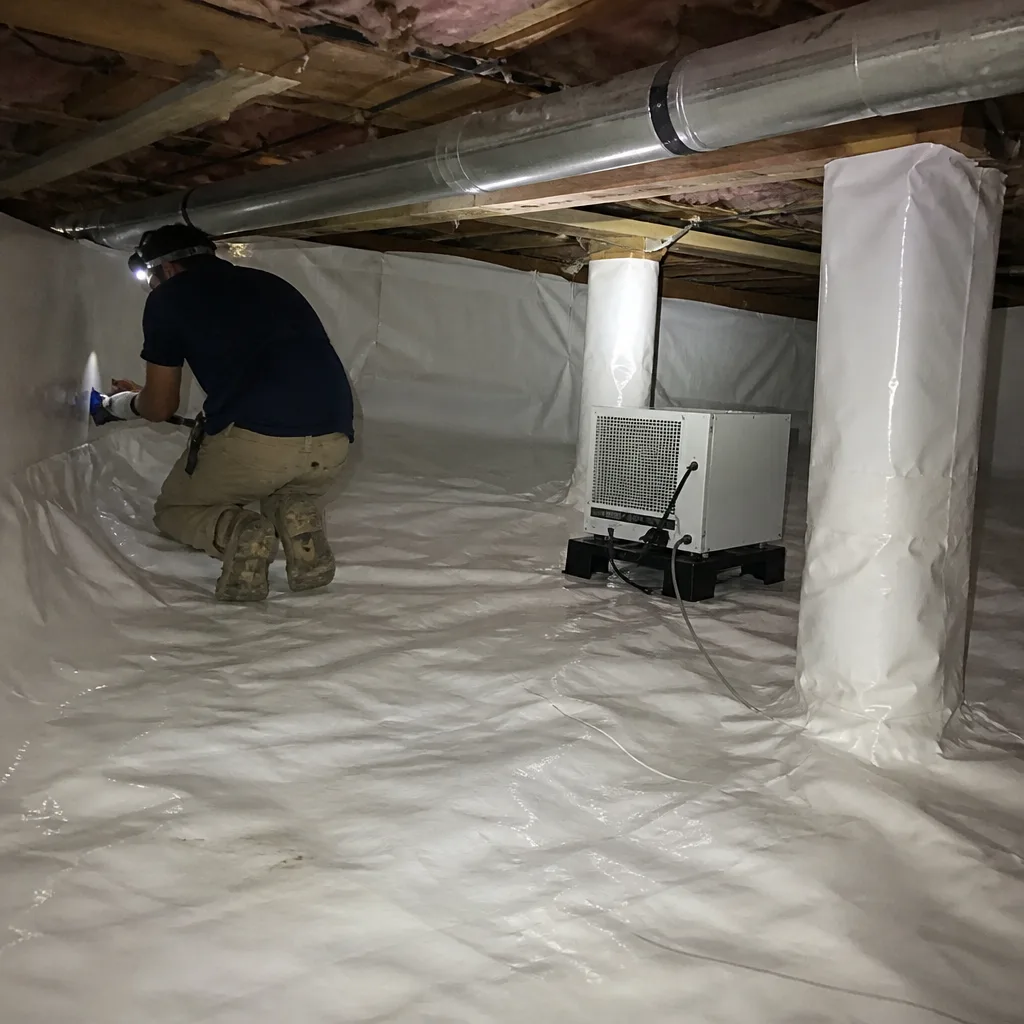
Envelope Insulation Co. has been independently owned and operated since 2016, and in that time we’ve sealed and insulated more than 9,000 homes – every one with a written price before the first tool came off the truck and a documented photo record when the last tool went back on. If you’ve been putting off wall insulation because you weren’t sure what it would cost or whether the contractor would show up and do what they said they’d do, that’s exactly the problem the Haven Standard was built to solve.
If you’re comparing quotes, bring us the written estimates you have. Our free second opinion isn’t a sales pitch – it’s a line-by-line read-through so you understand what you’re buying before you commit to anyone. And if you haven’t gotten any quotes yet, we’ll start from scratch: a blower-door test reading to show you what your envelope is actually doing, a written scope that names every material and every step, and a flat price with no “we’ll see when we get in there” language.
Wes Okafor leads every project through the same written scope and documented record process that Envelope Insulation Co. has run since 2016. When Wes or one of our background-checked, uniformed technicians is on the way to your home, you’ll get a text with their name and an ETA – not a four-hour window and a callback promise. For home insulation projects in Boerne and the surrounding Hill Country, the standard is written scope, documented result, and a blower-door number you can verify.
Call (830) 529-7780 to schedule a free estimate. A live person answers that line 24 hours a day – no voicemail, no callback queue measured in business days.
Written by Wes Okafor, Owner at Envelope Insulation Co., serving Boerne, TX since 2016.
Pricing reflects the Boerne market as of 2026. Topside Attic Insulation Boerne offers free estimates – call (830) 529-7780.
What Our Customers Say
"They photographed rodent damage in the old insulation that we had no idea about, and priced the exclusion work separately so we could decide."
- Harriet N."Crawl space encapsulation done properly. Photographs of the vapour barrier at every seam, and the damp smell in the hallway is gone."
- Ainsley P."They air-sealed the attic floor before insulating and showed me the blower-door number before and after. The upstairs is finally the same temperature as downstairs."
- Marisol D.