
Johns Manville Attic Air Sealing: The Boerne Owner’s Guide
We stock and install Johns Manville-compatible attic air sealing components in Boerne, with most residential jobs running between $380 and $720 installed, depending on attic square footage and penetration count. Same-day service is available when you call before noon, and we carry JM-certified caulk, foam, tape, and gasket stock on every truck. Most homeowners figure out something’s wrong when they notice hot spots in second-floor bedrooms during July, or when their HVAC runs nonstop and the upstairs never catches up.
Which Johns Manville Models This Applies To
Johns Manville doesn’t sell attic air sealing as a single branded system. Instead, they manufacture the individual components that contractors and homeowners use to seal the building envelope: AP Foil-Faced polyiso board for rigid air barriers at knee walls and skylight chases, Formaldehyde-free fiberglass batts with kraft or foil facing that serve as both insulation and an air retarder when properly sealed, InsulGrip facing tape for sealing seams, and low-expansion polyurethane foam for penetration sealing. The critical compatibility issue in Boerne’s Hill Country homes, especially the ranch and split-level builds from the 1980s near River Road Park, is matching the facing type to your existing stack. Foil-faced polyiso can’t mate directly with kraft-faced batts without a proper transition detail. You’ll find the JM product code on a printed label on the foil or kraft facing - usually a 6- to 10-digit number starting with a region code. We also stock Reflectix components for homeowners who need a radiant-barrier-compatible air seal in the same assembly.
Topside Attic Insulation Boerne is an independent service provider, not affiliated with Johns Manville. We source JM materials through standard distribution channels alongside Owens Corning, Knauf, and Rockwool products, so we can match what’s already in your attic without forcing a proprietary system change.
Signs Your Johns Manville Attic Air Sealing Is Failing
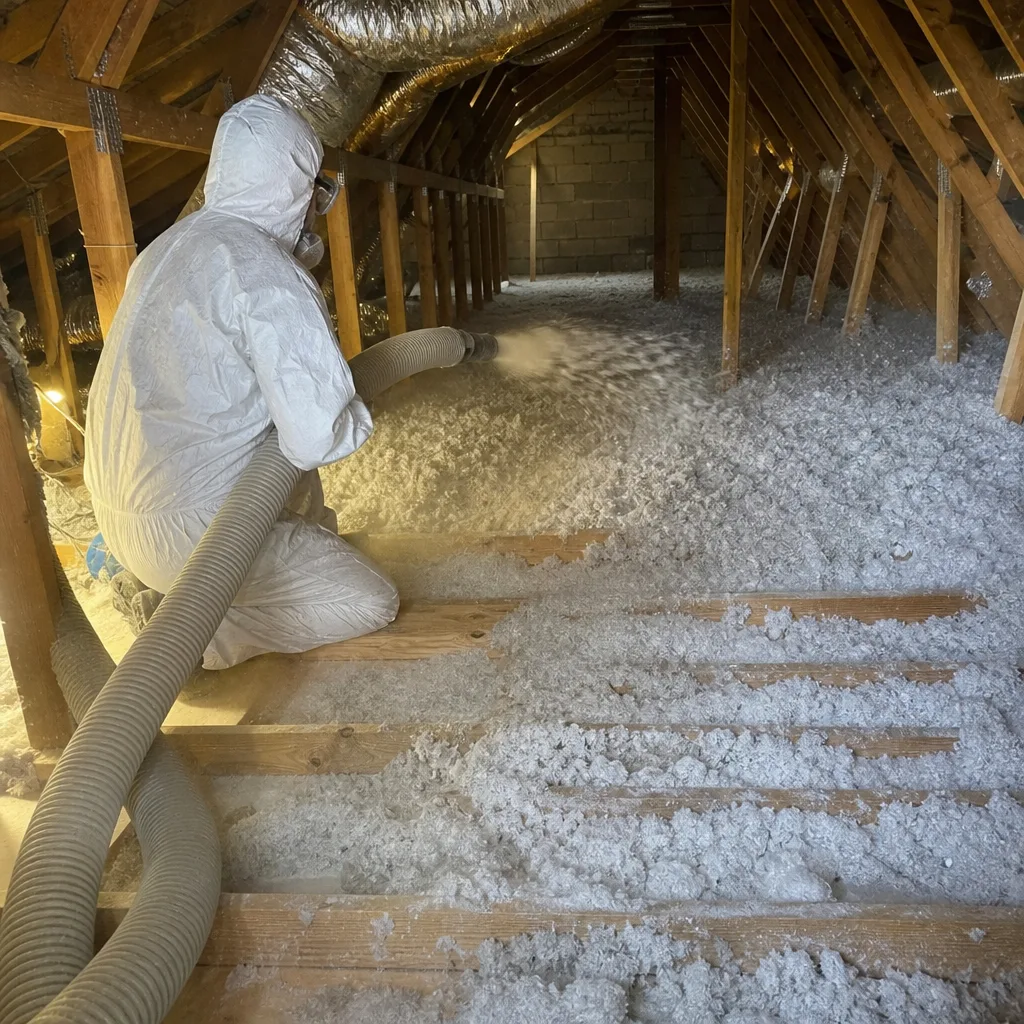
- Hot ceiling patches in summer. Air leaks around top plates and recessed can lights let conditioned air escape into the attic while pulling in attic heat through the same path. In Boerne, where attic temperatures hit 140°F in August, a failed seal at the top plate turns your ceiling into a radiant heater.
- Dust streaking around ceiling fixtures. This is the “filtration staining” pattern - air moving through small gaps carries attic dust and fiberglass particles that deposit on the ceiling surface. If you see gray or black streaking around your can lights or bath fan grilles, air is moving through gaps the seal was supposed to stop.
- Ice damming or moisture staining at the eaves in winter. Even in Boerne’s mild winters, a week below freezing can expose warm-air leaks at the attic floor edge. Warm, moist air hits cold roof decking, condenses, and freezes. When it melts, the water stains your soffit and exterior walls.
- Rooms that won’t maintain temperature despite new insulation. We see this constantly in the older homes off Esser Road - someone added R-38 blown fiberglass over unsealed top plates, and the stack effect pulls conditioned air out faster than the new insulation can slow it. The insulation is fine; the air sealing underneath failed or was never done.
- Excessive energy bills with no equipment change. A blower-door test on a 2,400-square-foot Boerne home with failed attic air sealing typically reads 3,500 to 5,000 CFM50. After proper sealing of top plates, wire and pipe penetrations, can lights, and the attic hatch, that same house drops to 1,800 to 2,400 CFM50. The utility bill follows.
Replacement Cost & What’s Included
Most Johns Manville attic air sealing jobs in Boerne run between $380 and $720 for attics under 1,500 square feet, and $720 to $1,400 for larger homes with complex rooflines or multiple HVAC zones. The low end covers straightforward top-plate sealing with JM low-expansion foam and InsulGrip tape on a single-level home with good attic access. The high end includes sealing around a dozen or more can lights, multiple bath fan and duct penetrations, chimney and flue chase blocking with fire-rated polyiso, and a sealed, insulated attic hatch assembly.
Every job includes our before-and-after blower-door test - a pressurization reading that shows, in one number, how much air your building envelope was losing before and after the work. You get the printed pressure-differential report in pascals, plus a Documented Photo Record of every sealed penetration. Under Haven Standard Clause 1, you receive a written price, written scope, and written warranty before anyone lifts a tool. The 365-Day Done Right Promise covers all completed air sealing work.
DIY or Call Us?
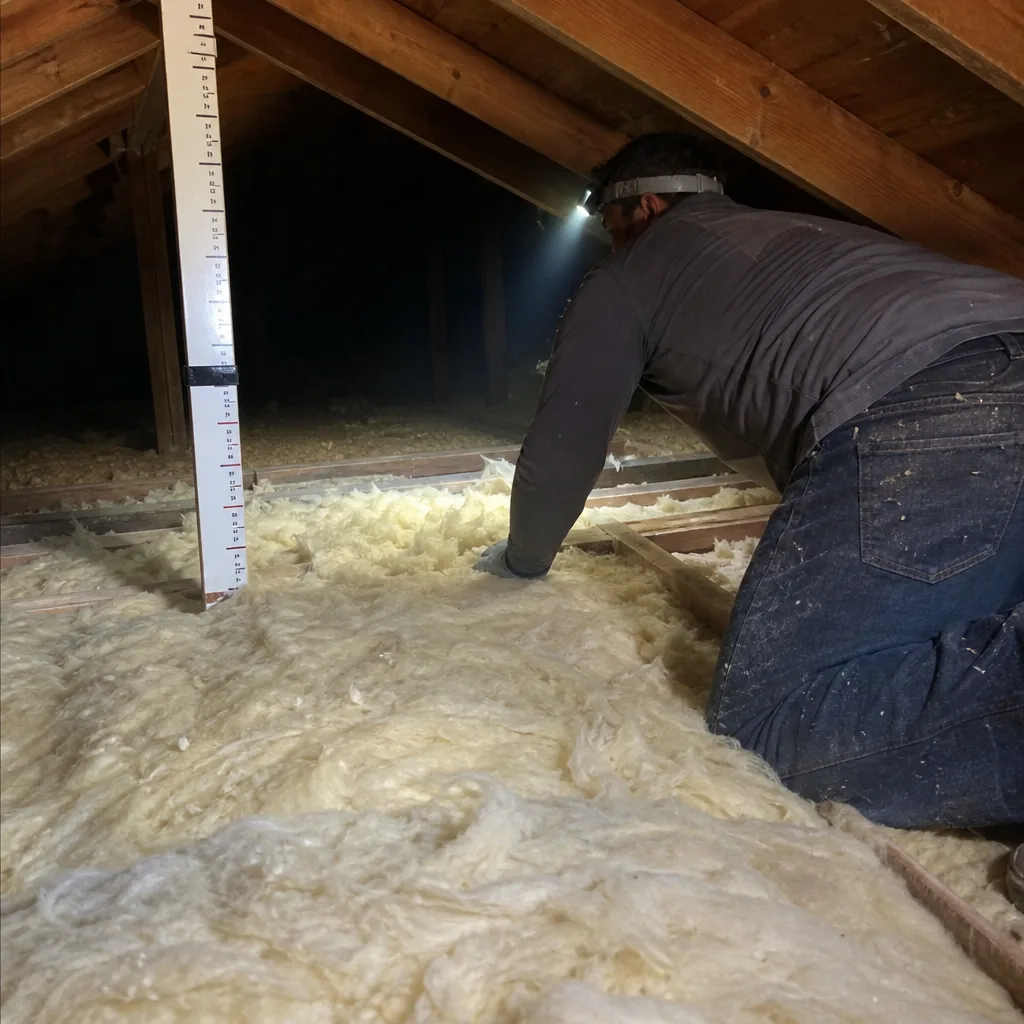
There’s a short list of checks any homeowner can do safely: verify that your attic hatch has weatherstripping and closes tight, look for daylight visible through top plates at exterior wall intersections, and confirm that bath fan ducts terminate outside (not into the attic). What you find is useful information to hand us when we arrive.
Where DIY goes wrong is in the execution. Sealing can lights requires fire-rated enclosures or proper IC-rated LED retrofits - standard caulk melts or off-gasses. Low-expansion foam around flues and chimneys demands fire-stop-rated products and clearances most homeowners don’t know to check. And without a blower-door test, you’re guessing at leak locations; the biggest holes are often hidden under insulation at electrical top plates or behind built-in soffits. We’ve pulled back batts in Boerne attics to find 4-inch gaps running the full length of a wall plate, completely invisible from above. Seal the envelope first. Then fill it. For the test, the materials, and the documentation that proves it worked, call (830) 529-7780.
FAQs
Properly installed JM foam, tape, and gasket materials last 20 to 30 years in a ventilated attic, but the seal’s real lifespan depends on subsequent work. We’ve revisited Boerne homes where a cable installer or solar contractor cut through sealed top plates and never repaired the breach. The materials don’t fail; the continuity gets interrupted. Call (830) 529-7780 for a free inspection if you’ve had roof or electrical work since your original sealing.
Localized repairs are common and effective. If the original sealing was done well, we can patch breaches with matching JM materials and re-test with the blower door to confirm the assembly performs. Full replacement is only necessary when the original work used incompatible products - latex caulk instead of acoustic sealant, or non-fire-rated foam near heat sources - or when the attic has been disturbed extensively. We provide a Free Second Opinion on any written estimate that recommends more work than your situation warrants.
Most residential attic air sealing jobs in Boerne take four to six hours for a two-person crew. A simple single-story home with walk-up attic access might finish in three hours; a two-story with complex duct routing and twenty-plus can lights can run a full day. We schedule the blower-door test at arrival and again at completion, so the time includes documentation, not just labor.
Yes. Every Topside Attic Insulation Boerne truck carries JM low-expansion polyurethane foam, InsulGrip facing tape, AP Foil-Faced polyiso board in half-inch and one-inch thicknesses, and fire-rated sealant for flue and chimney penetrations. For less common JM components - specialized gasket materials for recessed lighting, for example - we can source same-day or next-morning from San Antonio distribution. Call (830) 529-7780 before noon for same-day availability.
Written by Wes Okafor, Owner, Topside Attic Insulation Boerne at Topside Attic Insulation Boerne, serving Boerne and nearby areas.