
Rockwool Attic Insulation: The Boerne Owner’s Guide
Rockwool attic insulation installation in Boerne typically runs $2.80 to $4.20 per square foot installed, with most complete attic jobs falling between $3,200 and $5,800 depending on accessibility and whether existing material needs removal. We stock Rockwool Comfortbatt, Comfortboard, and AFB evo batt products on our Boerne trucks, and we can usually inspect and quote same-day. Homeowners usually discover their Rockwool insulation is failing when rooms stay hot despite the AC running constantly, or when they find compressed, moisture-stained batts in the attic after a Hill Country humidity spike.
Which Rockwool Models This Applies To
Rockwool’s residential attic line breaks into three families, and getting the right one matters for how it performs in a vented Boerne attic.
Comfortbatt is the flexible batt most homeowners picture: semi-rigid mineral wool with a water-repellent binder, sized to standard joist spacing. It comes in R-15 through R-30, with R-30 being the common attic-floor target for our climate zone. The gotcha: Comfortbatt R-30 is 7.25 inches thick, which exceeds many older Boerne homes’ 2×8 joist bays. We see this mismatch in ranch houses near River Road Park where someone stuffed R-30 into a 5.5-inch cavity, compressing it to R-24 performance and creating an air gap at the top.
Comfortboard 80 and 110 are the rigid boards, used for cathedral ceilings, knee walls, or as a thermal break over existing insulation. These are denser, rated in psi compression strength, and cut with a serrated knife rather than torn. If your Rockwool is a rigid sheet, it’s almost certainly Comfortboard.
AFB evo is the newer formaldehyde-free batt, slightly softer than Comfortbatt but with the same R-values. The label is the tell: AFB evo prints a green stripe pattern on the facing, while Comfortbatt uses a gray print.
We source Rockwool through our standard supplier alongside Owens Corning, Johns Manville, and Knauf. We are not affiliated with Rockwool; we’re an independent service provider who stocks what performs.
Signs Your Rockwool Attic Insulation Is Failing
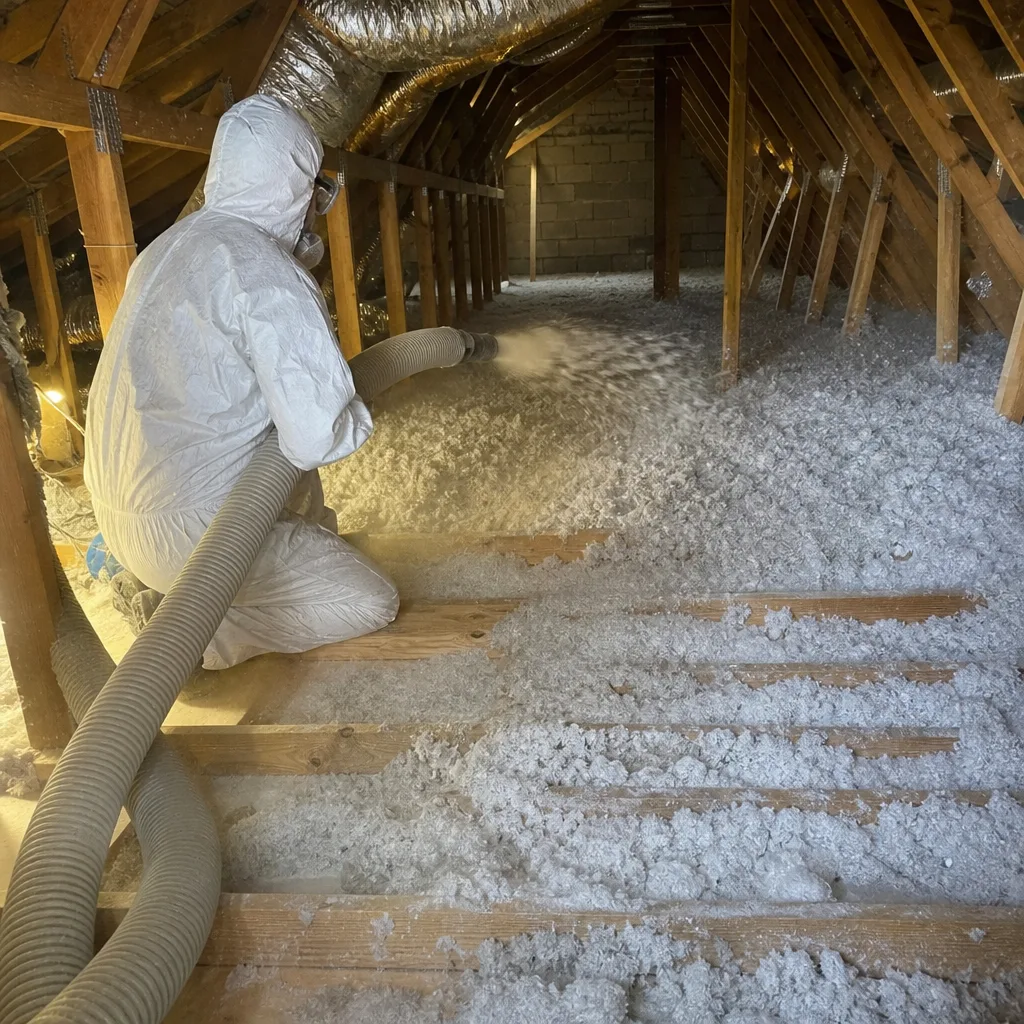
- Uneven temperatures between rooms. Rockwool doesn’t settle like fiberglass, but if it was installed without air sealing first, conditioned air escapes around the edges. The batt itself looks fine, yet the room below reads 6 degrees warmer. We’ve traced this exact pattern in homes off Esser Road where top plates were never sealed.
- Black or gray staining on batt surfaces. This is dust filtration, not mold. Air moving through the insulation deposits fine particles over years, creating dark streaks that follow framing members. It means your attic is breathing indoor air, and your Rockwool is acting more like a filter than a thermal barrier.
- Compression or thinning in traffic areas. Rockwool recovers better than fiberglass, but walking on it repeatedly crushes the fiber structure. In Boerne attics used for storage, we find 6-inch batts compressed to 3 inches, which cuts effective R-value roughly in half.
- Moisture at the eaves or around penetrations. Rockwool is water-repellent, not waterproof. Sustained humidity from bathroom vents dumping into the attic, or from inadequate soffit ventilation in our Hill Country summers, wets the batt faces and can degrade the binder over time.
- Visible gaps between batts and framing. Rockwool’s friction-fit design relies on snug contact. Gaps as narrow as 1/8 inch create thermal bypasses that disproportionately kill performance. We measure these with an infrared camera; a 5% gap area can reduce overall R-value by 20%.
Replacement Cost & What’s Included
| Scope | Price Range in Boerne |
|---|---|
| Add Rockwool over existing (no removal) | $2.80 - $3.50/sq ft |
| Remove old insulation + install Rockwool | $3.80 - $4.80/sq ft |
| Air sealing + Rockwool (full envelope) | $4.20 - $5.50/sq ft |
| Removal only (prep for other work) | $1.20 - $1.80/sq ft |
What moves the number: attic square footage is obvious, but the real variables are access (scuttle vs. pull-down stairs vs. cut new opening), whether we find rodent damage requiring sanitation, and how much air sealing the top plates and penetrations need. A 1,200-square-foot attic with good access and minimal sealing might hit the low end. The same footprint with a maze of can lights, HVAC boots, and a bathroom vent dumping moist air into the space runs higher.
Every Rockwool job we quote includes the written scope, the material specification by R-value and product line, and our 365-Day Done Right Promise. On jobs where air sealing is part of the work, you’ll get before-and-after blower-door numbers printed on paper, in pascals, so the change is documented. We also deliver a Documented Photo Record of the completed attic before we close the hatch.
DIY or Call Us?
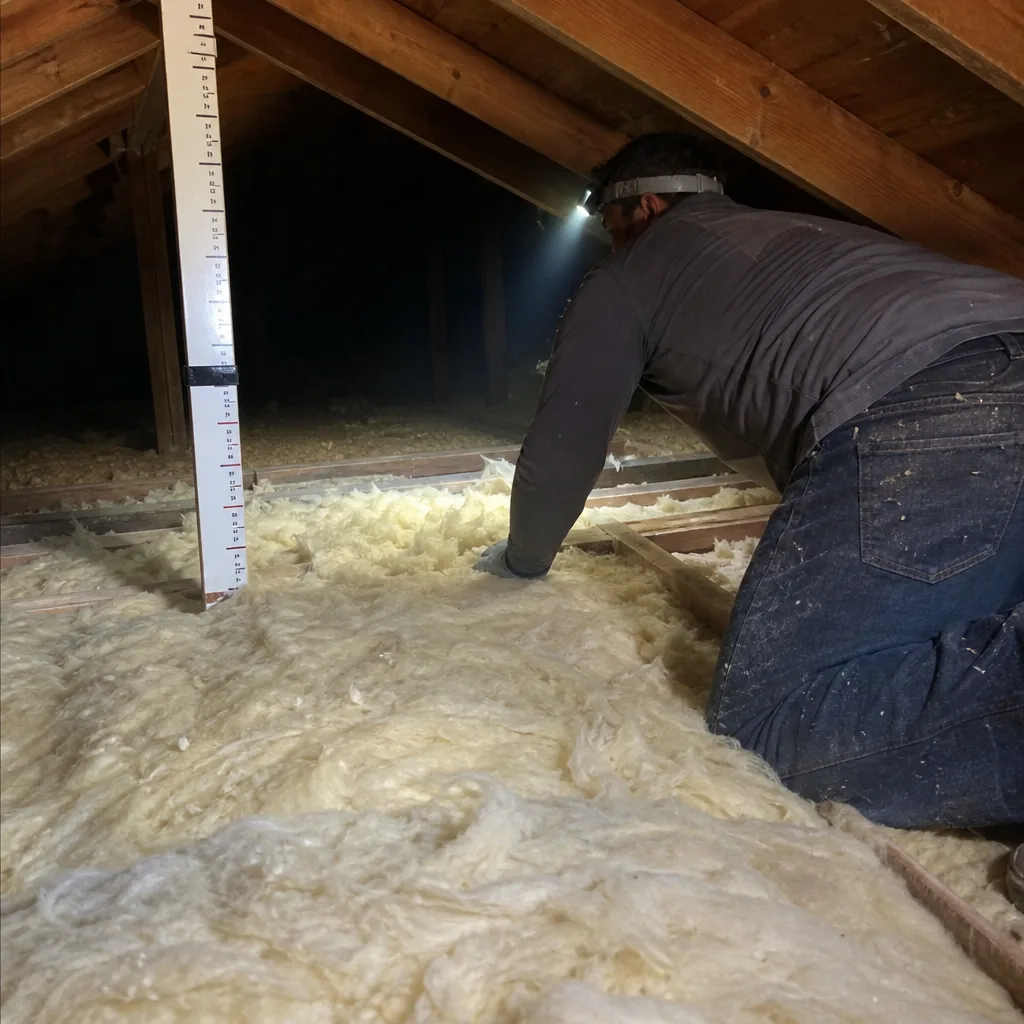
Here’s where honesty matters. Rockwool batts are not technically difficult to handle. They’re itch-resistant, cut clean with a bread knife, and don’t require special breathing equipment beyond a basic dust mask. If you’re adding a layer over existing insulation in a straightforward attic with good decking, permanent lighting, and no electrical or HVAC work needed, a competent homeowner can do acceptable work.
Where DIY goes wrong: air sealing. The Department of Energy estimates 30% of attic heat loss bypasses insulation through leaks. Rockwool performs well as an insulator and poorly as an air barrier. If you lay new batts over an unsealed attic floor, you’ve spent money to hide the problem rather than fix it. We’ve opened attics in Boerne where homeowners did exactly this, then called us two summers later when the upstairs still wouldn’t cool.
Also worth flagging: knob-and-tube wiring, buried junction boxes, and deteriorated flue pipes are common in pre-1990 Hill Country homes. These are fire and safety hazards that belong to a professional. We background-check and uniform our technicians for a reason.
Seal the envelope first. Then fill it. If you want us to assess what’s actually happening in your attic, call (830) 529-7780. Estimates are free, and we bring a blower door to measure before we recommend anything.
FAQs
Rockwool mineral wool is rated for the life of the building when kept dry and undisturbed. In practice, we see performance degradation starting around 15-20 years in Boerne attics where air sealing was skipped, humidity control failed, or storage traffic compressed the batts. The material itself doesn’t break down; the installation conditions do. Call (830) 529-7780 and we’ll inspect what shape yours is in.
Spot repair is possible if the damage is localized. A few compressed batts near the attic hatch, or a section disturbed by a recent HVAC repair, can be lifted and replaced without touching the rest. We do this when the surrounding installation is sound and properly sealed. If the failure pattern is widespread, spot-fixing becomes false economy. We’ll tell you which category you’re in after we look.
Most complete removals and reinstallations finish in one day for attics under 1,500 square feet. Jobs requiring extensive air sealing of top plates, can lights, and chase ways run into a second day. We don’t rush the sealing phase; it’s the part that shows up in your blower-door number. You’ll get a written timeline with your price before anyone starts.
We stock Comfortbatt in R-15, R-23, and R-30, plus Comfortboard 80 in common thicknesses on our Boerne trucks. AFB evo and less common R-values typically arrive next business day from our San Antonio supplier. We don’t ask you to wait for a special order before we quote; we measure, spec the product, and schedule from stock or incoming based on your timeline.
Written by Wes Okafor, Owner, Topside Attic Insulation Boerne at Topside Attic Insulation Boerne, serving Boerne and nearby areas.