
Rockwool Blown-In Insulation in Boerne: What to Know First
We provide independent Rockwool blown-in insulation service in Boerne, Texas, with most attic jobs completed in one day and pricing put in writing before any work starts. As an independent Rockwool service provider, we are not affiliated with or authorized by Rockwool A/S, which means we source parts based on what actually fixes your problem, not what moves a manufacturer’s quota. Most homeowners who call us are dealing with settled Comfortbatt in a 1990s ranch near the Cibolo, or a contractor who blew Granulated Rockwool into an unsealed attic and called it done. If that sounds familiar, call (830) 529-7780. We’ll read your situation with you, then give you a written price.
How Rockwool Products Fail - and How We Fix Them
- Comfortbatt settling in wall cavities. The semi-rigid batts, common in Boerne’s 1980s and 1990s construction, sag when moisture cycling from Hill Country temperature swings breaks down the phenolic binder. We find 4-inch gaps at the top of stud bays where R-23 was specified and R-15 is performing. Our fix: remove the degraded batt, dense-pack with Rockwool Granulated or switch to blown-in fiberglass if the cavity geometry won’t hold density, and seal the top plate with acoustic sealant first.
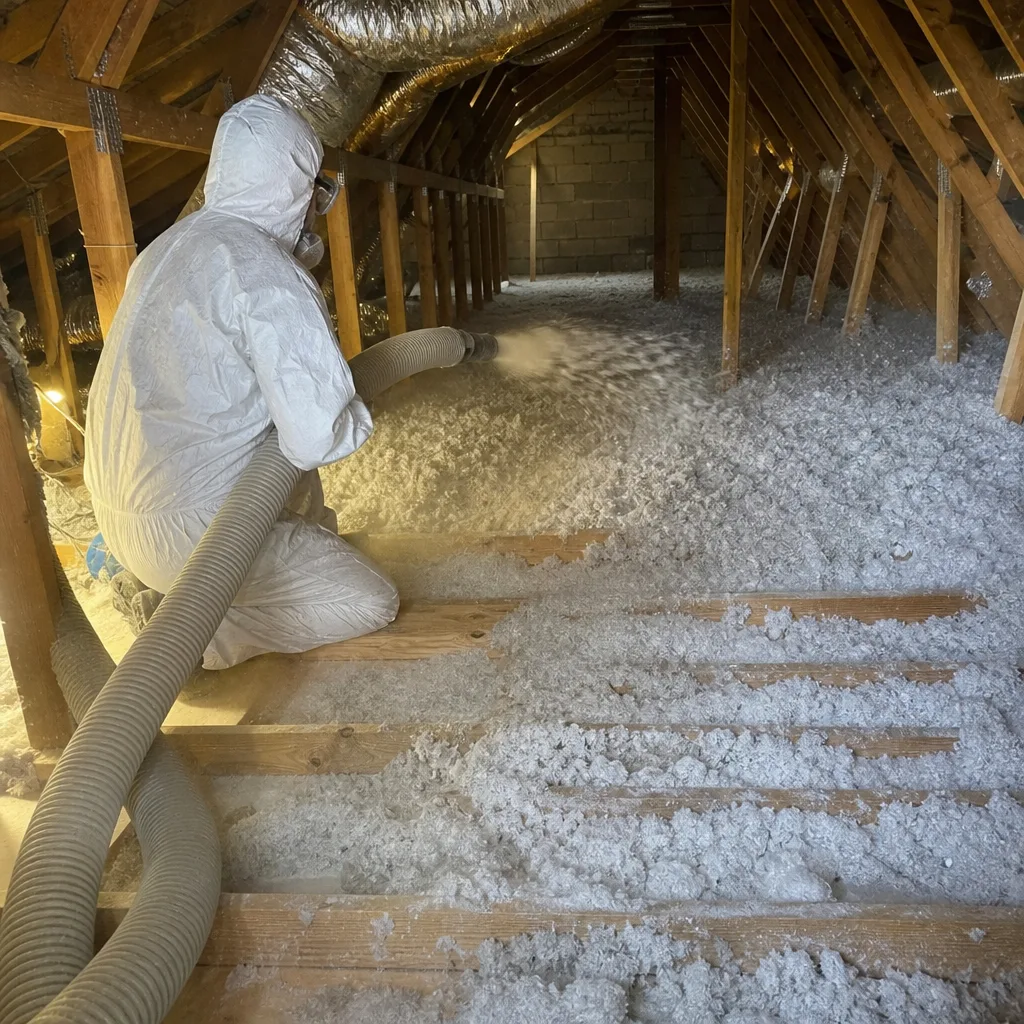
- Granulated Rockwool (formerly Rock wool Granulate) bridging in blown applications. The irregular fiber shape, excellent for friction fit, can bridge across joist bays in attics with irregular framing - common in the older homes near Main Street. The blower hose leaves a fluffy ridge and a valley beside it. We fix this by back-brushing every third bay during installation, then verifying with a depth probe, not a visual guess.
- Comfortboard 80 used as attic floor insulation without an air barrier. Rigid board stock in an attic floor is almost always a retrofit shortcut we inherit. The boards gap, and Rockwool’s open fiber structure lets air wash straight through. We pull the boards, seal the deck with closed-cell foam at penetrations, then blow Granulated Rockwool or fiberglass to the depth that hits your target R-value.
- Top-plate leakage rendering blown Rockwool ineffective. In Boerne’s limestone-country construction, truss uplift opens gaps at the perimeter wall top plate that Granulated Rockwool cannot seal - it filters air but doesn’t stop it. We blower-door test first, find the CFM50 contribution from the attic floor, seal with fire-rated caulk and gasketed boxes, then blow insulation. Seal the envelope first. Then fill it.
- Retrofit jobs where the previous installer mixed Rockwool with cellulose. The fibers don’t interlock; the cellulose settles and leaves Rockwool suspended like a dirty snowdrift. We vacuum the mixture out, document the cavity condition with photos, and reinstall with a single material to spec.
Our Rockwool Blown-In Insulation Process
- 1
Call and scope. A live person answers. We ask about the home’s year, the last insulation work, and whether you’ve noticed temperature stratification or high summer cooling load. We schedule a site visit with a written price to follow.
- 2
Blower-door test and attic inspection. We pressurize the house, measure CFM50, and identify the attic’s contribution. We photograph top plates, can lights, chimney chases, and duct boots. You get these photos in your Documented Photo Record.
- 3
Air sealing before insulation. Every penetration gets sealed with appropriate fire-rated material. We don’t blow over unsealed decks. This is non-negotiable.
- 4
Material selection and installation. We choose Rockwool Granulated, a quality aftermarket equivalent, or another material if the application demands it. No proprietary lock-in. We blow to depth, back-brush for uniformity, and probe-verify.
- 5
Post-test and documentation. We run the blower door again. You get the before-and-after CFM50 in writing, the pressure-differential report in pascals, your photos, and the written warranty under our 365-Day Done Right Promise.
- 6
Cleanup and walkthrough. We leave the attic access cleaner than we found it. You review the documentation before we leave.
What Rockwool Blown-In Insulation Costs in Boerne
Most attic insulation jobs in a Boerne home this size run between $2,400 and $4,800 for air sealing plus blown-in material to R-38 or R-49. Dense-pack wall work runs higher, typically $3,200 to $5,600, because of the labor to access each cavity. What moves the price: whether we can work from the attic or need interior wall access, the current material condition (removal adds $800 to $1,400), and whether the home has active air leaks that must be sealed first.
We also carry Reflectix and other multi-layer radiant barrier products when the attic geometry or budget points that direction. Call (830) 529-7780 for a written estimate. Estimates are free, and we offer a Free Second Opinion on any written estimate you’ve already received.
Why Boerne Homeowners Call Topside Attic Insulation Boerne for Rockwool Work
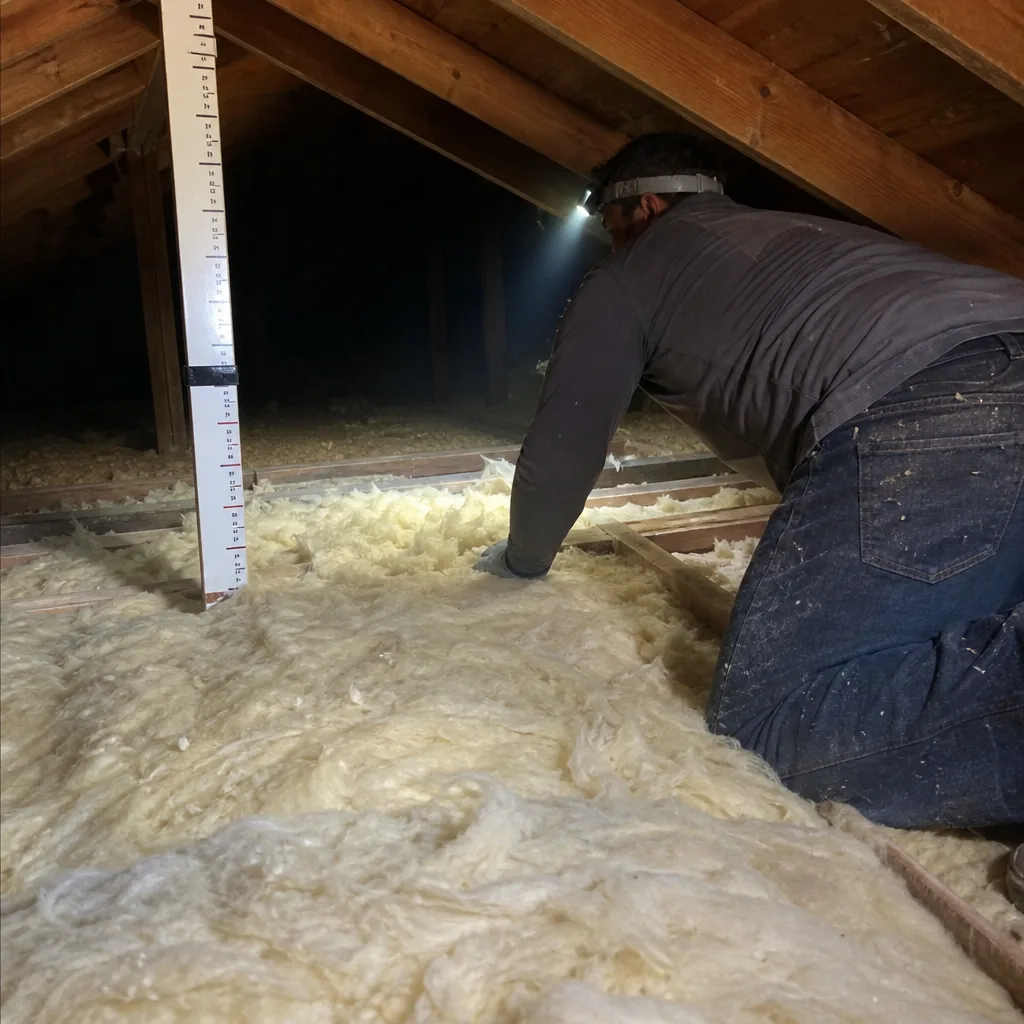
Wes Okafor has been running blower-door tests for going on eighteen years, and his crews have worked the Hill Country long enough to know that a 1978 ranch near the Cibolo Nature Center leaks differently than a 2015 build on the north side of Boerne. We publish before-and-after numbers on every job. Our technicians are background-checked and uniformed. Calls are answered by a live person, 24/7. And we don’t upsell air sealing - we require it, because insulation over a leaky deck is just a filter for your conditioned air.
FAQs
Rockwool’s product warranties cover manufacturing defects, not installation; installation warranties come from the contractor who did the work. If your original installer is gone, the product warranty still stands for defect claims, but you’ll need a new contractor’s warranty for the labor. We provide a written 365-Day Done Right Promise on our installation work. Call (830) 529-7780 and we’ll explain what’s covered by whom.
We source Rockwool Granulated and Comfortbatt through standard distribution channels; for specialized applications, we use quality aftermarket materials from Owens Corning, Johns Manville, Knauf, and others that meet or exceed the same thermal and fire-resistance specs. We choose based on what solves your problem, not brand loyalty. Your written scope lists exactly what we’re installing before we start.
Spot repair is rarely worth it with settled Comfortbatt - the binder breakdown is usually widespread, and patching leaves thermal discontinuities. Removal and proper dense-pack or blown-in replacement costs more upfront but performs correctly for the life of the material. Most Boerne homeowners who’ve tried patching once call us for the full fix the second time. We’ll give you both numbers in writing.
Most attic jobs are one day. Wall work or jobs requiring material removal typically run two days. We don’t schedule faster than we can do right. Call (830) 529-7780 - a live person will check current availability and give you a firm date.
We run a blower-door test - a pressurization reading that shows, in one number, how much air your building envelope is losing - before and after sealing. You get both readings in writing, in pascals, with the photo record. If the number doesn’t move, we find out why before we leave.
Written by Wes Okafor, Owner, Topside Attic Insulation Boerne at Topside Attic Insulation Boerne, serving Boerne and nearby areas.