
Rockwool Radiant Barrier Installation: The Boerne Owner’s Guide
Rockwool radiant barrier installation in Boerne typically runs $1,800-$3,400 for a 2,000-square-foot attic, depending on whether your top plates and can-light penetrations need sealing first. We stock Rockwool Comfortboard 80 and 110 for rigid radiant barrier assemblies, plus the foil-faced batts used in cathedral ceiling retrofits, and most jobs start same-day once the written scope is signed. Most homeowners in Boerne figure out something’s wrong when their second-floor rooms won’t cool below 78°F even after sundown, or when their July electric bill jumps $80-$120 year-over-year with no rate change.
Which Rockwool Models This Applies To
Rockwool makes radiant barrier-compatible products across three product lines, and matching the right board or batt to your assembly matters for both fire rating and thermal performance.
Comfortboard 80 is the workhorse for exterior wall and roof-deck radiant barrier systems in Boerne. It’s a rigid mineral wool board, 2 to 6 inches thick, with a density of 8 pounds per cubic foot. The foil facing goes toward the air gap, never toward the conditioned side. We see this specified on Hill Country homes with standing-seam metal roofs where the architect wants a vented assembly with a radiant barrier surface.
Comfortboard 110 handles the same applications at higher density, 11 pounds per cubic foot. It’s what we use when the radiant barrier layer doubles as a thermal break in a steel-framed outbuilding or workshop near Fair Oaks Ranch. The facing adhesion is stronger, which matters in Boerne’s 100°F+ attic peaks where cheaper foil laminates can delaminate.
Foil-faced Comfortbatt fits standard 16-inch and 24-inch joist cavities for attic-floor radiant barrier retrofits. The facing is kraft-backed aluminum, not the poly-laminate you see on generic big-box batts. That kraft layer breathes; it won’t trap moisture against the sheathing the way poly-barrier products do in our humid shoulder seasons.
To identify what you’ve got, check the inkjet stamp on the board edge or batt wrapper. Rockwool stamps the product name, density class, and production date in a 2-inch band. If that stamp’s faded or cut off, measure thickness and weigh a 12-inch square sample on a bathroom scale, multiply by 144 for density per cubic foot. Comfortboard 80 at 2 inches weighs roughly 1.3 pounds per square foot.
We source Rockwool through standard distribution, same as any independent contractor, not through any exclusive or preferred program. For the foil facing specifically, we also stock Reflectix as an alternative when the job calls for a standalone radiant barrier sheet rather than an insulated board. The OEM Rockwool facing is thicker aluminum, 0.5 mil versus Reflectix’s 0.25 mil, which holds up better in attics where squirrels have been active.
Signs Your Rockwool Radiant Barrier Installation Is Failing
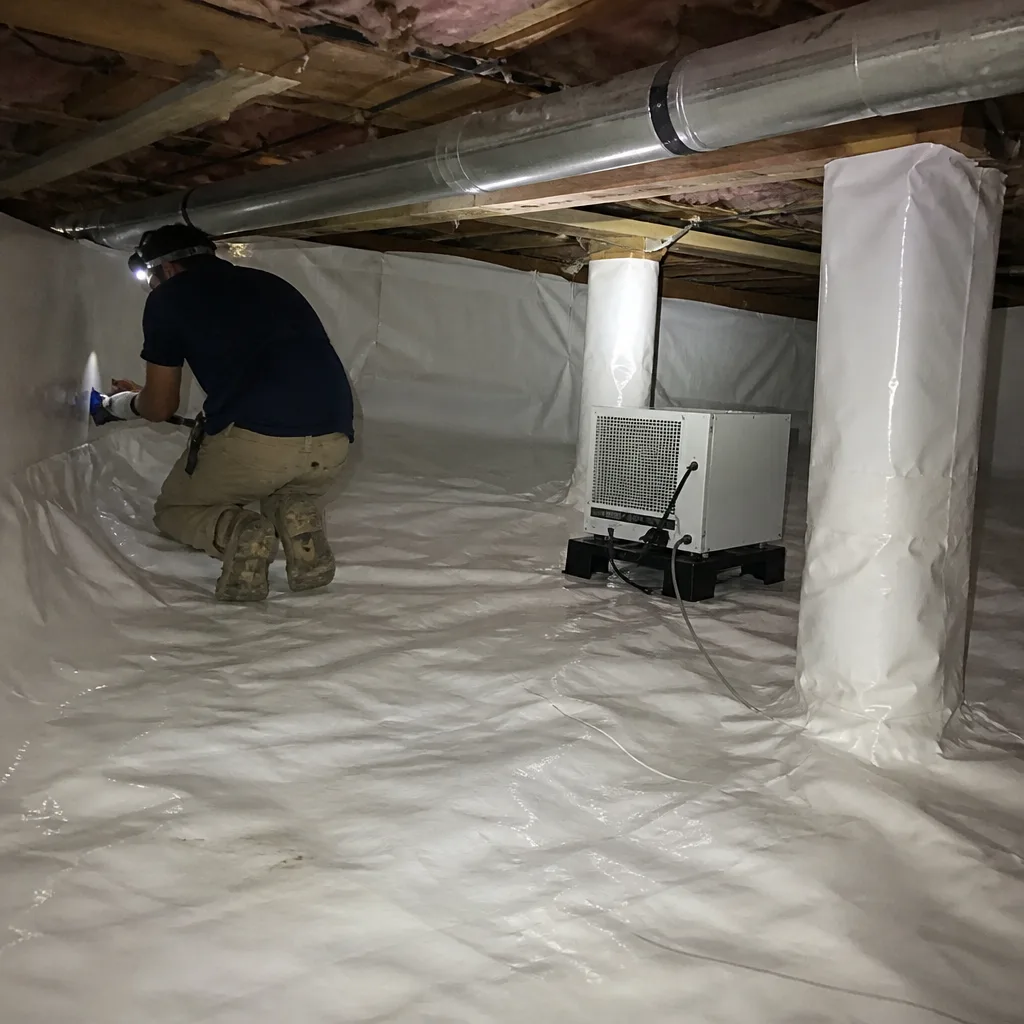
- Hot ceiling patches directly below roof valleys or dormers. The radiant barrier foil has pulled away from the fasteners or the air gap has collapsed, usually because the strapping was undersized or installed without expansion gaps. In Boerne, the daily temperature swing from 72°F at dawn to 140°F in the attic sheathing moves the boards enough to pop screws that were too short.
- Discolored or brittle foil facing visible at attic hatches or recessed can lights. The aluminum oxidized after prolonged exposure to moisture. This happens when the air sealing below the radiant barrier was skipped, letting conditioned air leak up and condense on the cold side of the foil during shoulder seasons. We find this regularly in 1990s builds near River Road Park where the original contractor blew insulation over unsealed top plates.
- Insulation settling below labeled R-value depth markers on adjacent batts. The radiant barrier assembly is no longer vented properly, so attic heat is baking the neighboring fiberglass or cellulose and causing binder breakdown. The Rockwool itself doesn’t settle, but the thermal bridge it was supposed to eliminate is now conducting heat straight through.
- Spikes in cooling load that don’t track with outdoor temperature. Your radiant barrier’s emissivity has degraded above 0.10, meaning it’s re-radiating heat into the attic rather than reflecting it. Foil facing that’s been dust-coated for years, or was installed facing the wrong direction initially, does this silently. We verify with an infrared thermometer during the energy audit.
- Musty odor or visible mold on the attic side of drywall. The radiant barrier became a vapor trap. Rockwool is hydrophobic and won’t mold, but if the foil facing was taped to form an imperfect air barrier without proper drying channels, condensation collects at the laps. We pulled a job near Main Street last spring where the previous installer had used HVAC foil tape on every seam, creating a sealed pouch that held a half-gallon of water.
Replacement Cost & What’s Included
| Component | Price Range (Boerne) |
|---|---|
| Rockwool Comfortboard 80, 2″ (per sq ft installed) | $4.50-$6.00 |
| Rockwool Comfortboard 110, 2″ (per sq ft installed) | $5.50-$7.50 |
| Foil-faced Comfortbatt, attic floor (per sq ft installed) | $3.00-$4.25 |
| Air sealing, top plates & penetrations (per sq ft of attic) | $1.25-$2.00 |
| Strapping/re-fastening for air gap restoration | $350-$650 (flat) |
A typical 2,000-square-foot attic-floor retrofit in Boerne lands between $1,800 and $3,400. Roof-deck assemblies run higher, $4,200-$6,800, because we’re working against gravity and the strapping labor doubles. The range depends on three things: how much air sealing the attic floor needs before we start, whether the existing radiant barrier can be salvaged or must be fully removed, and access, specifically whether there’s a permanent staircase or just a hatch.
Every job gets a Written Price Before Any Work Starts, flat, with the scope itemized line by line. The 365-Day Done Right Promise covers installation defects and material failures. We don’t warranty against future rodent damage or roof leaks, but we document the condition of both with photos before we close up so there’s a baseline.
DIY or Call Us?
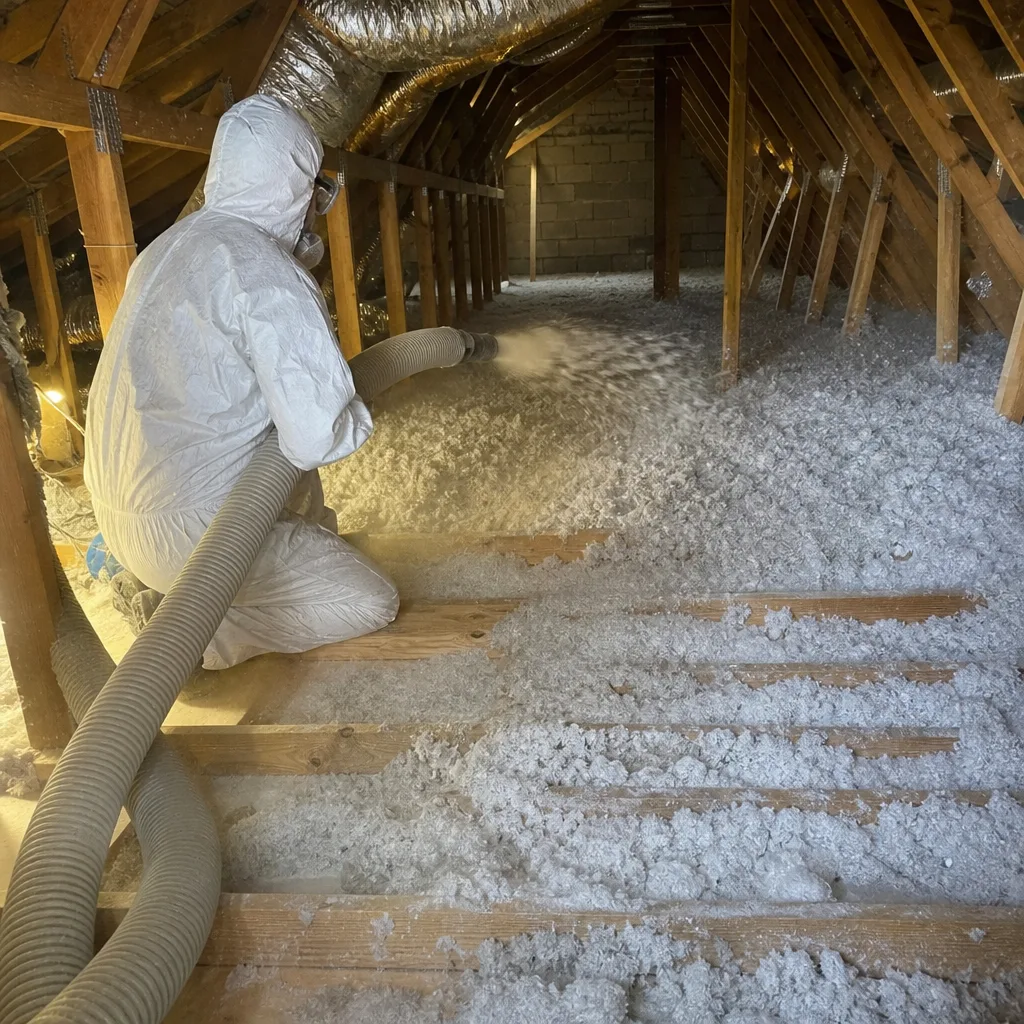
There’s no high-tension spring or electrical hazard in radiant barrier work, but there are two ways DIY goes wrong in Boerne attics, and both are expensive to fix.
What you can safely check yourself: Verify which direction the foil faces, shine a flashlight along the boards to spot gaps or sagging, and look for water staining at the laps. Measure the air gap, if there is one, it should be 3/4 inch minimum for a radiant barrier to function. Less than that, and you’re paying for foil that’s performing like painted drywall.
Where DIY fails: Installing new Rockwool over an unsealed attic floor. The air leakage path doesn’t disappear, it just gets hidden. We’ve removed four DIY radiant barrier jobs in Boerne where the homeowner spent $900 on materials and ended up with a hotter attic because the stack effect was pulling conditioned air through gaps they couldn’t see from the hatch. The other failure mode is compression, Rockwool Comfortboard needs that air gap to work. Squeezing it against the sheathing turns a radiant barrier into an expensive spacer with no reflective function.
We run a blower-door test before and after every job, a pressurization reading that shows, in one number, how much air your building envelope was losing. Seal the envelope first. Then fill it. Call (830) 529-7780 for a free estimate with a written price.
FAQs
The mineral wool substrate lasts 50+ years; the foil facing is the wear item, typically 15-25 years in a vented Boerne attic before oxidation or mechanical damage degrades emissivity. Harsh attic summers above 150°F accelerate the facing. We inspect foil condition during every energy audit and flag delamination before it becomes a performance problem. Call (830) 529-7780 to schedule, estimates are free.
Spot repairs work if the damage is localized, a few square feet of torn facing or popped fasteners. We patch with matching Rockwool foil tape and restore the air gap. If oxidation is widespread or the facing is dust-coated across more than 30% of the surface, replacement is the only fix that restores performance. We quote both options when we can. Call (830) 529-7780 for an exact quote.
An attic-floor retrofit on a 2,000-square-foot home takes one day, two if extensive air sealing is needed first. Roof-deck assemblies run two to three days because of the strapping layout and working at pitch. We don’t start without a written scope signed, and we don’t leave without a Documented Photo Record. Call (830) 529-7780 to check same-week availability.
We keep Comfortboard 80 and 110 in 2-inch and 3-inch thicknesses on the truck, plus foil-faced Comfortbatt in standard cavity widths. Odd sizes or large roof-deck quantities typically arrive next business day from San Antonio distribution. We confirm material availability when we deliver the written price, not after you’ve signed. Call (830) 529-7780.
Written by Wes Okafor, Owner, Topside Attic Insulation Boerne at Topside Attic Insulation Boerne, serving Boerne and nearby areas.