
Icynene Attic Insulation: The Boerne Owner’s Guide
Most Icynene open-cell spray foam attic jobs in Boerne run between $2.80 and $4.20 per board foot installed, with a typical 1,200-square-foot attic at R-38 landing between $4,800 and $7,200. We stock Icynene Classic Max and Icynene ProSeal LE on our trucks, and we can usually start the same day you call. Homeowners usually figure out something’s wrong when their upstairs bedrooms won’t cool below 78 degrees in July, or when they spot dark streaking on the north slope of the roof deck where humid attic air is condensing against cold sheathing.
Which Icynene Models This Applies To
Icynene’s product line breaks into two families that behave differently in Hill Country attics. Open-cell formulas like Icynene Classic Max (0.5 lb/ft³ density, R-3.7 per inch) and Icynene Classic Plus are what most Boerne homes from 2010-2020 got. Closed-cell Icynene ProSeal LE (2.0 lb/ft³, R-6.0 per inch) shows up more in commercial work and the occasional conditioned attic where headroom is tight. The label matters: open-cell is vapor-permeable, closed-cell is a vapor barrier. Mix them up and you’ll trap moisture or lose R-value.
To identify what you’ve got, check the spray foam surface. Open-cell has a spongy, bread-like texture you can dent with a fingernail. Closed-cell feels hard and smooth, like rigid styrofoam. The original installer should have left a compliance label near the attic hatch with the product name, date, and applied thickness. If that’s missing, we cut a small core sample, measure density, and match it to the right Icynene formulation. We don’t guess. The wrong product layered over the right one creates adhesion failures we’ve seen pull sheathing nails in Fair Oaks Ranch homes where a handyman “matched it close enough.”
Topside Attic Insulation Boerne is an independent service provider, not affiliated with Icynene. We source Icynene through authorized distribution, but we also carry Reflectix radiant barrier and other brands so we’re not locked into one manufacturer’s spec when your attic needs something different.
Signs Your Icynene Attic Insulation Is Failing
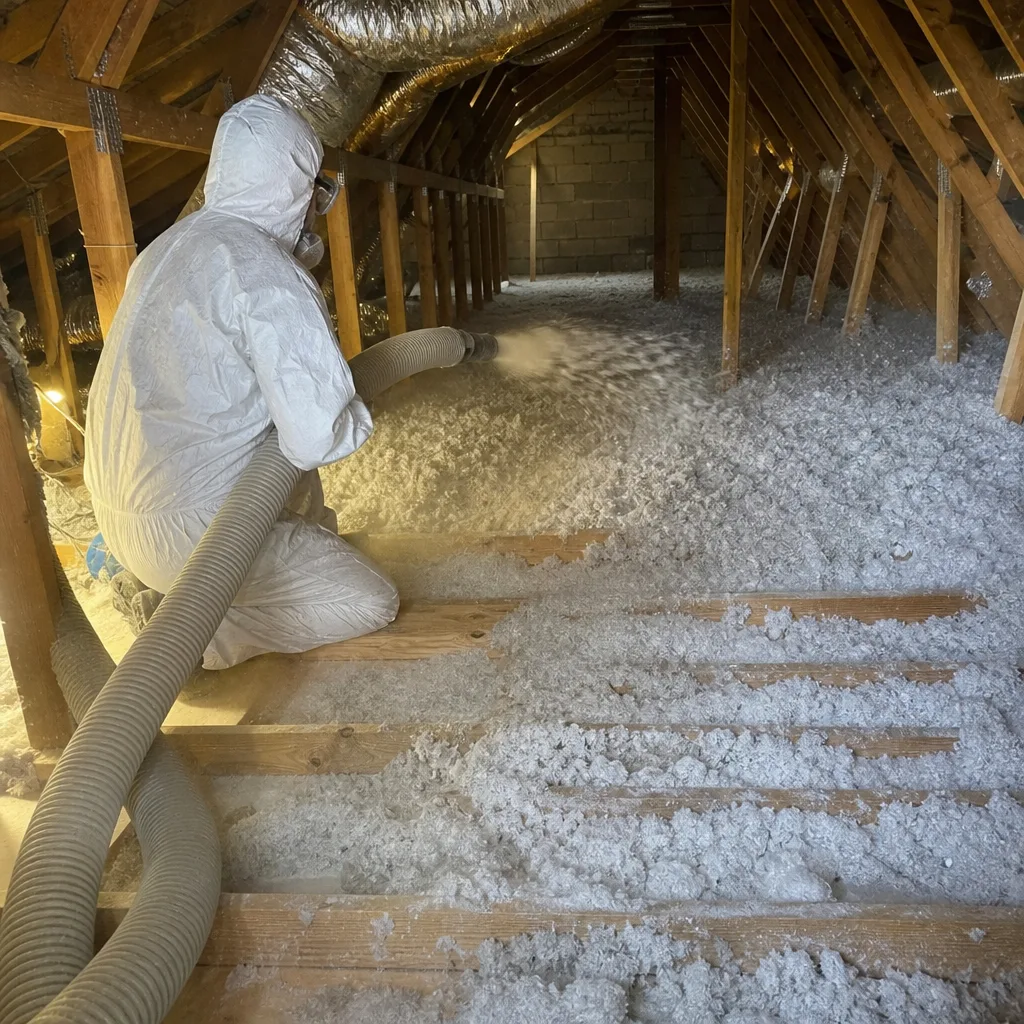
- Hot second-floor rooms that the HVAC can’t pull down. In Boerne, where summer design temperatures hit 99°F, degraded Icynene lets attic heat radiate through the ceiling plane. The foam itself doesn’t settle like fiberglass, but delamination from the deck creates an air gap that bypasses the R-value entirely. We find this most often on south-facing pitches where roof surface temperatures exceed 160°F.
- Dark staining or mold spotting on roof sheathing. Open-cell Icynene allows vapor diffusion. When indoor humidity leaks through in winter and hits cold sheathing, condensation follows. In the Cibolo Creek watershed area, where groundwater keeps basements damp even in dry years, this shows up as black spotting on the north side of the attic by February.
- Cracking or yellowing foam surface. UV exposure degrades Icynene’s surface polymers. Code requires a thermal barrier or ignition barrier coating in living spaces, but in attics a thin skim coat sometimes fails first. We inspect for the chalky, alligator-skin pattern that means the protective layer has degraded and the foam underneath is oxidizing.
- Ice damming at the eaves in rare freeze events. Even Boerne gets a hard freeze every few years. When Icynene misses the top plate or doesn’t extend fully to the eave, warm air escapes and melts roof snow above the heated envelope. The water refreezes at the cold overhang, backs up under shingles, and stains ceiling drywall.
- Sudden spike in electric bills with no HVAC change. We pull utility histories on every job. A 30% summer increase against the same cooling-degree days usually means the envelope failed somewhere. In one 2019 home off Esser Road, the Icynene contractor had skipped air sealing the chase around a remodeled fireplace. The blower-door reading was 3,800 CFM50; after we sealed and touched up the Icynene, it dropped to 1,900. The homeowner’s August bill fell $187.
Replacement Cost & What’s Included
| Scope | Price Range (Boerne) |
|---|---|
| Touch-up/repair (localized delamination, under 200 sq ft) | $850 - $1,400 |
| Partial re-spray (one slope or section, 500-800 sq ft) | $2,200 - $3,800 |
| Full attic re-spray (open-cell, 1,200 sq ft at R-38) | $4,800 - $7,200 |
| Full attic re-spray (closed-cell, same footprint at R-21) | $6,400 - $9,800 |
| Air sealing + blower-door verification (add to any job) | $650 - $1,100 |
What moves the number: sheathing condition if we find rot during tear-out, access difficulty (cathedral ceilings with no attic floor), and whether the original foam was applied too thin to meet code. We quote flat. The price we write is the price you pay. Under Haven Standard Clause 1, you get the written scope, the written warranty, and the Documented Photo Record before anyone starts. Our 365-Day Done Right Promise covers adhesion, coverage, and R-value verification. We don’t charge to come back and fix our own work.
DIY or Call Us?
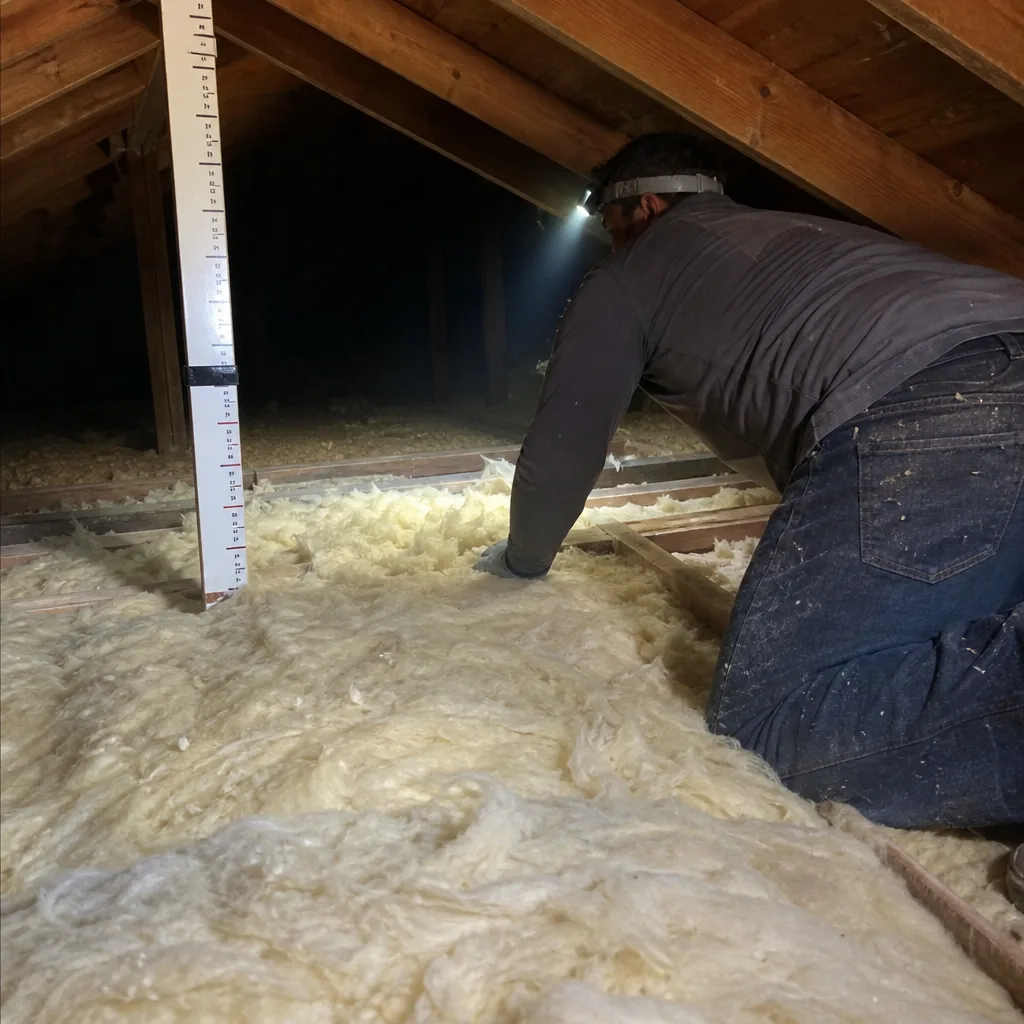
There’s no safe DIY for spray foam application. The two-component chemicals require respirators with organic vapor cartridges, full skin coverage, and controlled temperature delivery (resin and iso must be 70-90°F at the gun). Off-ratio mixing creates foam that shrinks, cracks, or never cures. We’ve been called to fix homeowner attempts where the uncured isocyanate off-gassed for months and the family had to move out.
What you can do: check the attic hatch for the original installer’s label, photograph any staining or cracking you see, and note which rooms are problematic and when. That information gets our technician to the right diagnosis faster. What you shouldn’t do: cut into the foam yourself looking for thickness. You’ll create an unsealed penetration that becomes a new leak path.
Seal the envelope first. Then fill it. If your Icynene is failing, call (830) 529-7780. We’ll run the blower-door test, show you the number, and write a price that covers everything needed to fix it right.
FAQs
Properly applied Icynene should perform for the life of the building, 25 years or more. The failure mode we see in Boerne isn’t the foam degrading, it’s installation defects: missed air sealing before spray, insufficient thickness, or UV exposure where the ignition barrier failed. Call (830) 529-7780 for a free inspection if you’re unsure of your install quality.
Localized delamination can be cut out and re-sprayed if the substrate is sound. We don’t patch over wet or moldy sheathing; that traps the problem. In most cases, a targeted repair plus air sealing of the surrounding area is enough. We’ll tell you honestly whether repair or full re-spray makes sense after we see it.
A typical Boerne attic, 1,200 square feet with air sealing first, takes one day to prep and spray, plus a next-day inspection for full cure before we run the final blower-door test. Larger or more complex roofs, or jobs requiring sheathing repair, may run into a second work day. We don’t rush cure times; re-occupancy too early means you’ll smell it for weeks.
We stock both Icynene Classic Max and ProSeal LE in our rig, along with the full Graco Reactor setup for proper temperature and pressure control. For Boerne jobs, that means no waiting on material delivery. Same-day starts are normal when you call before noon. Call (830) 529-7780 to check today’s availability.
Written by Wes Okafor, Owner, Topside Attic Insulation Boerne at Topside Attic Insulation Boerne, serving Boerne and nearby areas.