
Icynene Insulation Removal & Replacement in Boerne: What to Know First
We provide independent Icynene insulation removal and replacement in Boerne, typically completing most jobs same-day or next-day depending on contamination level and attic access. Most homeowners receive a written price before we start - no exceptions - and every job closes with a Documented Photo Record. If you’re seeing uneven temperatures, rising energy bills, or suspect your Icynene spray foam has degraded, failed, or been compromised by rodents or moisture, this page covers what actually happens next. Call (830) 529-7780 to schedule a free estimate or bring us a competing written quote for our Free Second Opinion.
How Icynene Products Fail - and How We Fix Them
- Icynene Classic Max (open-cell) shrinkage from Hill Country humidity swings. Boerne’s hard freeze-to-90-degree swings in March and October stress open-cell foam that wasn’t installed at proper lift thickness. We see 1/4-inch to 1/2-inch pull-back from rafters and top plates in attics near River Road and the Cibolo Nature Center area. Our fix: mechanical removal of compromised sections, reconditioning of the substrate, then replacement with closed-cell or properly specified open-cell per the new thermal boundary design.
- Icynene MD-R-200 (medium-density closed-cell) off-gassing and odor retention. When installed too thick in a single pass - common in faster-built 2018-2022 homes around Boerne Stage Road - the exothermic reaction traps isocyanate odor. Homeowners report a chemical smell that HVAC ductwork then circulates. We remove affected lifts entirely, ventilate the cavity to safe VOC levels verified with a photoionization detector, then reinstall to manufacturer lift limits.
- Icynene LD-R-50 (low-density) water absorption in vented attics. Open-cell foam in Boerne’s occasional driving-rain events can wick moisture if the roof deck above has pinhole leaks. The foam doesn’t rot, but it holds water against sheathing. We strip the waterlogged foam, map the roof leak source for your roofer, treat any microbial growth on sheathing, then replace with closed-cell or switch the attic to conditioned space with proper dehumidification.
- Rodent intrusion through Icynene in gable-end and soffit gaps. Icynene seals well, but mice compress open-cell foam to nest - we’ve found active burrows in LD-R-50 near the Berges Fest grounds area. The fix isn’t patching; it’s removal of contaminated sections, rodent-proofing with steel mesh at all penetration points, then reinstallation. We also run a blower-door test after to confirm we didn’t open new leakage paths during the process.
- Icynene installed over unsealed bypasses - the “foam first” mistake. We regularly find Icynene sprayed directly over unsealed can lights, chimney chases, and top plate gaps in Boerne’s 2005-2015 builds. The foam looks fine but air still moves through it. We remove the compromised sections, seal the bypasses with fire-rated caulk and rigid blocking, then reinstall insulation - this time with a continuous air barrier. Seal the envelope first. Then fill it.
Our Icynene Insulation Removal & Replacement Process
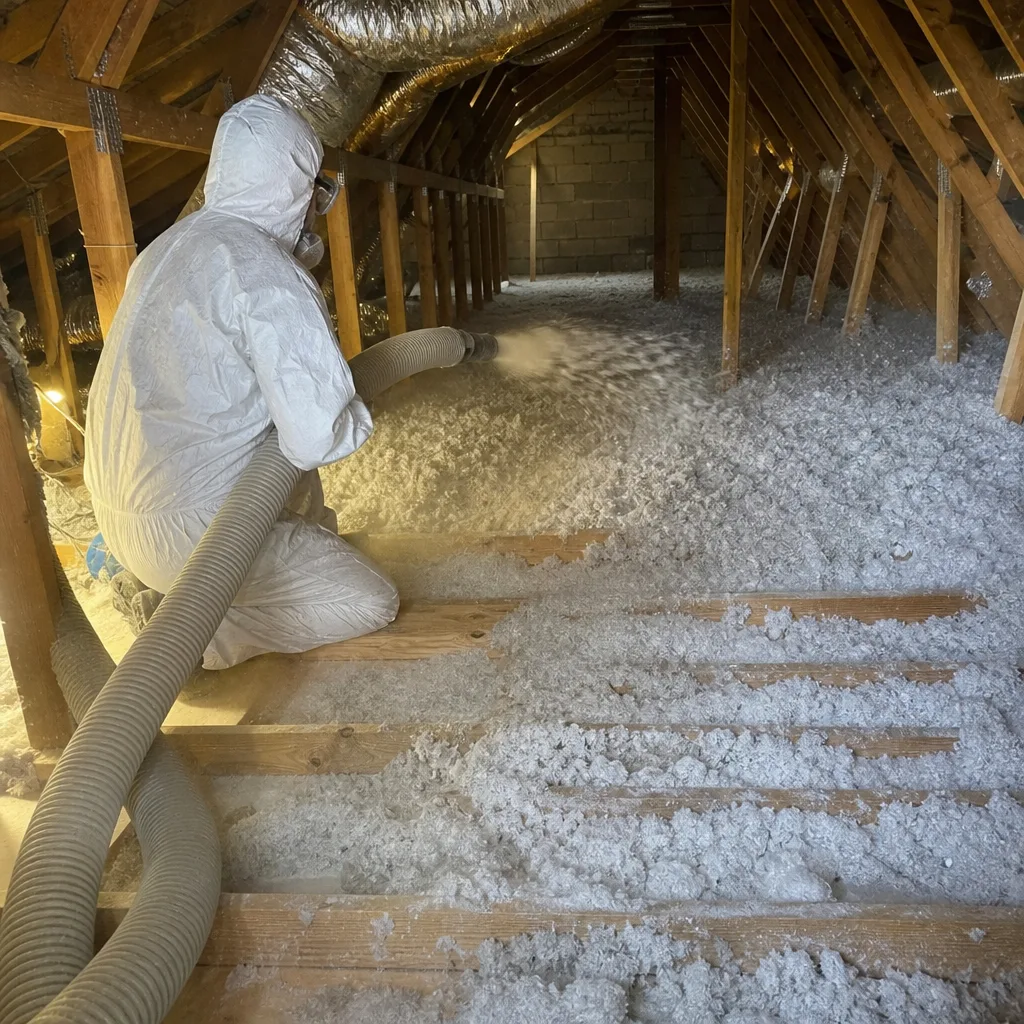
- 1
Site visit and contamination assessment. We photograph the existing Icynene, test for asbestos in pre-1990 homes (Boerne has its share), and run a blower-door test to establish your baseline CFM50 - the pressurization reading that shows, in one number, how much air your building envelope is losing.
- 2
Written price and scope delivered. Under Haven Standard Clause 1: flat price, written scope, written warranty before anyone lifts a tool. No work starts without it.
- 3
Mechanical removal and substrate prep. We scrape or plane off failed Icynene, never solvent-wash (that drives chemicals deeper into wood). Substrate is HEPA-vacuumed and inspected for moisture damage or mold.
- 4
Air sealing of bypasses and penetrations. Top plates, can lights, chimney chases, plumbing stacks - sealed with fire-rated caulk, rigid foam, or steel mesh as appropriate. This is not optional; it’s prerequisite.
- 5
Replacement insulation installed to spec. We source replacement Icynene, or if you prefer, Owens Corning, Johns Manville, Knauf, Rockwool, CertainTeed, Demilec, or GreenFiber - no proprietary lock-in. Install thickness and lift limits documented.
- 6
Post-work blower-door test and documentation. We run the test again, hand you the printed pressure-differential report in pascals, and add the Documented Photo Record to your file. The 365-Day Done Right Promise begins at sign-off.
What Icynene Insulation Removal & Replacement Costs in Boerne
Most Icynene removal and replacement jobs in Boerne homes run between $2,800 and $6,500 depending on three factors: square footage of affected area, whether we’re dealing with open-cell (faster to remove) or closed-cell (denser, more labor), and whether hazardous material protocols apply - vermiculite underneath, asbestos-containing materials, or active rodent contamination requiring PPE and disposal surcharges.
Specific scenarios we price regularly:
- Partial open-cell removal and replacement in a 1,200 sq ft attic: $2,800-$3,900
- Full closed-cell removal from rafter bays with reconditioning: $4,200-$6,500
- Rodent-contaminated removal with cleaning and proofing: add $800-$1,400
- Asbestos-containing vermiculite found beneath Icynene: ab handled by certified partner, quoted separately
What moves the price up: multiple attic zones, cathedral ceilings requiring scaffold work, or homes near Boerne’s hilltop exposures where access is limited. What doesn’t move it: we don’t charge extra for the blower-door test, the photo record, or the written warranty. Call (830) 529-7780 for a written price before any work starts - or bring us any competing estimate for our Free Second Opinion.
Why Boerne Homeowners Call Topside Attic Insulation Boerne for Icynene Work
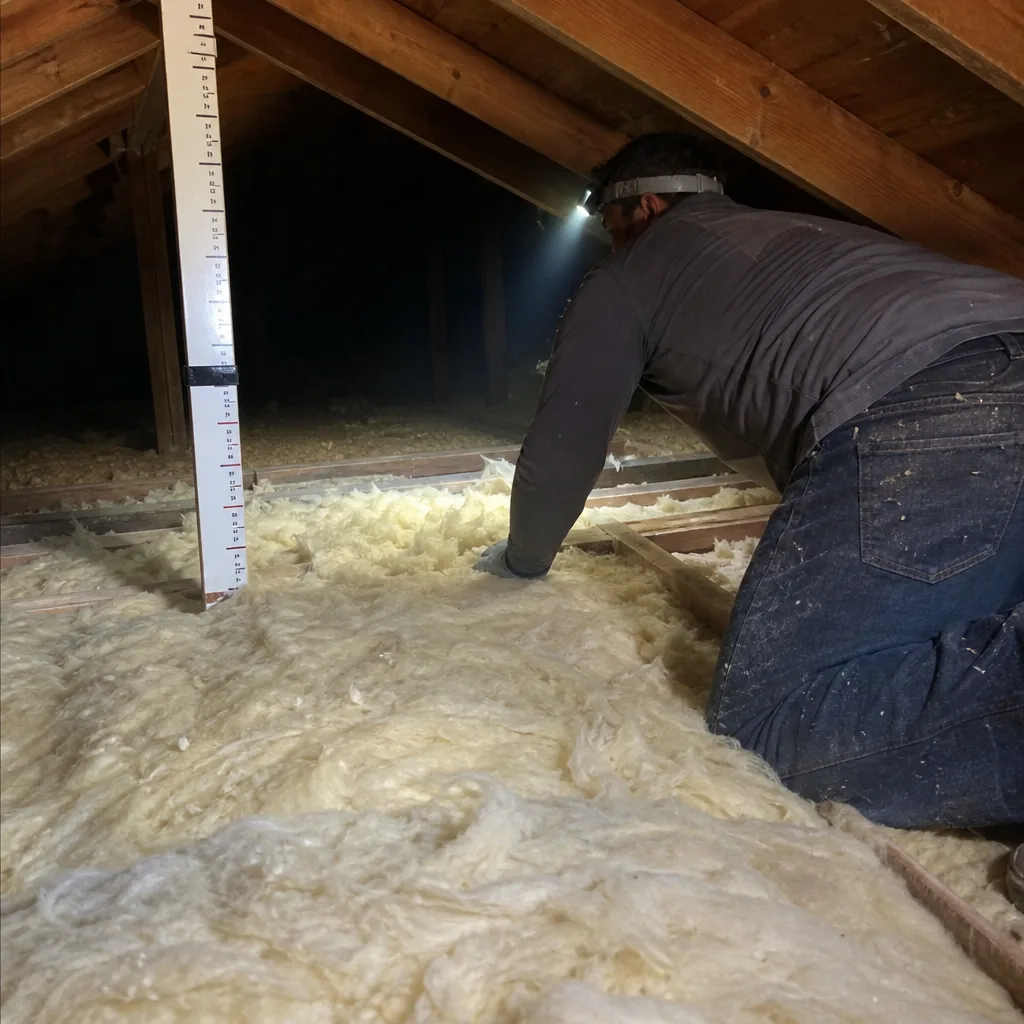
We’ve worked Icynene jobs across the Hill Country, including that stretch of older homes near the Cibolo Nature Center where stack-effect air leakage was eating through cooling bills before a single batt ever went in. Wes Okafor keeps a well-used copy of the ACCA Manual J on his truck and will pull it out at your kitchen table if you want to understand why R-38 in an attic floor performs differently than R-38 in a cathedral ceiling.
As an independent Icynene service provider, we’re not locked to one manufacturer’s product line. If your situation calls for Reflectix radiant barrier, closed-cell from Demilec, or dense-pack cellulose from GreenFiber, we’ll specify it and source it. Every crew is background-checked and uniformed. Calls are answered by a live person, 24/7 - no voicemail loops. And every job closes with documentation you can hold: the blower-door numbers, the photos, the written scope. Under The Haven Standard since 2016, we’ve sealed and insulated 9,000+ homes, every one with a written price first and a documented record at the end.
FAQs
The original Icynene warranty covers product defect and proper installation; it does not cover subsequent modification or removal by third parties. As an independent Icynene service provider, our 365-Day Done Right Promise covers our workmanship and materials - we document the condition of existing foam before removal and warrant our replacement installation. For warranty questions on newer installs, we can review your original paperwork with you. Call (830) 529-7780 and we’ll walk through what coverage remains.
Most Boerne jobs complete in one to two days: Day one for removal, substrate prep, and air sealing; day two for replacement insulation and post-work testing. Larger closed-cell removals or homes with limited attic access may run into a third day. We schedule with a named technician and text when they’re en route - Haven Standard: Arrive on schedule. Call (830) 529-7780 to check current availability.
We can source replacement Icynene Classic Max, MD-R-200, or LD-R-50 through our supplier network. That said, if the original product failed due to a specification mismatch - open-cell in a climate boundary that needed closed-cell, for instance - we’ll recommend a different product or brand, including Reflectix or others in our materials list. The choice is yours; we document the recommendation and the reason in writing.
Spot repairs on Icynene are rarely cost-effective. The mechanical removal process disturbs adjacent foam, and color-matching aged Icynene is impossible - new foam cures to a different shade. Partial repairs also leave transition joints that can become air leakage paths. For failures under 30% of the insulated area, repair might make sense; above that, full removal and replacement is usually the better value and the only way we can guarantee the air barrier continuity. We’ll show you both numbers in the written price.
For standard mechanical removal with HEPA containment, you can stay in the home - we isolate the work zone with plastic sheeting and negative air machines. If we encounter active rodent contamination or asbestos-containing vermiculite beneath the Icynene, we’ll recommend temporary relocation during abatement; this is rare but we flag it immediately when found. Your written scope will specify the protocol before work starts. Call (830) 529-7780 to discuss your specific situation.
Written by Wes Okafor, Owner, Topside Attic Insulation Boerne at Topside Attic Insulation Boerne, serving Boerne and nearby areas.