
Icynene Attic Air Sealing: The Boerne Owner’s Guide
We stock and install Icynene-compatible attic air sealing components for open-cell and closed-cell spray foam systems in Boerne, with most replacement jobs running $340-$780 installed and same-day service available when you call before noon. Homeowners usually discover the problem when their HVAC runs longer than it used to, or when a routine energy audit turns up unexpected CFM50 leakage where the foam has pulled away from top plates or shrunk around can-light penetrations. In Boerne’s Hill Country climate, thermal cycling between 100°F summer attic peaks and 30°F winter nights stresses Icynene’s bond line more aggressively than in milder zones.
Which Icynene Models This Applies To
Icynene’s product line breaks into two families that matter for attic air sealing: the open-cell LD-C-50 series (the soft, spongy foam most common in residential attics) and the closed-cell MD-R-200 series (the rigid, higher-density product used where moisture management is critical). The LD-C-50 shrinks roughly 2-3% during cure, which is normal, but in Boerne we’ve seen excessive shrinkage when the substrate was dusty or when summer humidity pushed cure times past the spec window. MD-R-200 doesn’t shrink much, but its rigidity means it can crack at the bond line if the framing moves.
To identify what you have, look for the Icynene batch label on the foam itself, usually found on an attic rafter or access hatch frame. The label shows the product code, install date, and applicator ID. If the label’s gone, poke the foam with a screwdriver: LD-C-50 compresses easily and springs back slowly; MD-R-200 feels like stiff bread. We carry compatible sealants and backer rod for both, plus a two-part touch-up foam that matches Icynene’s density spec without the proprietary markup. Topside Attic Insulation Boerne is an independent service provider, not affiliated with Icynene, so we source from multiple manufacturers including Demilec and GreenFiber when the application allows.
Signs Your Icynene Attic Air Sealing Is Failing
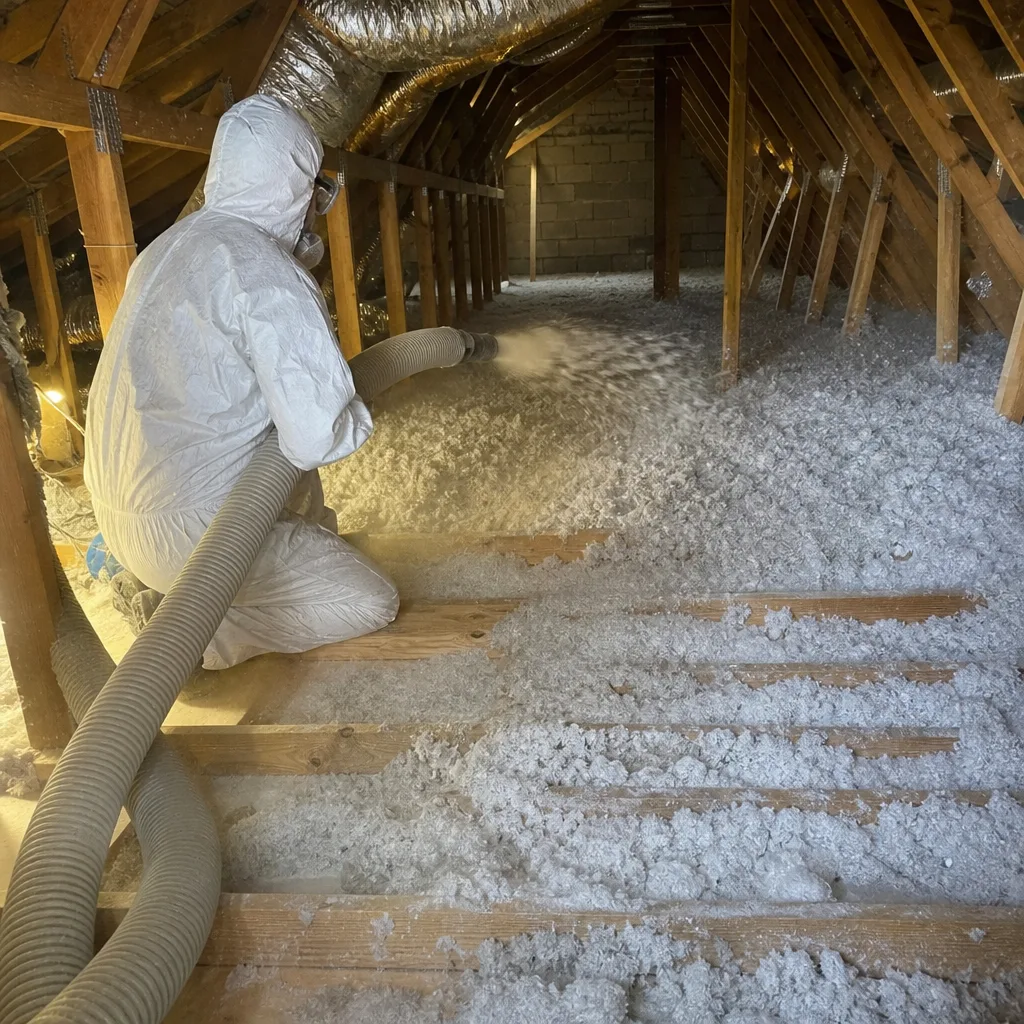
- Your HVAC runtime has climbed 20% or more with no thermostat change. This usually means conditioned air is escaping through gaps where the Icynene has detached from top plates or chimney chases. The blower-door test will show the leakage; we see this most in Boerne homes built 2015-2019 where fast-track framing left sawdust on the plates.
- Hot spots on your ceiling during August afternoons. When open-cell foam shrinks away from rafter bays, attic heat radiates through the gap. The drywall might read 85°F while the surrounding surface holds at 78°F. An infrared camera finds it in minutes.
- Dust streaking around recessed can lights. This is the stack effect pulling attic air through failed seals. In older Boerne neighborhoods near the Cibolo Nature Center, we’ve traced this to original Icynene installs that missed the fire-rated enclosure requirement for IC-rated fixtures.
- Musty odor after rain, even with no roof leak. Closed-cell MD-R-200 can develop micro-cracks at the bond line that pass vapor but not liquid water, creating a condensation pocket against the roof deck. The fix isn’t more foam; it’s removing the failed section and re-prepping the substrate.
- Your energy audit shows worse numbers than five years ago. Icynene doesn’t degrade chemically, but mechanical separation from the substrate is common. We compare your current blower-door reading to the original; anything within 10% of the pre-seal number means the envelope has failed.
Replacement Cost & What’s Included
Most Icynene attic air sealing repairs in Boerne run $340-$780, with smaller touch-up work around pipe penetrations at the low end and full top-plate re-sealing across a 2,500-square-foot footprint at the high end. Here’s how the range breaks:
- Spot repair (single penetration or small gap): $340-$480 - includes substrate prep, compatible sealant or touch-up foam, and post-repair blower-door verification
- Sectional re-seal (one attic zone, multiple gaps): $480-$620 - includes removal of failed material, HEPA vacuuming, re-application, and documentation
- Full top-plate and penetration re-seal: $620-$780 - includes complete envelope re-test, written scope, and 365-Day Done Right Promise coverage
What drives the range is access (steep-pitch attics take longer), the amount of failed material to remove, and whether we need to bring in a fire-rated enclosure for can lights. Every job gets a Written Price Before Any Work Starts, no exceptions. The 365-Day Done Right Promise applies to all completed repairs, and you’ll walk away with a Documented Photo Record plus before-and-after blower-door numbers in CFM50 and pascals.
DIY or Call Us?
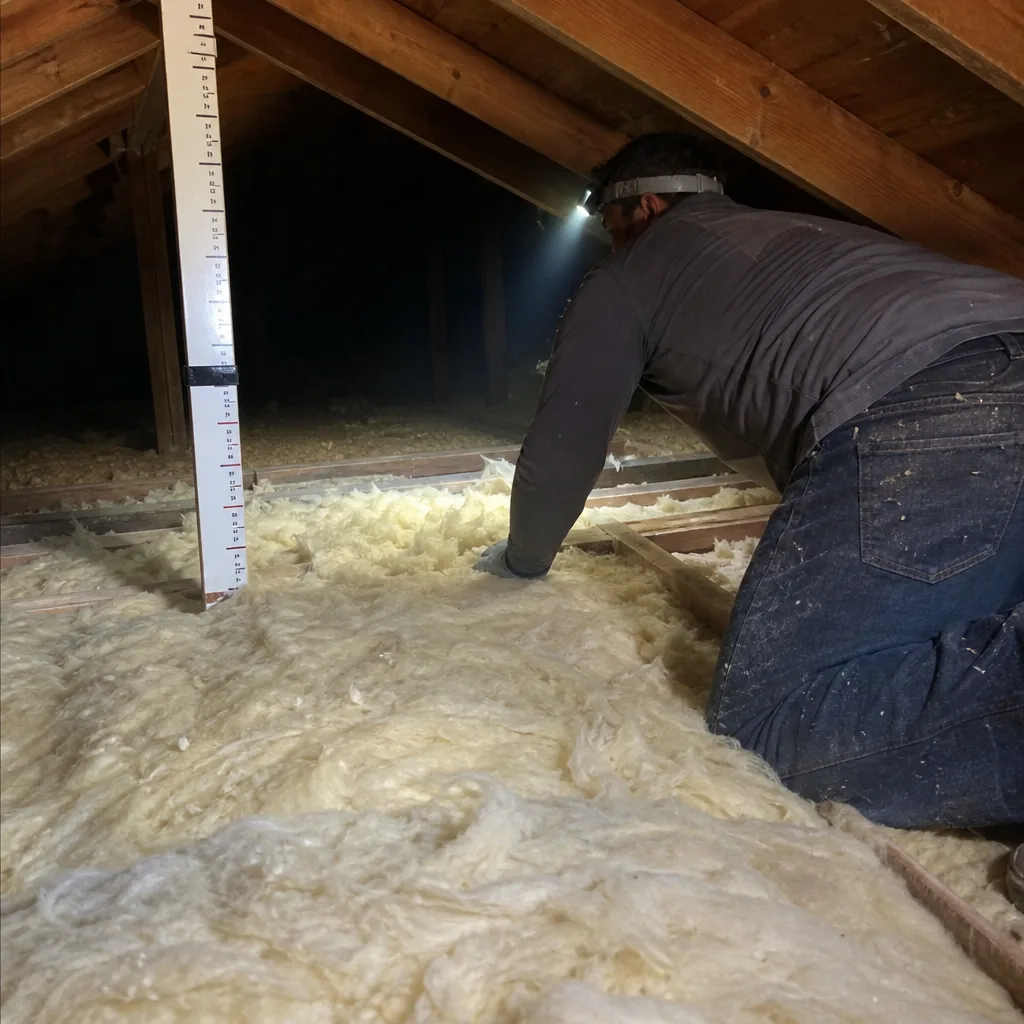
You can safely check what you have: read the Icynene label, photograph any gaps, and note where your ceiling hot spots occur. What you shouldn’t do is climb into a 140°F attic with a can of hardware-store foam and hope for the best. Open-cell touch-up requires matching the original density; closed-cell work demands proper substrate prep and moisture verification. Misapplied foam traps water against the roof deck, and in Boerne’s humidity that’s a $4,000 sheathing repair waiting to happen. We also see homeowners seal can lights with non-fire-rated materials, which violates IECC and creates a real hazard.
Call (830) 529-7780 and we’ll read your situation over the phone, no charge. If it sounds like a quick fix, we’ll say so. If it needs a blower-door test to scope properly, we’ll bring the gear and give you a written price before anyone lifts a tool. Seal the envelope first. Then fill it.
FAQs
Properly applied Icynene should maintain its seal for 20+ years, but in Boerne we’ve seen premature failure at 6-8 years when the original install missed substrate prep or when summer attic peaks exceeded 140°F regularly. The foam itself doesn’t degrade; the bond line does. Call (830) 529-7780 for a free envelope check if your home’s past the five-year mark.
Spot repair works if the surrounding foam is well-bonded and the substrate is clean. We cut back to sound material, prep with primer if needed, and apply compatible foam. If the failure is widespread or the original density was wrong, sectional replacement is the honest call. We’ll show you the blower-door numbers both ways so you can decide.
Most spot repairs are done in two to three hours; a full top-plate re-seal across a typical Boerne home takes a full day. We run the blower-door test before we leave, so there’s no guessing whether it worked. You’ll get the printed report before we pack up.
We carry LD-C-50 and MD-R-200 compatible touch-up foam, fire-rated backer rod, and vapor-variable sealants on every vehicle. For larger jobs we order overnight from our San Antonio supplier. Same-day repair is available in Boerne when you call before noon and the access is straightforward.
Written by Wes Okafor, Owner, Topside Attic Insulation Boerne at Topside Attic Insulation Boerne, serving Boerne and nearby areas.