
Attic Batt Insulation in Boerne, TX
Attic Insulation services for batt insulation in Boerne typically run between $1.50 and $3.20 per square foot installed, depending on the R-value specified, the condition of your existing insulation, and how much air sealing the attic floor needs before batts go in. Most attic jobs we complete in Boerne’s single-story homes fall between $1,100 and $2,800 total, and the work is almost always finished in a single day.
Batt insulation – fiberglass or mineral wool panels cut and friction-fit between attic floor joists – is one of the oldest and most field-proven ways to bring an attic up to code R-value. It works well in Boerne because the joist bays here tend to be clean and accessible, especially in the tract and custom-build neighborhoods that expanded along the I-10 corridor between 2005 and 2020. What batts do not do on their own is stop air movement. That is why, at Topside Attic Insulation Boerne, we complete attic air sealing – closing top plates, can-light penetrations, and plumbing chases with foam or caulk – before the first batt goes in. Every time, no exceptions.
If you are researching your options, our parent page on Attic Insulation in Boerne covers the full range of attic insulation methods we install, including blown-in and spray foam. This page focuses specifically on batt insulation: when it makes sense, how we install it, and what it costs in this market. To schedule a free estimate or get a written price before any work starts, call us at (830) 529-7780 – a live person answers, around the clock.
When You Need Attic Batt Insulation
- Your existing batts are compressed, displaced, or water-stained. Compressed fiberglass loses R-value fast – a batt rated R-19 that has been walked on or wetted out may be performing closer to R-10. In Boerne homes near Cibolo Creek drainage corridors, we regularly find batts that absorbed moisture from slow roof leaks and never fully dried. Compressed or damp insulation has to come out before new material goes in.
- Your upstairs rooms are 5 to 10 degrees warmer than your thermostat setting on summer afternoons. The Hill Country sun heats a dark shingle roof to 160°F or more on a July afternoon. If that heat is transferring through your attic floor unchecked, your HVAC is running longer and your upstairs rooms are still uncomfortable. A properly specified batt system at R-38 to R-49 cuts that conduction path significantly.
- Your home was built before 2010 and has never had insulation work done. Boerne saw a major building surge between 1998 and 2008, and a large share of those homes were insulated to the code minimum at the time – R-30 in attics. Current IECC code for this climate zone calls for R-49. If your home hasn’t been touched since closing, it is almost certainly under-insulated.
- You are finishing a room addition or converting a bonus room above the garage. New framing gives us clean, open joist bays – the ideal condition for batt installation. We can spec the right R-value, air-seal the new framing before drywall closes it off, and document the whole job with photos so you have a record for the building inspector and for your own files.
- Your energy bills jumped after a roofing job. Roofers working in attics sometimes push batts aside to reach fasteners or pull decking and never re-seat the insulation properly. We see this regularly in the Cordillera Ranch and Esperanza communities. A post-roofing inspection is worth doing before the next summer cooling season.
- You want the lowest-disruption insulation option for an occupied home. Batts produce no airborne particulate during installation (unlike blown-in cellulose) and do not require curing time (unlike spray foam). If you have young children at home or are sensitive to dust, batts are often the cleanest way to get the attic insulated without disrupting the rest of the house.
Our Attic Batt Insulation Process
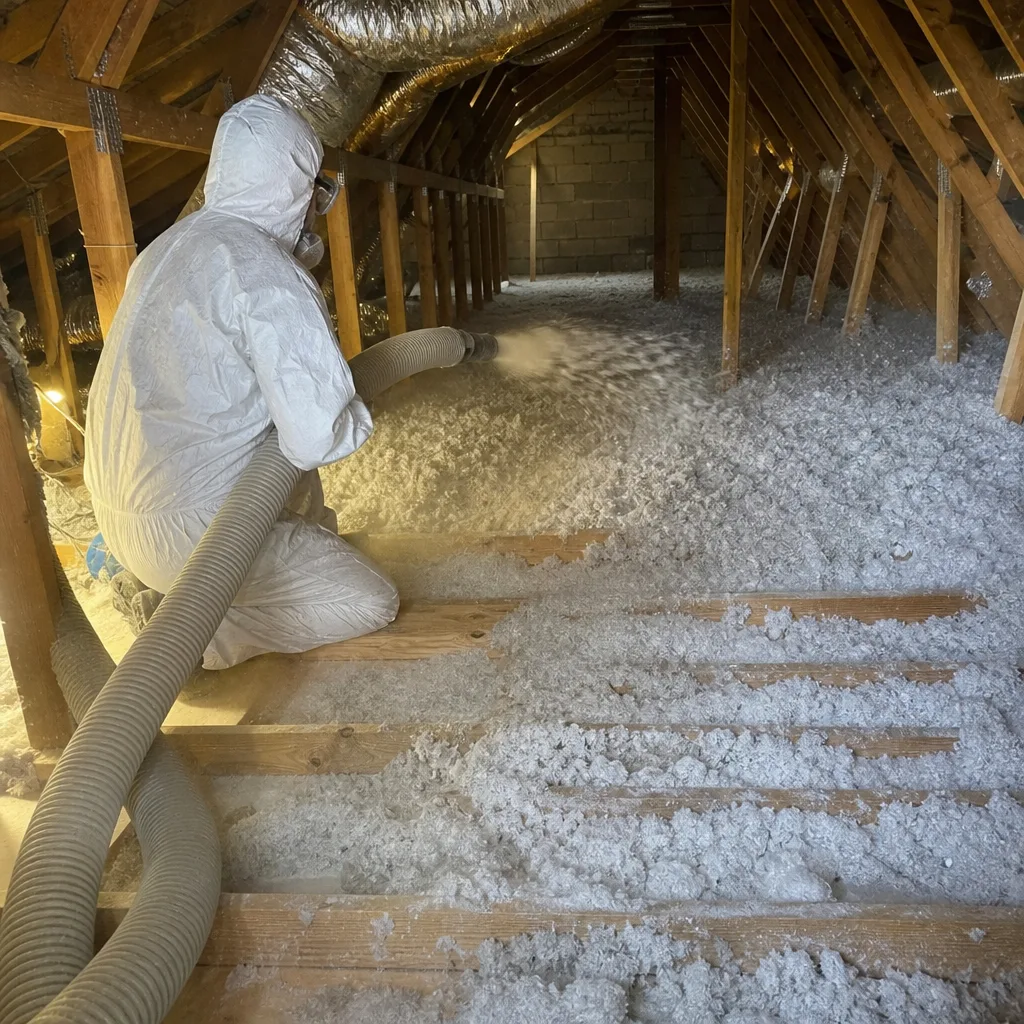
- Pre-installation assessment and written price. Before we schedule a crew, Wes Okafor or one of our trained technicians walks the attic with a flashlight, a tape measure, and a moisture meter. We check existing R-value, identify any wet or compressed sections that need removal, and locate every penetration in the attic floor – can lights, plumbing vents, top plates, HVAC supply plenums. That inspection produces a written scope and a flat price. Under Haven Standard Clause 1, no work starts without both in your hands. You will also receive the technician’s name and a text when they are on their way – no callback windows, no guessing.
- Attic air sealing – completed before any insulation is touched. This is the step most contractors skip or treat as optional. We do not. Using two-part spray foam and fire-rated caulk, we seal every top plate gap, every recessed light housing, every plumbing and electrical penetration in the ceiling plane. On a typical 1,800-square-foot Boerne home, this step alone can reduce conditioned air loss by 20 to 35 percent, which shows up as a measurable change in the blower-door reading. On applicable jobs, we record a before reading – a CFM50 figure from a calibrated blower-door fan – then a second reading after sealing so you can see the actual change documented.
- Removal of damaged or non-performing existing insulation. If the pre-installation walk found wet, moldy, pest-contaminated, or severely compressed batts, we remove and bag them before installation begins. We do not lay new insulation over material that cannot do its job. Removed material is photographed so you have a before record of what was actually in your attic.
- Batt installation to specified R-value. We cut and friction-fit fiberglass or mineral wool batts – sourced from Owens Corning or comparable quality manufacturers – to fill each joist bay fully, with no gaps at the edges and no compression from over-stuffing. For Boerne’s climate zone (Zone 3, per IECC), the target for attic floors is R-49 in new work or to the homeowner’s specified R-value in retrofit. Batts are installed with the facing orientation correct for the application – kraft-faced toward the living space when specified, unfaced when layering over existing insulation. We do not leave gaps around attic hatches, knee-wall transitions, or HVAC platforms.
- Final quality walk and photo documentation. Once installation is complete, we do a second attic walk with the homeowner present if they want to see the work. Every job closes with a Documented Photo Record – timestamps, coverage shots, detail photos of the sealed penetrations, and the finished batt field. That record is delivered to you before we leave, not available on request. If anything does not look right to you in the next 365 days, the Done Right Promise covers it: we make it right, in writing, at no additional cost.
Attic Batt Insulation Pricing in Boerne
Pricing for attic batt insulation in Boerne depends on four factors: attic square footage, target R-value, whether air sealing is needed (it almost always is), and whether Attic Insulation Replacement is needed first. The ranges below reflect what we actually quote in this market – not a national average pulled from a cost database.
| Scope | Typical Range |
|---|---|
| Batt installation only, clean attic, 1,000-1,500 sq ft | $900 – $1,500 |
| Batt installation + attic air sealing, 1,500-2,000 sq ft | $1,400 – $2,400 |
| Full job: removal of old batts + air sealing + new batt install, 1,800-2,500 sq ft | $2,000 – $3,800 |
| Upgrade to R-49 layering over existing R-19 to R-30, 1,500-2,000 sq ft | $1,100 – $1,900 |
A few things that move the number upward: attics with tight clearance (common in some of the custom homes on Boerne’s ridge lots), high can-light counts that need individual air-sealing boots, or attics that have rodent contamination requiring cleanup before any insulation work. Things that keep the number toward the lower end: clean, open attics with accessible joist bays, no existing material removal needed, and straightforward rectangular floor plans.
We do not ask you to call for a price. Under the Haven Standard, you get a written price before any work starts – flat, not an estimate range that expands on job day. If you already have a written quote from another contractor, bring it to us. We offer a free second opinion on any written estimate and will read it with you line by line. Call (830) 529-7780 to schedule your free on-site assessment in Boerne.
Why Attic Air Sealing Has to Come First
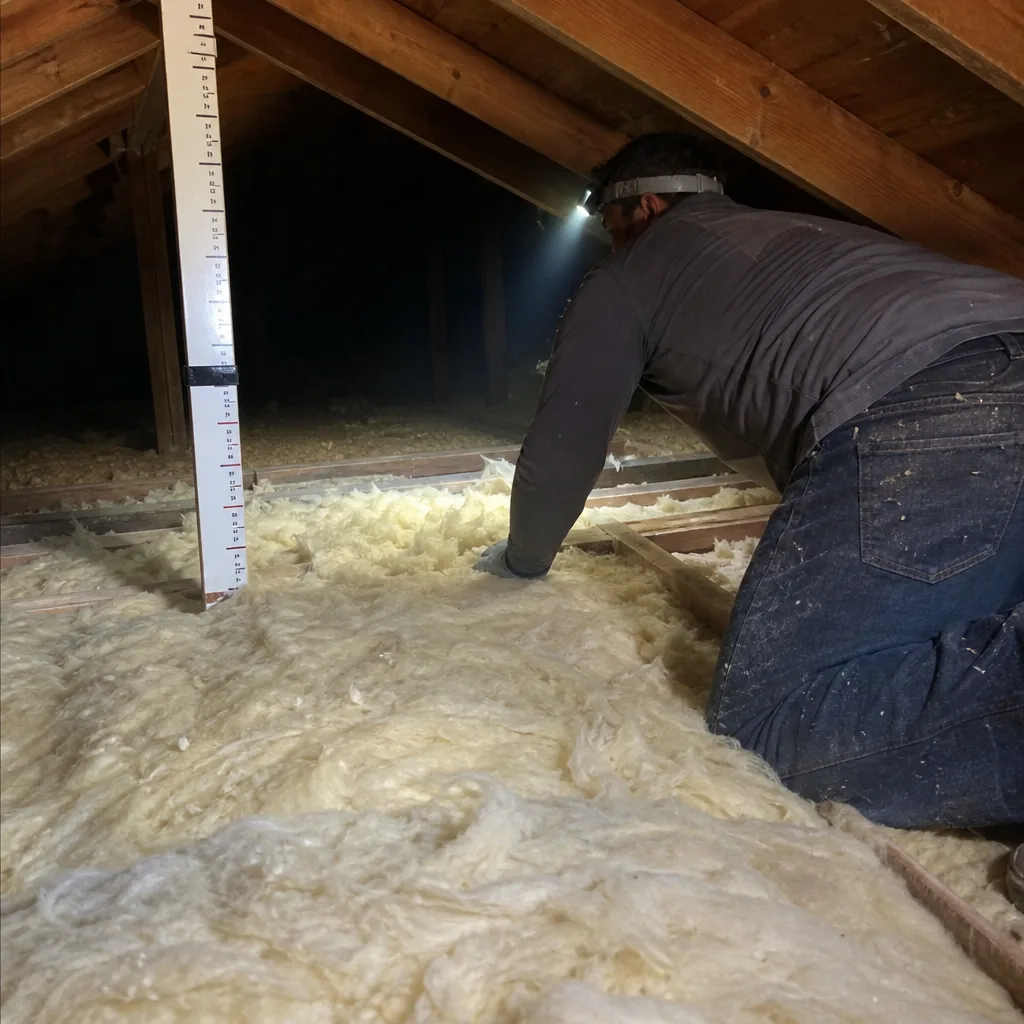
This is worth explaining clearly because a lot of Boerne homeowners get quotes that skip it entirely. Batt insulation slows heat conduction – the transfer of heat through solid material. It does almost nothing to stop air movement. A 1/4-inch gap around a recessed light housing can transfer more conditioned air in a year than a poorly insulated wall panel. If you lay batts over an unsealed attic floor, you get R-value on paper and noticeably less comfort in practice.
The blower-door test – a calibrated pressurization test that measures, in one number (CFM50), how much air your building envelope is losing – makes this visible. We use it as a diagnostic tool before sealing, then again after. On a Boerne home we worked on in the Sablechase neighborhood last spring, the pre-sealing reading was 3,840 CFM50. After sealing the top plates and 22 can-light penetrations, the post-sealing reading came in at 2,290 CFM50. That change was documented and given to the homeowner with the job record. The batts went in after.
For a fuller picture of our air-sealing-first approach across all attic insulation types, the home page links to each of our service lines, including our standalone attic air sealing service for homeowners who want that work done separately before adding insulation.
Batt vs. Blown-In: Which Makes More Sense in Boerne?
Batts are the right call when the attic floor is clean and the joist bays are fully accessible, when you prefer a dry-process installation with no airborne particulate, or when you are working in a tight budget range and need a predictable installed cost. They are also a straightforward fit for additions and new construction where the framing is open and nothing needs to be worked around.
Blown-in insulation – cellulose or fiberglass loose-fill – has advantages in attics with irregular framing, lots of cross-bracing, or areas where fitting cut batts precisely would be difficult. It also achieves better coverage in hard-to-reach corners. The tradeoff is that blown-in settles slightly over time and can shift if the attic is disturbed. For most existing Boerne homes we assess, batts and blown-in each have legitimate use cases, and sometimes the best answer is batts in the accessible center field and blown-in in the perimeter runs. We will tell you which approach the attic actually calls for, not which one we prefer to install.
The 365-Day Done Right Promise
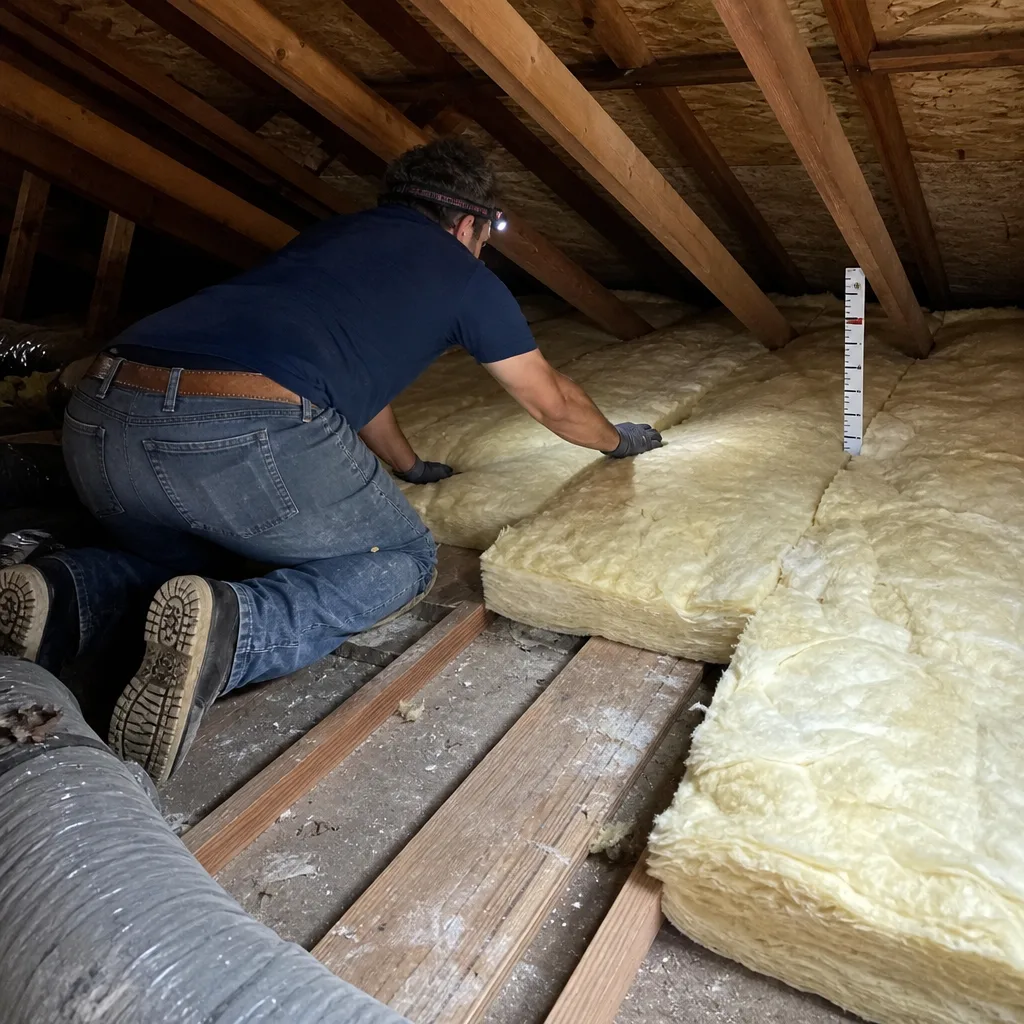
Every attic batt insulation job we complete in Boerne is covered by the 365-Day Done Right Promise. If the work is not right – if batts shifted, if a sealed penetration failed, if anything we installed underperforms within the first year – we come back and make it right at no charge. That promise is written in your job documentation before we start, not offered verbally at the end of the appointment.
We have completed Attic Insulation Near Me in Boerne, TX work in more than 9,000 homes since 2016. Every one of those jobs started with a written price and ended with a documented record. That record exists so that if something comes up six months later, there is no ambiguity about what was done, where, and to what specification.
FAQs – Attic Batt Insulation in Boerne
How much does attic batt insulation cost in Boerne, TX?
Most attic batt insulation jobs in Boerne run between $1,100 and $2,800 for a standard single-story home, depending on square footage, target R-value, and whether air sealing and old insulation removal are included. A full job with removal, air sealing, and new R-49 batts in a 2,000-square-foot attic typically falls between $2,200 and $3,200; see our How Much Does Attic Insulation Cost? (2026 Price Guide) - Boerne, TX for more details. To get a flat written price specific to your attic, call (830) 529-7780 – the assessment is free and you will have the price in writing before any work is scheduled.
Do I need to do anything to my attic before batt insulation is installed?
No – we handle all prep as part of the job. That includes removing damaged or contaminated existing insulation, air-sealing all penetrations in the attic floor, and clearing any debris that would prevent full batt coverage. You do not need to do anything before we arrive. After the assessment, we will tell you exactly what the attic needs and give you the price for each scope in writing.
What R-value do I need for attic batt insulation in Boerne?
Boerne sits in IECC Climate Zone 3. Current energy code calls for R-49 in attic floors for new construction and significant retrofits. Many existing homes in Boerne are sitting at R-19 to R-30 from original construction, especially those built before 2010. Adding a layer of unfaced batts over existing insulation is a cost-effective way to reach R-49 without a full tear-out. We will measure your existing R-value during the assessment and show you the gap between where you are and where code – or comfort – puts you.
Can attic batt insulation be installed in one day?
Yes, in nearly all cases. A standard attic batt installation in a Boerne home – including air sealing and any required removal – is typically completed within four to eight hours. Larger homes or those with significant contamination removal may run a full day, but a second trip is rare. You will receive the Documented Photo Record and the blower-door readings (on applicable jobs) before the crew leaves.
Written by Wes Okafor, Owner at Topside Attic Insulation Boerne, serving Boerne.