
Attic Baffles & Ventilation Prep in Boerne, TX
Attic baffles are rigid channels – typically made from polystyrene or cardboard – that are installed between the roof rafters at the eaves to keep insulation from blocking soffit vents. Without them, blown-in insulation migrates toward the eaves, chokes off airflow, and turns a well-intended insulation upgrade into a moisture and heat trap. In Boerne’s climate, where attic temperatures routinely exceed 140°F through June, July, and August, an unvented attic floor doesn’t just underperform – it accelerates shingle wear and drives up cooling loads month after month.
Ventilation prep is the broader category: everything that needs to happen before insulation goes in so the attic can breathe the way the building code and the manufacturer’s specs both require. That means baffles installed at every rafter bay that touches a soffit vent, air sealing completed at top plates and penetrations, and a confirmed net free area – the total open vent space, measured in square inches – that meets the 1:150 or 1:300 ratio that Texas energy codes reference for Attic Batt Insulation and other types depending on whether a vapor retarder is present.
At Topside Attic Insulation Boerne, ventilation prep is not a line item we add when a customer asks. It is part of how we build every scope. If you are reading this page because you have an estimate from another contractor that skips baffle installation or leaves vent ratios unconfirmed, call us at (830) 529-7780 – we offer a free second opinion on any written estimate and will read it with you. Our work falls under the broader Attic Insulation in Boerne service, and every job we touch starts with a written price and ends with a documented photo record. That is the Haven Standard, and it does not change based on job size.
When You Need Attic Baffles & Ventilation Prep
Not every attic needs baffles replaced or added. Some need them for the first time. A few scenarios are straightforward signals that this work belongs on your scope before any insulation is installed or upgraded:
- Existing insulation is packed against the eaves. In many Boerne homes built before 2005, original blown fiberglass or loose-fill cellulose has shifted toward the soffit line over the years. When we pull back that material, we regularly find the vent openings are 60 to 100 percent blocked. Adding more insulation on top of that condition makes it worse, not better.
- Your home has no attic baffles at all. Homes built in the Hill Country during the 1980s and early 1990s often came without rafter baffles as standard. If your soffit vents are present but the rafter bays between the top plate and the roof deck are open to loose fill, there is nothing preventing future insulation from migrating directly into those openings.
- You are seeing moisture staining or mold at the eave line. Boerne averages roughly 33 inches of rainfall a year, and humidity swings can be sharp in spring and fall. When soffit ventilation is restricted, warm moist air from inside the home has nowhere to exhaust. We have found dark staining on OSB sheathing in the eave zone on homes in the Esperanza and Fair Oaks Ranch corridors where baffles were missing or collapsed.
- Your upstairs rooms stay hot even after adding insulation. This is the most common complaint we hear from homeowners in Boerne’s newer subdivisions near IH-10. The insulation R-value looks correct on paper, but if the attic is not ventilating, radiant heat builds up in the air cavity and conducts downward regardless of how thick the insulation layer is. Baffles alone do not fix that – but they are a prerequisite for getting the ventilation rate that makes the insulation perform as rated.
- You are converting to spray foam or dense-pack blown-in. Certain encapsulated attic systems intentionally close off soffit vents and bring the roof deck into conditioned space. If that is not the plan – if you are staying with an open attic assembly – then baffles are required before GreenFiber cellulose or Owens Corning blown fiberglass goes in.
- Your HVAC equipment lives in the attic. A large share of Boerne homes have their air handlers in the attic. When those units are running in an under-ventilated attic, they are pulling in hotter ambient air, which directly reduces system efficiency. Getting vent ratios right protects the equipment and shows up in the electric bill.
Our Attic Baffles & Ventilation Prep Process
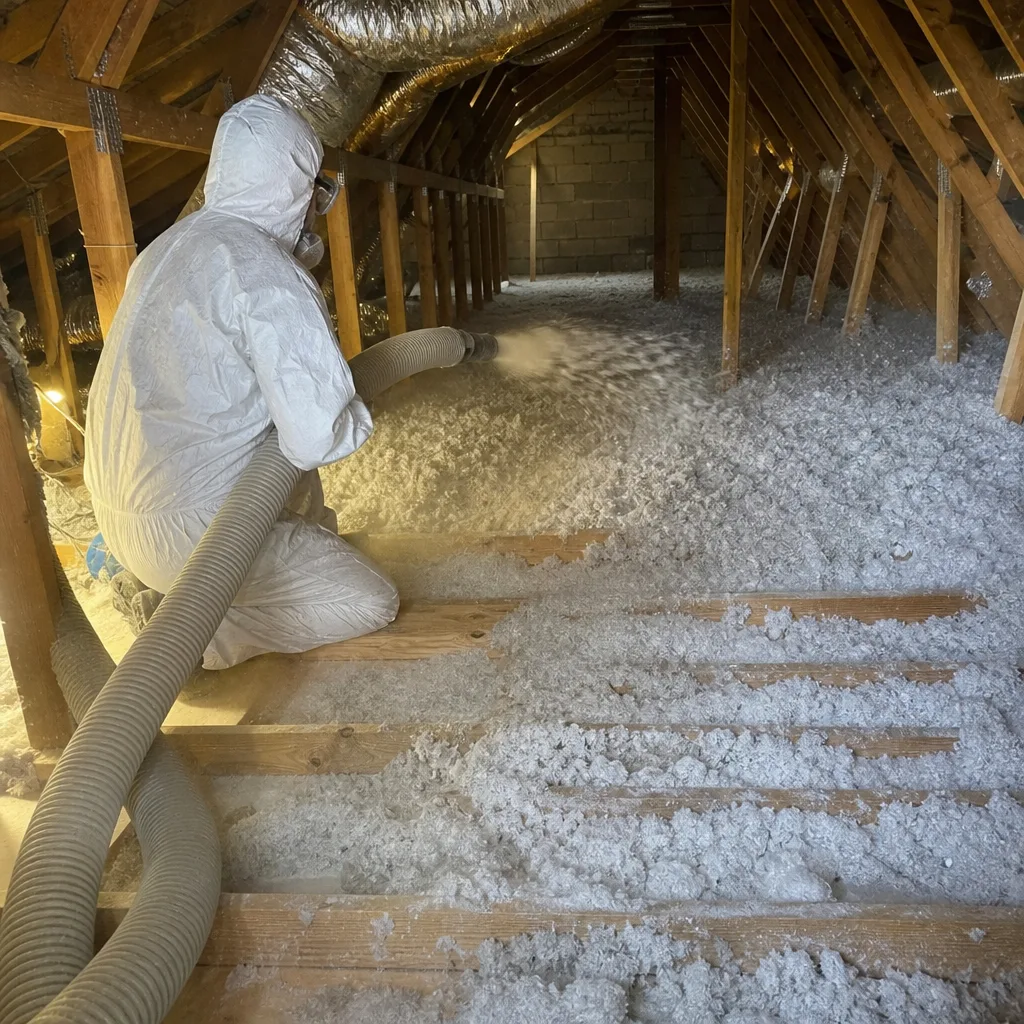
The steps below are the sequence we follow on every Boerne job where ventilation prep is part of the scope. This is not an estimate process – it is the actual production sequence, in order.
- Pre-work attic assessment and vent count. Before anyone carries material up the pull-down stairs, a technician walks the attic perimeter with a flashlight and a tape measure. We count every rafter bay that aligns with a soffit vent opening, photograph the existing condition, and confirm the net free area on both intake (soffit) and exhaust (ridge, gable, or powered) venting. That measurement tells us whether the current vent configuration can support the planned insulation depth. If it cannot, we note it in the scope before work starts – not after.
- Air sealing of top plates, penetrations, and can lights. Baffles do not address air leakage, and air leakage is almost always the larger energy loss. We seal every top-plate gap, every wire and pipe penetration through the ceiling plane, and every recessed can light that is not already rated for direct insulation contact. This work is completed before insulation is placed. We do not blow insulation over an unsealed attic floor. That is not a preference – it is a firm rule at Envelope Insulation Co., and it is the reason before-and-after blower-door readings move as much as they do on our jobs. A blower-door test – a pressurization reading that shows, in one number, how much conditioned air the building envelope is losing – is run on applicable jobs both before and after this step, and those numbers go into your documented record.
- Baffle installation at every applicable rafter bay. We cut and fit baffles – typically 1-inch polystyrene channels on standard 24-inch on-center framing, though some older Boerne homes require custom-cut baffles to fit irregular rafter spacing – and fasten them so the top edge is tight to the roof deck and the bottom clears the top plate. This creates a continuous air channel from the soffit opening to the open attic cavity, which is what allows outdoor air to move through the space and exhaust heat.
- Exhaust vent verification and correction. Intake without exhaust does not produce airflow; it produces pressure differentials that pull humid outdoor air into unintended gaps. We check ridge vent continuity (many Boerne ridge caps are intact on the outside but have ridge board blocking airflow on the inside), confirm gable vents are unobstructed, and document powered vent capacity if one is present. If exhaust capacity is short of what the vent ratio calculation requires, that correction goes into the scope before insulation is scheduled.
- Documented photo record before insulation is placed. Under Haven Standard: Documented Photo Record, we photograph every completed baffle installation and the sealed penetrations before the insulation crew begins. That photo set is yours. It is included in the job record, not available on request. If an issue surfaces years from now – moisture, pest entry, a warranty question – those photos show the exact condition of the attic cavity at the time of installation.
- Written confirmation of vent ratio compliance. The scope document you receive at job close identifies the intake net free area, the exhaust net free area, and which Texas energy code ratio was met. If the attic configuration could not achieve the target ratio without structural changes outside the agreed scope, that limitation is named in writing – not left implied. You know what was done and what was not done before the crew leaves the driveway.
Attic Baffles & Ventilation Prep Pricing in Boerne
Ventilation prep is almost always priced as part of a full Attic Insulation services scope rather than as a standalone job, because the access, staging, and cleanup overlap significantly. That said, here are honest ranges for what this work costs in the Boerne market as of 2025:
- Baffle installation only (existing attic, no insulation work): $250 – $550 for a standard single-story home with 20 to 30 rafter bays requiring baffles. Homes with complex rooflines, vaulted sections, or difficult access run toward the higher end.
- Ventilation prep bundled with blown-in insulation: The prep component typically adds $300 – $700 to a full insulation scope, depending on the number of bays, the degree of air sealing required, and whether exhaust corrections are needed. Most complete attic insulation projects in a 1,500 to 2,500 square foot Boerne home – including prep, air sealing, and blown-in material – run between $1,800 and $4,200, with the wide range reflecting attic depth, current R-value, and access conditions.
- Exhaust vent corrections (ridge vent unblocking, gable vent repair): $150 – $400 depending on linear footage and whether new vent material is needed.
- Blower-door test (pre and post, on applicable jobs): Included in the job scope on air-sealing projects at no separate charge.
Under Haven Standard Clause 1, a flat written price and written scope are provided before any work starts. There is no estimate range that turns into a final invoice surprise. If you have a competing written estimate in hand, bring it to us – our free second opinion is a direct line-by-line read of what the other contractor proposed. Call (830) 529-7780 to schedule the attic assessment that produces your written price. There is no charge for that visit.
FAQs – Attic Baffles & Ventilation Prep
Do I need attic baffles if my home already has soffit vents?
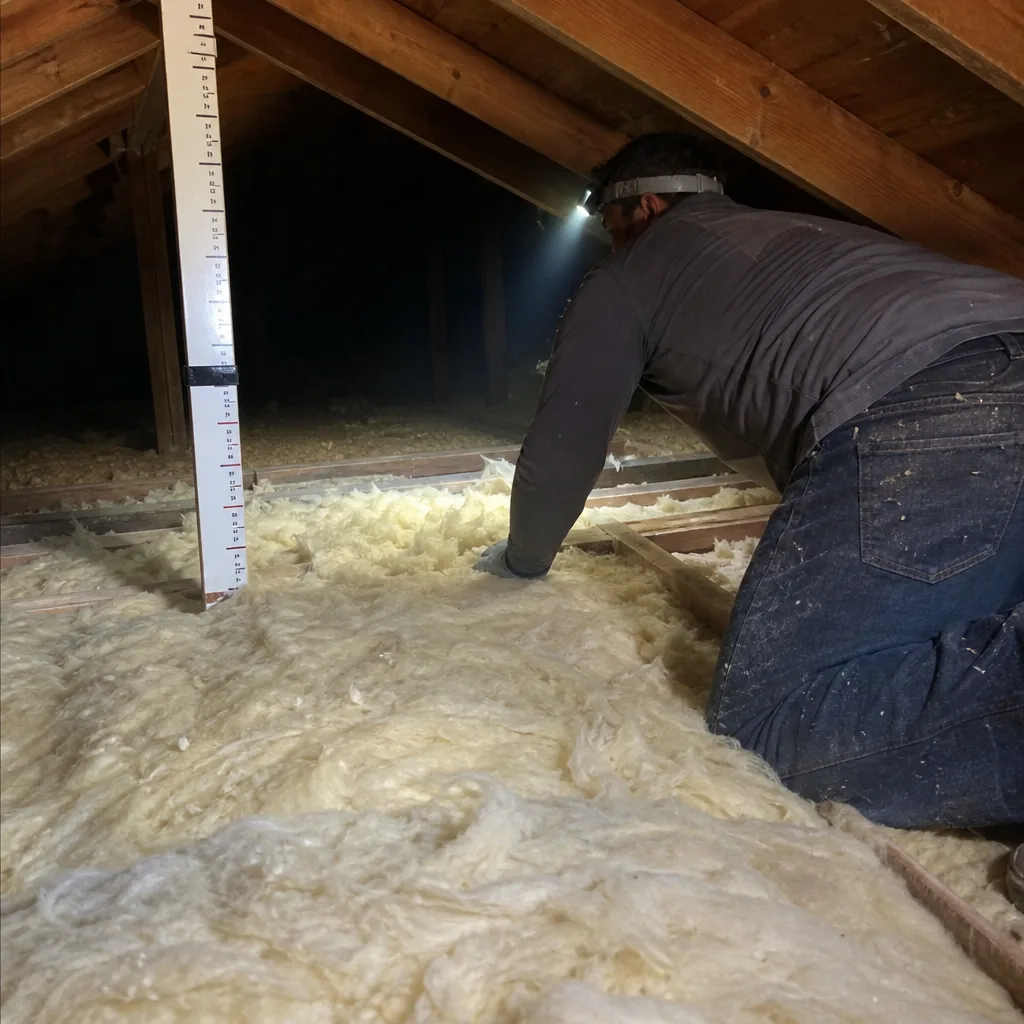
Yes, in almost every case where blown-in or batt insulation is present or planned, because soffit vents do nothing if insulation is blocking the opening from the inside. The vent is the hole in the exterior; the baffle is the channel that keeps the rafter bay open so air can actually move from that hole into the attic cavity. We have inspected homes in Boerne’s Cascade Falls and Cordillera Ranch neighborhoods where every soffit vent was intact but every rafter bay was completely packed – effectively zero airflow despite the appearance of a properly vented attic. Baffles solve that condition. Call (830) 529-7780 and we will confirm whether your current setup has the baffle coverage it needs.
Can baffles be installed without removing existing insulation?
Sometimes, but not always. If existing insulation has already migrated into the soffit zone, it needs to be pulled back before baffles can be correctly seated against the roof deck. Trying to install baffles over packed insulation produces a compromised channel – too shallow to provide adequate airflow and not reliably attached. We will tell you in the written scope exactly what removal is required and at what cost, before the job starts. There are no surprises after the work is done.
How do I know if my attic ventilation ratio is correct?
The standard reference is 1 square foot of net free vent area for every 150 square feet of attic floor space – or 1:300 when a vapor retarder is installed correctly on the warm-in-winter side. “Net free area” is the actual open area of the vent after accounting for louvers and screens, which is smaller than the vent’s physical size. Most homeowners have no way to measure this without pulling back insulation and counting bays. We calculate it as part of the pre-work assessment on every job, document the result, and give you the number in writing. If the ratio is short, the correction goes into the scope. If you want that assessment without committing to a full project, call (830) 529-7780.
What is the difference between ventilation prep and air sealing?
Ventilation prep is about creating the pathway for outside air to move through the attic cavity and exhaust heat and moisture. Air sealing is about stopping conditioned air from leaking out of the living space through gaps in the ceiling plane – top plates, wire penetrations, can lights, attic hatch edges. They are related but they address different problems in different locations. Ventilation prep happens at the roof deck level; air sealing happens at the ceiling-to-attic boundary. Both have to be done before insulation goes in, and we do both as prerequisites on every applicable scope. The home page outlines the full building-envelope service line if you want to see how these pieces fit together.
Why Boerne Homes Specifically Benefit from Getting This Right
Boerne sits at roughly 1,400 feet elevation in the Texas Hill Country, which produces a climate that is a little more forgiving than San Antonio in summer but still punishing for an attic cavity. The combination of high summer radiant loads, periodic cold snaps that drop below freezing, and a spring humidity window that can bring dew points into the 60s creates an attic environment where ventilation failures show up in multiple ways – moisture in winter, heat in summer, shortened roof material life year-round.
The limestone soil and karst geology in the Boerne area also means homes sit on foundations that move seasonally, and that movement can open small gaps at top plates and wall-to-ceiling junctions over time. Those gaps are air-sealing targets before insulation goes in. We see them regularly on homes built in the mid-2000s on the north and northwest sides of the city, particularly in areas with pier-and-beam sections over the garage.
Getting ventilation prep right in Boerne is not about meeting a checkbox. It is about the insulation you pay for performing at its rated R-value for the life of the roof – not degrading over three summers because the attic was baking at 150°F with nowhere for that heat to go.
What You Receive When the Job Is Done
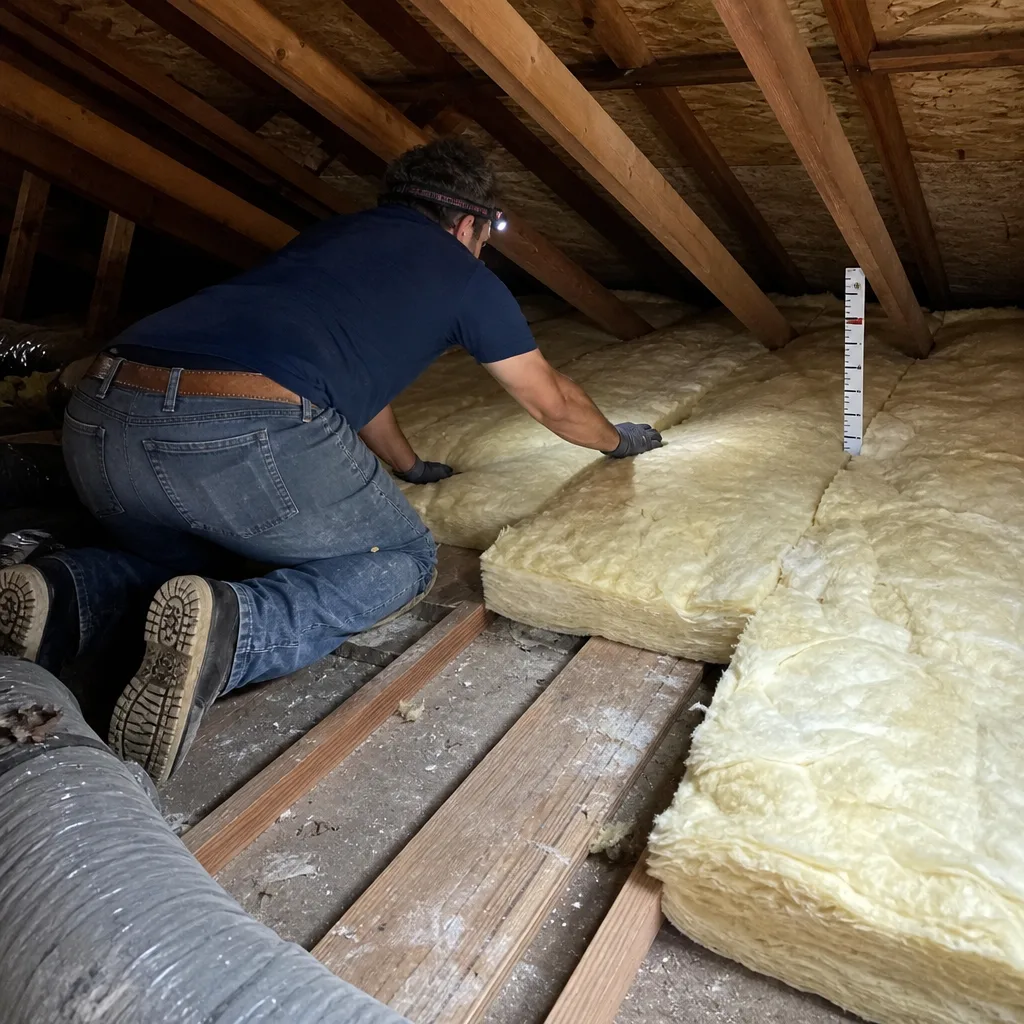
At the close of every ventilation prep and insulation scope, you receive three things in writing:
- A completed scope document that lists what was installed, where, and to what specification – including the vent ratio calculation result.
- A documented photo record of the baffle installation, the sealed penetrations, and the attic condition before and after – included on every job, not a premium add-on.
- Before-and-after blower-door readings on applicable air-sealing jobs, so you have a measured number – not a claim – showing what changed.
The 365-Day Done Right Promise applies to all of this work. If something is not right within the first year, we correct it. That promise is backed by the written scope you received before the job started – under Haven Standard, you have it in writing before anyone lifts a tool.
Wes Okafor has led the Topside Attic Insulation Boerne team since 2016, and in that time the process has not changed: written price first, documented record at the end, no exceptions. If you are in Boerne and trying to figure out whether your attic needs baffle installation before you add insulation, or if you have a written estimate from another contractor that does not include ventilation prep, search Attic Insulation Near Me in Boerne, TX or call (830) 529-7780. The assessment visit is free, the written price comes before any work starts, and the second opinion on a competing estimate costs nothing. That is what the Haven Standard looks like in practice.
Written by Wes Okafor, Owner at Topside Attic Insulation Boerne, serving Boerne.