
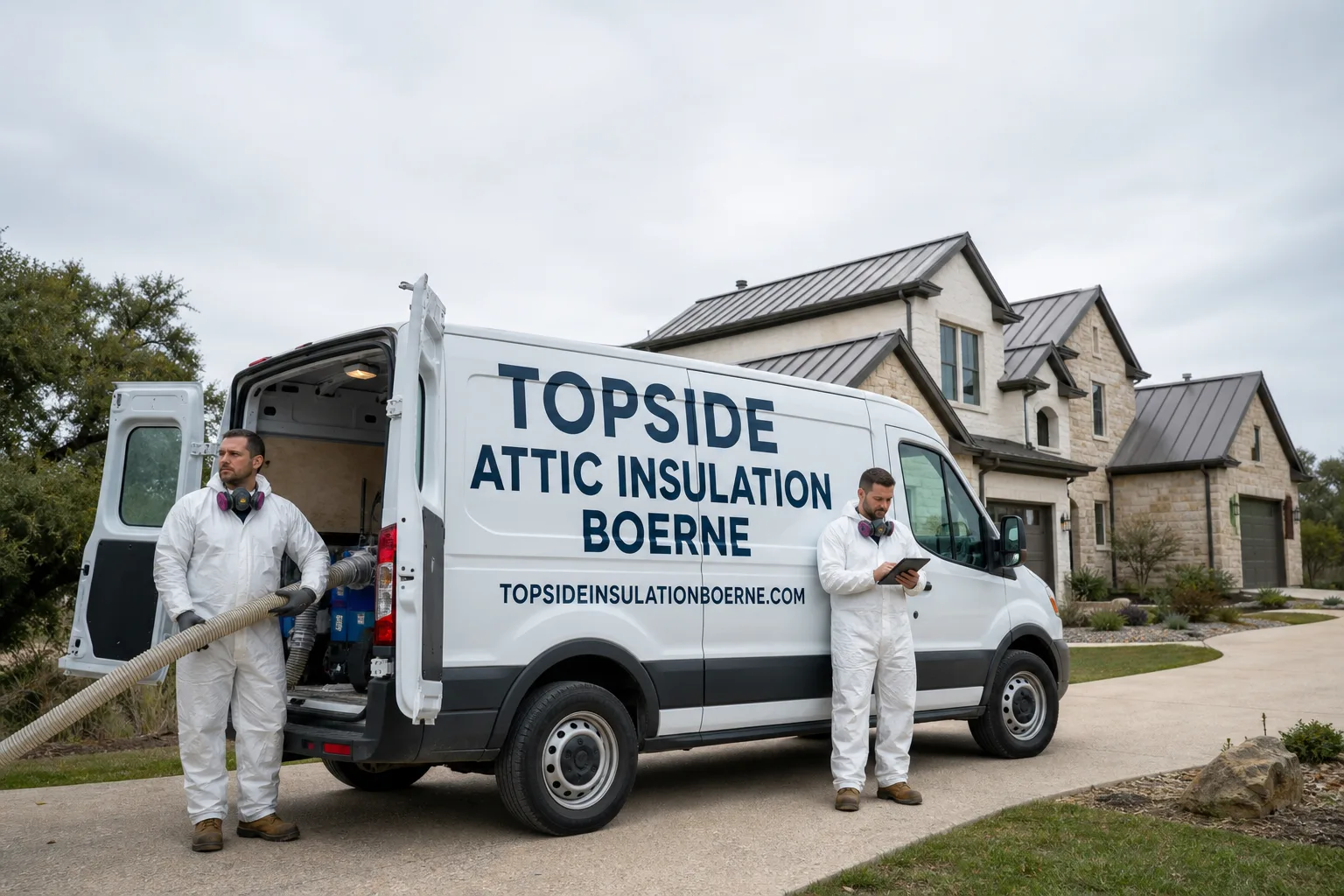
Insulation in Castle Hills, TX
Crawl space encapsulation and vapor barrier work in Castle Hills typically runs $3,800-$7,500 for a full encapsulation, with most ranch-style homes falling in the $4,200-$5,800 range. Because Castle Hills sits entirely within San Antonio but maintains its own building department, permits for any crawl space or attic work must be pulled through Castle Hills City Hall, not San Antonio Development Services. We’re familiar with that process, and we coordinate it on every job. If you’re seeing moisture, musty odors, or uneven floor temperatures, call (830) 529-7780 and we’ll walk the space with you.
Why Castle Hills Homes Are Different
Castle Hills was built out largely between the late 1940s and mid-1970s, and the housing stock shows it: single-story ranch-style brick homes with low-slope rooflines and unconditioned attics originally insulated to R-7 or R-11. That fiberglass has settled, torn around HVAC penetrations, and compressed to a fraction of its rated value. We rarely recommend simple top-offs here; full removal and replacement is the standard scope.
The city sits in the Bexar County heat island, where attic temperatures exceed 150°F in summer and cooling dominates the energy bill. February 2021’s Winter Storm Uri exposed how underinsulated these homes are at the rim joist and exterior wall cavities. The combination means both radiant barrier sheathing and attic floor air sealing are now nearly universal recommendations on Castle Hills retrofits.
Because Castle Hills maintains its own code enforcement independent of San Antonio, some older remodeled homes carry non-standard permit histories. Additions built to one era’s code without later upgrades often leave wall cavities completely uninsulated behind drywall. A thermal-imaging pre-inspection catches this quickly, and it’s something contractors working only in surrounding San Antonio neighborhoods rarely encounter.
Our Main Castle Hills Services
Castle Hills homeowners call us most often for attic work and spray foam applications. Here is what each service involves in this market.
Attic Insulation in Castle Hills
Attic insulation in Castle Hills almost always starts with removal of existing material. The original R-7 to R-11 fiberglass batts in these ranch homes have degraded past the point where topping off makes sense. We air seal the attic floor first, then install new insulation to current code. Attic Insulation in Castle Hills includes a blower-door test before and after, with the readings delivered in your documented record.
Spray Foam Insulation in Castle Hills
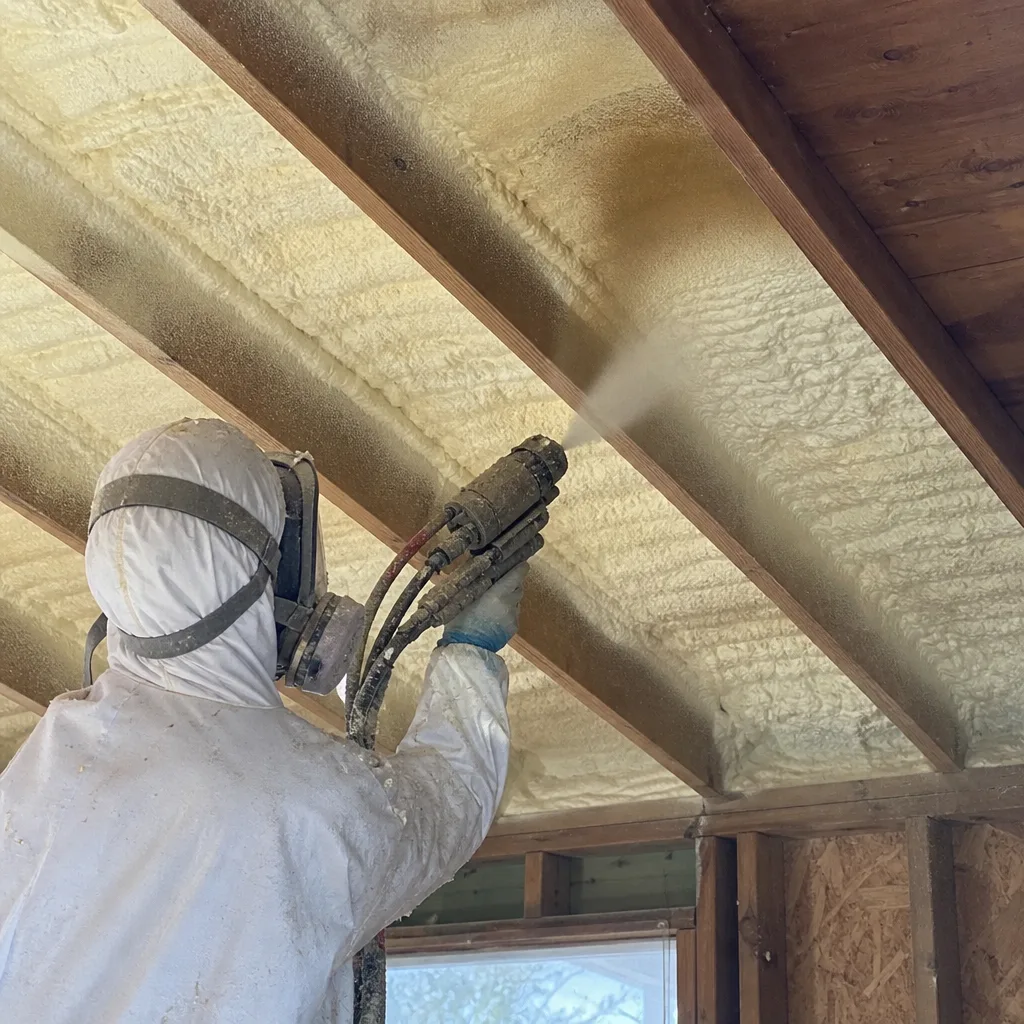
Spray foam works well in Castle Hills for rim joist sealing, unvented attic conversions, and additions with non-standard framing. We use open-cell and closed-cell products from Demilec and Icynene, selected for the application rather than pushed as a default. Spray Foam Insulation in Castle Hills includes a written scope specifying foam type, thickness, and expected R-value before work begins.
Blown-In Insulation in Castle Hills
Blown-in cellulose from GreenFiber or fiberglass from Owens Corning is our standard replacement material for Castle Hills attics after air sealing is complete. It fills irregular joist bays and covers top plates more uniformly than batts. Blown-In Insulation in Castle Hills is priced by the square foot with the depth specified in writing on every quote.
What happens when you call
- 1
A real person answersNo phone trees - you reach a local pro.
- 2
You get an upfront price rangeHonest numbers before anyone is dispatched.
- 3
A background-checked tech heads outLicensed & insured, dispatched right away.
- 4
You approve before work beginsNothing starts until you say go.
Crawl Space Encapsulation & Vapor Barrier in Castle Hills
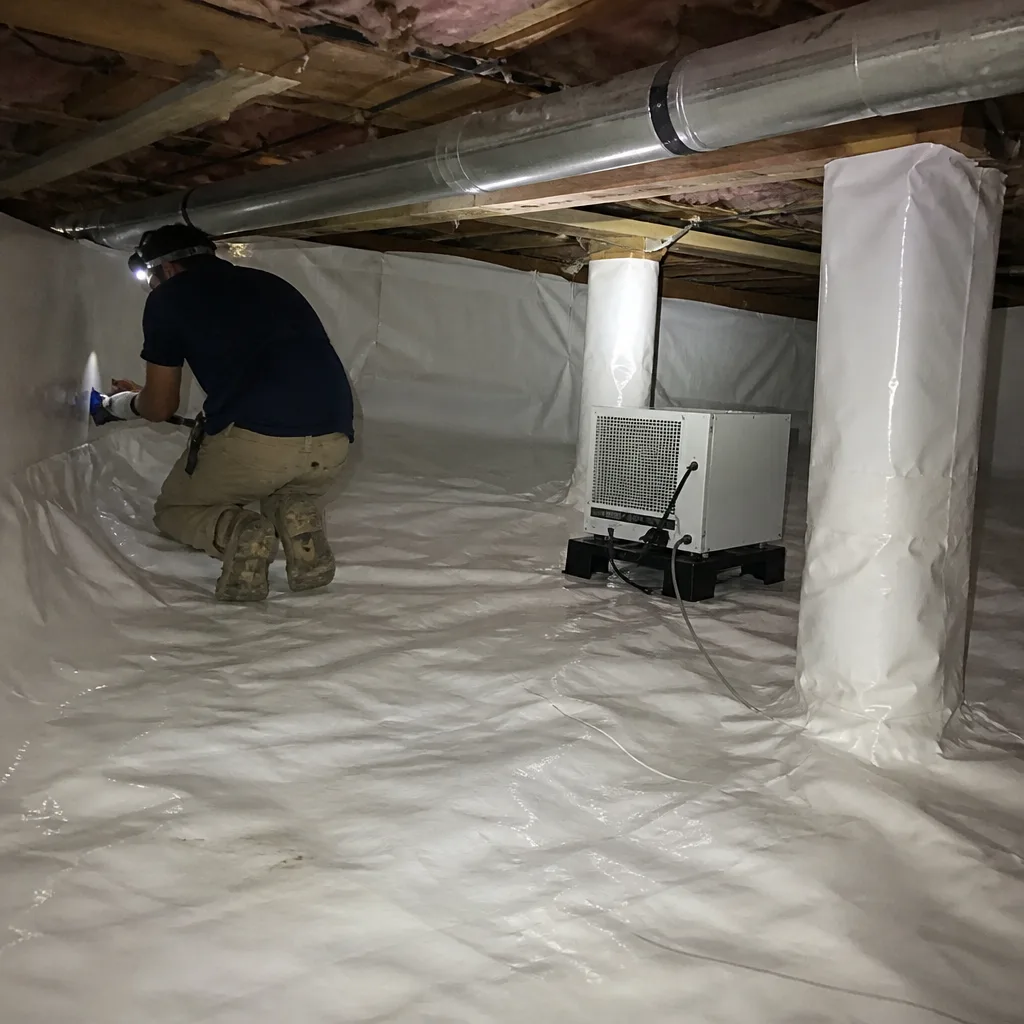
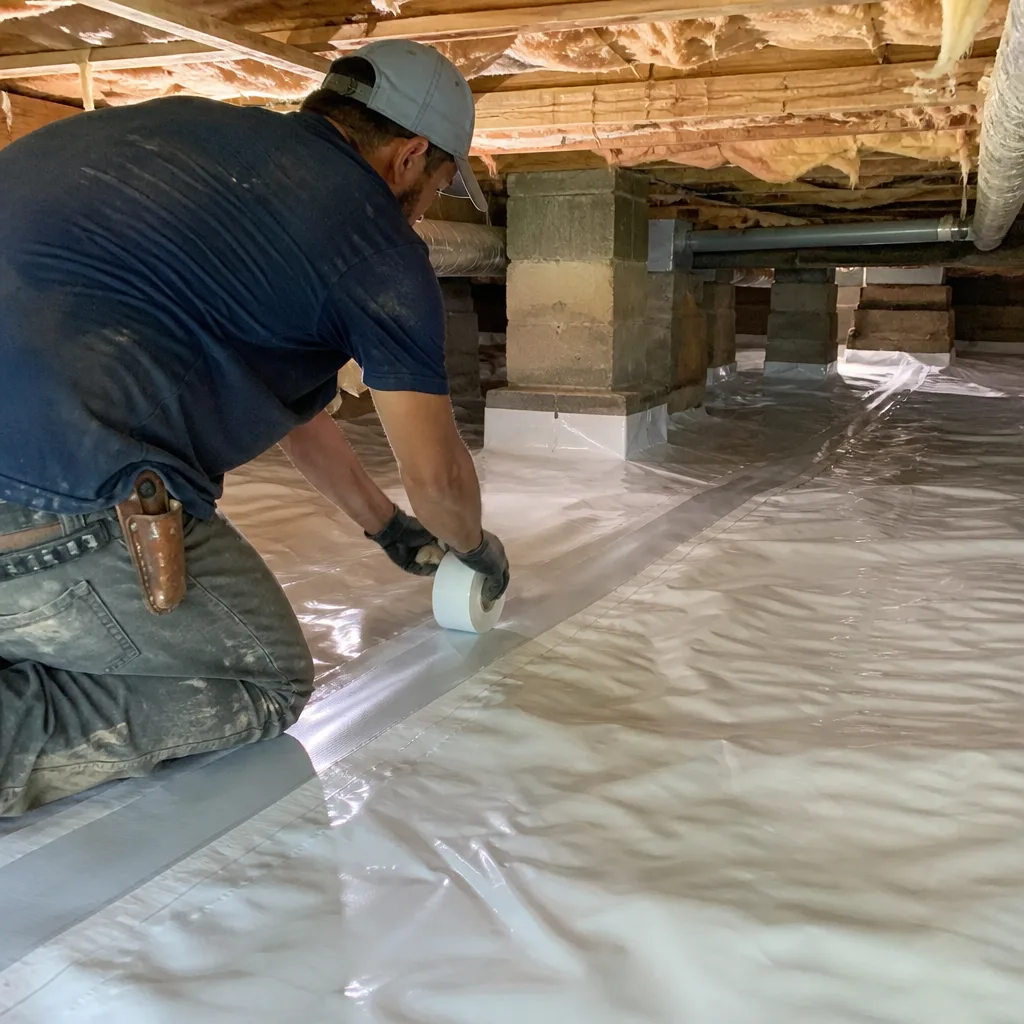
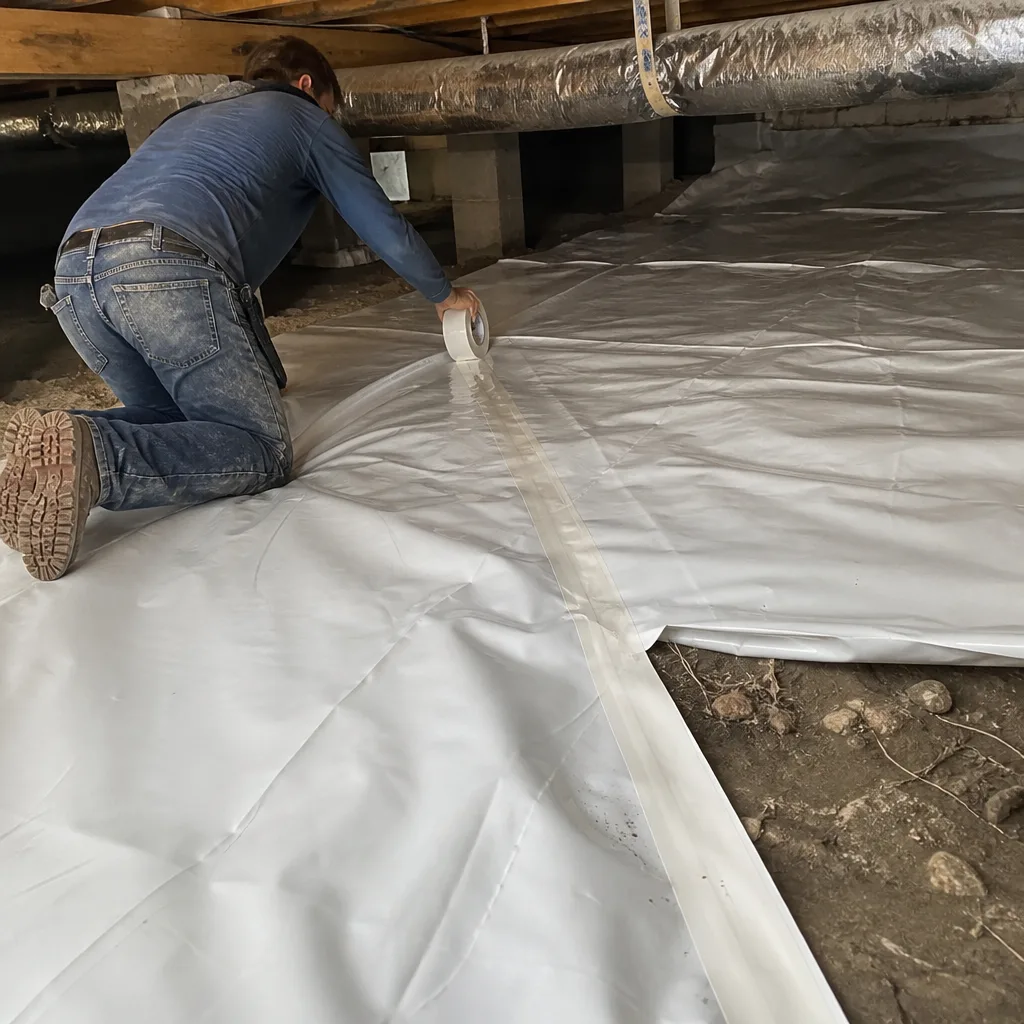
Crawl space encapsulation and vapor barrier installation in Castle Hills addresses a problem common to the area’s mid-century ranch homes: perimeter foundation vents that pull humid Bexar County air into the crawl space year-round, condensing on cool floor joists and ductwork. The February 2021 freeze made the problem visible, with frozen pipes in crawl spaces that should have been conditioned. Crawl Space Encapsulation & Vapor Barrier is one of our most called-for services in this city, and every job includes a written scope and documented photo record.
Crawl Space Vapor Barrier
Signs you need it
Your crawl space needs a vapor barrier if you notice musty odors rising through floor registers, visible moisture on the ground or foundation walls, or warping hardwood floors above the crawl space.
What it costs in Castle Hills
A 6-mil to 10-mil vapor barrier installation in Castle Hills typically runs $1,200-$2,800 depending on crawl space square footage and whether the ground requires grading or debris removal first.
How we do it
We remove debris, grade the ground if needed, seam-seal the polyethylene sheeting at all overlaps, and mechanically fasten it to the foundation walls six inches above outside grade.
Crawl Space Encapsulation
Signs you need it
Full encapsulation is warranted when vapor barrier alone hasn’t controlled humidity, when HVAC ducts in the crawl space show condensation or mold, or when you’re converting the space to conditioned storage.
What it costs in Castle Hills
Complete crawl space encapsulation in Castle Hills, including wall liners, sealed vents, and a dehumidifier, typically runs $4,200-$7,500 for the ranch-style homes that dominate this market.
How we do it
We seal all perimeter vents, install reinforced wall liner from floor to sill plate, lay overlapping floor membrane, install a condensate-pumped dehumidifier, and provide before-and-after humidity readings in your documented record.
What Crawl Space Encapsulation & Vapor Barrier Costs in Castle Hills
| Item | Typical range in Castle Hills |
|---|---|
| Vapor barrier (ground only) | $1,200 - $2,800 |
| Full encapsulation with dehumidifier | $4,200 - $7,500 |
| Crawl space insulation (floor joist) | $2,400 - $4,600 |
How long does crawl space encapsulation take in Castle Hills?
Most Castle Hills crawl space encapsulations take two to three days, with permitting through Castle Hills City Hall adding one to two business days before work can begin. We handle the permit application as part of our standard process.
Will encapsulation help with frozen pipes?
Yes, a fully encapsulated and conditioned crawl space maintains temperatures above freezing even during hard freezes like Winter Storm Uri, protecting plumbing that was previously exposed to outside air through vents. Call (830) 529-7780 to discuss your specific foundation type.
Radiant Barrier Installation in Castle Hills
Radiant barrier installation in Castle Hills is driven by the Bexar County heat island and those 150°F attic temperatures. The low-slope rooflines common to Castle Hills ranch homes create attic spaces with less vertical clearance for convective cooling, so radiant heat transfer from the roof deck to the attic floor becomes the dominant thermal load. A properly installed radiant barrier can reduce attic heat gain by 20-30 percent, measured by the temperature drop at the ceiling plane. Radiant Barrier Installation in this market is almost always combined with attic air sealing for maximum effect.
Attic Radiant Barrier
Signs you need it
Your attic needs a radiant barrier if your ceiling feels hot to the touch on summer afternoons, if your AC runs continuously after 4 p.m., or if your second-story rooms are noticeably warmer than the rest of the house.
What it costs in Castle Hills
Attic radiant barrier installation in Castle Hills typically runs $1,800-$3,400 for a standard ranch home, with price varying by attic square footage and whether we install foil over existing insulation or attach it to the roof deck.
How we do it
We staple perforated aluminum foil across the bottom of the roof rafters, maintaining a minimum one-inch air gap above the foil, and we verify no recessed lighting or ventilation is blocked in the process.
Radiant Barrier Roof Deck
Signs you need it
Roof-deck radiant barrier makes sense when you’re reroofing or when the attic has limited headroom that makes rafter-mounted foil difficult to install and maintain properly.
What it costs in Castle Hills
Radiant barrier roof-deck application in Castle Hills, typically done during reroofing or with decking replacement, runs $2,400-$4,200 depending on roof pitch and accessibility.
How we do it
We apply radiant barrier sheathing or foil-faced decking directly to the roof structure, ensuring all seams are taped and the attic ventilation path remains unobstructed from soffit to ridge.
What Radiant Barrier Installation Costs in Castle Hills
| Item | Typical range in Castle Hills |
|---|---|
| Attic radiant barrier (rafter-mounted) | $1,800 - $3,400 |
| Radiant barrier roof deck | $2,400 - $4,200 |
| Radiant barrier with attic air sealing package | $3,200 - $5,600 |
Does radiant barrier work with existing insulation?
Yes, radiant barrier complements rather than replaces insulation; it blocks radiant heat transfer while your fiberglass or cellulose slows conductive heat flow, and the combination is what we specify for most Castle Hills retrofits. Call (830) 529-7780 for a thermal imaging assessment of your attic.
How much can radiant barrier lower my cooling bill?
Castle Hills homeowners with radiant barrier and proper attic air sealing typically see cooling cost reductions of 10-15 percent, with the greatest savings in homes with dark shingle roofs and minimal existing shade coverage.
Insulation Removal & Replacement in Castle Hills
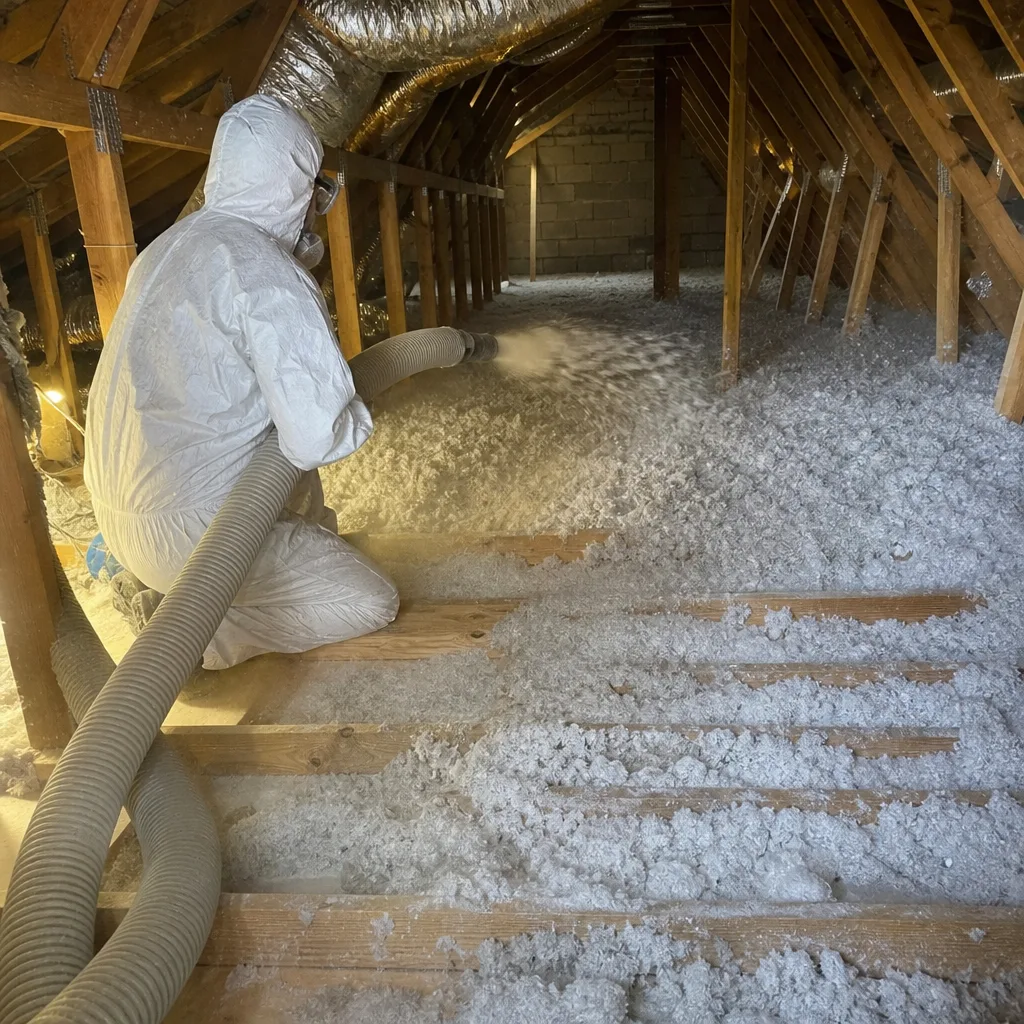
Insulation removal and replacement in Castle Hills is the standard starting point for most attic projects because the existing material has exceeded its useful life. The original R-7 to R-11 fiberglass batts in these 1940s-1970s ranch homes have settled, torn around HVAC penetrations, and often been disturbed by prior roofing or ductwork contractors. We’ve also found vermiculite insulation in a small percentage of pre-1980 Castle Hills homes, which requires tested, contained removal. Insulation Removal & Replacement always includes a written scope specifying disposal method and replacement R-value target.
Attic Insulation Removal
Signs you need it
Your attic insulation needs removal if it’s compressed below the joist tops, if it contains rodent droppings or nesting material, or if it was wet at any point and shows mold or mildew.
What it costs in Castle Hills
Attic insulation removal in Castle Hills typically runs $1,400-$2,800 for a standard ranch home, with additional cost for extensive rodent contamination or if the material contains vermiculite requiring asbestos testing.
How we do it
We use commercial HEPA-filtered vacuums to remove all loose material, bag it in the attic space to prevent contamination of living areas, and dispose of it at a licensed facility with documentation provided to you.
Insulation Replacement
Signs you need it
Replacement is warranted after removal, or when your attic insulation tests below R-30, when energy bills have risen without rate increases, or when thermal imaging shows ceiling temperatures matching attic air temperature.
What it costs in Castle Hills
Insulation replacement in Castle Hills, installed after air sealing and removal, typically runs $2,600-$5,400 depending on material type and target R-value, with most homes receiving R-38 to R-49 blown-in cellulose or fiberglass.
How we do it
We air seal all top plates, penetrations, and duct boots first, then install blown-in material to specified depth with depth markers visible for inspection, and we verify with a blower-door test before signing off.
What Insulation Removal & Replacement Costs in Castle Hills
| Item | Typical range in Castle Hills |
|---|---|
| Attic insulation removal | $1,400 - $2,800 |
| Insulation replacement (after removal) | $2,600 - $5,400 |
| Removal + replacement + air sealing package | $4,800 - $8,200 |
Is vermiculite common in Castle Hills homes?
We’ve found vermiculite in roughly 5-10 percent of pre-1980 Castle Hills homes we’ve inspected; if suspected, we test before disturbing it, and removal is handled by certified abatement contractors with documentation for your records. Call (830) 529-7780 if your home was built before 1980 and you’re unsure what’s in your attic.
Can you replace insulation without removing the old material?
We don’t recommend it for Castle Hills homes; the existing material is typically too degraded to provide meaningful R-value, and blowing new insulation over compressed, torn batts traps air leaks and moisture problems beneath the new layer.
Attic Air Sealing in Castle Hills
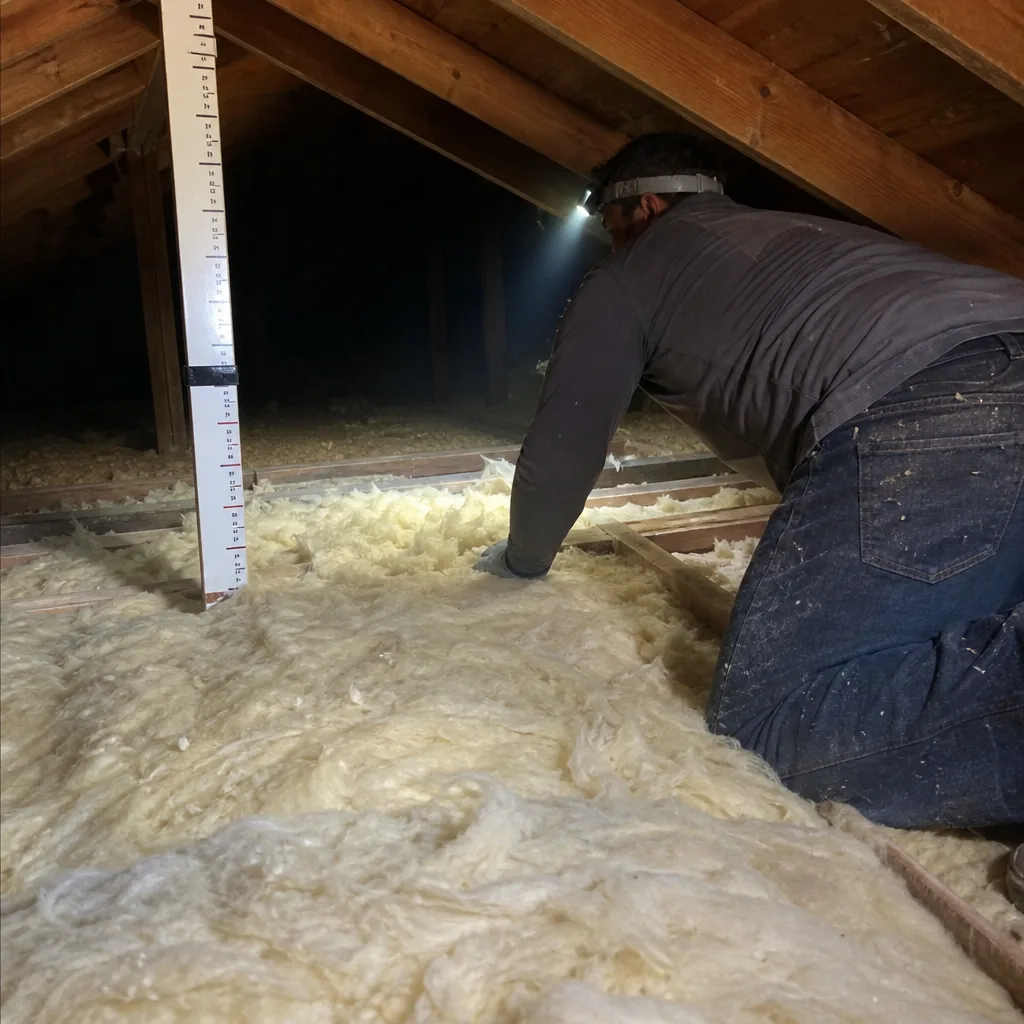
Attic air sealing in Castle Hills is the prerequisite step we never skip, and it’s where we see the biggest performance gains in these older ranch homes. The top plates, electrical penetrations, and can light housings in 1940s-1970s construction were never sealed during original build, and decades of HVAC and electrical modifications have added more holes. A blower-door test on a typical Castle Hills home before air sealing reads 3,500-5,000 CFM50; after sealing, we regularly see 1,800-2,800 CFM50. Attic Air Sealing is performed before any insulation is added, always, and the before-and-after numbers are in your documented record.
Attic Floor Air Sealing
Signs you need it
Your attic floor needs air sealing if you feel drafts at outlets and switches on exterior walls, if dust accumulates rapidly in rooms below the attic, or if your blower-door test reads above 3,500 CFM50.
What it costs in Castle Hills
Attic floor air sealing in Castle Hills, including all top plates and penetrations, typically runs $1,600-$3,200 for a standard ranch home, with complexity increasing if there are multiple HVAC zones or extensive recessed lighting.
How we do it
We seal all top plate joints with expanding foam, caulk wire and pipe penetrations, install fire-rated covers over can lights, and verify with a blower-door test mid-process to catch any missed leaks.
Can Light & Duct Boot Sealing
Signs you need it
Can light and duct boot sealing is needed when you see insulation dust streaks around ceiling fixtures, when rooms farthest from the air handler are significantly warmer or cooler, or when thermal imaging shows hot spots at duct connections.
What it costs in Castle Hills
Can light and duct boot sealing in Castle Hills typically adds $400-$1,200 to the attic floor sealing scope, depending on the number of fixtures and whether duct boots require disassembly and re-taping.
How we do it
We install pre-formed fire-rated enclosures over each can light, seal duct boots to the ceiling drywall with mastic and mesh tape, and pressure-test the duct system if leakage is suspected.
What Attic Air Sealing Costs in Castle Hills
| Item | Typical range in Castle Hills |
|---|---|
| Attic floor air sealing (top plates, penetrations) | $1,600 - $3,200 |
| Can light & duct boot sealing | $400 - $1,200 |
| Full attic air sealing with blower-door verification | $2,400 - $4,200 |
Can air sealing alone reduce my energy bills?
Yes, attic air sealing alone typically reduces heating and cooling costs by 10-20 percent in Castle Hills homes, with the greatest impact on the oldest stock where leakage was never addressed during prior insulation work. Call (830) 529-7780 for a blower-door test to measure your home’s current leakage rate.
How do I know if my attic was already sealed?
We can tell in five minutes with a blower-door test and thermal imaging; if your attic has visible gaps at top plates, unsealed can lights, or insulation dust streaks around penetrations, it wasn’t sealed properly or at all.
Wall Insulation in Castle Hills
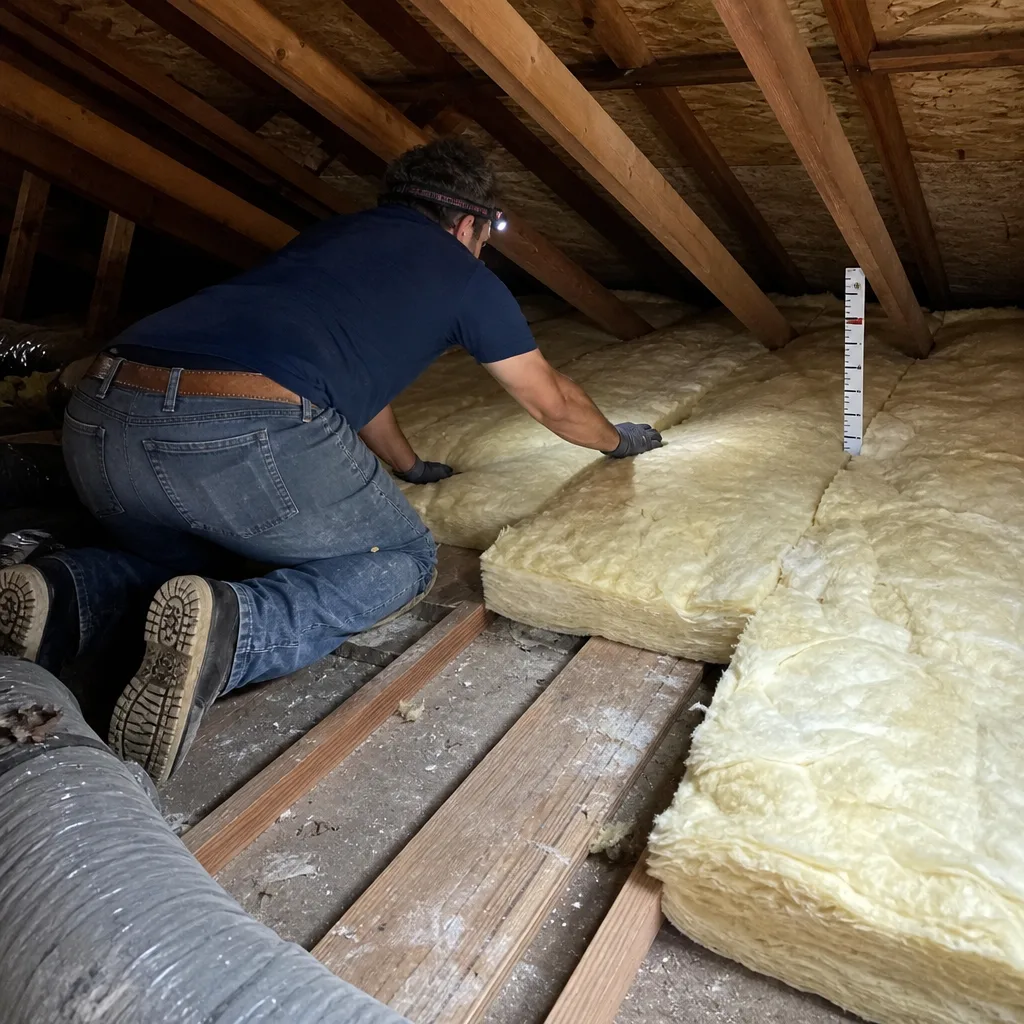
Wall insulation in Castle Hills addresses a specific gap in the mid-century ranch homes that dominate this market: exterior walls were often built with no insulation, or with early fiberglass batts that have settled to useless density. The February 2021 freeze revealed the problem dramatically, with exterior walls cold enough to condense moisture and damage drywall. Additionally, Castle Hills’ independent permitting history means some additions have wall cavities completely empty behind drywall, a condition thermal imaging catches immediately. Wall Insulation in this market is almost always retrofitted from the interior.
Injection Foam Wall Insulation
Signs you need it
Injection foam is appropriate when your exterior walls feel cold to the touch in winter, when thermal imaging shows cavity temperatures matching outside air, or when you’re renovating and can confirm empty stud bays.
What it costs in Castle Hills
Injection foam wall insulation in Castle Hills typically runs $3,200-$6,800 for a full exterior wall scope on a standard ranch home, with price varying by wall square footage and whether we access through exterior siding or interior drywall.
How we do it
We drill 5/8-inch holes at stud-bay intervals, inject slow-rise foam to fill the cavity without bowing studs, patch and texture-match the access points, and verify fill with thermal imaging from the exterior.
Drill & Fill Wall Insulation
Signs you need it
Drill and fill makes sense for walls with degraded or missing batts where you want a less expensive option than full foam injection, or where the wall cavity contains obstructions that prevent complete foam fill.
What it costs in Castle Hills
Drill and fill with blown-in fiberglass or cellulose in Castle Hills typically runs $2,400-$4,800 for exterior walls, with cost savings over foam offset by slightly lower R-value per inch and potential settling over time.
How we do it
We remove a row of siding or drill through interior drywall at the top of each stud bay, blow in cellulose or fiberglass to specified density, seal the access points, and verify complete fill with thermal imaging.
What Wall Insulation Costs in Castle Hills
| Item | Typical range in Castle Hills |
|---|---|
| Injection foam (exterior walls) | $3,200 - $6,800 |
| Drill & fill with blown material | $2,400 - $4,800 |
| Interior wall soundproofing | $1,800 - $3,600 |
Can you insulate walls without removing drywall?
Yes, we typically access wall cavities by removing a row of exterior siding or drilling through interior drywall at inconspicuous locations, then patch and match texture so the access points are invisible after paint. Call (830) 529-7780 to discuss which approach works for your home’s siding type.
Do walls in Castle Hills additions need special attention?
Yes, we’ve found completely uninsulated wall cavities in Castle Hills additions built under older permit cycles; thermal imaging during our pre-inspection identifies these gaps, and we specify targeted injection rather than whole-house scope where appropriate.
Attic Cleaning & Rodent Proofing in Castle Hills
Attic cleaning and rodent proofing in Castle Hills is a common starting point because the mature trees and established neighborhoods in this enclave city support active squirrel, rat, and raccoon populations that access attics through aging soffits and roof vents. The original low-slope rooflines with minimal overhangs make gutter-to-soffit transitions particularly vulnerable. Once rodents are present, insulation becomes contaminated with droppings and urine, creating both odor problems and health hazards that require full removal and sanitization before new material goes in. Attic Cleaning & Rodent Proofing includes a documented photo record of all entry points found and sealed.
Attic Sanitizing & Decontamination
Signs you need it
Your attic needs sanitizing if you smell urine or musk through ceiling fixtures, if insulation shows dark staining or droppings, or if your HVAC intake is located in the attic and you’ve noticed unexplained respiratory symptoms.
What it costs in Castle Hills
Attic sanitizing and decontamination in Castle Hills typically runs $1,800-$3,600 depending on contamination extent, whether insulation removal is required first, and if specialized HEPA equipment is needed for heavy accumulation.
How we do it
We remove contaminated insulation if present, apply EPA-registered disinfectant to all attic surfaces, fog the space with odor-neutralizing agent, and provide before-and-after photos showing the sanitization result.
Rodent Proofing & Exclusion
Signs you need it
Rodent proofing is needed if you hear scratching in walls or ceiling, if you find droppings in the attic or at exterior foundation lines, or if you’ve had repeated pest control visits without permanent resolution.
What it costs in Castle Hills
Rodent proofing and exclusion in Castle Hills typically runs $1,200-$2,800 for a standard ranch home, with price increasing if roofline access requires ladder work on steep sections or if multiple entry points are hidden behind gutters.
How we do it
We inspect the roofline, soffits, vents, and foundation with the homeowner present, seal all entry points with rodent-resistant materials, install vent guards where appropriate, and provide a written diagram of every location addressed.
What Attic Cleaning & Rodent Proofing Costs in Castle Hills
| Item | Typical range in Castle Hills |
|---|---|
| Attic sanitizing & decontamination | $1,800 - $3,600 |
| Rodent proofing & exclusion | $1,200 - $2,800 |
| Full attic restoration (cleaning + proofing + re-insulation) | $5,400 - $9,200 |
How do I know if rodents are in my attic?
Listen for scratching at dawn and dusk, check for droppings near attic access points, and look for chewed wires or compressed insulation trails; we confirm with a visual inspection and provide photo documentation of all evidence found. Call (830) 529-7780 if you suspect activity.
Will rodent proofing keep them out permanently?
Our rodent proofing includes a one-year warranty on all entry point sealing work in Castle Hills, and we use metal flashing and hardware cloth rather than foam or caulk that rodents can chew through; the documented diagram you receive shows every sealed location for future reference.
Home Energy Audit in Castle Hills
A home energy audit in Castle Hills is the diagnostic starting point we recommend for any homeowner who wants to understand why their energy bills are high or why certain rooms are uncomfortable. The combination of 1940s-1970s construction, degraded original insulation, and independent permitting histories that left some additions uninsulated means problems vary significantly house to house. Our audit provides a prioritized scope with written pricing for each recommendation, not a generic report. Home Energy Audit includes blower-door testing, thermal imaging, and a documented photo record of all findings.
Blower Door Test
Signs you need it
A blower-door test is warranted if your energy bills seem high for your home size, if you feel drafts you can’t locate, or if you’re planning insulation work and want a baseline to verify improvement.
What it costs in Castle Hills
A standalone blower-door test in Castle Hills typically runs $350-$650, or it’s included at no additional charge when bundled with a full home energy audit or as part of our pre-work inspection for insulation projects.
How we do it
We install a calibrated fan in an exterior door, depressurize the house to 50 Pascals, measure the airflow in CFM50, and use smoke pencils and thermal imaging to locate the dominant leakage paths while the house is under test.
Thermal Imaging Inspection
Signs you need it
Thermal imaging reveals problems invisible to visual inspection: missing insulation in wall cavities, air leaks around windows and doors, and moisture intrusion that hasn’t yet caused visible damage.
What it costs in Castle Hills
Thermal imaging inspection in Castle Hills typically runs $250-$450 as a standalone service, or it’s included in the full audit; we use FLIR cameras with resolution sufficient to detect temperature differences of 0.5°F across surfaces.
How we do it
We scan all exterior walls, ceilings, and accessible foundation areas with the thermal camera, mark anomalous readings for verification, and include the images with temperature annotations in your documented record.
What Home Energy Audit Costs in Castle Hills
| Item | Typical range in Castle Hills |
|---|---|
| Blower door test (standalone) | $350 - $650 |
| Thermal imaging inspection | $250 - $450 |
| Full home energy audit (both tests + report) | $450 - $850 |
What does a home energy audit include in Castle Hills?
Our full audit includes blower-door testing, thermal imaging of all accessible envelope surfaces, inspection of attic and crawl space insulation condition, duct leakage testing if accessible, and a written report with prioritized recommendations and pricing for each item. Call (830) 529-7780 to schedule; audits are typically completed in two to three hours.
Can I use audit results for utility rebates?
Yes, our audit documentation meets CPS Energy and Texas Gas Service rebate program requirements, and we note which recommendations qualify for current incentives in the written report we deliver.
Brands We Service in Castle Hills
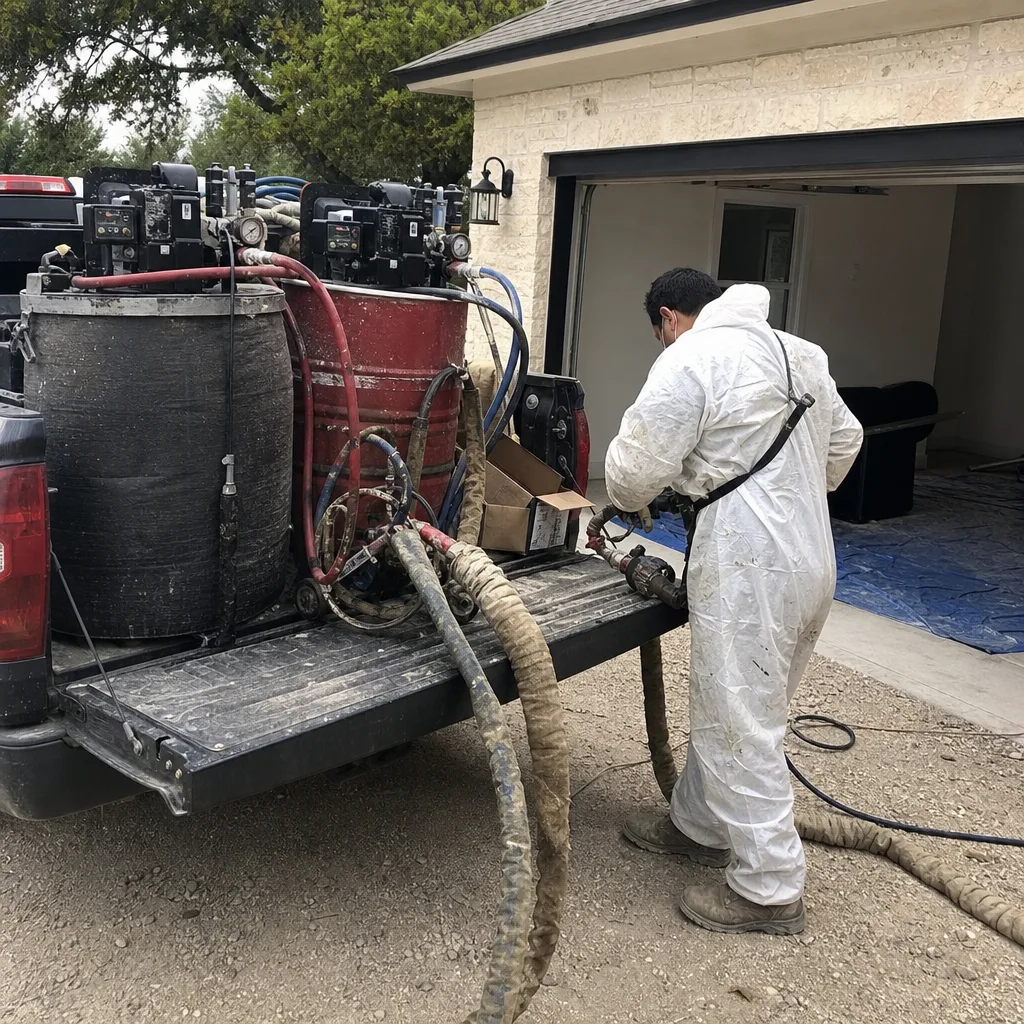
We install and service materials from Owens Corning, Johns Manville, Knauf, Rockwool, CertainTeed, Icynene, Demilec, and GreenFiber. No proprietary product lock-in means we specify the right material for your Castle Hills home’s specific condition, not what a manufacturer requires us to push. We stock common batt and blown-in products locally for fast turnaround on standard replacements. our brands
Pricing for Insulation in Castle Hills, TX
| Service | Typical range in Castle Hills |
|---|---|
| Vapor barrier (crawl space ground) | $1,200 - $2,800 |
| Full crawl space encapsulation | $4,200 - $7,500 |
| Attic radiant barrier (rafter-mounted) | $1,800 - $3,400 |
| Radiant barrier roof deck | $2,400 - $4,200 |
| Attic insulation removal | $1,400 - $2,800 |
| Insulation replacement (after removal) | $2,600 - $5,400 |
| Attic floor air sealing | $1,600 - $3,200 |
| Can light & duct boot sealing | $400 - $1,200 |
| Injection foam wall insulation | $3,200 - $6,800 |
| Drill & fill wall insulation | $2,400 - $4,800 |
| Attic sanitizing & decontamination | $1,800 - $3,600 |
| Rodent proofing & exclusion | $1,200 - $2,800 |
Prices in Castle Hills increase with accessibility challenges, such as low-clearance crawl spaces or steep roof pitches, and when permitting through Castle Hills City Hall requires plan review rather than over-the-counter approval. Every quote is a flat written price under Haven Standard Clause 1, delivered before any work starts, with no change orders unless you add scope.
Neighborhoods We Serve in Castle Hills
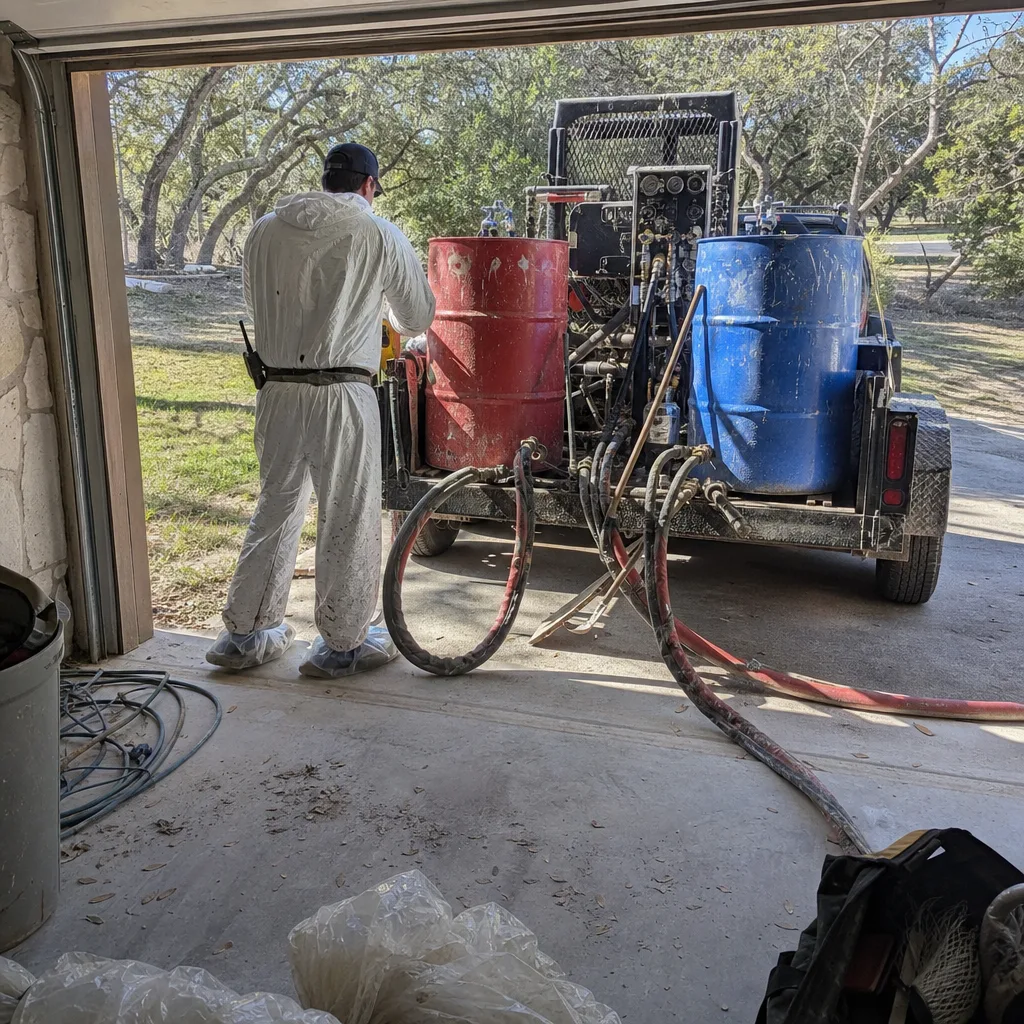
We work throughout Castle Hills and the immediately surrounding area, with crews dispatched from our Dallas-Fort Worth scheduling office and routed to Castle Hills daily. Most appointments are available within two to three business days, with emergency response for active water intrusion or heating emergencies.
- Castle Hills proper (original 1940s-1970s ranch core)
- Castle Hills Forest
- Castle Hills Village
- Nearby San Antonio neighborhoods adjacent to Castle Hills city limits
Service Area - Cities Near Castle Hills
We serve Castle Hills homeowners and also work in Boerne, TX, Fair Oaks Ranch, TX, Scenic Oaks, TX, and Helotes, TX. Scheduling and dispatch are coordinated from our Dallas-Fort Worth office, with crews serving the greater San Antonio metro area including Castle Hills locally.
Serving Castle Hills, TX - Our Local Coverage Area
We’re based in the Castle Hills area and know this community well. Use the map below to see our service coverage - if you’re nearby, we can almost certainly help.
FAQs About Insulation in Castle Hills
Yes, Castle Hills maintains its own building department entirely separate from San Antonio, and any insulation work in attics, walls, or crawl spaces requires a permit pulled through Castle Hills City Hall; we handle this as part of our standard process, and contractors who pull through San Antonio cause delays and failed inspections.
Most Castle Hills appointments are available within two to three business days for standard assessments, with permitting adding one to two days before work can begin; emergency response is available for active water intrusion or heating system failure related to insulation deficiency.
Castle Hills’ housing stock is older and more uniform, with lower original insulation values and independent permitting histories that left some additions uninsulated; the city’s separate building department also means contractors unfamiliar with Castle Hills routinely make procedural errors that delay projects.
Ready to schedule? Call (830) 529-7780 for a free estimate. We’ll walk your attic or crawl space, explain what we find, and deliver a written price before any work starts. That’s Haven Standard Clause 1, and it’s how we’ve operated since 2016.
What happens when you call
- 1A real person answersNo phone trees - talk to a local insulation pro.
- 2You get an upfront price rangeHonest numbers before anyone is dispatched. No surprises.
- 3A background-checked tech heads outLicensed & insured, typically within the hour.
- 4You approve before work beginsNothing starts until you say go.
What Castle Hills Customers Say
"Crawl space encapsulation done properly. Photographs of the vapour barrier at every seam, and the damp smell in the hallway is gone."
- Ainsley P."They air-sealed the attic floor before insulating and showed me the blower-door number before and after. The upstairs is finally the same temperature as downstairs."
- Marisol D."The winter gas bill dropped by about a third. They had estimated a quarter, so they under-promised."
- Genevieve R.