
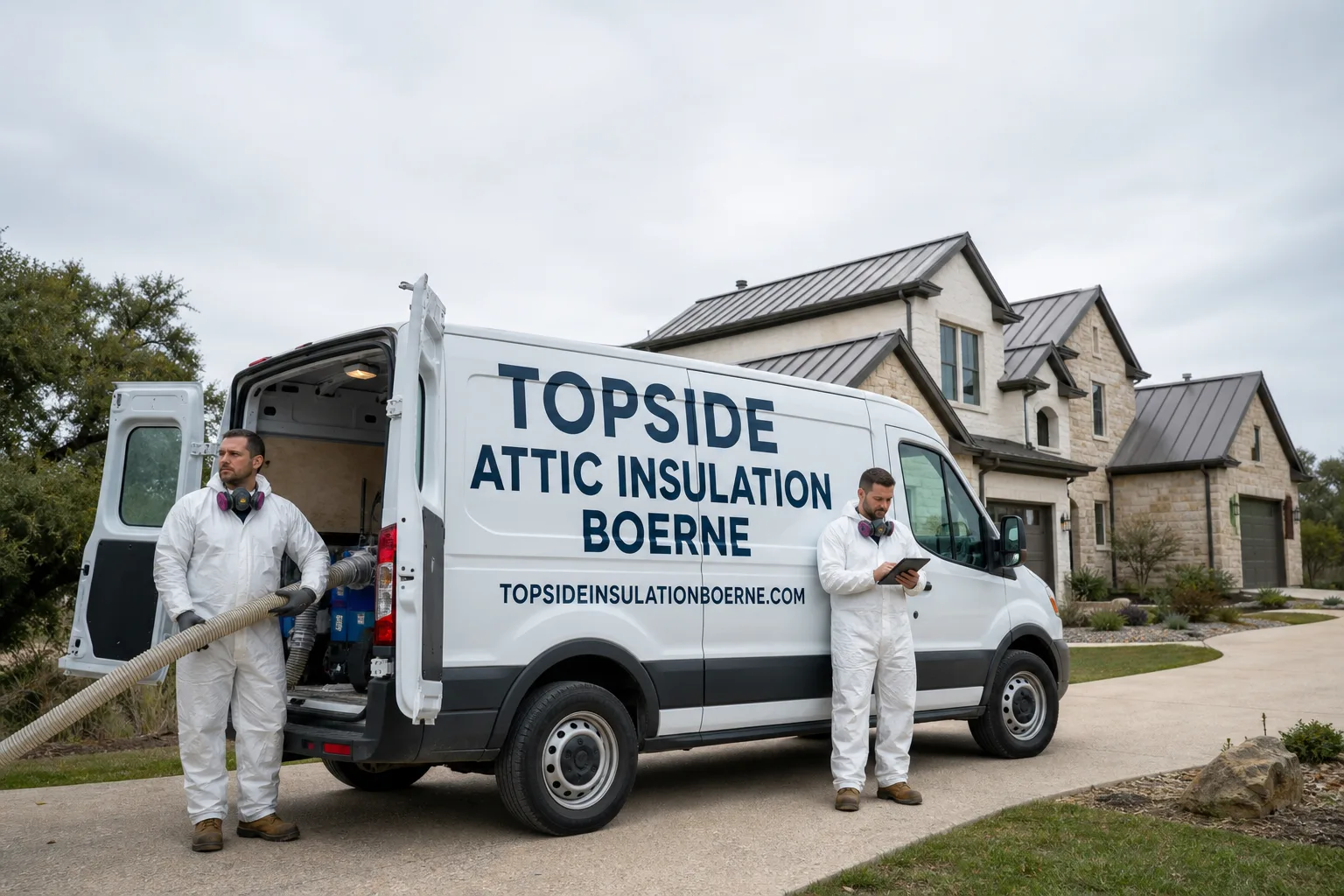
Fast, Reliable Blown-In Insulation Across Converse
Blown-in insulation in Converse typically runs $1,800-$4,200 for a complete attic retrofit on a standard slab ranch, and most jobs finish in a single day. We dispatch crews daily from our San Antonio office to Converse homes, with same-week availability for standard bookings and next-day response for urgent heat-load issues. Call (830) 529-7780 for a written price before any work starts.
We’ve worked the neighborhoods around JBSA-Randolph long enough to know what the attics look like before we pull the ladder down. The compressed batts. The top plates leaking 150°F air around the edges. The minimum-code blown fiberglass from 2007 that’s settled to half its labeled thickness. Converse isn’t generic suburban stock, and treating it that way wastes your money.
Why Topside Attic Insulation Boerne Is Converse’s Preferred Blown-In Insulation Company
Our Blown-In Insulation team has sealed and insulated more than 9,000 homes since 2016, and a measurable share of those have been in Converse’s base-adjacent neighborhoods. Reviews from Converse customers consistently note the same thing: we show the blower-door numbers, we photograph everything, and we don’t start until the price is in writing. That’s Haven Standard Clause 1. No exceptions.
Response time to Converse is typically same-day for assessments and next-day for crew deployment. We know the difference between a 1964 ranch off Gibbs Sprawl Road and a 2012 vinyl-sided build near Converse North Park. The insulation problems aren’t the same. The solutions shouldn’t be either.
Wes Okafor built this company on documented evidence, not promises. Every Converse customer receives a written scope, a written warranty, and a Documented Photo Record before the crew leaves. On jobs with air sealing, you also get before-and-after blower-door readings so you can verify the performance change in one number.
Our Blown-In Insulation Services in Converse
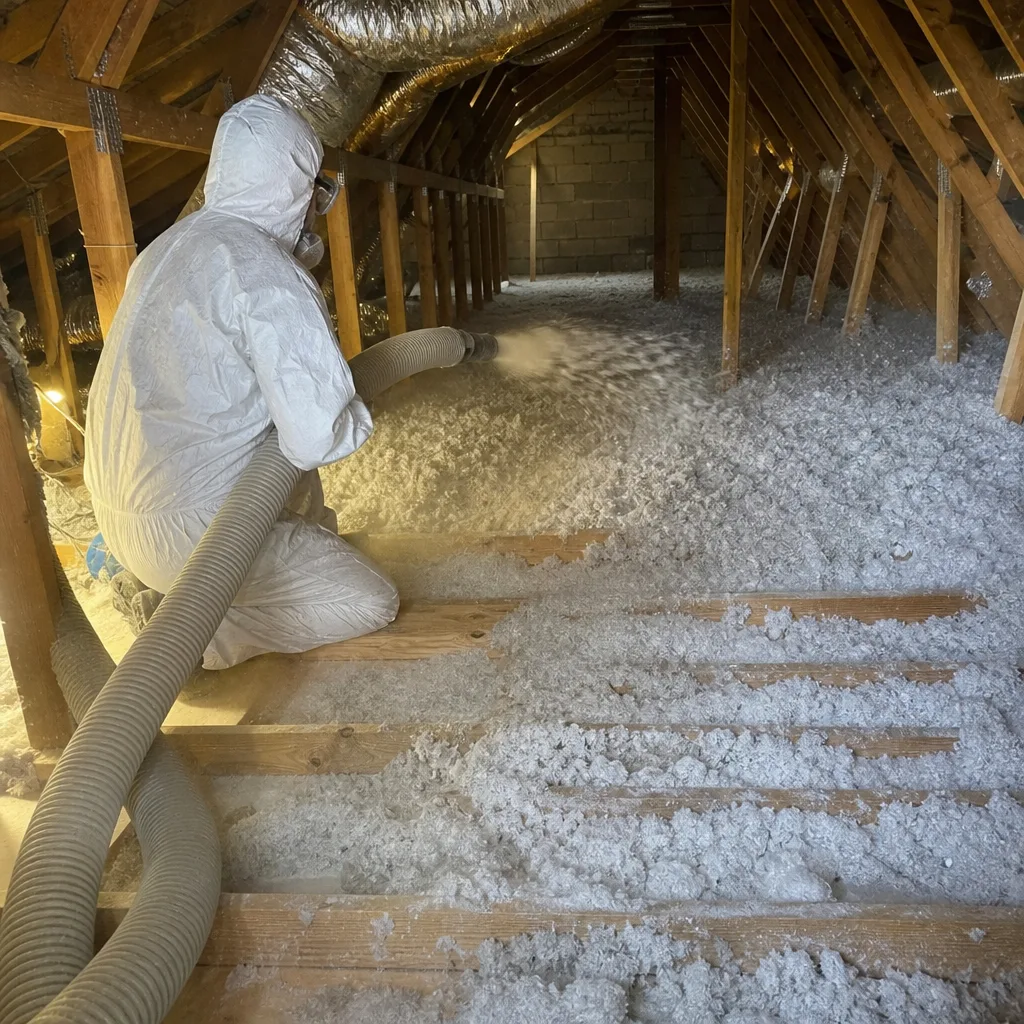
Blown-In Cellulose
We use GreenFiber cellulose for most full retrofits in Converse’s older ranch stock. Cellulose handles the 150°F attic temperatures of Climate Zone 2 better than fiberglass when properly dense-packed, and it air-seals as it settles into joist cavities. For the 1960s-era homes near JBSA-Randolph with original batts compressed to R-6 or below, we strip the dead material, seal the envelope, and blow to R-49. Typical cost: $2,400-$4,200 for a 1,400-1,800 square foot attic.
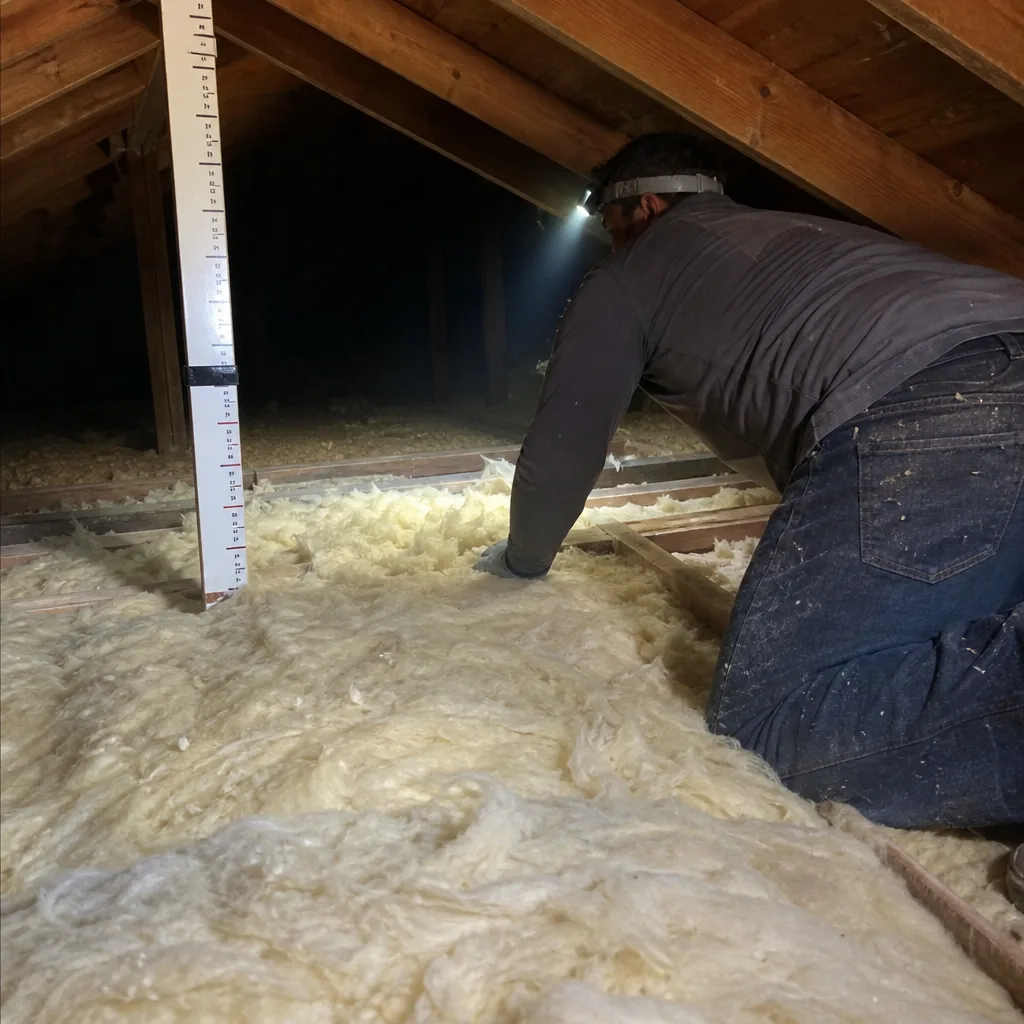
Blown-In Fiberglass
Newer Converse subdivisions, the 2000s-2010s vinyl-sided builds near Rolling Ridge Drive and Converse City Park, often started with minimum-code blown fiberglass around R-30. That material settles. It loses loft. We top up with Owens Corning or Johns Manville blown fiberglass to current Texas energy-efficiency levels, but only after we pressure-test and seal the attic floor. Blowing over leaks is throwing money into the wind.
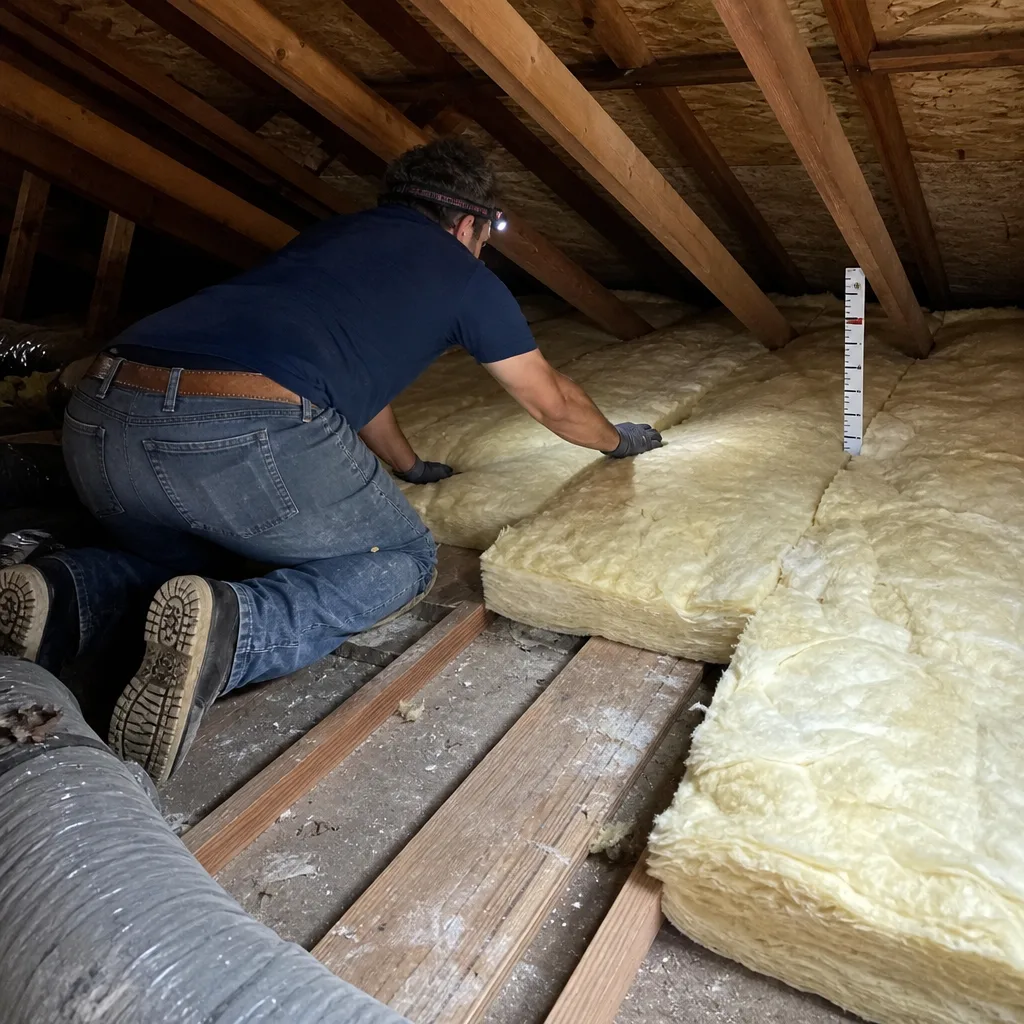
Dense-Pack Wall Insulation
Converse’s 1950s-1970s ranch homes were built with empty stud cavities or thin fiberglass batts in walls. Dense-pack cellulose, blown at 3.5 pounds per cubic foot, fills those cavities completely and cuts convection loops that batts never stop. We drill and fill from either interior or exterior, patch, and match texture. This matters in Converse because slab-on-grade construction puts all the thermal burden on the roof and walls. Typical wall job: $1,800-$3,200 depending on linear footage and access.
Blown-In Top-Up
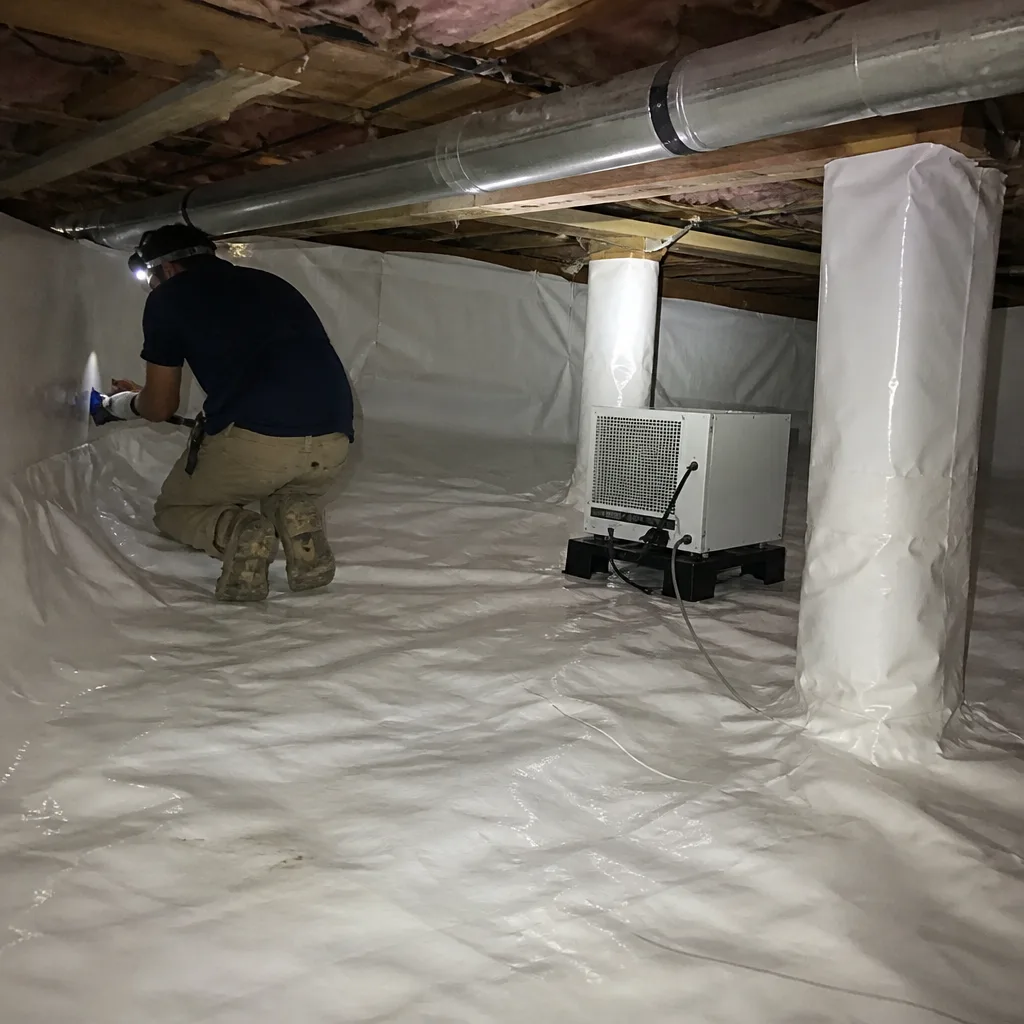
Not every Converse attic needs a full gut. Some 2010s builds have adequate depth but settled coverage, or homeowners who added a few bags themselves and created uneven thermal layers. We assess with a depth gauge and thermal camera, then top up to uniform R-49 with matched material. Cost typically runs $900-$1,800. We were called to a 1968 slab ranch on the Randolph perimeter where the homeowner’s August electric bill had topped $400. The attic told the story: original batts crushed to a 1.75-inch mat from years of HVAC inspection foot traffic. We pulled the dead batts, air-sealed the top plates and can lights, and blew GreenFiber cellulose to R-49, cutting the attic heat load enough that the 4-ton unit stopped short-cycling by the next week.
What happens when you call
- 1
A real person answersNo phone trees - you reach a local pro.
- 2
You get an upfront price rangeHonest numbers before anyone is dispatched.
- 3
A background-checked tech heads outLicensed & insured, dispatched right away.
- 4
You approve before work beginsNothing starts until you say go.
Trusted Brands We Service in Converse
We stock and install Owens Corning, Johns Manville, and GreenFiber blown-in products for Converse jobs, with no proprietary lock-in forcing a brand you don’t want. Our San Antonio warehouse carries standard densities and R-values for same-week turnaround on most Converse bookings. If your existing insulation is a specific brand and you’re matching for a top-up, we source to spec. The materials are commodity. The installation detail is not.
Common Blown-In Insulation Problems We See in Converse Homes
- Original fiberglass batts compressed to under 2 inches by decades of foot traffic from military-required annual HVAC inspections near JBSA-Randolph. Homeowners assume R-19 exists. We measure R-6. The gap between assumption and reality is what drives $400 August electric bills.
- Minimum-code blown fiberglass in 2000s-2010s vinyl-sided subdivisions has settled and lost loft, now performing below updated Texas energy expectations. The label said R-30 in 2008. It measures R-22 today.
- Attic air-sealing gaps around top plates and recessed cans let 150°F summer attic air bypass the insulation entirely. The blown-in layer never delivers its rated R-value because conditioned air escapes faster than the insulation can slow heat transfer.
- Post-Uri water line freeze damage in under-insulated attics across northeast Bexar County. February 2021 revealed how many Converse homes had supply lines in unconditioned spaces with no protection. Insulation retrofits now include targeted pipe wrapping and air-sealing as standard.
Pricing for Blown-In Insulation in Converse, TX
| Service | Typical Range in Converse | Notes |
|---|---|---|
| Blown-In Cellulose (full attic, R-49) | $2,400-$4,200 | Includes removal of degraded batts, air sealing, blower-door test |
| Blown-In Fiberglass Top-Up | $900-$1,800 | To R-49 from existing R-30 or better base |
| Dense-Pack Wall Insulation | $1,800-$3,200 | Per linear footage; interior or exterior access |
| Attic Air Sealing Only | $800-$1,500 | Top plates, cans, penetrations; with blower-door verification |
What moves the number: attic square footage, current insulation condition, accessibility (steep roof pitch or limited hatch access adds labor), and whether we find active rodent damage requiring remediation before blowing new material. We provide a written price before any work starts. No exceptions. Free second opinion on any competing written estimate. Call (830) 529-7780 for your exact number.
We Also Serve Cities Near Converse
Our crews run daily to Converse, Universal City, Schertz, San Antonio, and Bulverde from the San Antonio office. Same scheduling system, same written-price requirement, same documented closeout for every job.
Serving Converse, TX - Our Local Coverage Area
We’re based in the Converse area and know this community well. Use the map below to see our service coverage - if you’re nearby, we can almost certainly help.
FAQs - Blown-In Insulation in Converse
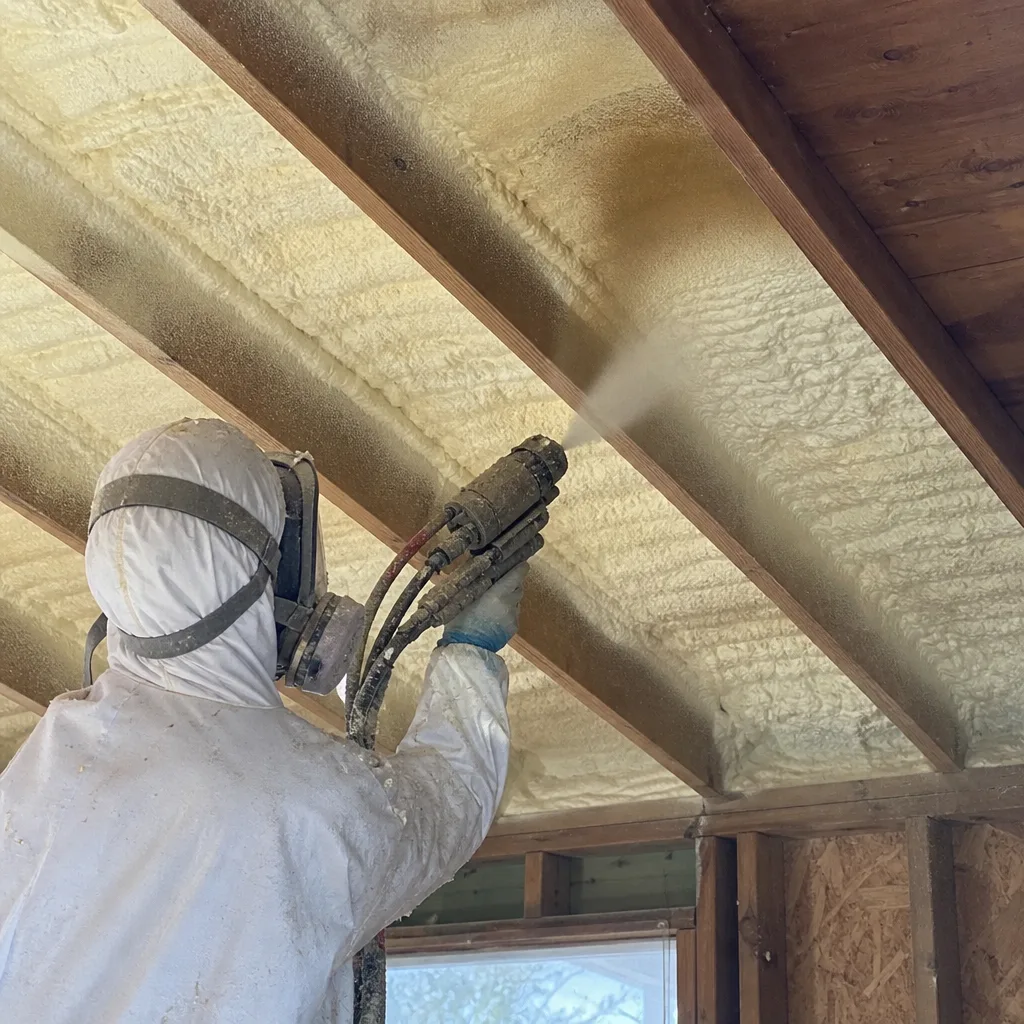
No. We remove compressed or degraded batts before blowing new insulation. Covering R-6 batts with R-38 cellulose traps the failed layer underneath, and the new material can’t perform because heat still conducts through the compressed mat beneath. We strip, air-seal, then blow. Call (830) 529-7780 for a written scope and price.
It affects how we document the job, not whether insulation makes sense. High turnover means resale value matters, and documented energy improvements with blower-door numbers sell better than verbal claims. We provide the photo record and performance data in a format that transfers to the next owner. The work pays for itself in comfort and utility savings regardless of how long you stay.
Air sealing first, then insulation, then radiant barrier if budget allows. In Converse’s 150°F attics, radiant barrier reduces radiant heat gain by 20-30%, but it’s secondary to stopping air leakage and achieving adequate R-value. We assess each attic individually and specify in writing what we recommend and why.
Uri exposed how many Converse homes had under-insulated attics and unprotected water lines in unconditioned spaces. Frozen supply lines in northeast Bexar County suburbs caused thousands in damage. Post-storm, homeowners and insurers began requiring verified insulation depth and pipe protection. We still field weekly calls from Converse residents upgrading attics they thought were adequate until February 2021.
Most complete retrofits finish in one day: morning for removal and air sealing, afternoon for blowing and cleanup. A top-up without removal takes 3-4 hours. We schedule Converse jobs with crew sizes matched to attic square footage so we’re not stretching a two-person team across a 2,400-square-foot footprint. Call (830) 529-7780 to book your assessment.
Ready for a written price on your Converse attic? Call (830) 529-7780 today. A live person answers 24/7. Your assessment includes a Documented Photo Record, and if air sealing applies, you’ll receive before-and-after blower-door readings under our 365-Day Done Right Promise. Haven Standard: Have it in writing.
Written by Wes Okafor, Owner at Topside Attic Insulation Boerne, serving Converse since 2016.