
GreenFiber Attic Air Sealing: The Boerne Owner’s Guide
GreenFiber attic air sealing components in Boerne homes typically run $340-$780 installed, depending on attic square footage and whether we’re re-sealing top plates, can light housings, or the full penetration set. We stock GreenFiber-compatible sealant assemblies, gasket kits, and dense-pack blocking materials on our Boerne trucks, and most replacements are completed same day. Most homeowners discover the problem when their summer electric bill jumps $80-$150 despite the thermostat never moving, or when they notice the insulation in their attic has dark streaks near the eaves - that’s filtered air leaking through gaps the original sealing was supposed to close.
Which GreenFiber Models This Applies To
GreenFiber’s cellulose insulation systems don’t ship with proprietary air-sealing hardware the way some spray-foam rigs do, but they do require specific compatibility between the cellulose density and the sealant type. The GreenFiber Low Dust and Sanctuary product lines - the two most common in Boerne’s 2015-2022 builds - need a vapor-permeable sealant at the attic floor that won’t off-gas and compromise the cellulose’s fire-retardant borate treatment. We see this mismatch in about one in five attics we open: a previous contractor used standard acrylic caulk that cracked in the Hill Country’s 100-degree summer attic heat, creating a hard ring around the penetration that actually channels air rather than blocking it.
To identify what you’re working with, look for the GreenFiber bag labels still visible in the attic - Low Dust has a blue stripe, Sanctuary a green one - and measure your top plate width. Most Boerne tract homes from the 2018-2021 build wave used 2×4 top plates at 16 inches on center, but the older ranch stock near River Road Park often has 2×6 plates at 24 inches, which changes the gasket length and the blocking depth we need. We carry both OEM GreenFiber sealant kits and a Johns Manville aftermarket equivalent that meets the same ASTM C920 standard; the JM kit costs about 15% less and performs identically in our blower-door testing, so we typically recommend it unless you’re matching existing material for a partial repair.
Signs Your GreenFiber Attic Air Sealing Is Failing
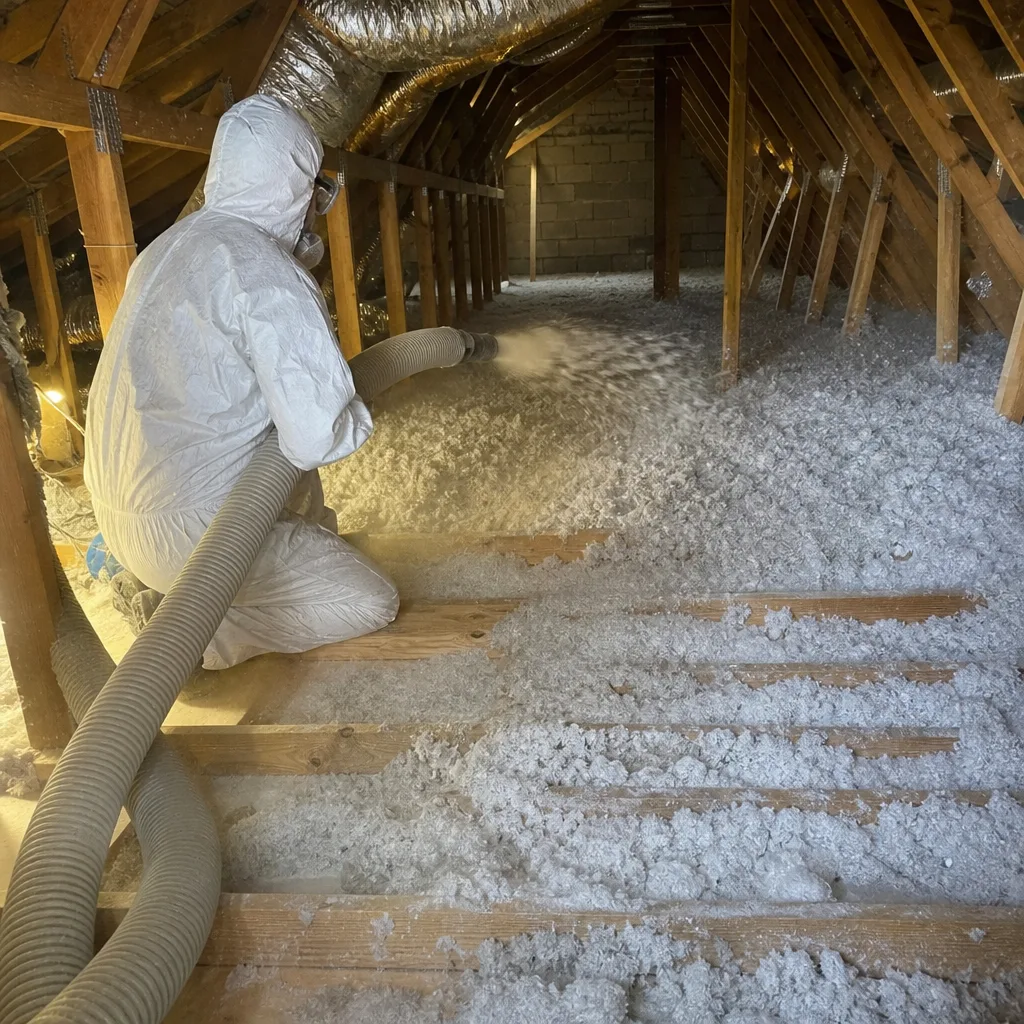
- Dust darkening at insulation edges. Air moving through a failed seal acts like a filter, trapping dirt in the cellulose fibers. In Boerne, where caliche dust is fine and persistent, this shows up as gray-to-black streaks running from the eaves toward the ridge - the telltale footprint of the stack effect pulling unconditioned air through gaps the sealing was meant to close.
- Uneven room temperatures between summer afternoons. When top plate sealing fails over a west-facing bedroom, that room runs 4-7 degrees warmer than the rest of the house by 4 PM because attic air is leaking directly into the wall cavity. We mapped this exact pattern in a 2019 build off Esser Road where the builder’s crew had missed two top plate sections entirely.
- Ice damming or condensation on nail pops in winter. Warm, moist interior air leaking through a failed can light seal hits the cold roof deck and condenses. Even in Boerne’s mild winters, we’ve seen this in homes with vaulted ceilings where the original foam gaskets around IC-rated housings had compressed to paper-thin after three years.
- Insulation settling faster than the 1-inch-per-year rule of thumb. GreenFiber cellulose should settle slowly and predictably, but air moving through it strips the fine fibers and accelerates compaction. If your attic floor shows 2-3 inches of settlement in eighteen months, the air sealing has likely failed at multiple points and the insulation is being wind-washed.
- Blower-door numbers that don’t match the original test. New construction in Boerne is supposed to test at 3 ACH50 or lower under current code. We’ve had homeowners bring us their original HERS paperwork showing 2.8 ACH50, then our pre-job test reads 5.5 or higher - almost always tracing back to failed attic air sealing at the chase, the top plates, or the bath fan penetrations.
Replacement Cost & What’s Included
| Scope | Typical Range in Boerne | What’s Included |
|---|---|---|
| Partial re-seal (2-4 penetrations or one top plate section) | $340-$520 | Sealant, gasket material, labor, blower-door verification |
| Full attic floor re-seal (typical 1,800-2,400 sq ft home) | $580-$780 | All top plates, can lights, chases, bath fans, documented photo record, before-and-after blower-door test |
| Additional dense-pack blocking at dropped soffits | $120-$200 per soffit | Rigid blocking, sealant, air barrier continuity to conditioned space |
What drives the range: attic accessibility (truss height and whether there’s decking), the number of can light housings that need gasket replacement, and whether we’re working around existing GreenFiber that needs to be moved and replaced. We don’t charge separately for the blower-door test - it’s included because without it, neither of us knows whether the work actually worked. Under Haven Standard Clause 1, you get the written price before anyone lifts a tool, and that price includes the 365-Day Done Right Promise. If a seal fails or a gasket compresses inside a year, we come back and make it right.
DIY or Call Us?
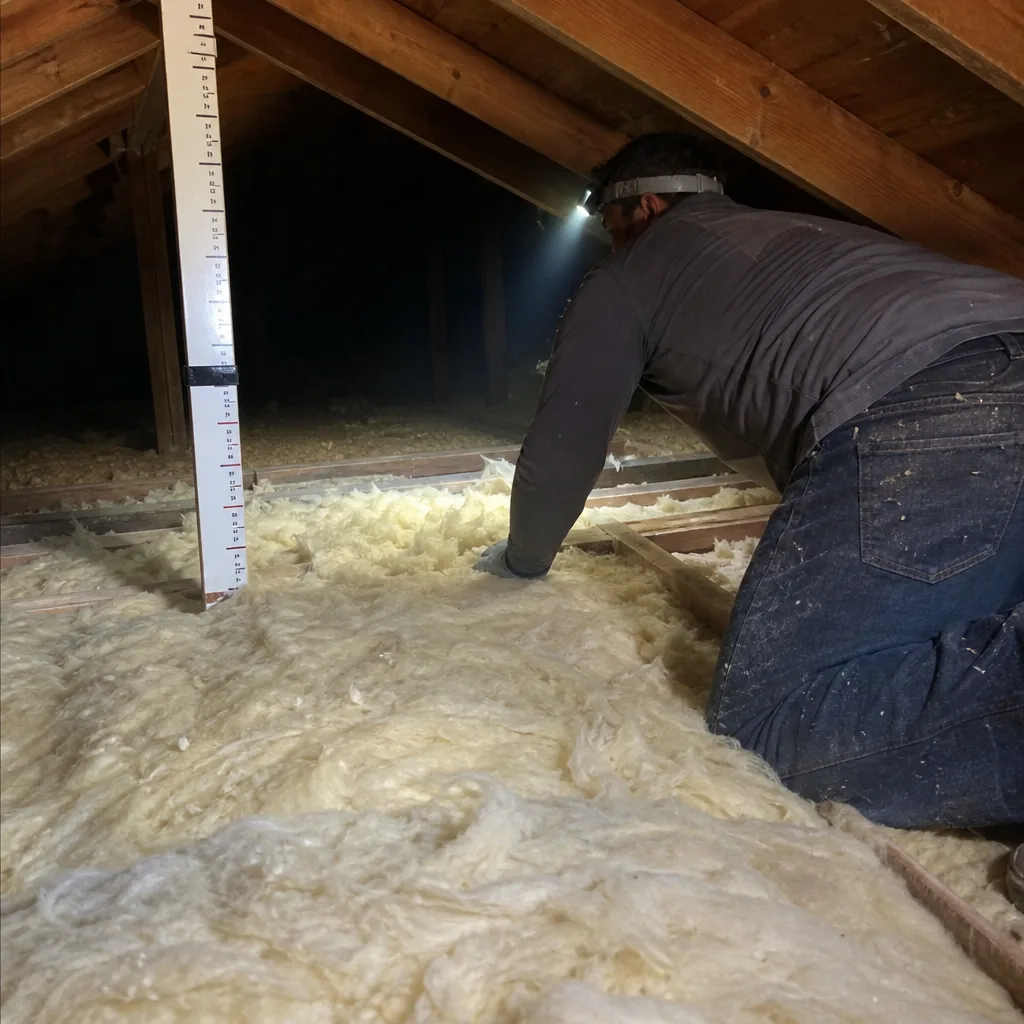
There’s a short list of things a homeowner can safely check: verify that bath fan housings still have intact foam gaskets, look for obvious gaps around chimney chases or plumbing vents, and confirm that attic access doors have weatherstripping that actually compresses when closed. What you can’t safely or effectively do yourself is the pressure-diagnostic work. A blower-door test tells us which leaks matter and which are trivial - without it, you’re sealing what you can see and missing what you can’t, which is usually the larger problem.
The other DIY risk in a Boerne attic is the work itself. Attic floors aren’t built to be walked on, the heat in July runs 130-140 degrees, and disturbing existing GreenFiber without proper PPE puts loose cellulose fibers in your lungs. We’ve also found live electrical junctions buried in insulation more times than we can count - a hazard that doesn’t announce itself. If you’re comfortable with a flashlight and a camera, document what you see and text us the photos. If the problem involves the roof deck, the HVAC chase, or more than two or three penetrations, call (830) 529-7780. We’ll read your situation with you, and if you have a competing estimate, we’ll give you a free second opinion on it.
FAQs
Properly installed sealant and gasket materials should last 15-20 years, but we’ve seen builder-grade installations fail in 3-5 years because the original crew used the wrong sealant for cellulose contact or skipped the top plates entirely. The Hill Country’s temperature swing - 30 degrees at night to 100 by afternoon in summer - accelerates thermal cycling and gasket compression. Call (830) 529-7780 and we’ll test what you’ve got; estimates are free.
Partial repair is possible when the failure is isolated to one or two penetrations, but we don’t patch over degraded material. If the original sealant is brittle or the gaskets are compressed past recovery, we remove and replace the full run so the air barrier stays continuous. Mixing new sealant with failed old sealant is how you get a leak that shows up two years later in a different season. Call (830) 529-7780 for an exact quote - estimates are free.
Most partial jobs are done in 3-4 hours; a full attic floor re-seal on a 2,000-square-foot home takes a full day, including the blower-door test at both ends. We don’t rush the diagnostic - finding the leaks takes longer than sealing them, and skipping that step is how you end up with a 20% improvement instead of 40%. Call (830) 529-7780 to schedule; we stock GreenFiber-compatible materials on our Boerne trucks.
We stock GreenFiber-compatible sealant kits, gasket sets, and dense-pack blocking on every Boerne truck, plus the Johns Manville aftermarket equivalent that matches the same specs. We’re an independent service provider - not affiliated with GreenFiber - so we source what tests best, not what a manufacturer requires us to carry. Same-day completion is standard for most jobs we book before noon. Call (830) 529-7780 to confirm availability.
Topside Attic Insulation Boerne is independently owned and operated. We also stock parts for Reflectix systems.
Seal the envelope first. Then fill it. That’s the order we follow on every job in Boerne, whether we’re working on new construction off Balcones Creek or a 1980s ranch near the Cibolo Nature Center where the stack effect has been pulling conditioned air through the attic floor for decades. Wes Okafor has been running blower-door tests for eighteen years, and he still hands homeowners that printed pressure-differential report in pascals before the crew packs up - because a number on paper outlasts any claim.
Call (830) 529-7780 for a free estimate. A live person answers 24/7, and under Haven Standard Clause 1, you’ll get a written price before any work starts.
Written by Wes Okafor, Owner, Topside Attic Insulation Boerne at Topside Attic Insulation Boerne, serving Boerne and nearby areas.