
GreenFiber Attic Insulation: The Boerne Owner’s Guide
We stock and install GreenFiber cellulose attic insulation in Boerne with same-day availability on most jobs, and most attic insulation projects in a home this size run between $1,800 and $3,400 installed. The typical Boerne homeowner discovers their GreenFiber insulation is failing when upstairs rooms won’t stay cool in July despite the AC running nonstop, or when they find gray cellulose dust settling on ceiling fan blades, a sign the material has degraded and is migrating through gaps in the ceiling plane.
GreenFiber’s stabilized cellulose product line, commonly found in Boerne homes built between 2010 and 2020, performs well in our Hill Country climate when the attic floor is properly sealed first. We’ve pulled failed batches from homes near Main Street where the original installer skipped top-plate sealing, letting conditioned air wash through the cellulose and carry it into wall cavities over time.
Which GreenFiber Models This Applies To
GreenFiber produces two product lines relevant to Boerne attics: Low Dust and Stabilized cellulose, both sold in 25-pound bags with an R-value of 3.7 per inch. The Low Dust line carries a boric-acide fire retardant treatment and is identifiable by the green-and-white bag labeling; Stabilized adds a water-based adhesive to reduce settling in vertical applications, marked with blue accent stripes. Most residential attic floors in Boerne received the Low Dust product at R-30 to R-38 depths, roughly 8 to 10 inches after settling.
To identify what you have, check for a bag remnant or installer invoice, or measure the settled depth and note the color: fresh GreenFiber Low Dust reads as medium gray with visible fiber texture, while degraded material turns lighter and powdery. We do not use proprietary product lock-in; our crews also work with Owens Corning, Johns Manville, Knauf, and Rockwool, so if your GreenFiber has failed prematurely we can match the R-value with an alternative or reinstall GreenFiber per your preference. Topside Attic Insulation Boerne is an independent service provider, not affiliated with GreenFiber.
One compatibility gotcha in this market: GreenFiber’s Stabilized line was sometimes specified for sloped cathedral ceilings in Boerne’s 2015-2019 builds, but the adhesive can break down in attic temperatures exceeding 140°F, which happens routinely in unvented Boerne attics during August. If your ceiling follows the roofline and the insulation is dropping, that’s likely the cause.
Signs Your GreenFiber Attic Insulation Is Failing
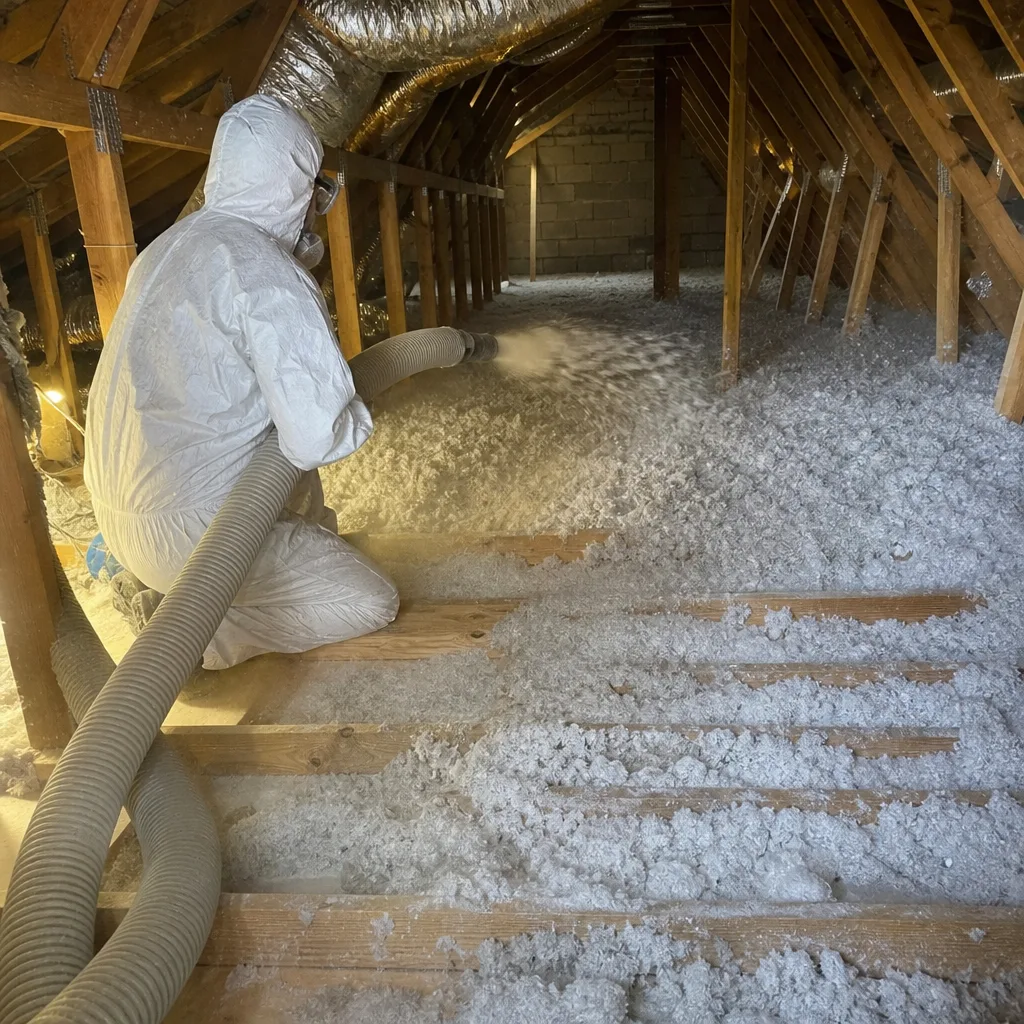
- Uneven temperatures between rooms. Cellulose that has settled, compressed, or migrated leaves thin spots where thermal bridging dominates. In Boerne, we see this most in homes near the Cibolo Creek drainage where humidity swings accelerate fiber clumping.
- Gray dust on ceiling fixtures and fan blades. This indicates air is moving through the insulation layer, carrying cellulose particles with it. The cause is almost always unsealed penetrations, can lights, or top plates, not the insulation itself.
- Ice damming or heavy frost on roof sheathing in winter. Warm, moist air leaking through a compromised insulation layer condenses on cold decking. Boerne’s freeze-thaw cycles are milder than Chicago’s, but we still see sheathing mold in January after a cold snap.
- Insulation depth below original grade marks. GreenFiber cellulose settles 10-15% over the first two years; beyond that, further loss means disturbance by rodents, wind washing from soffit vents, or removal by prior service work that was never replaced properly.
- Musty odor in upstairs spaces after rain. Wet cellulose loses its fire-retardant treatment and supports mold growth. In Boerne’s spring storm season, we’ve found saturated GreenFiber in valleys where roof leaks went undetected, the boric acid long since leached out.
Replacement Cost & What’s Included
Most GreenFiber attic insulation replacement jobs in Boerne run between $1,800 and $3,400 for a typical 1,500 to 2,500 square foot home, with smaller partial repairs starting around $900. The range reflects three variables: how much existing material must be removed (water-damaged or rodent-contaminated cellulose costs more to extract safely), whether the attic floor requires air sealing before new insulation goes in, and the final R-value you want, R-38 being the current Texas energy code minimum for attic floors.
Our price includes removal and bagging of failed material, thorough air sealing of top plates, wire penetrations, and can-light housings, installation of new baffles at soffit vents, and blowing new cellulose to specified depth. Every job closes with a Documented Photo Record and, where applicable, before-and-after blower-door numbers so you can verify the air-sealing result in CFM50. Under Haven Standard Clause 1, you get a written price, written scope, and written warranty before anyone lifts a tool. The 365-Day Done Right Promise covers all completed work.
DIY or Call Us?
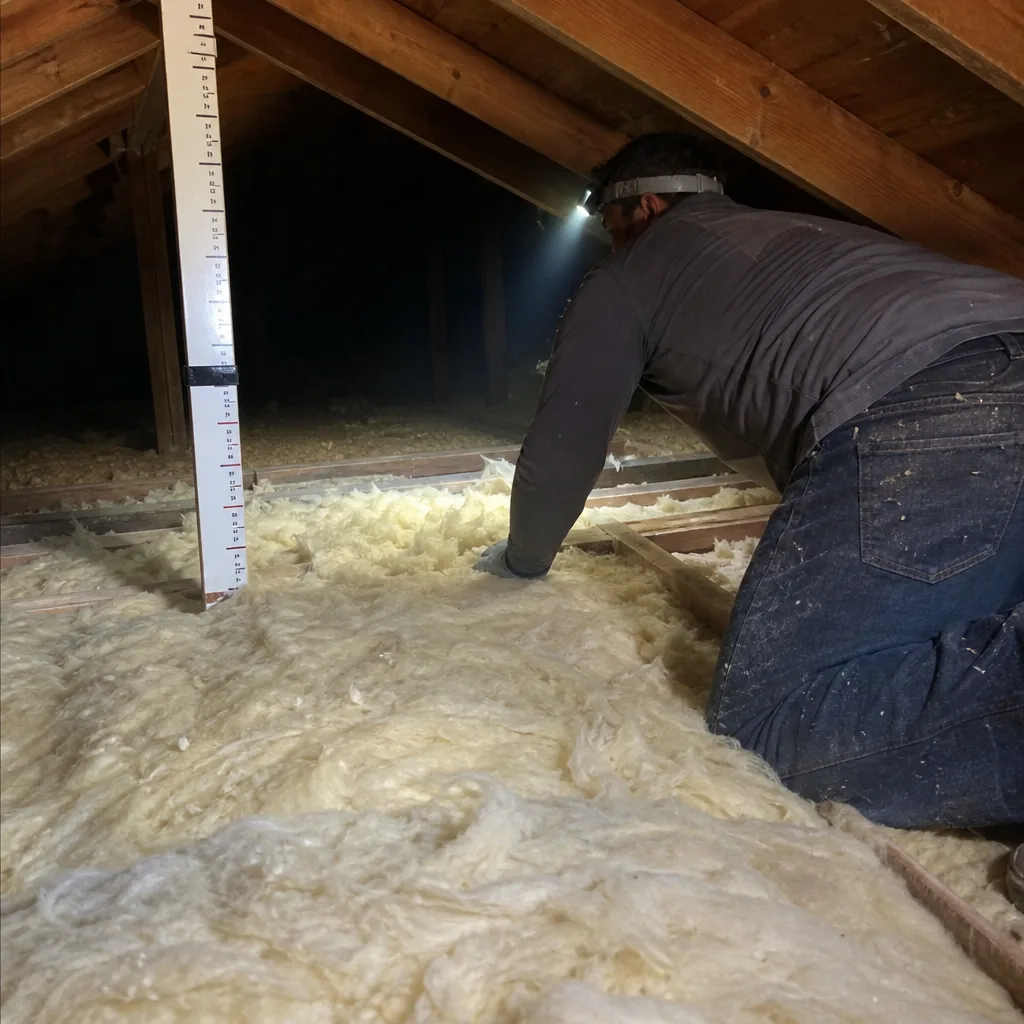
Homeowners can safely check their attic insulation depth with a ruler and photograph any discoloration or thin spots for reference. What you cannot safely do is remove contaminated cellulose without proper respirator protection, or air-seal an attic floor while balancing on joists near active electrical. The boric acid in GreenFiber is low-toxicity but the dust is a respiratory irritant, and disturbed cellulose in a confined attic creates visibility hazards.
Where DIY goes wrong: blowing new cellulose over an unsealed attic floor, which guarantees the same failure mode in three to five years. Seal the envelope first. Then fill it. We carry GreenFiber-compatible cellulose on our trucks, and most Boerne jobs are completed in a single day. Call (830) 529-7780 for a free estimate, or bring us a competing written quote for our Free Second Opinion.
FAQs
In Boerne’s climate, properly installed GreenFiber cellulose lasts 20 to 30 years if the attic floor is sealed and the roof doesn’t leak. Without air sealing, we’ve seen functional failure in 5 to 8 years as wind washing and stack-effect leakage redistribute the material. Call (830) 529-7780 for an exact quote on replacement, estimates are free.
Localized thin spots can be topped off with new cellulose if the existing material is dry and uncontaminated, but this is rarely the full solution. The underlying air leaks that caused the failure must be sealed first, or the new material will fail the same way. Call (830) 529-7780 for an exact quote, estimates are free.
Most complete removals and replacements in a Boerne home are finished in one day, with larger or contaminated jobs occasionally extending to a second morning. We stock GreenFiber-compatible cellulose on our trucks and schedule with same-day availability when possible. Call (830) 529-7780 to check current openings.
We carry GreenFiber Low Dust and Stabilized cellulose on our service trucks, along with Owens Corning, Johns Manville, Knauf, and Rockwool alternatives. No proprietary lock-in means you choose the product that fits your home and budget. Call (830) 529-7780 to confirm current stock and schedule.
Written by Wes Okafor, Owner, Topside Attic Insulation Boerne at Topside Attic Insulation Boerne, serving Boerne and nearby areas.