
Icynene Vapor Barrier Installation: The Boerne Owner’s Guide
We stock and install Icynene-compatible vapor barrier systems for Boerne homes, with most crawl space or attic applications running between $1,800 and $3,400 installed depending on square footage and whether the space needs prep work. Same-day installation is available when we have your dimensions and a photo of the existing barrier, which most homeowners can text to (830) 529-7780. Most people discover their vapor barrier has failed when they notice a sharp musty smell returning after months of absence, or when they spot condensation beading on ductwork in a Boerne crawl space that should stay dry through our humid spring months.
Which Icynene Models This Applies To
Icynene produces vapor barrier materials as part of its broader building envelope system, most commonly the Icynene vapor barrier membrane used in conjunction with their open-cell and closed-cell spray foam installations. The critical compatibility point is thickness and permeance rating: Icynene-specified barriers are typically 6-mil polyethylene minimum, with some assemblies calling for 10-mil reinforced poly in ground-contact applications. We see confusion in Boerne when homeowners have a partial Icynene foam installation from a previous contractor and need the vapor barrier layer addressed separately.
To identify what you have, look for the Icynene lot number on any exposed foam surface, or check your original contract for the product designation, typically beginning with “LD-” for open-cell or “MD-” for closed-cell systems. The vapor barrier itself may carry a separate manufacturer marking, often stamped in the corner of the sheet. We stock both OEM Icynene-compatible 10-mil reinforced barrier and a Johns Manville equivalent that matches the permeance spec at a lower per-square-foot cost. The aftermarket option carries the same 10-year material warranty when we install it. Topside Attic Insulation Boerne is an independent service provider, not affiliated with Icynene, so we have no obligation to push one material over another.
Signs Your Icynene Vapor Barrier Installation Is Failing
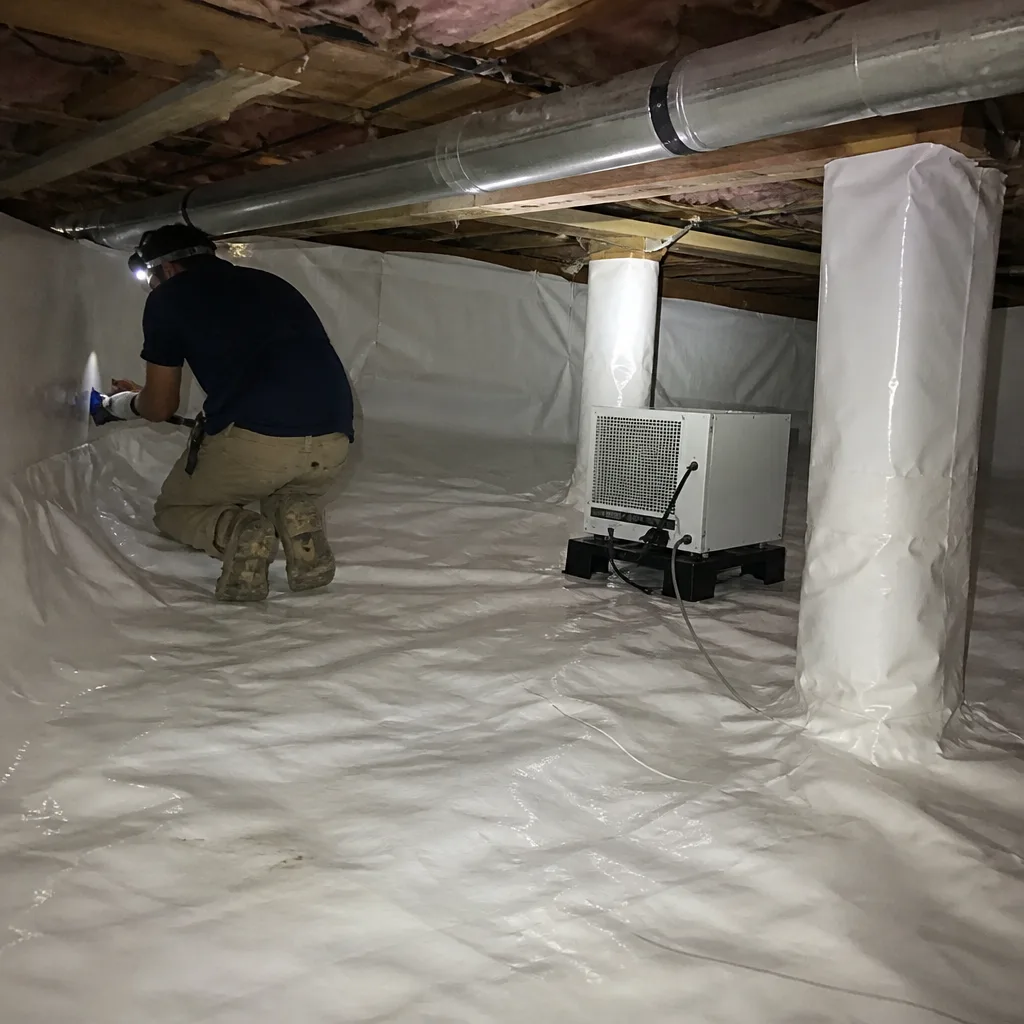
- Condensation on crawl space ducts or floor joists. When the vapor barrier separates at seams or tears around piers, warm humid air from Boerne’s spring and fall meets cooler surfaces below your home. The result is water droplets that look like a leak but are actually airborne moisture condensing out.
- Musty odor returning after prior remediation. A properly sealed vapor barrier blocks the soil moisture that feeds mold and mildew. If that smell comes back within a year of installation, the barrier has likely pulled away from walls or developed punctures from rodent activity or storage traffic.
- Visible pooling on top of the barrier. Water should never sit on a vapor barrier; it should drain to a sump or evaporate in a conditioned space. Pooling means the barrier was installed without proper slope or has sagged between supports, creating low points where condensation collects.
- White chalky residue on foam surfaces. This is efflorescence, mineral deposits left when moisture moves through a compromised barrier and evaporates at the foam face. It means your vapor barrier is no longer the primary moisture stop.
- Increased energy bills with no equipment change. A failed vapor barrier raises humidity in crawl spaces and attics, forcing your HVAC to work harder. In Boerne’s cooling-dominant climate, we regularly see this show up as a 12-18% spike before homeowners notice any visible symptom.
Replacement Cost & What’s Included
Most Icynene vapor barrier replacements in Boerne run $1,800 to $3,400 for crawl spaces under 2,000 square feet, and $2,200 to $4,100 for attic applications with more complex access. The lower end covers straightforward swap-outs where the old barrier comes out clean and the substrate needs minimal repair. The upper end includes sistering rotted joist ends, regrading for drainage, or addressing active rodent damage before the new barrier goes down.
Every installation includes removal and disposal of the failed barrier, installation of new 6-mil or 10-mil reinforced polyethylene (your choice, with the spec difference explained), seam sealing with pressure-sensitive tape rated for damp substrates, and mechanical fastening at walls and piers. We also run a moisture meter reading before and after, documented in your photo record. Under our 365-Day Done Right Promise, if a seam lifts or a tear develops from our workmanship, we return and fix it at no charge.
DIY or Call Us?
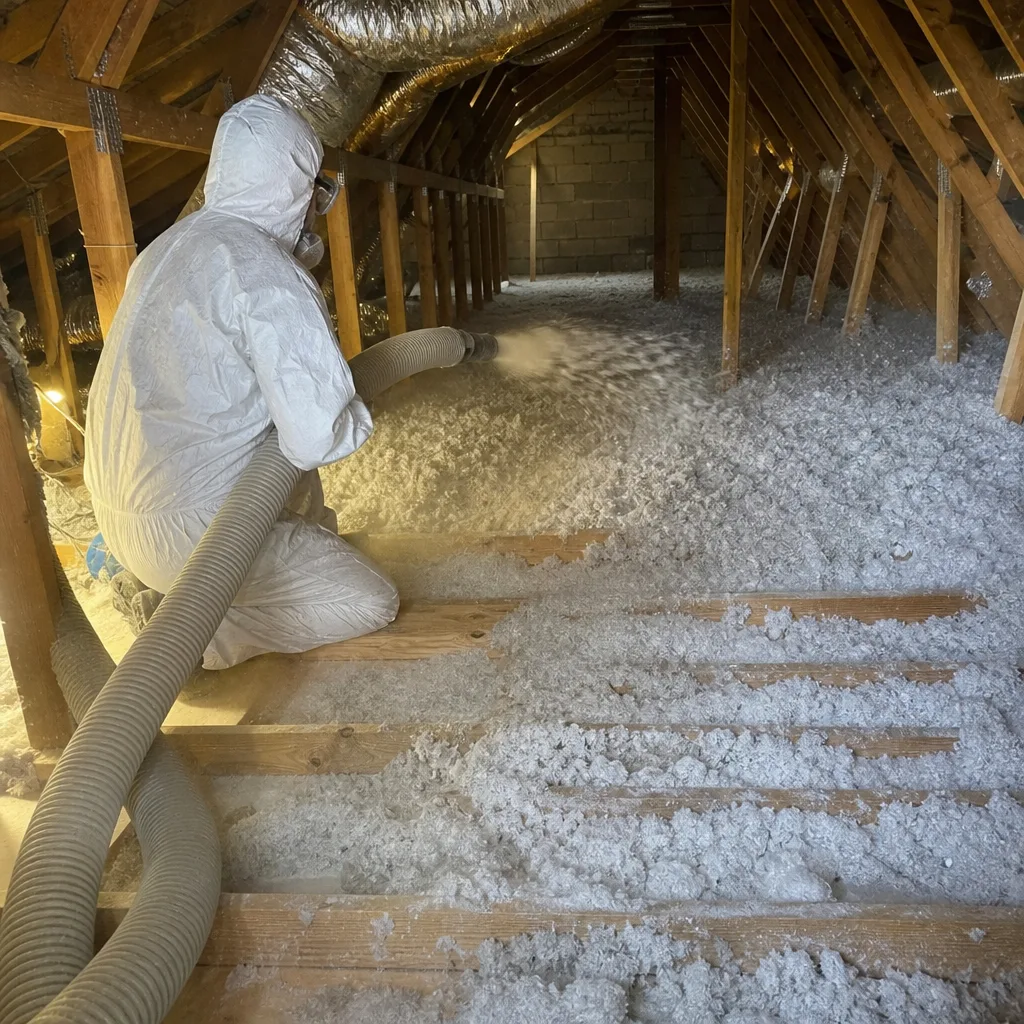
A homeowner can safely check whether a vapor barrier has torn or pulled away, and can photograph problem areas for us to review. What goes wrong with DIY is the prep: old barrier removal in a confined crawl space stirs up decades of rodent droppings and mold spores, and proper seam sealing requires a clean, dry substrate that most homeowners don’t have the ventilation setup to achieve. The 10-mil material we use is stiff and heavy, two-person work in tight quarters. We also see DIY jobs where the barrier was laid over standing water or active mold, which guarantees premature failure. For the actual installation, call (830) 529-7780. We bring HEPA ventilation, proper PPE, and the experience of 9,000+ homes sealed and insulated since 2016.
FAQs
In the Hill Country’s combination of limestone substrate, seasonal humidity swings, and occasional hard freeze-thaw cycles, a properly installed 10-mil reinforced vapor barrier typically lasts 15 to 20 years. The 6-mil standard grade often shows seam lifting or puncture damage closer to 8 to 12 years, especially in crawl spaces with storage traffic or rodent pressure. Call (830) 529-7780 for an exact assessment of your current barrier’s condition.
Patching works for isolated punctures smaller than a dinner plate, using compatible polyethylene tape on clean, dry material. Multiple tears, seam failures, or any area of mold growth underneath means full replacement; patches over contaminated substrate trap moisture and accelerate rot. We offer free second opinions on any written estimate you’ve received for this decision.
Most residential crawl spaces in Boerne take one day, attic applications typically one to two days depending on access constraints and whether air sealing of top plates and penetrations is needed first. We won’t blow insulation or install barrier over an unsealed envelope. Seal the envelope first. Then fill it.
We stock 6-mil and 10-mil reinforced polyethylene vapor barrier on every truck, along with the pressure-sensitive seam tape and mechanical fasteners specified for Icynene-compatible assemblies. For Icynene foam-specific jobs, we source from our regular supplier with a two-day lead time if your project requires an exact OEM match rather than our in-stock equivalent. Call (830) 529-7780 to confirm availability for your timeline.
Ready to get this handled? Text or call (830) 529-7780 for a free estimate. We’ll review your photos, give you a written price before any work starts, and schedule installation around your availability. Every job closes with a Documented Photo Record and, where applicable, before-and-after blower-door numbers so you can verify the result.
Written by Wes Okafor, Owner, Topside Attic Insulation Boerne at Topside Attic Insulation Boerne, serving Boerne and nearby areas.