
Knauf Attic Air Sealing: The Boerne Owner’s Guide
We stock and install Knauf-compatible attic air sealing components for Boerne homes, with most jobs running between $1,200 and $2,800 installed depending on attic square footage and penetration count. Same-day service is available when the call comes in before noon, and we carry Knauf Ecoseal System acrylic sealant, joint backing, and compatible gasket materials on every truck. Most Boerne homeowners discover their attic air sealing has failed when they notice hot rooms directly below the attic in July despite new insulation, or when a recent energy audit flags CFM50 numbers above 3,500 in a home that should test closer to 2,000.
Which Knauf Models This Applies To
Knauf’s attic air sealing line centers on the Ecoseal System, an acrylic latex sealant applied to joints, top plates, and penetrations before batt or blown insulation goes in. The system pairs with Knauf Insulation’s blown-in fiberglass and Jet Stream MAX products, though the sealant itself is compatible with any attic floor assembly. We also work with homes that have Knauf Ecobatt installations where the original air sealing was skipped or degraded, and with older Knauf projects using the pre-2018 formula that stiffens and cracks after seven to ten Hill Country summers.
To identify what you have, check for a Knauf lot number on any exposed batt paper or the original invoice. The Ecoseal System carries a light green label; post-2020 product uses the lower-VOC formula that stays flexible longer in high-temperature attics. We do not require you to find this label - our crew photographs every can and tube before application for your record - but it helps us match the cure rate and expansion characteristics if we’re touching up existing work.
Topside Attic Insulation Boerne is an independent service provider, not affiliated with Knauf. We source Ecoseal through standard distribution, and we also stock Reflectix tape and gasket products for homeowners who want a hybrid air-barrier approach at mechanical penetrations. The OEM-versus-aftermarket question rarely applies to acrylic sealants the way it does to mechanical parts; the real decision is whether the original application was thick enough and whether the substrate was clean. We’ve opened attics in Boerne’s Menger Springs and Balcones Creek subdivisions where the sealant was painted on like stain instead of gapped like caulk, which is a labor problem, not a product problem.
Signs Your Knauf Attic Air Sealing Is Failing
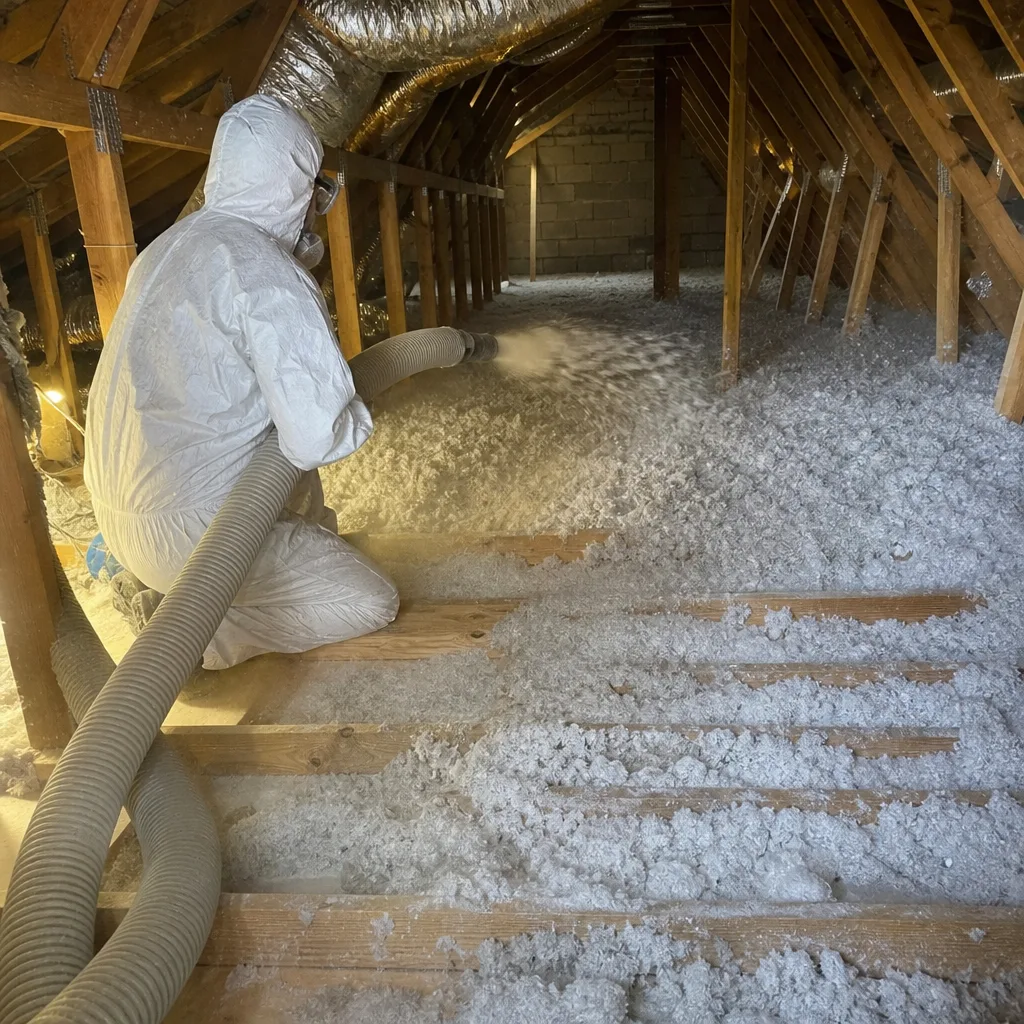
- Hot ceiling patches in summer. Air leaking through top plate gaps or recessed can light housings carries attic heat directly into conditioned space. The insulation above acts like a blanket over a draft, not a seal against it.
- Dust streaking around ceiling registers and can lights. This is the “filtration line” pattern - conditioned air escaping into the attic pulls attic dust back through every tiny gap when the system cycles off. In Boerne, that dust is often limestone and cedar pollen, which leaves a gray-brown shadow.
- Ice damming or heavy frost on roof sheathing in winter. Warm, moist indoor air hits cold OSB and condenses. The Knauf sealant was supposed to stop that exfiltration at the attic floor; if it’s cracked or missing at plumbing chases, the moisture path is open.
- Blower-door test shows minimal improvement after insulation upgrade. We see this in homes where another contractor blew fiberglass over unsealed gaps. The R-value went up; the air changes per hour barely moved. The fix is removing or working around that insulation to seal first.
- Rodent activity concentrated at interior wall tops. Mice follow air currents. A gap at a top plate that leaks conditioned air is also a highway. In Boerne’s hilltop homes with stone veneer, we’ve found entry points where the sealant never bridged the gap between framing and masonry transition.
Replacement Cost & What’s Included
| Scope | Price Range in Boerne | What’s Included |
|---|---|---|
| Small attic (under 1,200 sq ft), light sealing | $1,200 - $1,800 | Top plates, wire/plumbing penetrations, can light housings, blower-door test, photo record |
| Mid-size attic (1,200-2,400 sq ft), standard sealing | $1,800 - $2,400 | Above plus chimney chase, duct boots, dropped soffits, before-and-after CFM50 report |
| Large or complex attic (2,400+ sq ft, multiple HVAC zones) | $2,400 - $2,800+ | Full envelope treatment, multi-point testing, documented pressure-differential report in pascals |
The range driver is accessible linear footage of joints and penetrations, not just attic size. A 1,800-square-foot attic with a wide-open truss layout and a single HVAC chase is faster to seal than a 1,400-square-foot attic with dropped ceilings, a fireplace chase, and twelve can lights. Every job gets a written price before work starts - Haven Standard Clause 1 - and the 365-Day Done Right Promise covers material and labor both.
We publish before-and-after blower-door numbers on every applicable job. A typical Boerne home we sealed last month in the Cordillera Ranch area tested at 3,840 CFM50 pre-work and 2,150 CFM50 after sealing - a 44% reduction in envelope leakage before any insulation was added. You get that number on paper, not as a sales claim.
DIY or Call Us?
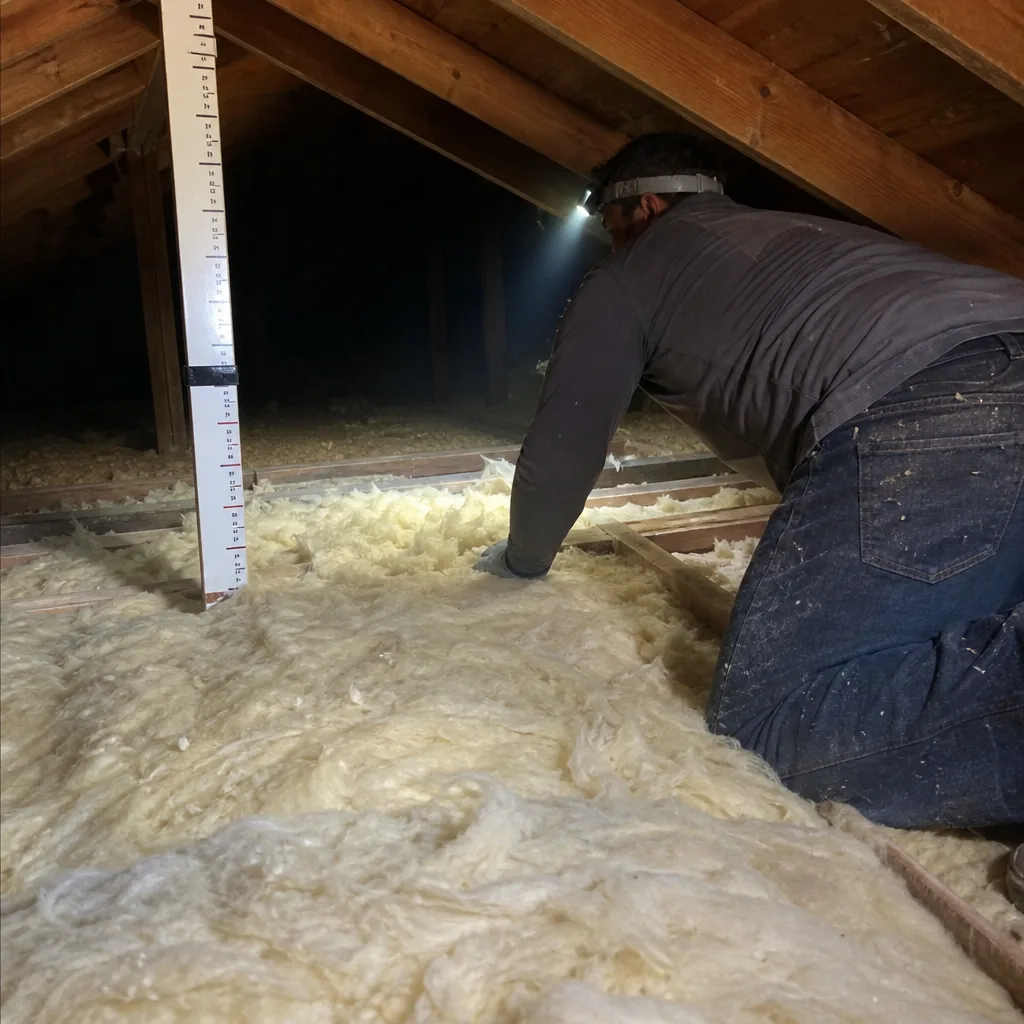
What you can safely check: look at your attic floor on a bright day with the hatch open. If you see daylight through gaps at interior wall tops, around chimney chases, or where wires drop into framing, your sealant is missing or failed. Note the locations. That’s useful information, and it costs nothing.
Where DIY goes wrong: proper air sealing requires a blower-door test to find leaks you cannot see - the ones behind insulation, at top plates buried under blown-in product, or in duct chases that read as solid from above. The Ecoseal System needs a clean, dry substrate and specific bead geometry to perform to spec; too thin and it cracks, too thick and it skins over before curing through. In attics with active knob-and-tube or damaged wiring, you’re working around energized components in a confined space. We don’t recommend it.
Seal the envelope first. Then fill it. Call (830) 529-7780 and we’ll run the test, show you the numbers, and give you a written price before anyone lifts a tool.
FAQs
Properly applied Ecoseal System acrylic sealant lasts 15 to 20 years in our climate, though the pre-2018 formula we encounter in older Boerne homes tends to stiffen and crack after 7 to 10 summers of 140°F attic peaks. The newer low-VOC formulation stays flexible longer. Call (830) 529-7780 for a free inspection if you’re unsure which version you have.
Spot repair works if the original sealant is still flexible and the gap is accessible; we cut back failed material, prime the joint, and bridge with new Ecoseal. If the failure is widespread or the attic was insulated over unsealed gaps, partial removal of insulation is usually necessary to do the job correctly. We price both approaches in writing so you can decide.
Most Boerne homes are completed in one day, with larger or more complex attics occasionally running into a second morning. The crew arrives with materials on the truck, so there’s no supply delay. You’ll have the blower-door report and photo record before we leave.
We carry Knauf Ecoseal System acrylic sealant, compatible backer rod, and gasket materials on every truck, along with Reflectix products for hybrid applications. For same-day service, call before noon at (830) 529-7780 - we can typically be on site within the calendar day.
Written by Wes Okafor, Owner, Topside Attic Insulation Boerne at Topside Attic Insulation Boerne, serving Boerne and nearby areas.