
Knauf Crawl Space Encapsulation: The Boerne Owner’s Guide
We stock and install Knauf-compatible crawl space encapsulation systems in Boerne, with most full encapsulations running $4,200-$7,800 depending on crawl footprint and whether the foundation needs active dehumidification tied in. Same-day assessment is available, and we carry Knauf vapor barrier rolls, seam tape, and mechanical fasteners on every truck. Most Boerne homeowners discover their encapsulation has failed when they notice musty odors returning after a rain, or when their dehumidifier runs continuously without pulling the relative humidity below 60% - a sign the barrier has separated at seams or the ground seal has been compromised by rodent activity or hydrostatic pressure.
Which Knauf Models This Applies To
Knauf’s crawl space line centers on their Insulation Solutions vapor barrier system, typically sold in 6-mil, 10-mil, and 15-mil reinforced polyethylene rolls with widths of 10, 12, or 16 feet. The critical compatibility point is the mil rating and reinforcement grid pattern - Knauf’s 15-mil product uses a woven scrim at 6.5 mm spacing, which does not interface cleanly with generic 15-mil barriers that use 3 mm or 12 mm scrim; seam tape adhesion fails prematurely at mismatched grid densities. We verify this by checking the printed roll label for the Knauf lot code prefix “KIS-VB” followed by the mil and width digits.
For repairs, we match OEM Knauf barrier where the existing system is under ten years old and the failure is localized - a puncture zone, a single seam separation, or foundation wall pull-away. For systems past that age or with widespread embrittlement, we typically recommend full replacement with Knauf-compatible material rather than patching, since UV-degraded polyethylene will continue to fracture around any repair. We also stock Reflectix radiant barrier accessories where the crawl includes ductwork that needs thermal break protection.
Topside Attic Insulation Boerne is an independent service provider - we are not affiliated with Knauf - and we source materials through regional distributors so we are not locked into proprietary product lines.
Signs Your Knauf Crawl Space Encapsulation Is Failing
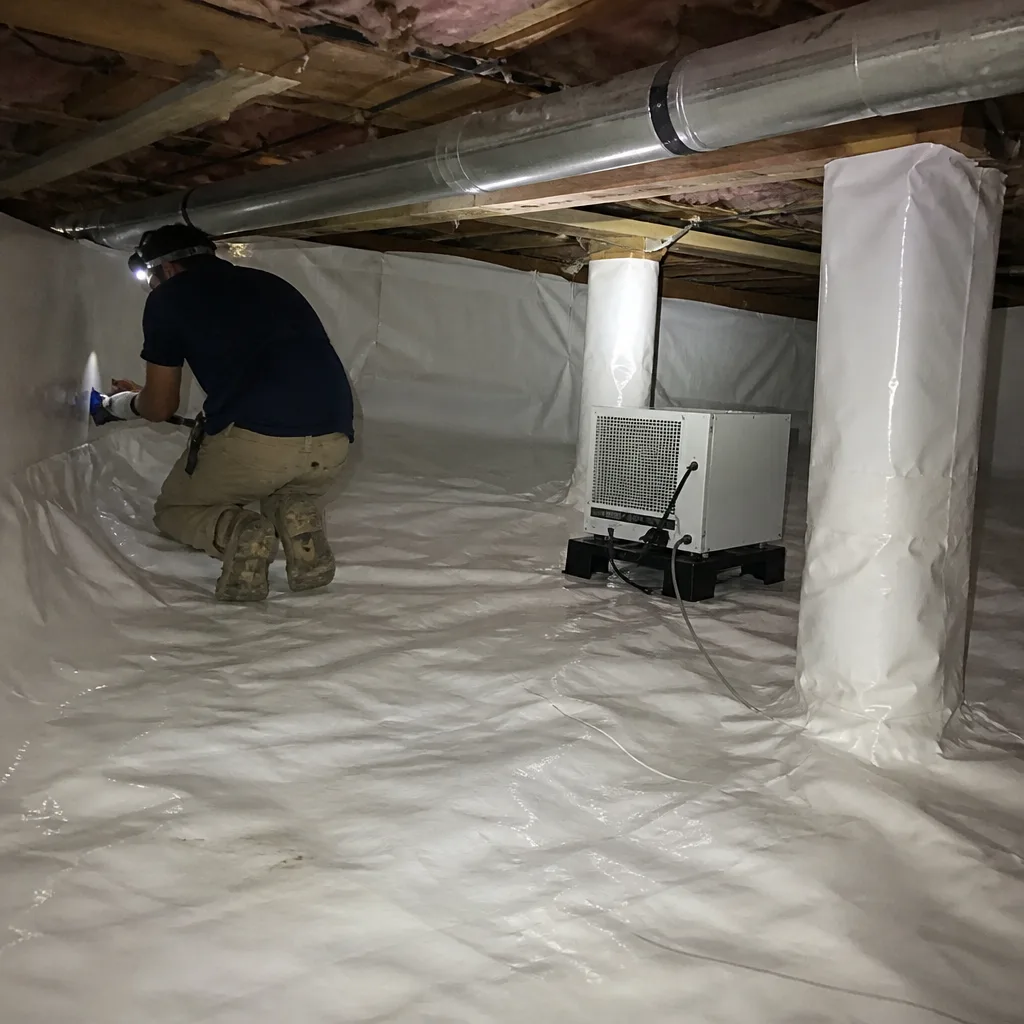
- Musty odors returning after rain events. This indicates the ground seal has breached, allowing soil gas and moisture vapor to bypass the barrier. In Boerne, where the Cibolo Creek watershed creates seasonal water tables that rise within 18 inches of grade in older Fair Oaks Ranch and Balcones Creek subdivisions, hydrostatic pressure can force water through perimeter gaps even when the center field looks intact.
- Dehumidifier running constantly without reaching setpoint. The encapsulation is supposed to create a conditioned microclimate; if the humidity sensor reads above 65% RH for more than 48 hours, the barrier has lost its air seal or the dehumidifier capacity is mismatched to the leak rate. We measure this with a thermo-hygrometer at three crawl points.
- Visible sagging or ponding on the barrier surface. Standing water above the vapor barrier means either the barrier was installed without proper slope to a sump, or the polyethylene has stretched and lost tension at fastening points. Knauf’s reinforced 15-mil resists this better than their 6-mil, but neither tolerates foot traffic from homeowners checking their own HVAC filters.
- White powder or crystalline deposits on the barrier underside. This is efflorescence - mineral salts carried through the soil by vapor drive and deposited where the barrier temperature drops below dew point. It signals that vapor is moving through, not just around, your encapsulation system.
- Insect or rodent entry at seam lines. Mice compress to 1/4 inch and will follow any ridge where tape has delaminated. Once inside, they tunnel under the barrier, creating new breach points and depositing organic material that supports mold growth on the otherwise clean polyethylene surface.
Replacement Cost & What’s Included
Full Knauf-compatible encapsulation in Boerne typically runs $4,200-$7,800 for crawl spaces between 800 and 2,400 square feet. The lower end assumes a 6-mil barrier replacement over clean, graded ground with existing sump function; the upper end includes 15-mil reinforced barrier, new mechanical fastening to sill plate and piers, sealed foundation vents, and a dedicated dehumidifier with condensate pump to exterior.
| Component | Price Range |
|---|---|
| Vapor barrier material (6-mil Knauf-compatible) | $1.10-$1.40/sq ft installed |
| Vapor barrier material (15-mil reinforced) | $1.80-$2.30/sq ft installed |
| Seam tape and mastic (per linear foot) | $0.45-$0.65 |
| Sill plate sealing and mechanical fastening | $380-$620 |
| Dehumidifier with condensate pump (if needed) | $1,200-$1,800 |
| Before-and-after blower-door test (applicable jobs) | Included |
What drives the range: crawl height (below 18 inches requires specialized crew positioning), pier count (each pier needs custom cut and seal), existing debris removal, and whether the HVAC ductwork must be temporarily relocated. Every job gets a Written Price Before Any Work Starts - Haven Standard Clause 1 - and our 365-Day Done Right Promise covers material and labor. We publish before-and-after blower-door numbers on encapsulations tied to full envelope work so you can verify the air-sealing result in pascals, not promises.
DIY or Call Us?
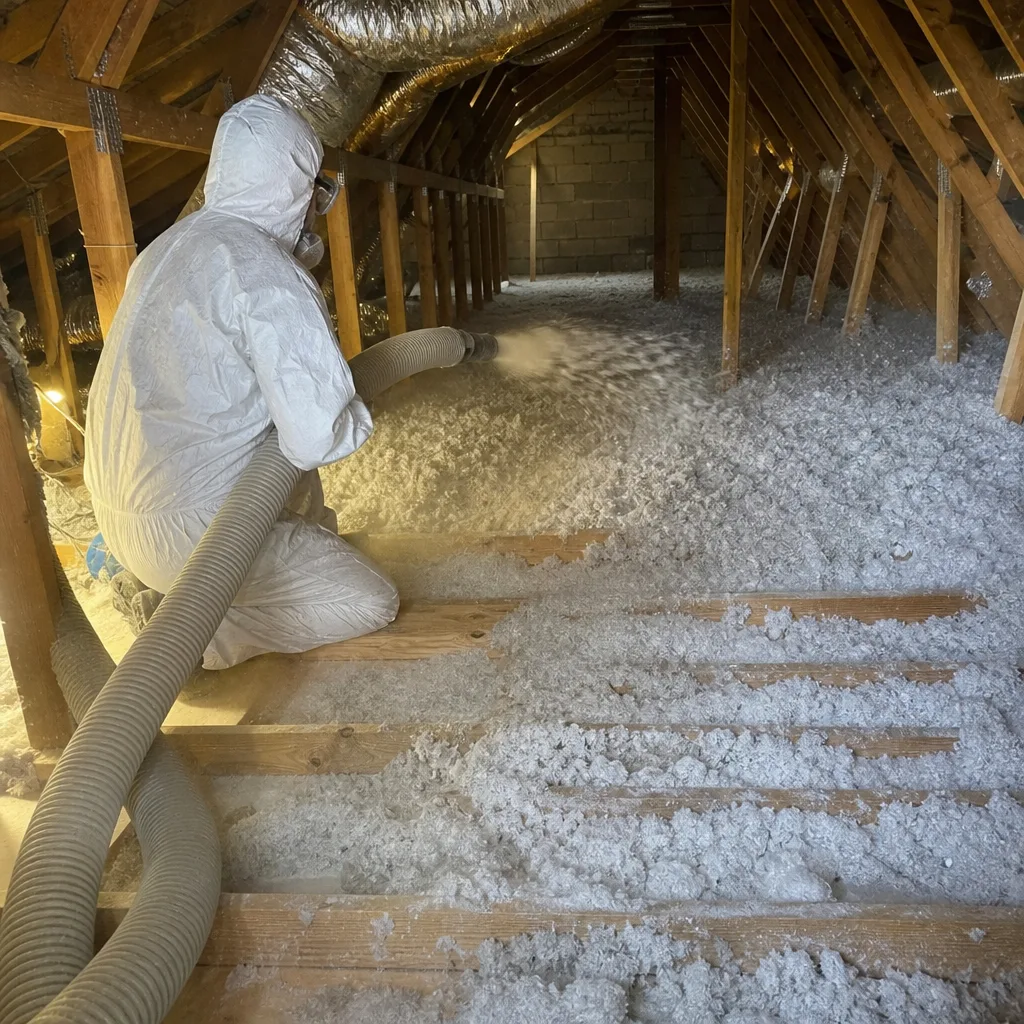
There is no high-tension danger in crawl space encapsulation, but there is a moisture-management trap that catches most DIY attempts. An owner can safely inspect: the barrier surface for punctures, the sill plate perimeter for tape adhesion, and the dehumidifier filter and drain line. What goes wrong is the sequencing - homeowners often lay new barrier over old, trapping moisture between layers; or they seal vents without adding mechanical dehumidification, creating a stagnant, humid cavity that accelerates floor joist rot.
We have pulled out three DIY encapsulations in Boerne’s River Road area where the homeowner used construction-grade polyethylene instead of vapor-rated material, and within two years the off-gassing plasticizers had degraded the adhesive on every seam. The fix cost more than our original quote would have. If you are unsure whether your Knauf system needs patch or full replacement, call us at (830) 529-7780 - we will read your situation with you, no charge for the assessment, and give you a written price before any work starts.
FAQs
Properly installed Knauf-compatible 15-mil reinforced barrier lasts 15-20 years in Boerne’s climate, though the 6-mil product typically shows seam stress and UV embrittlement at foundation vents within 8-12 years. The Hill Country’s freeze-thaw cycles at vent openings accelerate this - we have replaced 6-mil systems in Balcones Creek at year nine that still looked fine in the center field. Call (830) 529-7780 for an exact condition check - estimates are free.
Localized repairs work when the failure is under 10% of total barrier area, the existing material is under ten years old, and the damage is mechanical (puncture, single seam) rather than chemical (embrittlement, plasticizer breakdown). We cut a patch with 6-inch overlap minimum, use Knauf-compatible seam tape with pressure roller activation, and document the repair with photos. Widespread failure or material past its service life means replacement is more cost-effective than chasing new breach points every season.
Most Boerne crawl spaces complete in one to two working days: day one for debris removal, ground grading, and barrier installation; day two for sealing, dehumidifier connection if specified, and final inspection with photo documentation. Tight crawls below 24 inches, high pier counts, or active rodent exclusion work add a half day. We arrive with a named technician and text when they are on the way - Haven Standard: Arrive on schedule.
We carry Knauf-compatible 10-mil and 15-mil barrier rolls, seam tape rated for polyethylene-to-polyethylene adhesion, mechanical fasteners with corrosion-resistant caps for treated lumber contact, and dehumidifier drain assemblies. For less common widths or specialized Knauf accessories, we pull from our San Antonio distributor with next-morning availability. Same-day repair is possible for most standard failures; full encapsulations schedule within 48 hours of written price acceptance.
Seal the envelope first. Then fill it. That is how we approach every crawl space in Boerne - whether it is a 1980s ranch near the Cibolo Nature Center with stack-effect leakage eating through cooling bills, or a newer build where the original installer skipped the sill plate seal. Wes Okafor has been doing this for going on eighteen years, and his crews have learned that a vapor barrier without an air seal behind it is just a plastic sheet waiting to fail.
Written by Wes Okafor, Owner, Topside Attic Insulation Boerne at Topside Attic Insulation Boerne, serving Boerne and nearby areas.