
Knauf Radiant Barrier Installation: The Boerne Owner’s Guide
Knauf radiant barrier installation in Boerne typically runs $1.80 to $2.40 per square foot for attic-grade foil laminate with proper air-gap clearance, and most residential jobs in the 1,800-2,800 square foot range total $2,900 to $5,200 installed. We stock Knauf EcoTouch Radiant Barrier and Knauf Insulation radiant barrier foil on our trucks, and we can usually schedule within 48 hours. Most Boerne homeowners discover theirs is failing when summer attic temperatures climb past 140°F despite adequate insulation depth, or when they notice the foil has delaminated, torn at staple points, or accumulated a layer of Hill Country dust that renders it reflective only in patches.
Which Knauf Models This Applies To
Knauf produces radiant barrier materials, not discrete “parts” in the traditional sense, so matching what you have requires reading what’s on the roll or what’s stapled to your rafters. Look for the Knauf logo and product code printed along the foil edge: EcoTouch Radiant Barrier (foil-faced fiberglass batt with integrated radiant surface) or standalone Knauf radiant barrier foil (perforated or non-perforated, typically 25-50 micron aluminum laminate). The EcoTouch line is 23″ or 15″ wide to match standard joist spacing; the standalone foil comes in 48″ rolls for rafter-bay installation.
The OEM-vs-aftermarket question matters less with Knauf than with mechanical components. Knauf sources its aluminum laminate from the same handful of domestic mills that supply Reflectix and several private-label brands. What differentiates the installation is the air gap: Knauf specifies minimum ¾” clear space between the radiant surface and the roof deck, and we’ve found that spec gets ignored more often than the brand gets swapped. If your existing barrier is pressed against the sheathing, it’s performing as a conductor, not a reflector, regardless of whose name is on it. We carry both Knauf and Reflectix-compatible foils and will match what’s appropriate to your assembly.
Signs Your Knauf Radiant Barrier Is Failing
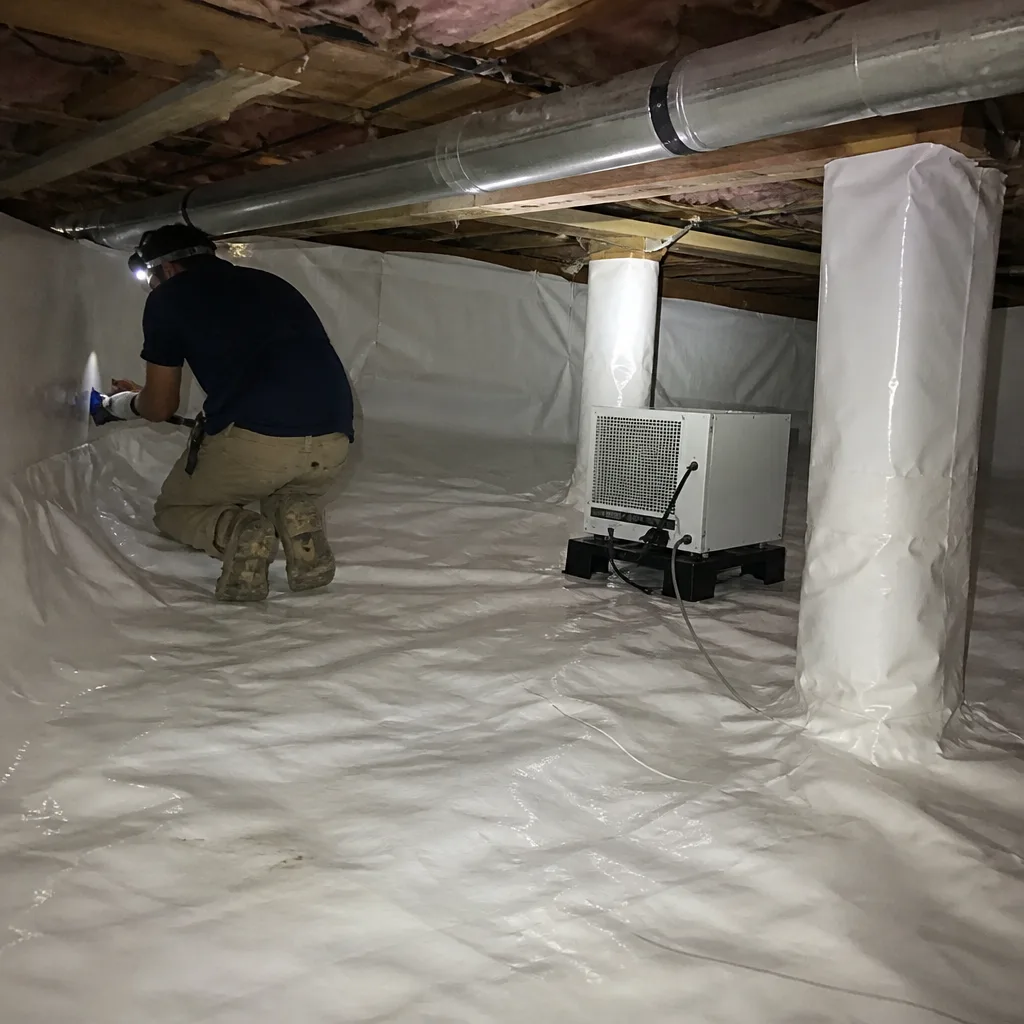
- Attic temperature spikes 25-40°F above ambient on mild days. A functioning radiant barrier should reduce radiant heat transfer from the roof deck by 90% or better. When the foil delaminates or tears, that heat pours straight through. We see this most in Boerne homes built 2015-2019 where stapling was rushed and the foil pulled free at fastener points.
- Visible tearing or sagging at staple lines, especially along the ridge. Knauf foil is aluminum laminate over kraft or polymer substrate. The substrate degrades with thermal cycling, and Hill Country temperature swings from 45°F winter mornings to 140°F attic peaks accelerate that fatigue. Once the substrate cracks, the foil flaps and reflects nothing.
- Dust accumulation dulling the reflective surface to matte gray. Radiant barriers work by reflectivity, not insulation value. A dusty foil in a Boerne attic with caliche soil infiltration might as well be painted sheetrock. This is why we air-seal before we install: every penetration is a dust delivery system.
- Hot spots on your second-floor ceiling directly under roof valleys or west-facing slopes. These are the high-radiant-load zones where barrier failure shows first. If your thermostat reads 74°F but the upstairs hallway feels like 82°F at 4 p.m., the barrier has likely failed in those bays or was never continuous to begin with.
- Your energy bill climbed 15-30% year-over-year with no rate change. In Boerne’s cooling-dominant climate, a failed radiant barrier shifts load to your AC for six months straight. We’ve traced $400 summer bill spikes directly to torn barrier foil in a single attic zone.
Replacement Cost & What’s Included
| Scope | Price Range (Boerne) |
|---|---|
| Partial repair (localized tear/delamination, under 400 sq ft) | $680 - $1,150 |
| Full attic replacement, 1,800-2,400 sq ft, standard pitch | $2,900 - $4,200 |
| Full replacement with integrated air sealing (top plates, can lights, penetrations) | $3,800 - $5,200 |
| Steep pitch (>8/12) or limited attic access adder | $350 - $600 |
What drives the range: attic square footage, pitch and accessibility, whether existing barrier removal is required (old foil stapled to rafters must come out first), and whether we find unsealed air leaks that need addressing before new foil goes up. Our price includes Knauf or equivalent foil, labor, proper ¾” minimum air-gap installation, and cleanup. Every job gets a written scope and written warranty before work starts, per Haven Standard Clause 1. On jobs where air sealing is included, we run a blower-door test before and after, and you get the printed pressure-differential report in pascals.
DIY or Call Us?
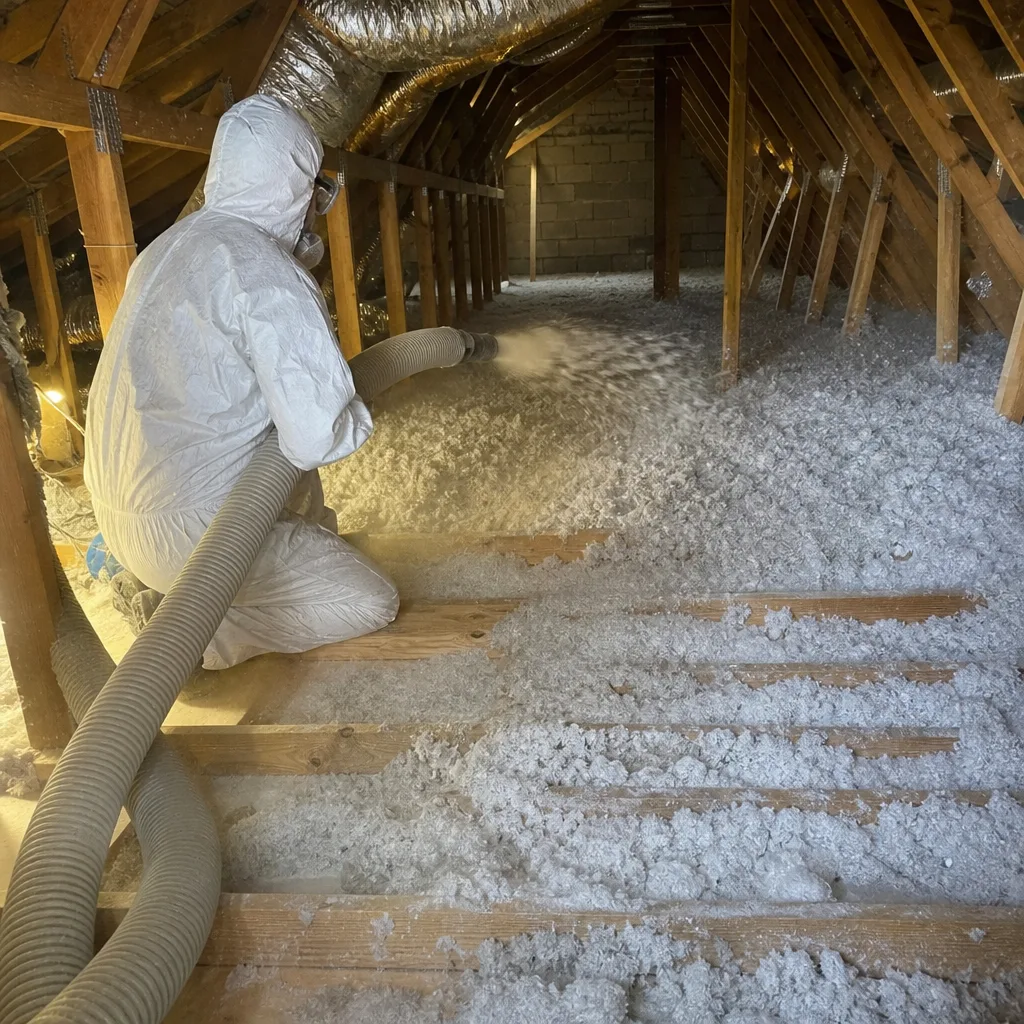
There’s nothing inherently dangerous about radiant barrier foil, but there’s plenty that goes wrong. A homeowner can safely inspect from the attic hatch with a flashlight: look for tears, sagging, dust coverage, and whether the foil has adequate clearance from the roof deck. What you can’t safely assess is whether your top plates are sealed, whether your can lights are rated for contact with insulation, or whether that bathroom fan is dumping moist air into the attic and degrading the substrate from behind.
Where DIY fails: working in 130°F attics leads to rushed stapling and inadequate overlap at seams (Knauf calls for 2″ minimum). Improper footwear on truss chords causes falls. And without a blower-door test, you’re installing barrier over an air leak network that will dust-coat the new foil within two seasons. We air-seal first, then install. Seal the envelope first. Then fill it. If you want a second opinion on your attic condition, call (830) 529-7780. Estimates are free, and we bring a camera.
FAQs
Properly installed Knauf radiant barrier foil lasts 15-25 years, but dust accumulation and thermal cycling in unsealed attics cut that to 8-12 years in practice. The aluminum reflective layer doesn’t degrade; the substrate and the installation integrity do. We extend lifespan by air-sealing first, which keeps dust out and reduces thermal shock. Call (830) 529-7780 if yours is past the decade mark - we can inspect and tell you what’s actually left up there.
Small tears under 6″ can be patched with foil tape rated for high-temperature exposure, but patching is usually a short-term fix. The underlying substrate is often fatigued around the tear, and the dust layer that caused the degradation is still present. We typically recommend replacement when tears exceed 10% of surface area or when multiple failure points are visible. We’ll show you the photos and let you decide - our Documented Photo Record on every visit means you see what we see.
Most residential attic replacements in Boerne take one day for crews of two, assuming standard pitch and clear attic access. Jobs requiring old-foil removal, air sealing, or steep-pitch work extend to a second day. We arrive with the material on the truck and don’t leave until the scope is complete. You’ll get a text when we’re on the way and a named technician, under Haven Standard: Arrive on schedule.
We stock Knauf EcoTouch Radiant Barrier batt and standalone foil rolls on our trucks, along with Reflectix-compatible alternatives. For Boerne jobs, we don’t order-to-install; we measure during the estimate visit and bring what’s needed on the work day. If your job requires a specific Knauf SKU we don’t carry, lead time is typically 3-5 business days, and we’ll tell you that at the estimate, not on the work day.
Written by Wes Okafor, Owner, Topside Attic Insulation Boerne at Topside Attic Insulation Boerne, serving Boerne and nearby areas.