
Knauf Vapor Barrier Installation: The Boerne Owner’s Guide
Knauf vapor barrier installation in Boerne typically runs $1,800-$3,400 for crawl space or attic applications, depending on square footage and whether we’re sealing over bare earth or replacing a failed existing barrier. We stock 6-mil and 10-mil Knauf-compatible polyethylene sheeting on our trucks, and most Boerne jobs can start same-day or next-day. Homeowners usually discover the problem during our humid spring months, when they notice musty odors from the crawl space, cupping hardwood floors, or condensation dripping from ductwork in the attic.
Which Knauf Models This Applies To
Knauf doesn’t manufacture vapor barriers as a standalone branded product line in the way they do fiberglass batts or loose-fill insulation. What Boerne homeowners are typically matching is Knauf’s Insulation System Compatibility, specifically where Knauf EcoSeal or Knauf Jet Stream Ultra blown-in insulation has been installed above a crawl space or vented attic that now needs proper vapor retarder protection. The critical spec is permeance rating: Knauf’s system warranties require a Class I vapor retarder (0.1 perm or less) when installed in climate zone 2, which includes Kendall County and the Hill Country.
We identify the right barrier by measuring your existing material’s thickness and checking for the ASTM E1745 stamp, which should read Class A, B, or C depending on soil contact. The OEM-equivalent Knauf specification calls for 10-mil reinforced polyethylene with woven scrim for ground contact applications. We also carry a quality aftermarket equivalent, Stego Wrap, that meets the same permeance spec at a lower cost point, though we always note in writing which material we’re proposing and why.
One compatibility gotcha we see in Boerne’s 1980s-2000s ranch builds: some homeowners have Knauf insulation installed directly against the subfloor with only a thin 4-mil painter’s plastic below. That 4-mil layer degrades in 3-5 years in our alkaline Hill Country soil and doesn’t qualify as a vapor barrier under any manufacturer’s spec. We replace it with proper 10-mil reinforced material, lapped 12 inches at seams, sealed with pressure-sensitive tape rated for polyethylene.
Signs Your Knauf Vapor Barrier Installation Is Failing
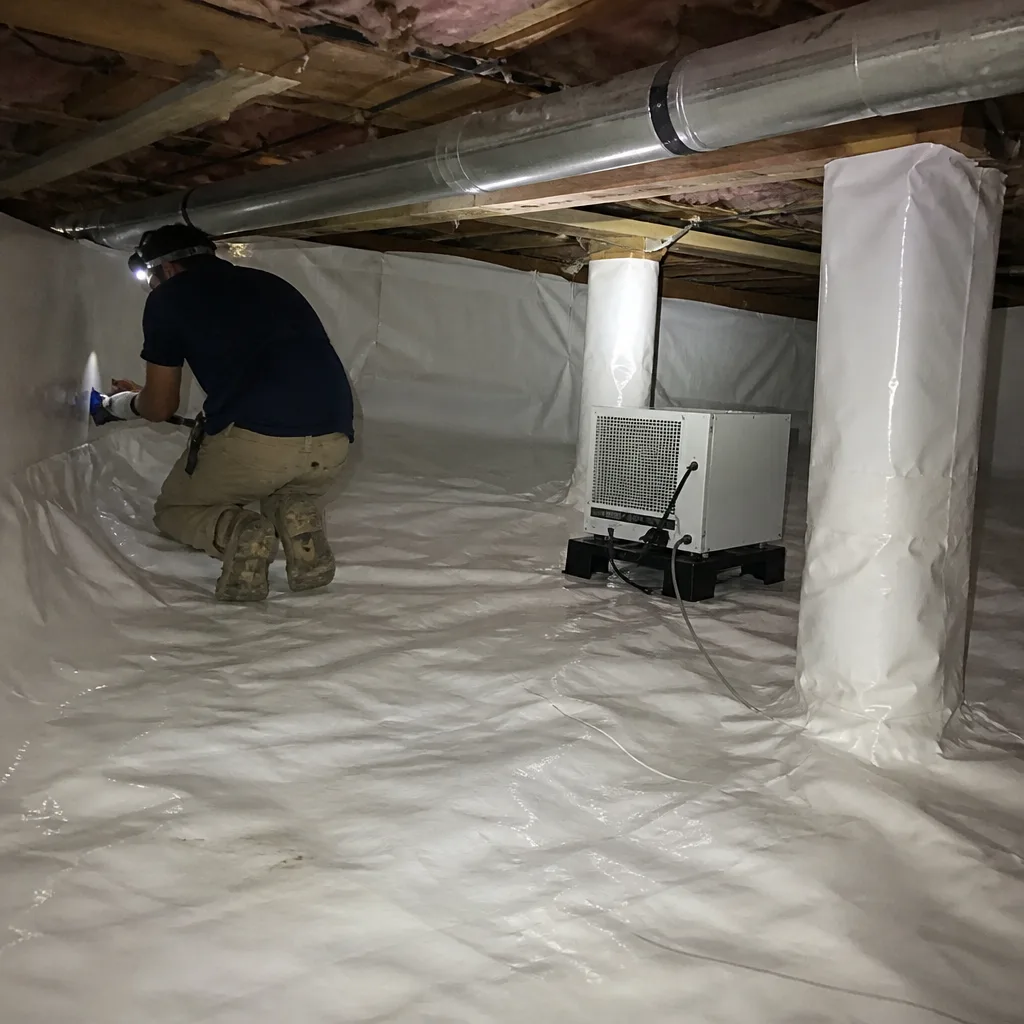
- Musty odors rising from floor registers or crawl space hatches. When the polyethylene tears or the seam tape fails, soil moisture evaporates directly into the crawl space air. In Boerne, where summer relative humidity routinely hits 80%+, that moisture load overwhelms the HVAC system’s ability to dry the space. The smell is mold and bacterial growth on floor joists, and it means your indoor air quality is compromised.
- Cupping or crowning of hardwood floors, especially in older homes near the Cibolo Nature Center. Wood absorbs moisture from below when the vapor barrier fails, causing the floorboards to swell on their underside faster than the top surface. We’ve measured 18% wood moisture content in these situations, well above the 12% equilibrium that prevents dimensional change.
- Condensation on ductwork or insulation batts in the crawl space. This happens when the dew point of the crawl space air exceeds the surface temperature of the ducts or insulation. A functioning vapor barrier keeps soil moisture out of the air volume; without it, every cool surface becomes a condensation plane, and fiberglass insulation loses R-value when wet.
- White or gray powder on block walls or piers. That’s efflorescence, mineral salts left behind when moisture wicks through masonry and evaporates. It indicates chronic water vapor movement, and in Boerne’s limestone-heavy soils, it often signals that the barrier has been compromised for months or years.
- Pest activity increasing in the crawl space. Termites, silverfish, and camel crickets all seek moist environments. A failed vapor barrier raises the relative humidity in the crawl space, which turns a dry, hostile environment into habitat. We document pest damage in our photo record and flag it for the homeowner before we seal the space.
Replacement Cost & What’s Included
| Application | Typical Range in Boerne | What’s Included |
|---|---|---|
| Crawl space, 1,000-1,500 sq ft, 6-mil standard | $1,800-$2,400 | Removal of failed barrier, soil prep, new material, seam sealing, pier wrapping |
| Crawl space, 1,000-1,500 sq ft, 10-mil reinforced | $2,200-$3,000 | Above plus reinforced scrim, extended warranty, documented photo record |
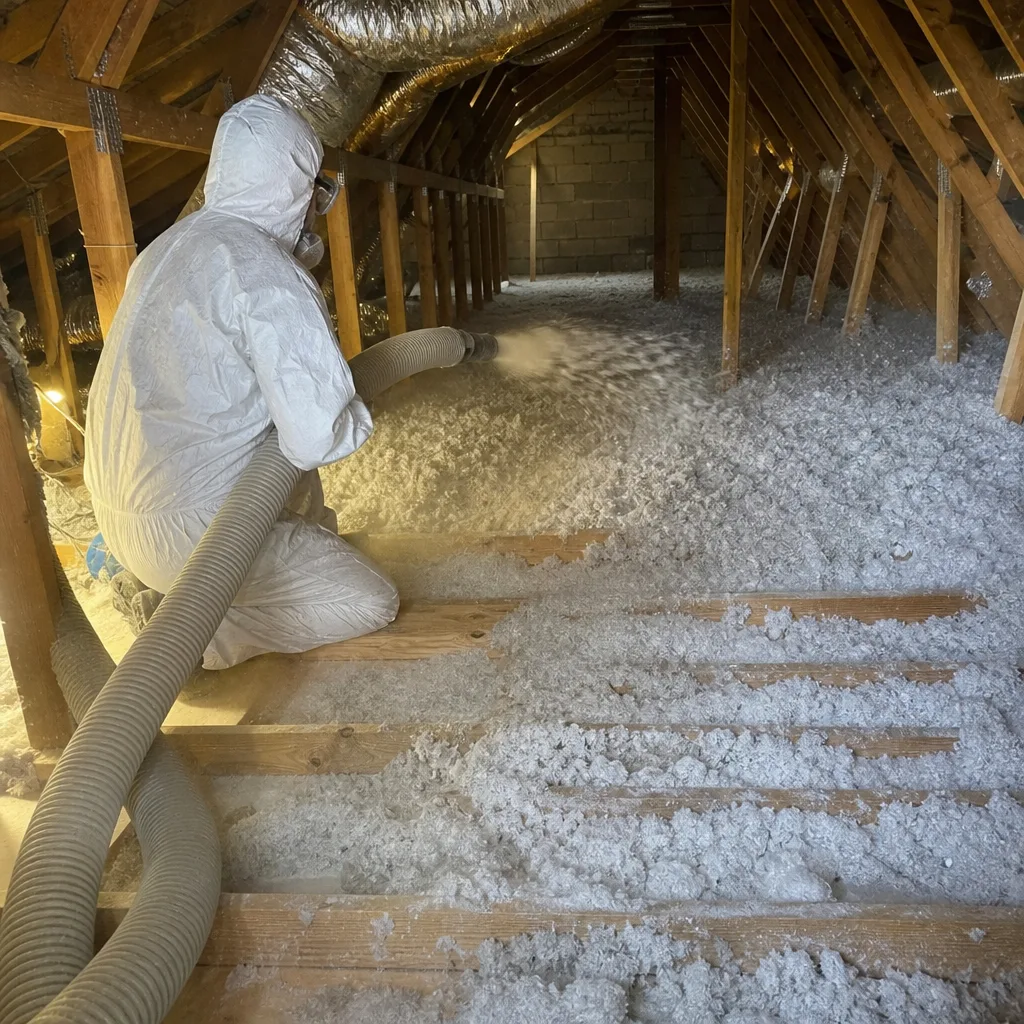
| Attic floor vapor retarder (under existing insulation) | $1,400-$2,200 | Careful insulation displacement, retarder install, insulation replacement, blower-door verification |
| Full encapsulation with dehumidifier prep | $3,200-$4,800 | Walls and ground sealed, closed-cell spray foam at rim joists, drain mat if needed |
What drives the range: square footage is obvious, but the bigger variables are access height (less than 18 inches of crawl space clearance adds labor), soil condition (rocky or debris-laden ground requires more prep), and whether we’re working around existing HVAC ductwork or plumbing runs. Every job gets a written price before any work starts, Haven Standard Clause 1, with no change orders unless you add scope. The 10-mil reinforced installation carries our 365-Day Done Right Promise on workmanship, and the material itself is warrantied against manufacturing defect for 10 years.
DIY or Call Us?
There’s no high-tension danger in vapor barrier work, but there is a knowledge gap that costs homeowners money. What you can safely check: pull back a corner of your existing barrier at the crawl space hatch and look for tears, thinning, or tape that’s turned to goo. Measure the thickness with a micrometer or compare it to a credit card (about 30 mil) to gauge if you have real barrier material or something thinner.
Where DIY goes wrong: seam lapping and sealing. Most homeowners tape seams with hardware-store duct tape, which fails in months from moisture and soil contact. Proper installation requires 12-inch overlaps, pressure-sensitive polyethylene tape rated for buried applications, and mechanical fastening at walls and piers. We’ve also seen homeowners install new barrier over wet soil, trapping moisture that guarantees mold growth. We run a moisture meter on the ground before we lay anything, and we document the reading in your photo record.
If you’re seeing efflorescence, floor cupping, or duct condensation, the problem has progressed past a simple barrier swap. Call (830) 529-7780 and we’ll walk through what we found on similar jobs in Boerne.
FAQs
Properly installed 10-mil reinforced polyethylene lasts 15-20 years in our climate; 6-mil standard material typically fails in 8-12 years, especially where soil contact is constant. The alkaline soils in northwest Boerne accelerate degradation of thin materials. Call (830) 529-7780 for an exact assessment of your existing barrier’s condition, estimates are free.
Patching works for isolated punctures smaller than a dinner plate using compatible polyethylene tape, but widespread embrittlement, seam failure, or thinning below 4 mil means full replacement. We’ve never seen a patch job outlast three years in a Boerne crawl space. Call (830) 529-7780 for an honest read on whether your barrier is patchable.
Most crawl space vapor barrier replacements in Boerne are completed in one working day, typically 4-6 hours for a 1,200-square-foot space. Attic floor retarder installation takes longer, 6-8 hours, because we carefully displace and replace existing insulation without compressing it. We schedule a start time, text when the technician is en route, and leave you with a documented photo record the same day.
We stock 6-mil and 10-mil reinforced polyethylene sheeting that meets Knauf’s system compatibility specs, along with proper seam tape, mechanical fasteners, and soil prep tools. We’re an independent service provider, not affiliated with Knauf, but we source materials that satisfy their permeance requirements and document the spec in your written scope. Same-day starts are available for most Boerne addresses.
Written by Wes Okafor, Owner, Topside Attic Insulation Boerne at Topside Attic Insulation Boerne, serving Boerne and nearby areas.