
Last updated September 24, 2026
Seasonal Insulation Care for Boerne: Year-Round Homeowner’s Guide
The most expensive attic insulation failures in Boerne don’t happen in July when attic temps hit 145°F. They happen in the 72-hour window after a November blue norther drops temperatures 40 degrees, when warm interior air suddenly meets a cold deck and leaves moisture that no one sees until the following spring. In this guide - a companion to our Complete Guide to Insulation in Boerne - you’ll learn how Boerne’s four thermal seasons each stress different parts of your thermal envelope, which warning signs to watch for, and how to keep a seasonal log that turns hidden problems into fixable ones before they cost thousands.
Quick Answer
Seasonal insulation care in Boerne - detailed in our Attic Insulation Maintenance Checklist for Boerne Homeowners - means checking attic ventilation in summer (temps above 130°F signal blocked airflow), sealing air leaks before November freeze-thaws, monitoring for winter condensation at ceiling drywall seams, and inspecting ridge vents after spring hail. A simple $12 infrared thermometer and a dated observation log will catch most envelope failures in weeks rather than years.
Table of Contents
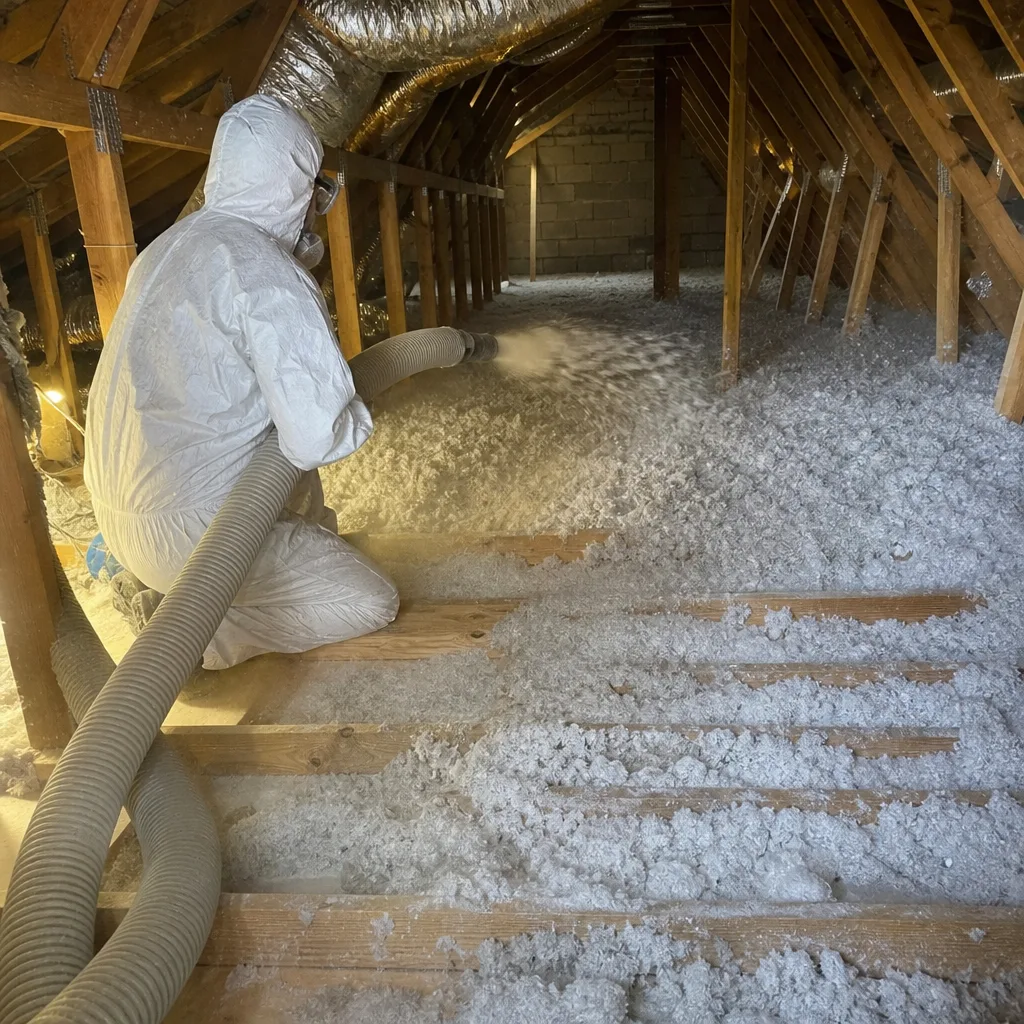
- Summer Protocol: When Attic Heat Becomes a Diagnostic Tool
- Fall Pre-Season: Sealing What Summer Opened Up
- Winter Condensation Window: Reading the Interior Warning Signs
- Spring Post-Storm: What Hail Leaves Behind in Your Ventilation
- Your Seasonal Log Template: Building a 12-Month Environmental History
- What Seasonal Maintenance and Repairs Cost in Boerne
- Common Mistakes to Avoid
- When to Call a Professional
- Frequently Asked Questions
Summer Protocol: When Attic Heat Becomes a Diagnostic Tool
Boerne’s June through August heat isn’t just uncomfortable. It’s a readable signal about whether your attic ventilation is doing its job. We’ve measured attic temperatures across Kendall County homes for nine years, and the pattern is consistent: a properly ventilated attic in Boerne runs 20 to 35 degrees above outdoor ambient. When the thermometer hits 105°F outside, that means attic air in the 125 to 140°F range. Anything above 130°F demands attention. Sustained readings above 145°F almost always point to blocked or inadequate ventilation.
Here’s what we recommend homeowners do themselves, with a tool that costs less than a tank of gas.
How to Take Useful Attic Temperature Readings
- Buy an infrared thermometer, any hardware store in Boerne carries them for $10 to $15. Point-and-click models work fine.
- Measure on a sunny afternoon between 2 and 4 p.m., when solar load peaks.
- Take three readings: at the attic floor near the center, at the highest ridge point, and at the soffit vent area where outside air enters.
- Record outdoor temperature at the same time. The differential matters more than the absolute number.
- Log the date, time, outdoor temp, and all three attic readings in your seasonal log (template below).
What the numbers tell you:
- Floor temp within 15 degrees of ridge temp: Good airflow. Your baffles - the cardboard or foam channels that keep insulation from blocking soffit vents - are likely intact.
- Floor temp 25+ degrees cooler than ridge: Stagnant layer near the deck. Check for insulation piled against soffit vents or baffles that have collapsed.
- Soffit area reading near outdoor ambient, ridge reading sky-high: Air is entering but not exiting. Ridge vent may be blocked by debris, or exhaust venting may be insufficient for the attic volume.
In Fair Oaks Ranch and the older sections of Boerne proper, we see a specific summer failure mode: original gable vents that were never removed after a ridge vent retrofit. The two systems fight each other. Air short-cycles through the gable instead of flowing low-to-high across the entire attic deck. The fix is simple - seal the gable vents from the inside with rigid foam and foil tape - but most homeowners don’t know to look for it.
One more summer check: after any roofing work, verify that the contractor didn’t bury your soffit vents with new decking or spray foam. We’ve found this three times in the past two years on Boerne homes, always discovered because the homeowner noticed their summer electric bill climbing 20% year-over-year.
For homes with attic insulation in Boerne that was installed before 2015, summer is also when you’ll first notice if your insulation has settled below the top plate. Look for hot stripes along the ceiling drywall where the wall meets the attic floor. That’s thermal bridging, and it means your effective R-value has dropped by 15 to 25 percent.
Fall Pre-Season: Sealing What Summer Opened Up
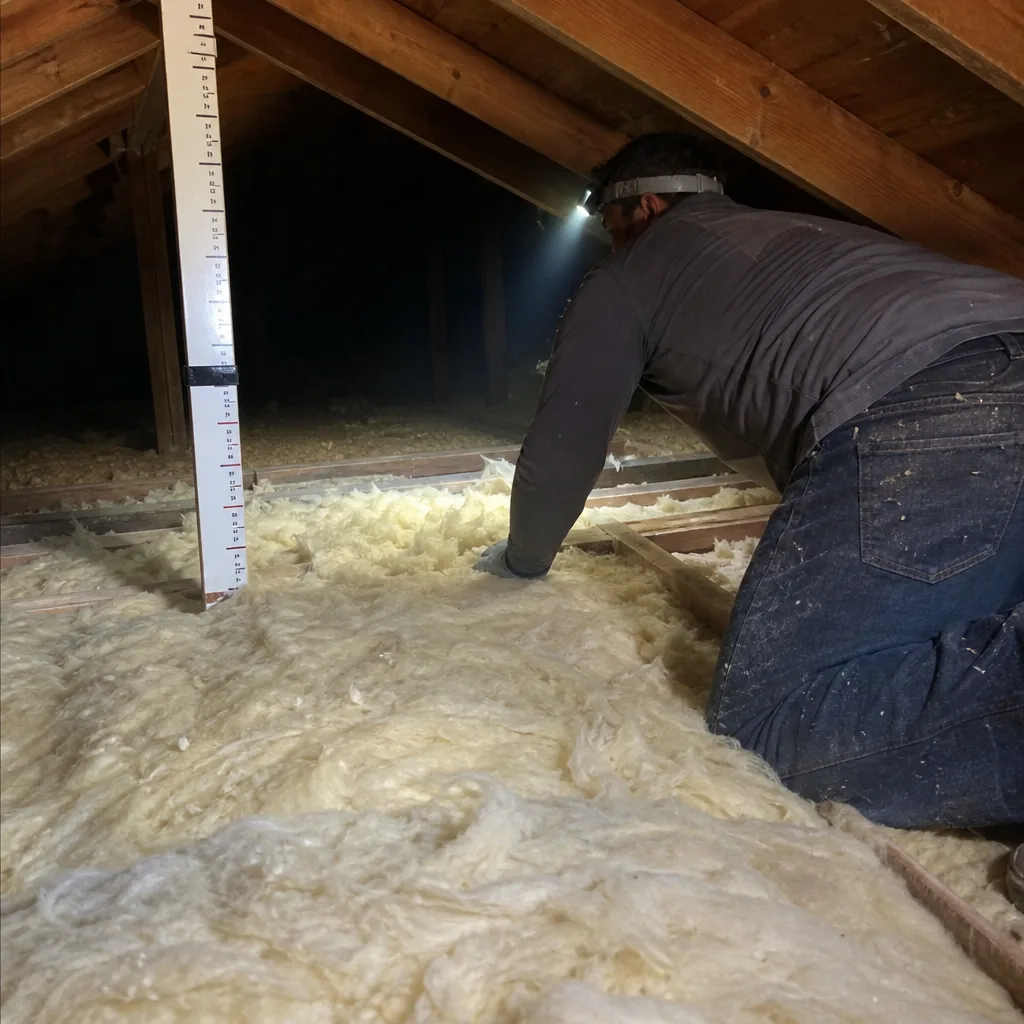
Boerne’s thermal expansion cycle is aggressive. A roof deck that sees 140°F in August and 35°F in January moves constantly. That movement opens air leaks that were sealed tight in spring. The three points we find reopened most often, in order of frequency:
1. Recessed Light Gaskets
IC-rated can lights have a gasket where the trim meets the ceiling drywall. The gasket material - usually closed-cell foam or EPDM - hardens and cracks after three to five Boerne summers. Once it fails, you’ve got a 6-inch hole pumping conditioned air into the attic every time the light is on. In a kitchen with six cans, that’s equivalent to leaving a window cracked year-round.
Check: Turn lights on for ten minutes, then feel around the trim with your hand. Warm airflow means the gasket is gone. Replacement gaskets cost $2 each and press in without tools. If your cans are pre-2010 non-IC fixtures, stop - those require a fire-rated enclosure before any sealing work, and that’s not a DIY job.
2. Attic Hatch Weatherstripping
The attic hatch is the largest unsealed hole in most homes. Summer heat destroys adhesive-backed foam weatherstrip in two seasons. We replace this on every air-sealing job, and we use mechanical bulb seal or EPDM gasket material, not tape. The cost difference is $8 versus $3, and the mechanical seal lasts ten years.
Check: Close the hatch on a piece of paper. If you can pull the paper out without tearing it, your seal is gone. While you’re up there, look for fiberglass insulation batting on top of the hatch - a common shortcut that compresses to R-3 and falls off within a year.
3. HVAC Platform Seams
In Boerne’s Hill Country subdivisions built 2005 to 2015, the furnace or air handler platform in the attic is often a plywood box sitting on the ceiling joists. The seams between platform and drywall, and between platform panels themselves, open with thermal cycling. We regularly find 200 to 400 CFM50 of leakage here on blower-door tests - air that the homeowner paid to condition, now heating or cooling the attic.
Check: From the attic, trace the platform with a flashlight. Gaps wider than a pencil need sealing with fire-rated caulk or mastic. If you see flex duct connections that have pulled loose from vibration, that’s a separate repair but equally important.
Fall is also when we recommend Boerne homeowners schedule a blower-door test if they’ve never had one. The test - a pressurization reading that shows, in one number, how much air your building envelope is losing - establishes a baseline before heating season. We’ve tested homes in Cordillera Ranch that read 5,800 CFM50 (very leaky) and homes in Random Oaks that read 2,200 CFM50 (tight for their age). Without that number, you’re guessing at whether your fall sealing work mattered.
Topside Attic Insulation Boerne home
Winter Condensation Window: Reading the Interior Warning Signs
Boerne’s November through February weather pattern creates a specific risk: rapid temperature drops followed by still, humid air. A blue norther can drop the temperature 30 to 40 degrees in 24 hours. Your interior drywall, warmed to 72°F, now faces attic air that may be below freezing at the deck surface. Any warm, moist interior air that reaches that cold surface condenses. The water doesn’t drain. It sits in the insulation, on the drywall backside, in the framing cavities.
The damage is invisible for months. By March, you smell it. By April, you see the paint bubbles.
Interior Warning Signs to Watch For
- Paint bubbling at ceiling drywall seams: Not random spots - specifically the taped joints between drywall sheets. This indicates moisture wicking along the tape from a leak point above.
- Musty smell for 48 to 72 hours after a cold front: The condensation event happens during the temperature drop; the smell arrives as mold begins active growth in the warmed aftermath.
- Cold stripes at wall-ceiling corners in upstairs rooms: Air is moving through the top plate, the horizontal framing member where wall meets ceiling. The insulation above has settled or was never properly fitted.
- Frost on nail points visible in the attic: If you do enter the attic in winter, nail tips that protrude through the roof deck will show frost crystals when warm interior air is leaking past them. This is definitive proof of an air leak path.
The critical distinction: condensation from air leaks behaves differently than roof leaks. Roof leaks follow rain events and show as brown stains with defined edges. Condensation follows temperature drops and shows as diffuse bubbling, often along seams, with no staining. If your ceiling damage appears after a cold snap without rain, suspect the envelope, not the shingles.
In Boerne’s older homes, particularly those built before 1990 with original insulation, we see another winter pattern: inadequate attic ventilation combines with bathroom exhaust fans that terminate in the attic rather than through the roof. The warm, moist air dumps directly onto the coldest surface available, usually the north-facing deck. The result is a stripe of black mold that follows the rafter bay. The fix is routing the exhaust through the roof with proper insulated duct, not just flex hose laid on the insulation.
We document every winter condensation case with photos, moisture meter readings, and thermal imaging when needed. Under Haven Standard: Arrive on schedule, you get a named technician and a text when they are on the way. You also get the photos and readings in your documented record before we leave.
Spring Post-Storm: What Hail Leaves Behind in Your Ventilation
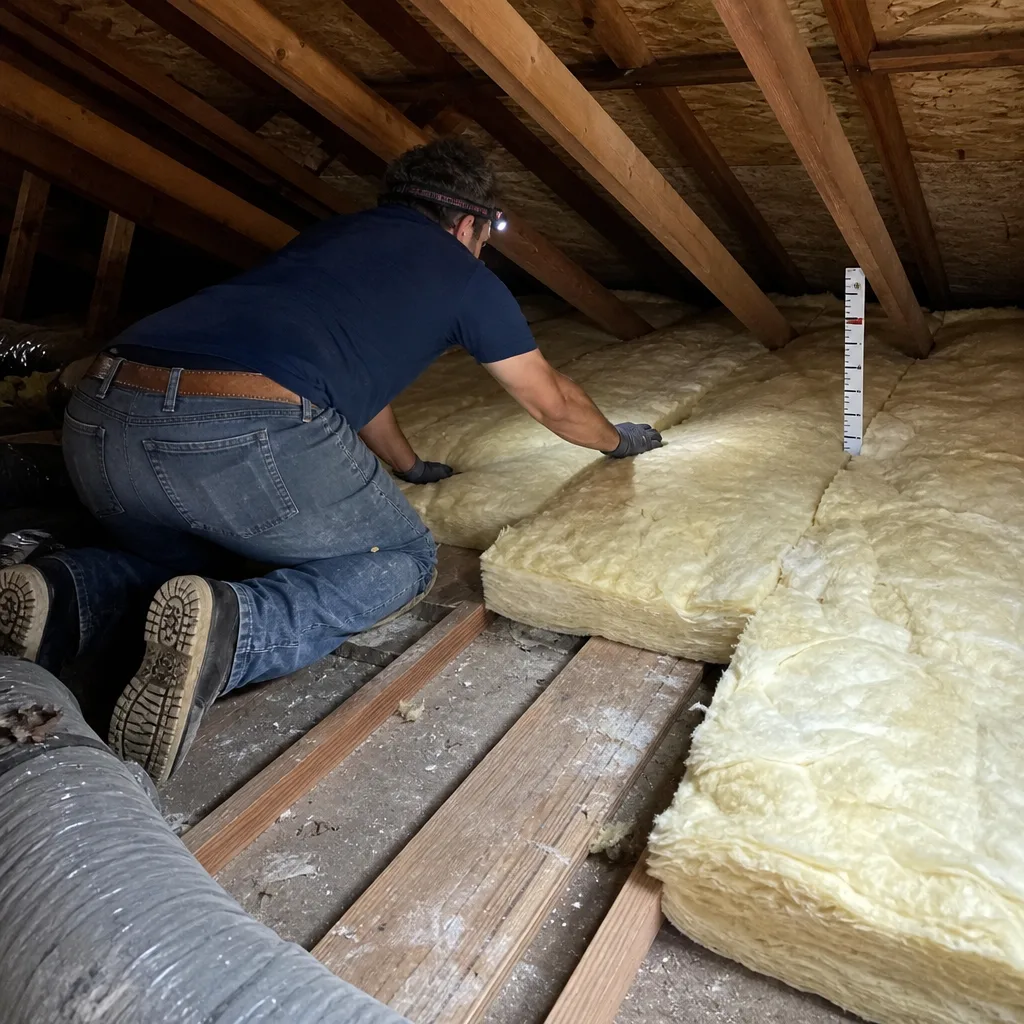
Boerne sits in the southern edge of Texas Hill Country hail alley. March through May storms with golf-ball to tennis-ball hail are not unusual. Homeowners naturally look at their roof for damage. Fewer look at what the storm did to their ventilation system, and that’s where insulation problems start.
Post-Storm Inspection Checklist
- Ridge vent caps: Walk the exterior perimeter with binoculars. Ridge vent caps should sit flat and continuous. Hail can crack the plastic or metal covers, and wind can lift them. A lifted cap lets rain in and, worse, disrupts the suction that pulls air up from soffits. We’ve found caps flipped entirely off after spring storms in Boerne, with homeowners unaware for months.
- Soffit vents: Look for dented or torn screens, and for debris packed against the opening. Hail shatters leaves and twigs into fragments that wedge in soffit vent openings. A 50% blockage doesn’t reduce airflow by 50% - it reduces it more, because the ventilation system depends on pressure differential. Partial blockage can stall the entire attic airflow pattern.
- Gable vent louvers: If your home still has gable vents, check that hail hasn’t bent the louvers closed or broken the screen behind them. Broken screens also admit birds and squirrels, which nest in insulation and compress it to uselessness.
- Attic intake: After any storm with wind above 40 mph, enter the attic during daylight with the lights off. You should see diffuse light at soffit locations and along the ridge. Any bright spot indicates a hole or crack that needs sealing. Any spot where you feel airflow against your face indicates an unintended leak path.
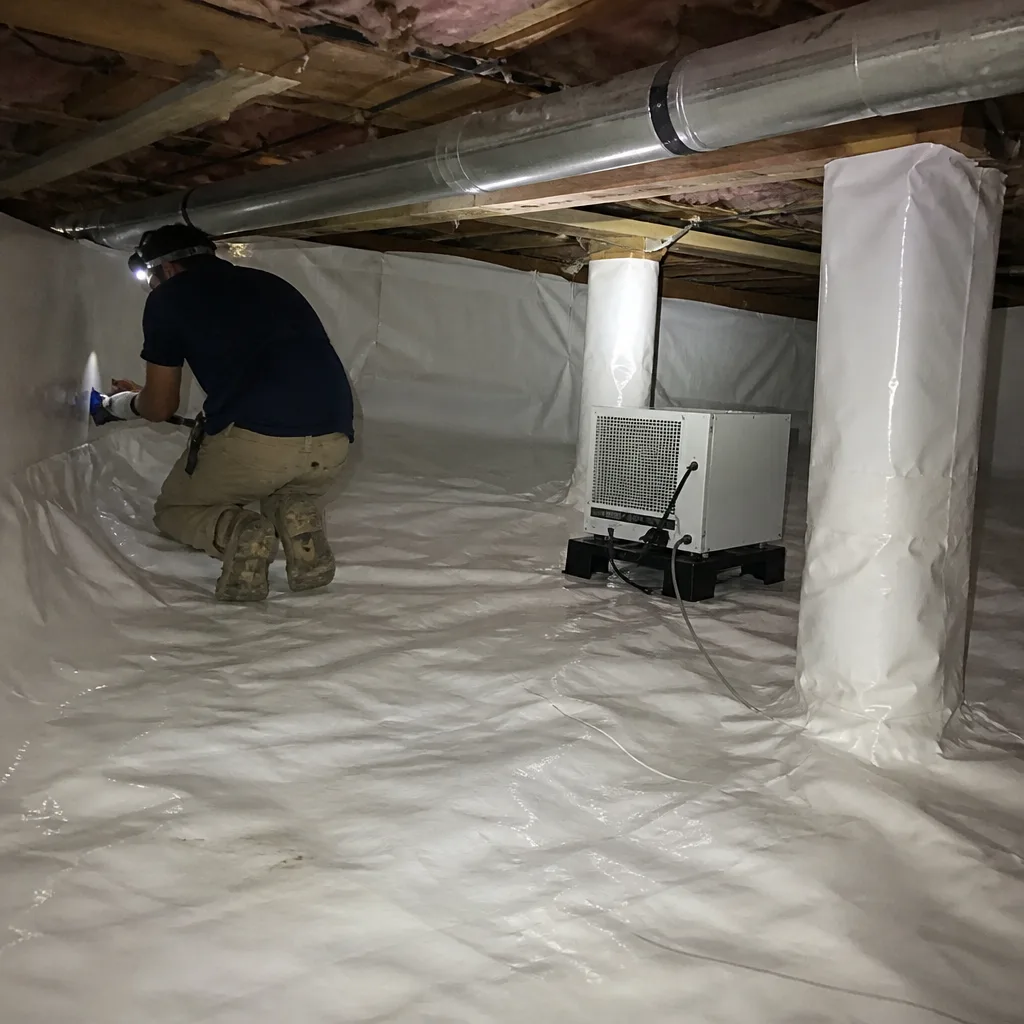
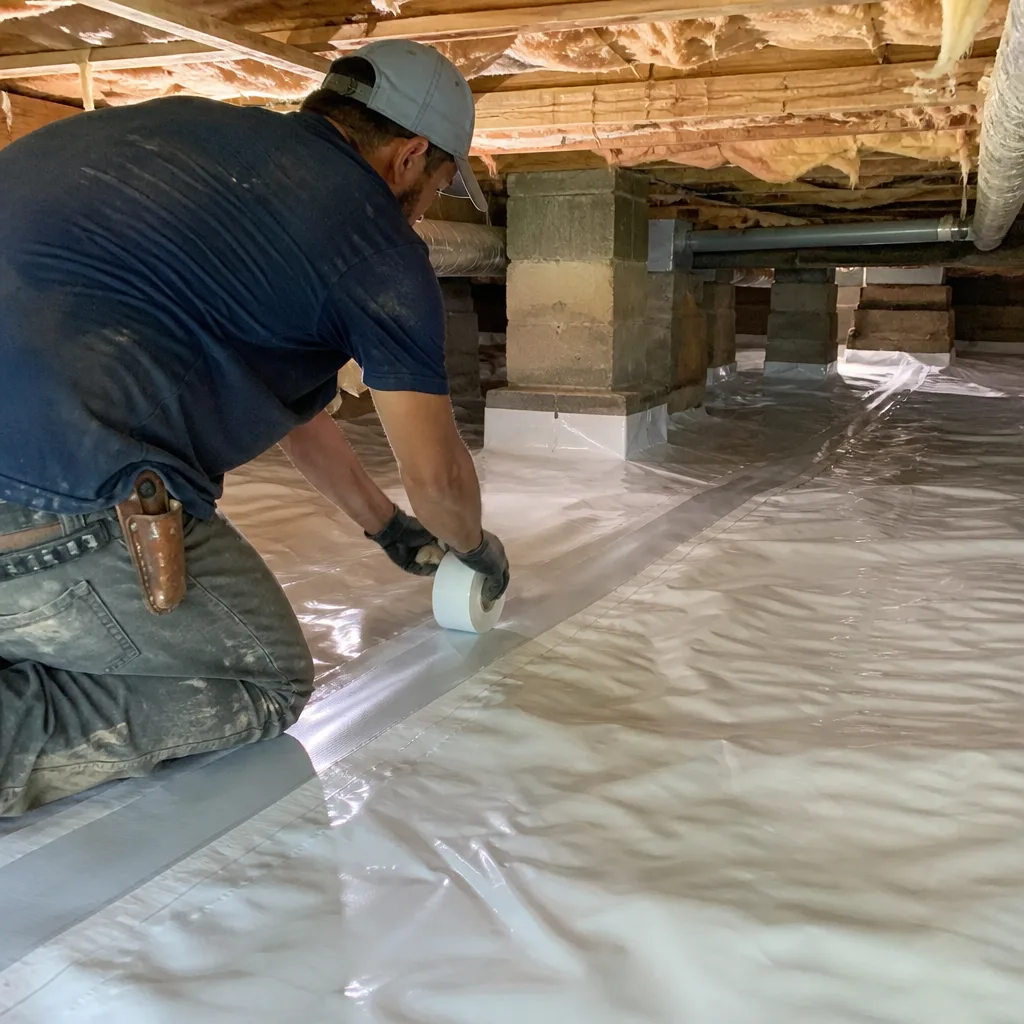
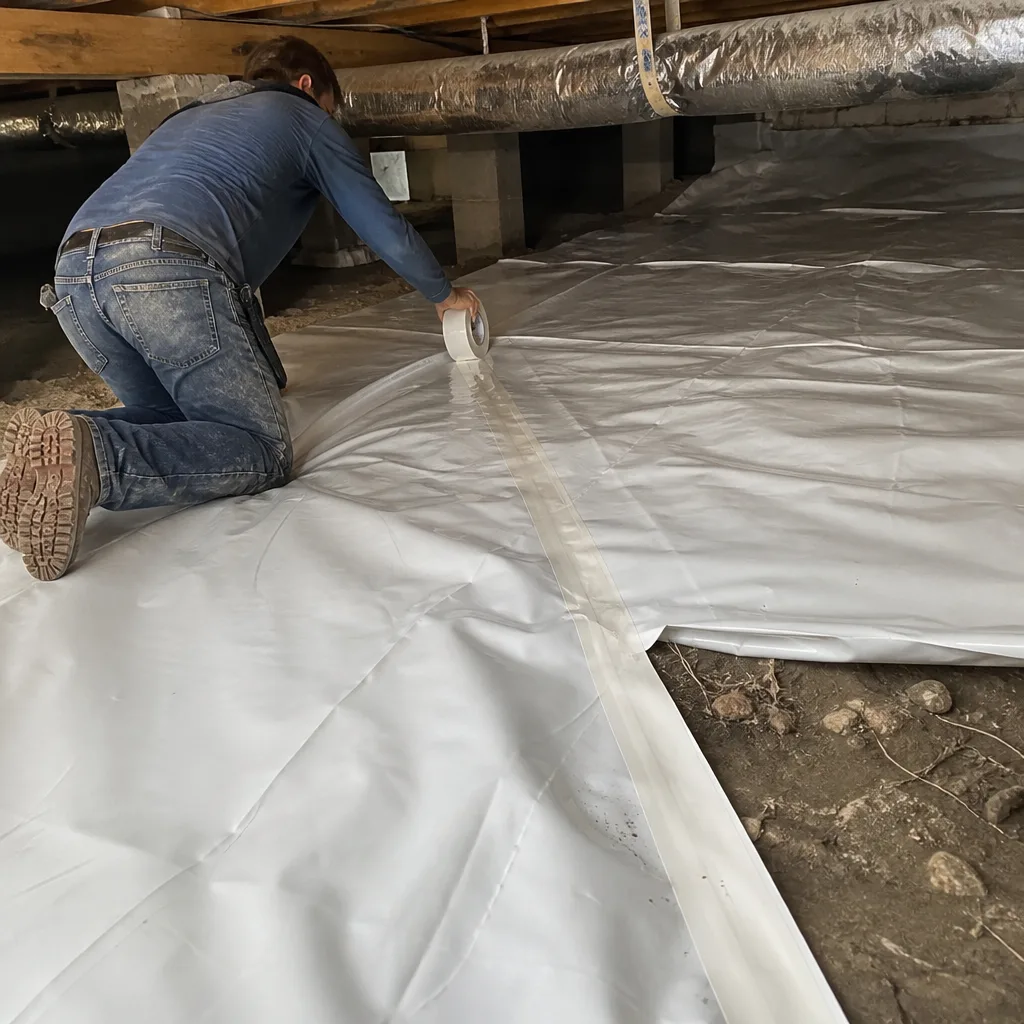
Spring is also when we recommend Boerne homeowners check their crawl space encapsulation and vapor barrier in Boerne. Spring rains saturate the Hill Country’s thin topsoil, and vapor drive increases through crawl space floors. A compromised vapor barrier in March means elevated humidity in the crawl space by May, which means condensation on ductwork and potential mold growth by July. The inspection is simple: the polyethylene sheeting should be intact, sealed at seams with tape, and extended up foundation walls to at least ground level.
For homes with spray foam insulation in Boerne, spring brings a specific consideration. Demilec and Icynene open-cell foams, properly applied, are vapor permeable - they let moisture pass rather than trapping it. This is generally desirable in Boerne’s mixed-humidity climate. But if the foam was applied over a wet substrate, or if the roof deck leaked post-application, the moisture gets into the foam cells and stays there. Spring is when that trapped moisture begins to show as odor or surface staining. The fix requires removal and reapplication, which is why we always verify deck dryness with moisture meters before any spray foam installation.
Your Seasonal Log Template: Building a 12-Month Environmental History
Every contractor who enters your home sees a single snapshot. The blower-door test reads what the envelope is doing today. The infrared camera shows what the surface temperatures are right now. But your home’s thermal performance varies across the year, and the pattern of that variation tells a story that no single visit can capture.
We ask Boerne homeowners to keep a simple log. It takes five minutes per season. When you call us or any contractor for future work, you hand over a year of data instead of a description of symptoms. For additional guidance, explore more guides & resources on our blog.
Seasonal Log Template
Date: ___________ Season: ___________ Outdoor Temp: ___________
Attic Readings (infrared thermometer):
- Floor center: _______°F
- Ridge peak: _______°F
- Soffit intake area: _______°F
Interior Observations:
- Any cold spots on ceilings? Location: ____________________
- Any paint bubbling at drywall seams? Location: ____________________
- Musty smell after weather change? Y / N, Date: ___________
- Electric bill vs. same month prior year: Higher / Lower / Same, Amount: $_______
Exterior / Storm Observations:
- Date of last hail / high wind event: ___________
- Ridge vent caps intact? Y / N
- Soffit vents clear? Y / N
- Gable vent screens intact? Y / N
Maintenance Performed This Quarter:
- Replaced attic hatch seal? Y / N
- Replaced can light gaskets? Y / N, Number: _______
- Sealed any new cracks or gaps? Location: ____________________
- Changed HVAC filter? Y / N, Date: ___________
Notes: _________________________________________________
Keep this log with your home maintenance records. When we arrive for a blower-door test or insulation evaluation, we read it before we enter the attic. In homes where we’ve had this history, we’ve caught failing ridge vents three months before they would have caused moisture damage, identified insulation settlement patterns that pointed to specific installation shortcuts, and avoided unnecessary work by showing homeowners that their “problem” was actually normal seasonal variation.
Under Haven Standard: Have it in writing. Your log is part of that.
What Seasonal Maintenance and Repairs Cost in Boerne
Homeowners in Boerne research thoroughly before calling. We publish ranges because a written price before any work starts is Haven Standard Clause 1, and that applies to our estimates too.
| Service | Typical Range in Boerne | What Affects Price |
|---|---|---|
| Attic air sealing (typical 1,800-2,400 sq ft home) | $1,400 - $2,800 | Accessibility, existing insulation condition, number of penetrations |
| Blower-door test with written report | $350 - $550 | Home size, whether thermal imaging included |
| Attic hatch weatherstrip replacement (mechanical seal) | $85 - $150 | Hatch size, whether insulation cover added |
| Recessed light gasket replacement (per fixture) | $25 - $45 | IC vs. non-IC rating, accessibility |
| Ridge vent repair / replacement (linear foot) | $18 - $32 | Material type, roof pitch, accessibility |
| Soffit vent cleaning / debris removal | $200 - $400 | Number of vents, extent of blockage, two-story access |
| Insulation top-off (blown cellulose, GreenFiber or equivalent, per sq ft) | $1.80 - $2.60 | Current R-value, desired R-value, attic accessibility |
| Spray foam insulation (open-cell, per board foot) | $0.65 - $1.10 | Thickness, substrate condition, access constraints |
These ranges reflect what we’ve charged on Boerne jobs since 2016. Every job begins with a written price - no work starts without it - and closes with a Documented Photo Record. On applicable jobs, before-and-after blower-door readings are provided so the homeowner can verify the air-sealing result.
We also offer a Free Second Opinion on Any Written Estimate. Bring us a competing quote; we will read it with you. We’ve found that many Boerne homeowners who received a “$900 attic insulation special” were quoted for adding material over unsealed leaks, which is the exact approach we reject. Sealed first, then insulated - in that order. Envelope will never blow insulation over an unsealed attic floor.
Common Mistakes to Avoid
- Adding insulation before sealing air leaks: This is the most expensive mistake we correct in Boerne. Blown fiberglass or cellulose over a leaky attic floor acts as a filter, not a barrier. Air moves through it, carrying moisture and conditioned air with it. The insulation performance is cut by 30 to 50 percent, and you pay for material that isn’t doing its job.
- Ignoring attic ventilation while upgrading insulation: A well-insulated, poorly ventilated attic is a moisture trap. We’ve removed saturated insulation from three Boerne homes in the past two years where homeowners added R-38 over existing R-19 without verifying soffit-to-ridge airflow. The new insulation compressed the old, blocked the baffles, and created a condensation reservoir.
- Using the wrong insulation type for the application: Open-cell spray foam on a roof deck in Boerne requires careful moisture management. Closed-cell foam in a crawl space can trap ground moisture against framing. Owens Corning fiberglass batts in an attic with irregular joist spacing leave gaps that convection exploits. Match the material to the condition, not the marketing.
- Skipping post-storm ventilation checks: Hail damage to ridge vents is invisible from the ground without binoculars. Soffit blockage from debris doesn’t announce itself. A single skipped spring inspection after a March storm can mean six months of compromised airflow before symptoms appear.
- Treating all ceiling damage as a roof leak: In Boerne’s winter pattern, condensation from air leaks mimics roof leaks in location but not in timing. Calling a roofer for a condensation problem leads to unnecessary shingle work and unresolved envelope failure. Check the weather history: did the damage appear after rain, or after a cold front?
- Compressing insulation during storage or installation: Fiberglass and cellulose both depend on loft - the trapped air between fibers - for their R-value. Storing bags in a garage before installation, or walking on installed material, can reduce performance by 20 percent or more. We use walk boards and proper storage on every job.
- Neglecting the crawl space while focusing on the attic: In Boerne’s Hill Country construction, the crawl space is often the leakier envelope component. Unsealed crawl space vents, missing vapor barriers, and duct leakage here can negate attic improvements. A whole-envelope approach is the only one that produces measurable results.
When to Call a Professional
Some seasonal observations are warnings; others are emergencies. Call for professional evaluation if you find frost on nail points in the attic, smell mustiness that persists more than a week after a weather change, see daylight through the roof deck from inside the attic, or measure attic temperatures above 145°F on multiple summer days. These indicate conditions that will cause structural or health damage if left unaddressed.
Topside Attic Insulation Boerne offers free estimates in Boerne. We’ll bring a blower door, an infrared camera, and a written scope. Every job begins with a written price before any work starts, and we publish before-and-after blower-door numbers on every applicable job so you can see the performance change you paid for. Call (830) 529-7780 to schedule.
Frequently Asked Questions
Most attic insulation jobs in a 2,000-square-foot Boerne home run between $2,200 and $4,500 for complete air sealing plus blown-in insulation to R-38, or $3,800 to $7,200 for spray foam on the roof deck. The exact price depends on current insulation condition, accessibility, and whether existing material needs removal. Call (830) 529-7780 for a written estimate - estimates are free, and we provide a Free Second Opinion on any written estimate you bring us.
You can, but you shouldn’t unless the old insulation is dry, uncontaminated, and the attic floor has been air-sealed first. In Boerne’s climate, old insulation often harbors moisture from past condensation events or rodent activity. Blowing new material over compromised old material buries the problem and creates a mold reservoir. We inspect and test existing insulation before recommending any addition. Sealed first, then insulated - in that order.
Most often, the insulation is performing but the ventilation has failed. In Boerne, we see this when soffit vents are blocked by insulation, ridge vent caps are damaged, or the original builder installed insufficient exhaust venting for the attic volume. Less commonly, ductwork in the attic has disconnected or the flex duct has torn. A blower-door test combined with thermal imaging identifies which cause applies to your home.
Timing is the clearest signal. Roof leaks follow rain and show as brown stains with sharp edges, usually near penetrations or in the field of the roof. Air-leak condensation follows temperature drops, shows as bubbling along drywall seams without brown staining, and often appears in multiple rooms simultaneously after a cold front. If you’re uncertain, we can verify with a blower-door test and moisture meter readings.
The Department of Energy recommends R-30 to R-60 for attics in Boerne’s climate zone. We typically specify R-38 to R-49 for retrofit applications, depending on the available depth at the eaves and whether we’re working with open attics or constrained kneewall spaces. Higher R-values produce diminishing returns if air sealing is skipped; a tight R-38 outperforms a leaky R-60.
Spray foam - both open-cell Icynene or Demilec products and closed-cell alternatives - makes sense for specific applications: unvented attics where the roof deck itself is the thermal boundary, crawl spaces with moisture management challenges, and irregular framing cavities where batt insulation leaves gaps. It does not make sense as a universal solution, and we do not recommend it for every Boerne home. The decision depends on your existing envelope condition, your HVAC configuration, and your budget. We source materials from multiple manufacturers including Icynene, Demilec, and Owens Corning, with no proprietary product lock-in.
The Bottom Line
Boerne’s four thermal seasons each test a different part of your home’s thermal envelope. Summer heat reveals ventilation failures you can measure with a $12 tool. Fall thermal cycling reopens air leaks at your most common penetration points. Winter temperature drops create condensation that hides for months. Spring storms damage the ventilation system that must work correctly for the other three seasons to matter.
The homeowner who keeps a seasonal log and knows which warning signs follow which weather pattern catches envelope failures in weeks rather than years. The homeowner who waits for visible damage pays for remediation, structural repair, and health mitigation that prevention would have avoided.
We’ve sealed and insulated over 9,000 homes since 2016. Every one began with a written price before work started and ended with a documented record when the crew left. The 365-Day Done Right Promise applies to all completed work. If you’re in Boerne and want to know what your envelope is actually doing, call (830) 529-7780. A live person answers 24/7. We’ll bring the blower door, the camera, and the written scope.
Written by Wes Okafor, Owner at Topside Attic Insulation Boerne, serving Boerne since 2016.