
Last updated September 24, 2026
Insulation Warning Signs: A Boerne Homeowner’s Reference Guide
The homeowner who tells a contractor “the house just feels hot” gets a different response than the one who says “the master bedroom runs 4°F above thermostat setpoint at 3 p.m. when it’s 101°F outside.” Same problem. One framing gets a real diagnosis; the other gets a shrug and a quote. In Boerne, where summer design temperatures hit 99°F and winter nights dip below freezing, insulation failures rarely announce themselves dramatically. They accumulate as patterns: a room that takes 45 minutes longer to cool than it did two summers ago, an energy bill that climbs 8% year-over-year without a rate change, a ceiling stain that is not growing but was not there before. This guide gives you the diagnostic vocabulary to describe what you’re observing in terms a contractor can act on rather than dismiss.
Quick Answer
Insulation warning signs in Boerne homes show up as measurable temperature differences between rooms, HVAC runtimes extending 10+ minutes on comparable weather days, ceiling stains with no active leak, and utility bills rising 8-12% year-over-year without rate increases. The most reliable early indicator is a room-by-room temperature differential of 3°F or more during peak load, documented with a basic indoor/outdoor thermometer.
Table of Contents
- How to Document Temperature Differentials Room by Room
- Ceiling Stains: Roof Leak vs. Condensation on Cold Ductwork
- Utility Bills as Lagging Indicators, HVAC Runtime as Leading
- Pest-Related Insulation Failure Signatures
- What to Look for During a Safe Attic Visual Check
- The Documentation to Gather Before Calling a Contractor
- Common Mistakes to Avoid
- When to Call a Professional
- Frequently Asked Questions
How to Document Temperature Differentials Room by Room
A $15 indoor/outdoor digital thermometer from any hardware store in Boerne gives you more diagnostic power than most contractors expect from a homeowner. The technique is simple; the interpretation is where the value lives.
When to measure: Pick a day when the National Weather Service forecast for Kendall County shows 95°F or above, with clear skies and low wind. Measure between 2 p.m. and 5 p.m., when the attic is at peak thermal load. In Boerne’s Hill Country climate, afternoon solar gain on dark roofing can push attic temperatures past 140°F even when ambient air is in the mid-90s.
The procedure:
- Set your thermostat to 75°F two hours before measuring. Let the system reach steady state.
- Place the thermometer in the center of each room, 4 feet off the floor, away from supply vents and exterior walls. Record after 10 minutes.
- Record the outdoor temperature from a weather station, not your car thermometer.
- Note which rooms have supply vents and which do not.
How to read the numbers:
- 0-2°F differential across all rooms: Normal variation. Your envelope is performing adequately.
- 3-5°F differential in specific rooms: Indicates either inadequate R-value in that ceiling/floor assembly, or air bypass - conditioned air leaking out, or attic air leaking in. In Boerne’s older homes, particularly in established neighborhoods like Old Town or River Road, we regularly find top plates and can light penetrations unsealed beneath apparently adequate insulation depth.
- 5°F+ differential: Significant envelope failure. The room is either losing conditioned air or gaining unconditioned air at a rate the HVAC cannot overcome.
The critical distinction: if the differential shrinks to under 2°F at 10 p.m., you likely have an air bypass problem - the leak path closes as attic temperatures drop and stack effect diminishes. If the differential persists at night, you likely have inadequate R-value or missing insulation in a specific cavity. This single observation changes what a contractor should recommend. Air bypass requires sealing before any insulation is added. Inadequate R-value may require additional blown-in insulation, but only after the bypass is ruled out.
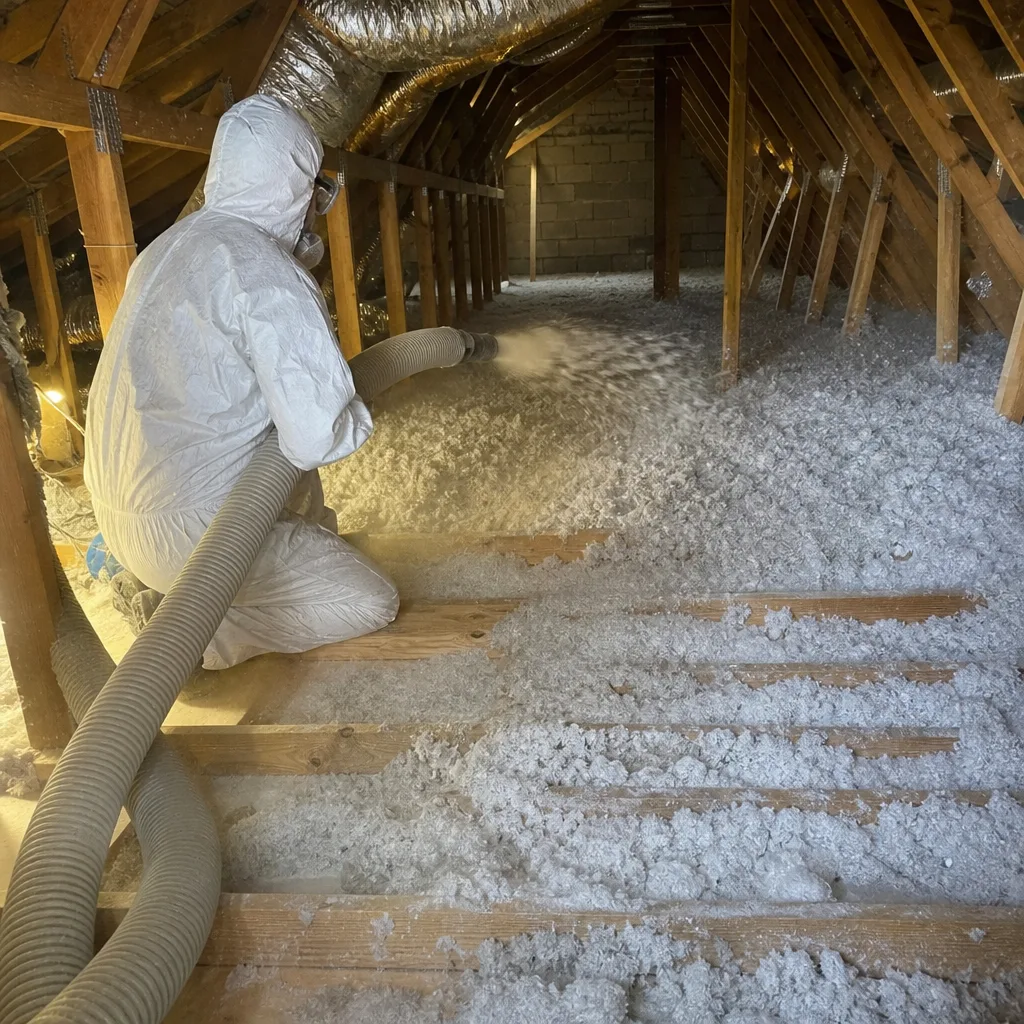
At Topside Attic Insulation Boerne home, we begin every attic job with a blower-door test - a pressurization reading that shows, in one number, how much air your building envelope is losing. We’ve tested homes in Boerne’s Fair Oaks Ranch and Balcones Creek subdivisions that showed 4,200 CFM50 before sealing and 2,100 after. The homeowner who arrives with room-by-room temperature data gets a faster, more precise diagnosis because we can correlate their observations with the pressure test results.
Ceiling Stains: Roof Leak vs. Condensation on Cold Ductwork
Not every ceiling stain means call a roofer. In Boerne’s climate, where humid Gulf air meets 140°F attic surfaces, condensation on poorly insulated or uninsulated HVAC ductwork produces stains that look remarkably like slow roof leaks. The wrong diagnosis sends you to the wrong trade, wastes money, and leaves the actual problem unaddressed.
Visual signature of a roof leak:
- Stain shape is irregular, often with defined edges that follow rafter or truss lines as water tracks along structural members
- Color progresses from yellow-brown to dark brown over time; may show multiple rings indicating repeated wetting
- Texture may include blistering paint or sagging drywall if the leak is active or was active recently
- Location correlates with roof penetrations: chimney, vent pipe, valley, or area of known shingle damage
- Stain grows or changes after rainfall; may show fresh wetness during heavy rain
Visual signature of condensation on cold ductwork:
- Stain is typically circular or oval, 6-18 inches across, centered below a supply duct register
- Color is uniform light yellow to tan; does not darken progressively because the moisture source is consistent, not accumulating debris
- Edges are diffuse, not sharp - moisture vapor spreads through drywall before condensing
- Often appears in rooms with the longest duct runs from the air handler, where supply air has warmed least before reaching the register
- May appear in multiple rooms simultaneously during humid periods, particularly May through October in Boerne
- Stain does not grow during rain; may actually shrink during dry spells when attic absolute humidity drops
The mechanism: in an unsealed, under-insulated attic, humid outdoor air infiltrates through soffit vents, ridge vents, and bypass paths. When this humid air contacts ductwork carrying 55°F supply air, the duct surface temperature drops below the dew point. Water condenses, drips onto drywall, and creates the stain. The insulation failure is not in the ceiling itself but in the duct insulation - or in the attic air sealing that allows humid air to reach the duct.
We’ve documented this exact pattern in Boerne homes with flex duct running through vented attics. The fix is not a roofer. It’s sealing the attic floor to reduce humid air infiltration, then insulating the duct with proper R-8 wrap or replacing the run with duct installed within the conditioned envelope. At Attic Insulation in Boerne, we treat this as an envelope problem, not a roofing problem, and we document the before-and-after with photos and blower-door numbers.
Utility Bills as Lagging Indicators, HVAC Runtime as Leading
By the time your utility bill shows a clear trend, insulation failure has been progressing for months. The bill is a lagging indicator - it confirms a problem you already have. The leading indicators are harder to notice because they develop gradually, normalized by your own adaptation.
Leading indicator: HVAC runtime extension
Modern thermostats with runtime history make this visible. If your system ran 8 cycles averaging 12 minutes each on a 95°F day in June 2022, and now runs 8 cycles averaging 22 minutes each on a comparable 95°F day in June 2024, your building envelope has degraded. The equipment is working longer to maintain the same setpoint. Possible causes:
- Insulation settlement or compression, reducing effective R-value
- New air bypass paths opened by structural movement, pest activity, or failed sealing
- Duct insulation degradation in the attic, increasing thermal loss before air reaches rooms
In Boerne, where ERCOT summer peak pricing can push electricity rates to 15-20 cents/kWh during afternoon events, extended runtime hits harder than in markets with flatter rate structures. A system that runs 30% longer is not just wearing out faster; it’s buying more expensive electrons.
How to track:
- Note your thermostat’s daily runtime if it displays it. Ecobee, Nest, and Honeywell Home models all do.
- Compare runtimes on days with matching outdoor conditions: same high temperature, same solar conditions (clear vs. overcast).
- A 10+ minute extension per cycle, sustained over two weeks, warrants investigation.
Lagging indicator: utility bill trend
Extract 24 months of billing history from your utility’s online portal. Plot kWh usage (not dollar cost) against cooling degree days for your billing period. You can find historical cooling degree day data for the San Antonio-New Braunfels metro area from NOAA. If kWh per cooling degree day is rising 8-12% year-over-year without equipment changes, your envelope is the likely culprit. We’ve seen this pattern in Boerne homes built during the 2015-2019 construction boom, where rapid build schedules sometimes left insulation gaps at complex roof geometries common in Hill Country architecture.
The Haven Standard approach: we ask for this data before we quote. A homeowner who arrives with 24 months of bills and runtime logs gets a diagnosis on the first visit, not a sales pitch. Under Haven Standard Clause 1, you get a flat price, written scope, and written warranty before anyone lifts a tool - but the price is more accurate when we understand the problem’s trajectory, not just its current state.
Pest-Related Insulation Failure Signatures
Boerne’s Hill Country location means wildlife pressure from raccoons, roof rats, squirrels, and occasional bat colonies. Each leaves a distinct signature in attic insulation, and the signature determines whether you’re looking at insulation replacement, air sealing, or both.
Settled insulation around a rodent runway:
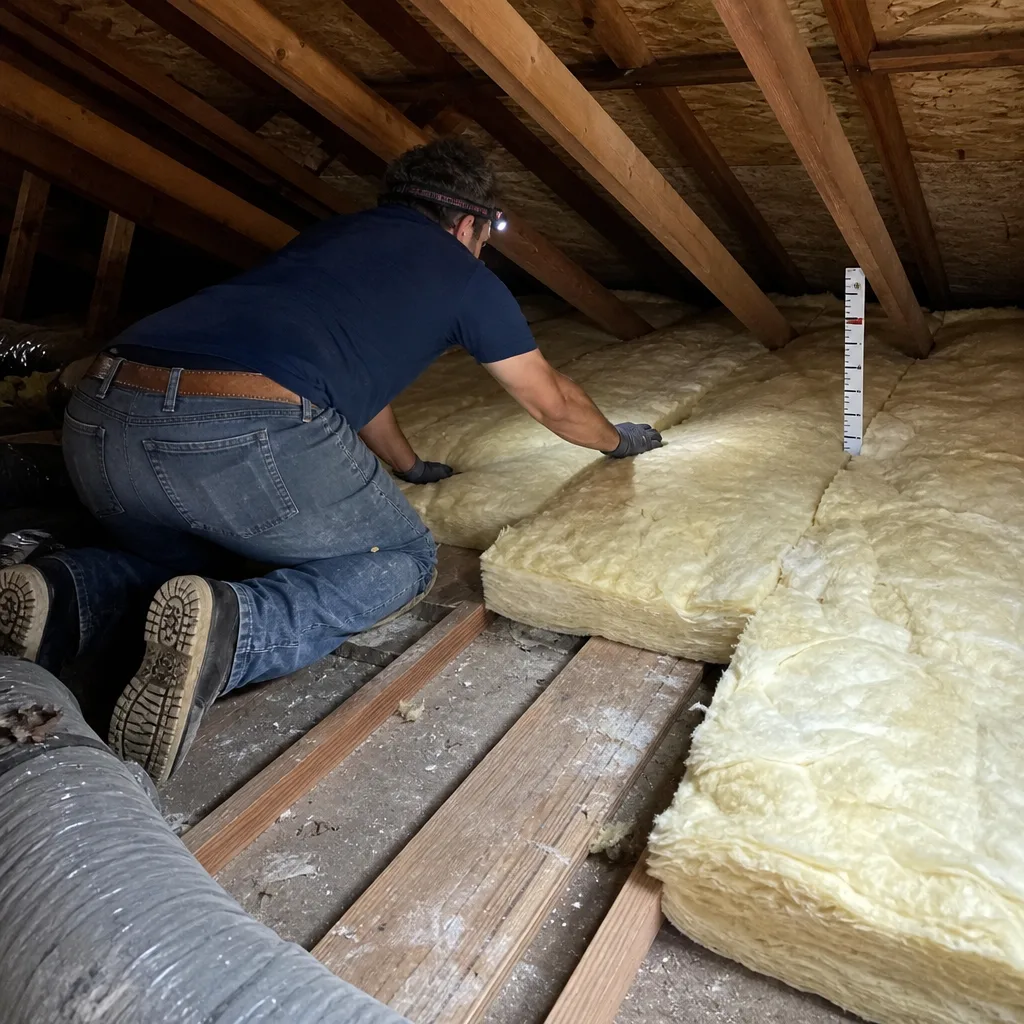
Roof rats and squirrels establish travel paths between nest sites and food sources. Their repeated passage compresses fiberglass batts or blown-in cellulose into a firm, grayed path 4-6 inches wide. The surrounding insulation remains at original depth; the runway is visibly depressed. Fibers in the runway are matted and may show grease staining from rodent fur. This is not water damage. The fix: remove contaminated insulation along the runway, seal entry points with rodent-proof materials (not spray foam - rodents chew through it), then replace insulation. In Boerne’s oak-heavy neighborhoods like Tapatio Springs and Cordillera Ranch, acorn abundance drives persistent squirrel pressure; we’ve found runways rerouted within months of inadequate sealing.
Moisture-compressed insulation:
Appears as broad, flat areas where insulation has lost loft and shows yellow-brown to dark brown discoloration. The compression is uniform across a wide area, not a narrow path. Often occurs near roof leaks, bathroom exhaust vents discharging into attics, or above ceiling penetrations where humid indoor air escapes and condenses. Fiberglass batts may separate from the ceiling drywall, creating a gap. Cellulose may clump and show fungal staining. The fix: address moisture source, remove compromised insulation, verify ceiling drywall integrity, then replace with new material at proper depth.
Normal thermal settling:
All loose-fill insulation settles slightly over time. Fiberglass blown-in may settle 10-15% in the first 2-3 years as fibers interlock. Cellulose settles less but may show slight reduction. The key distinction: uniform settling maintains consistent depth across the attic floor. There are no paths, no discoloration, no gaps at eaves or around penetrations. If original installation was to R-38 (approximately 12 inches of fiberglass), and current depth is 10-11 inches uniformly, this is normal settling. Adding 2-3 inches restores design R-value without full replacement.
Documentation we provide: on every job that involves pest-damaged insulation, we deliver a Documented Photo Record showing the condition before removal, the sealed entry points, and the replaced insulation at specified depth. For homes in Boerne with recurring rodent issues, we specify Knauf or CertainTeed fiberglass products treated with EPA-registered pest-resistant additives where appropriate, and we note this in the written scope.
What to Look for During a Safe Attic Visual Check
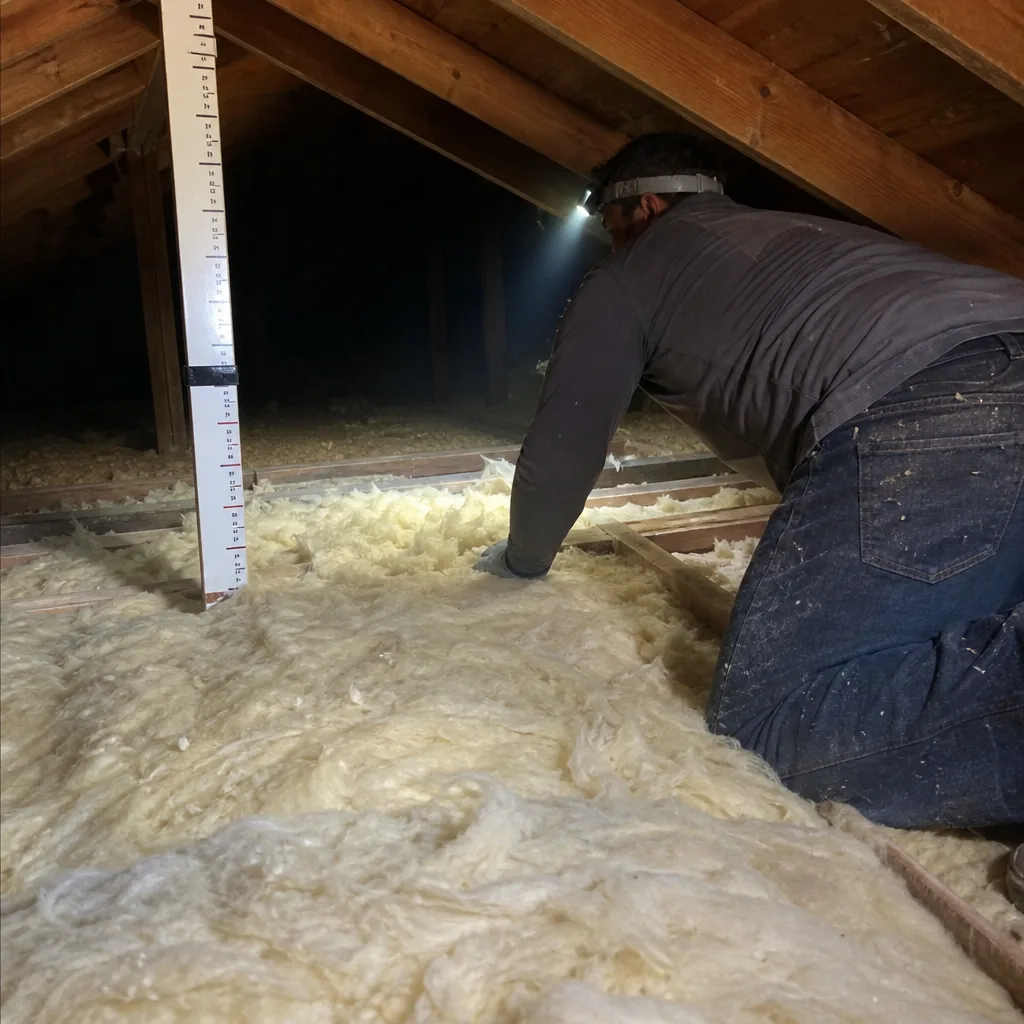
We do not recommend that homeowners traverse their attics. Ceiling drywall is not designed as a walking surface, and a misstep puts a foot through a bedroom ceiling. But a visual inspection from the attic access hatch, using a bright flashlight and a camera with zoom, can reveal significant information without risk.
Safety note: attics in Boerne during summer are dangerous heat environments. Temperatures above 130°F can cause heat exhaustion in minutes. Perform any visual check before 9 a.m. or after 7 p.m. in summer months. Wear a respirator rated N95 or higher - disturbed insulation fibers and rodent droppings are inhalation hazards. If you see disturbed vermiculite insulation (pea-sized gray granules), do not disturb it - it may contain asbestos. Close the hatch and call a professional.
What to observe from the hatch:
- Insulation depth at the hatch perimeter. Use a yardstick or tape measure on a pole. Note depth in three locations. In Boerne, current IECC code for attic insulation is R-38 minimum for new construction; many homes built 2000-2015 have R-30 or less. If your measurement shows 6 inches or less of fiberglass, you are below modern standards regardless of when the home was built.
- Uniformity of coverage. Look for gaps at eaves, around chimney chases, and near HVAC platforms. These are common installation defects that create thermal bypasses. In Hill Country homes with complex rooflines and multiple dormers, gaps are nearly universal in original construction.
- Condition of visible ductwork. Flex duct should be fully supported, not sagging between trusses. Metal duct should show intact insulation wrap. Any duct with visible condensation or missing insulation is an active energy loss and potential moisture source.
- Daylight penetration. In a dark attic with the hatch closed, look for light entering around chimney flues, vent stacks, or at eaves. Every point of daylight is a point of air leakage. In Boerne’s windy spring seasons, these leaks drive significant conditioned air loss.
- Evidence of prior work. Look for newer insulation layered over older, disturbed areas with fresh batts, or spray foam around specific penetrations. This tells you what has been addressed and what has not. Inconsistent work history often explains puzzling temperature differentials.
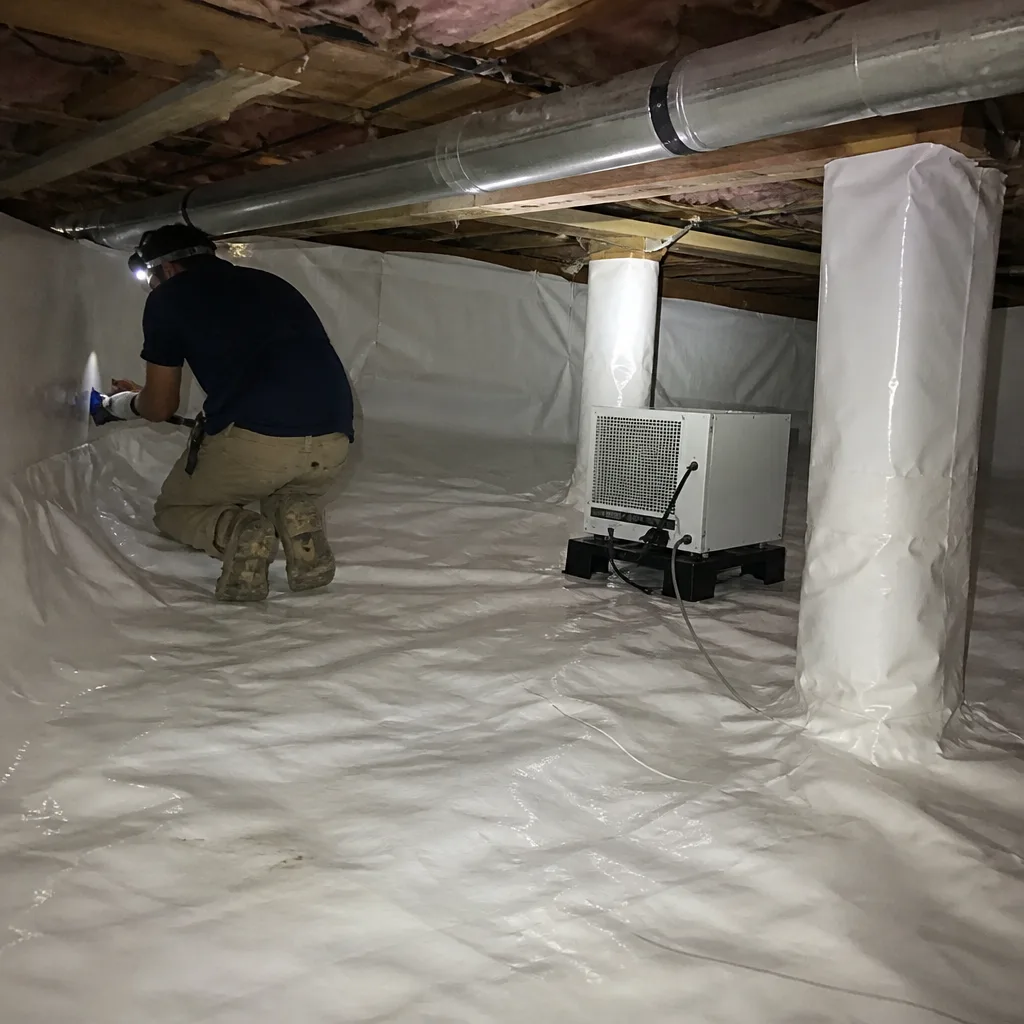
Document what you see with photos. The photo record you create is the first documentation layer; when we arrive, we add our own and correlate the two. This is standard on every Crawl Space Encapsulation & Vapor Barrier in Boerne job as well - the same documentation discipline applies across envelope work.
The Documentation to Gather Before Calling a Contractor
The first visit from a contractor should produce a diagnosis, not just a quote. The homeowner who arrives prepared gets a different quality of attention. Here is what to assemble:
1. Utility bills for 24 months
PDF or paper, all pages. We need kWh and therm usage, not just dollar amounts. Rate changes obscure consumption trends; usage data reveals envelope performance. If you have time-of-use billing, note which hours show peak consumption - this indicates when thermal load is overwhelming your envelope.
2. Thermostat logs, if available
Smart thermostat history showing runtime, indoor temperature by room, and outdoor temperature correlation. Export if possible; screenshots if not. The correlation between outdoor temperature spike and indoor temperature drift tells us whether the problem is air leakage (fast response) or inadequate R-value (slow, sustained drift).
3. Photos of visible attic insulation
From the hatch inspection described above. Include one wide shot showing overall depth and distribution, and close-ups of any gaps, stains, or damage. If you have photos from home purchase inspection or prior contractor work, include those for comparison.
4. Room-by-room temperature differential data
The measurements from the $15 thermometer procedure. Note date, time, outdoor temperature, and thermostat setpoint. A simple table format is fine.
5. Description of comfort complaints
Not “the house is hot.” Instead: “South-facing guest bedroom reaches 79°F by 4 p.m. when thermostat is set to 75°F and outdoor is 98°F. Room cools to 75°F by 9 p.m. without thermostat change.” This specificity lets us map the complaint to likely envelope failure modes.
What we deliver in return: Under the Haven Standard, every job begins with a written price - no work starts without it - and closes with a Documented Photo Record. On applicable jobs, before-and-after blower-door readings are provided so you can verify the air-sealing result. The 365-Day Done Right Promise applies to all completed work. We’ve sealed and insulated over 9,000 homes since 2016, every one with this documentation package.
Materials we specify come from Owens Corning, Johns Manville, Knauf, Rockwool, CertainTeed, Icynene, Demilec, and GreenFiber - no proprietary product lock-in. The right material for your specific assembly, documented in the written scope before work begins.
Common Mistakes to Avoid
- Adding insulation over unsealed air leaks. This is the most common error we correct in Boerne. A contractor blows fiberglass over a attic floor with open top plates, can lights, and duct chases. The insulation hides the leaks but does not stop them. Conditioned air continues to escape; attic air continues to enter. The homeowner gets marginal comfort improvement at full price. We never blow insulation over an unsealed attic floor - air sealing of top plates, can lights, and penetrations is completed first.
- Treating all ceiling stains as roof leaks. As described above, condensation on cold ductwork produces stains that send homeowners to roofers unnecessarily. A $300 roofing inspection becomes a $2,800 roof repair that does not address the actual problem. Document the stain’s characteristics before calling any trade.
- Using utility bill dollars instead of usage data. ERCOT rate volatility in 2022-2024 means many Boerne homeowners saw 30%+ bill increases with no consumption change. Comparing dollars year-over-year produces false conclusions. Extract kWh and therms from your bill history.
- Ignoring spring and fall shoulder seasons. Insulation problems are most visible when HVAC runs continuously (summer peak) or not at all (mild weather). During shoulder seasons, a well-sealed home maintains temperature with minimal equipment runtime. If your system cycles frequently in April or October, air bypass is likely.
- Accepting a quote without a written scope. Haven Standard Clause 1 requires a flat price, written scope, and written warranty before any work starts. A verbal quote or “estimate range” does not meet this standard and leaves you without recourse if the work is incomplete.
- DIY spray foam in occupied spaces. Two-component polyurethane foams available at hardware stores produce isocyanate vapors that require full-face respirators and forced ventilation. Improper application creates permanent, off-gassing hazards. Spray Foam Insulation in Boerne requires trained application with proper respiratory protection and cure-time ventilation.
When to Call a Professional
Call when you have documented evidence of envelope failure: persistent room temperature differentials above 3°F, ceiling stains with no active leak, utility usage trending up without rate changes, or visible insulation damage from the attic hatch. Do not wait for dramatic failure - a collapsed ceiling from long-term moisture damage, or an HVAC compressor failure from excessive runtime. These are expensive consequences of deferred diagnosis.
Topside Attic Insulation Boerne offers free estimates in Boerne - call (830) 529-7780. A live person answers 24/7; no voicemail loops, no callback windows measured in business days. We’ll review your documentation with you, perform a blower-door test if indicated, and deliver a written price before any work starts. Background-checked, uniformed technicians; named technician and text notification when en route. Free Second Opinion on any written estimate from another contractor - bring us their scope and we’ll read it with you.
Frequently Asked Questions
Most attic insulation jobs in a Boerne home of 2,000-2,500 square feet run between $2,800 and $5,400 for air sealing plus blown-in fiberglass to R-38, or $4,200 to $8,600 for spray foam on the roof deck to convert the attic to conditioned space. The exact price depends on accessibility, current insulation condition, and whether rodent damage requires removal before replacement. Call (830) 529-7780 for a written price specific to your home - estimates are free.
Same-day repair is possible for localized air sealing and spot insulation, but full attic work requires scheduling based on crew availability and material staging. We deliver the diagnosis and written price on the first visit; work typically begins within 3-5 business days for standard jobs, or 1-2 days for urgent comfort or safety issues. Call (830) 529-7780 to check current scheduling.
Repair is cheaper only when damage is truly localized - a single rodent runway, one wet area above a repaired leak. In Boerne’s climate, we find that homes with visible damage in one area typically have concealed air bypasses and thermal bridging throughout the attic. Partial repair often leaves the underlying problem unaddressed, and the homeowner calls again in 18-24 months. A full-scope solution with documented blower-door improvement is more cost-effective over the homeownership period. We offer Free Second Opinions on any written estimate to help you evaluate this tradeoff.
Original installation depth is documented in your home’s builder specifications or original inspection report if you purchased new construction. For resale homes, compare current depth to the labeled R-value on any visible insulation packaging (often found near the attic hatch). Fiberglass blown-in at R-38 should measure 12-14 inches; if you measure 8 inches or less, the insulation was either under-installed or has settled excessively, or both. Our blower-door test and thermal imaging can distinguish between these causes.
Boerne’s climate is more demanding than many homeowners expect. Summer design temperatures of 99°F with 140°F+ attic temperatures stress envelope performance more severely than milder or more humid climates where absolute temperature differentials are smaller. Winter nights below freezing create reverse stack effect, pulling warm air upward through ceiling penetrations. The Hill Country’s variable winds drive infiltration through gaps that would be less significant in calmer climates. And the construction boom of 2015-2019 produced many homes with rapid, inspection-minimum insulation installation that degrades faster than properly detailed work. For everything you need to know about materials, R-values, and local building science, see The Complete Guide to Insulation in Boerne.
A blower-door test is a pressurization reading that shows, in one number, how much air your building envelope is losing. A large fan mounts in an exterior door, depressurizes the house, and measures airflow required to maintain that pressure difference. We perform this test on every applicable job at Topside Attic Insulation Boerne, before and after air sealing, so you can see the performance change you paid for. For homes with comfort complaints but no visible insulation damage, the blower-door test often reveals bypass paths that would otherwise go undetected. It is the single most informative diagnostic for envelope performance.
The Bottom Line
Insulation failure in Boerne announces itself through patterns, not events. The homeowner who learns to read these patterns - temperature differentials at peak load, runtime extension on comparable weather days, the visual signature of condensation versus leakage, the distinct marks of pest activity - gets a real diagnosis instead of a generic quote. Document what you observe. Gather 24 months of usage data. Take photos from the attic hatch. Then call a contractor who begins with testing, delivers a written price before work starts, and closes with documented evidence of what changed. That is the Haven Standard, and it is the minimum you should accept for work on the building envelope that protects everything inside it. Browse more guides & resources to stay ahead of envelope problems before they become expensive repairs.
Written by Wes Okafor, Owner at Topside Attic Insulation Boerne, serving Boerne since 2016.