
Last updated September 24, 2026
Insulation Cost Breakdown: The Boerne Homeowner’s Reference for 2026
The lowest insulation bid in Boerne for a 2,000 square foot attic is typically $1,700. The cost to remediate poorly installed blown insulation that has compressed against unvented soffits and caused wood rot is typically $6,400 - and the original contractor’s liability coverage rarely applies to consequential damage. In this guide, we’ll show you exactly what separates those two numbers, what line items belong in every legitimate quote, and what you’re actually paying for when the scope is done right versus when it is not. If you’re researching Topside Attic Insulation Boerne home services, this is the reference we wish every homeowner had before signing a contract.
Quick Answer
Insulation costs in Boerne range from $0.85 to $4.20 per square foot depending on material and scope, with most complete attic jobs falling between $2,400 and $5,800 for a typical 2,000 square foot footprint. The spread reflects whether the quote includes pre-installation air sealing, baffle installation, and post-work blower-door verification - not just profit margin. A legitimate 2026 quote in Boerne should itemize labor, materials, and verification separately so you can compare scope, not just bottom-line price.
Table of Contents
- Why Boerne Insulation Bids Vary by 250% for the Same Attic
- Material Cost Breakdown by Product Type
- The Labor Line Items That Separate a $1,700 Quote from a $3,100 Quote
- How to Compare Bids That Quote R-Value Differently
- Payback Period Math Using Actual Boerne CPS Energy Rate Data
- 2026 Rebates and Incentive Programs
- Common Mistakes to Avoid
- When to Call a Professional
- Frequently Asked Questions
Why Boerne Insulation Bids Vary by 250% for the Same Attic
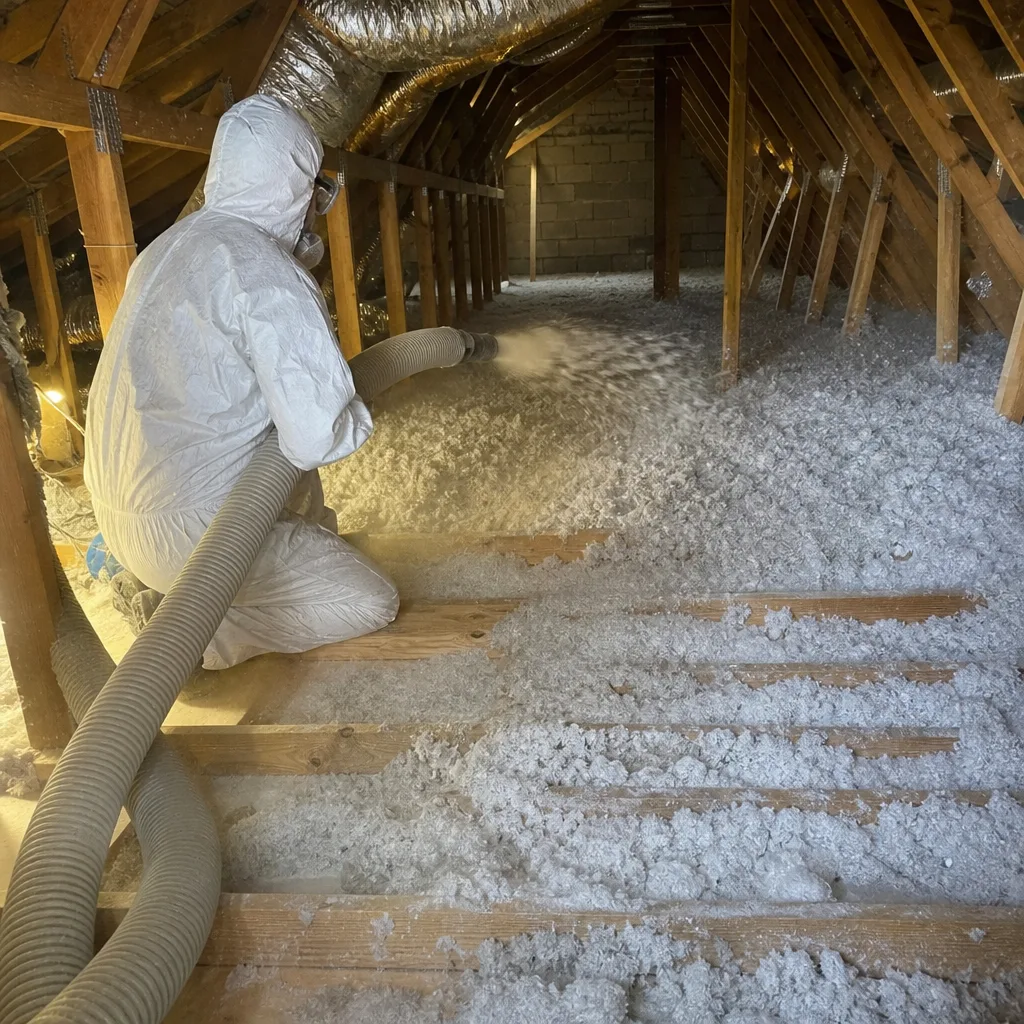
We’ve reviewed thousands of competitor quotes across the Hill Country since 2016, and the single biggest source of price confusion is this: contractors are not always quoting the same job. One proposal covers insulation only. Another covers insulation plus air sealing, baffles, and verification. Both say “attic insulation,” but the scope differs by thousands of dollars and years of performance.
Boerne’s climate amplifies this problem. Our 90-plus summer days and sub-freezing winter nights mean attic insulation works harder here than in milder zones. A contractor who blows fiberglass over unsealed top plates - the framing connection between wall and ceiling - leaves a thermal bypass that can reduce effective R-value by 30% according to Department of Energy field studies. The homeowner sees R-38 on paper and pays for R-38, but the actual performance is closer to R-27. In Fair Oaks Ranch and Cordillera Ranch, where ceiling heights and roof complexity increase, these bypasses are even more costly because conditioned volume is larger.
The 250% bid spread breaks down into three scope categories:
- Bare insulation only ($0.85-$1.25/sq ft): Material blown or laid to stated depth, no air sealing, no baffles, no verification. Common in Boerne’s lower-priced market segment.
- Insulation with basic prep ($1.40-$2.20/sq ft): Includes baffle installation at soffits and rudimentary sealing of large penetrations. Misses top plates and recessed lights.
- Complete envelope treatment ($2.60-$4.20/sq ft): Full air sealing of top plates, can lights, plumbing and electrical penetrations; baffles; insulation; post-installation blower-door test. This is the only scope that delivers the labeled R-value.
Under Haven Standard Clause 1, we provide a written price before any work starts that itemizes each of these components separately. You see what you’re paying for and what you’re not. No contractor should obscure scope to win on price.
Material Cost Breakdown by Product Type
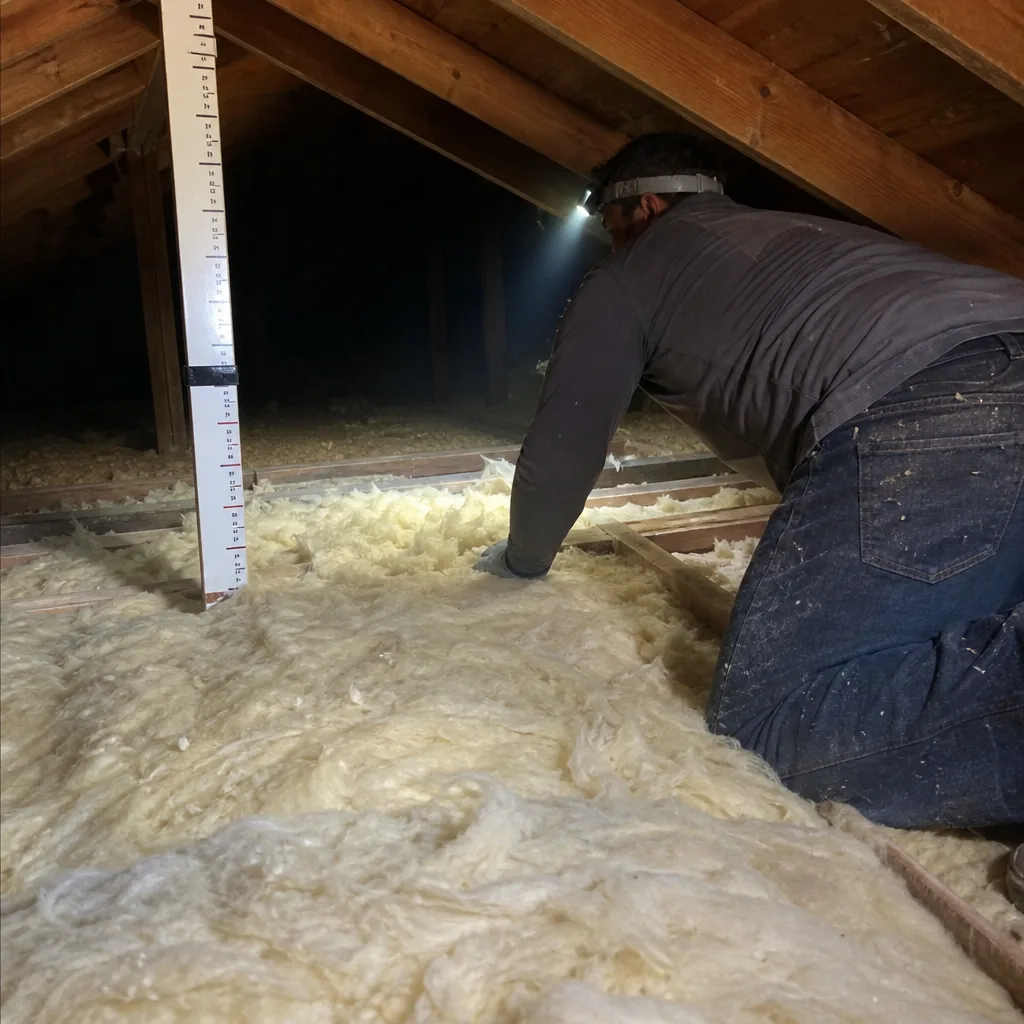
Material costs in the Boerne market for 2026 reflect national pricing with modest Hill Country freight premiums. These are installed-cost ranges per square foot at standard attic depths, based on our purchasing with Owens Corning, Johns Manville, Knauf, and GreenFiber. Your actual quote may vary with attic accessibility, existing insulation removal needs, and current supply chain conditions.
| Material | Installed Cost per Sq Ft | Typical Depth for Target R-Value | Notes for Boerne Climate |
|---|---|---|---|
| Blown fiberglass (Owens Corning AttiCat or equivalent) | $0.85-$1.35 | 14-16 inches for R-38 | Performs well in high heat; does not settle significantly; requires dense-pack for wall cavities |
| Blown cellulose (GreenFiber or equivalent) | $0.75-$1.20 | 11-13 inches for R-38 | Higher per-inch R-value; treated for fire and pest resistance; can settle 20% over time if not dense-packed |
| Open-cell spray foam (half-pound density) | $1.80-$2.80 | 5-6 inches for R-19 to R-21 | Air barrier and insulation in one; excellent for irregular framing; not a vapor barrier at this thickness |
| Closed-cell spray foam (two-pound density) | $3.20-$4.20 | 3-4 inches for R-19 to R-21 | Vapor barrier and structural rigidity; highest R per inch; critical for crawl space encapsulation and unvented applications |
These material costs represent roughly 35-45% of total job cost for blown products and 55-70% for spray foam, where labor efficiency is higher but material cost is substantially greater. In Boerne’s Stone Oak and Balcones Creek areas, where many homes built 2005-2015 have complex rooflines with multiple dormers, spray foam’s ability to conform to irregular geometry often offsets its premium by reducing labor hours.
We source materials from Owens Corning, Johns Manville, Knauf, Rockwool, CertainTeed, Icynene, Demilec, and GreenFiber - no proprietary product lock-in. The right material depends on your building assembly, not our supplier relationship.
The Labor Line Items That Separate a $1,700 Quote from a $3,100 Quote
The $1,400 gap between low and legitimate mid-market quotes in Boerne is not padding. It is labor that protects your structure and verifies your result. Here are the specific line items that appear in complete scopes and are omitted in cut-rate bids.
1. Pre-Work Air Sealing at Top Plates
Top plates - the horizontal framing members where interior walls meet the ceiling - are the single largest source of attic air leakage in Boerne’s tract homes built 1990-2010. Sealing them requires removing existing insulation along plate lines, applying expanding foam or caulk to gaps, and replacing insulation. Labor: 2-4 hours for a 2,000 sq ft attic. Cost in scope: $280-$450.
2. Recessed Light Air-Sealing Caps
IC-rated can lights still leak air through the housing. Non-IC cans are a fire hazard if buried in insulation. Proper treatment involves installing fire-rated sealing boxes or replacing fixtures with airtight LED housings. Labor and materials: $15-$35 per fixture. A Boerne home with 12 cans adds $180-$420 to scope.
3. Baffle Installation at Soffit Vents
Baffles - cardboard or foam channels that maintain airflow from soffit to ridge vent - prevent insulation from blocking intake vents. Without them, summer attic temperatures spike and winter moisture accumulates. In Boerne’s humid shoulder seasons, blocked soffits contribute to the condensation issues we see regularly in Timberwood Park and near Boerne City Lake. Labor: $8-$15 per linear foot of soffit. Typical job: $200-$400.
4. Post-Installation Blower-Door Verification
A blower-door test - a pressurization reading that shows, in one number, how much air your building envelope is losing - is the only way to verify that air sealing worked. We provide before-and-after numbers on every applicable job. A pre-work reading of 3,800 CFM50 reduced to 2,400 CFM50 is a measurable result you own, not a promise you accepted. Labor and equipment: $150-$250. This line item is absent from most low bids because the contractor has no baseline and no intention of measuring improvement.
These four items total $810-$1,520 for a typical Boerne attic. Add them to a $1,700 bare-insulation quote and you have a legitimate $2,510-$3,220 job - which is exactly where our mid-market pricing falls for Attic Insulation in Boerne with full scope.
How to Compare Bids That Quote R-Value Differently
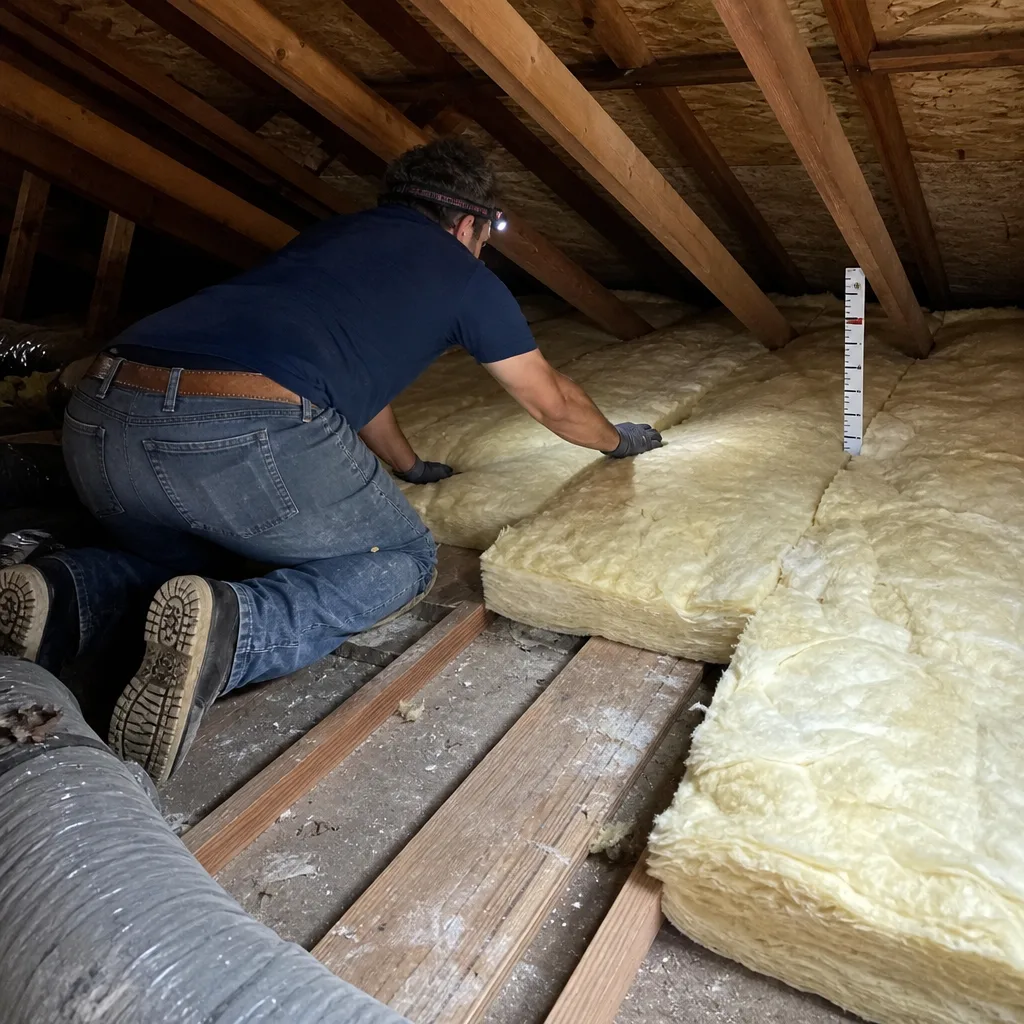
“R-38 blown fiberglass” from two Boerne contractors can mean a 20% difference in installed inches depending on the product’s labeled density. Here’s how to read the specification correctly.
R-value is a measure of thermal resistance per inch, but installed performance depends on achieving the density at which that R-value was tested. Owens Corning AttiCat blown fiberglass is labeled at R-2.5 per inch at 0.5 pounds per cubic foot. To achieve R-38 requires 15.2 inches at that density. A contractor who installs to 12 inches - visually “full” against joists - delivers roughly R-30. The homeowner has no way to know without measuring depth and density.
Three steps to compare bids accurately:
- Request the product name and manufacturer data sheet. Legitimate contractors specify the exact material. Vague references to “fiberglass” or “cellulose” allow substitution with lower-density products.
- Verify depth requirements against the labeled R-value per inch. Divide quoted R-value by labeled R-per-inch. R-38 divided by R-3.2 per inch (dense-pack cellulose) equals 11.9 inches. If the contractor plans 10 inches, the math does not work.
- Ask for installation photos with a measuring reference. Under Haven Standard, our Documented Photo Record on Every Visit includes depth measurements at multiple attic locations. You receive this record; you do not request it.
In Boerne’s older homes near Main Street and The Herff Ranch, attic joist spacing is often irregular - 19.2 inches or 24 inches on center rather than standard 16 inches. Wider spacing requires additional material to achieve the same depth because insulation spreads rather than stacks. A per-square-foot quote that assumes standard spacing underprices the actual material needed. Our written scope specifies joist spacing and adjusts material quantities accordingly.
Payback Period Math Using Actual Boerne CPS Energy Rate Data
Simple payback on attic insulation is calculable from four numbers: pre-work blower-door CFM50, post-work CFM50, your conditioned floor area, and current kWh cost. Here’s how to run the math with Boerne’s actual utility data.
CPS Energy’s residential rate for 2026 is approximately $0.128 per kWh for the typical usage tier, with seasonal adjustments that push summer cooling costs higher. A 2,000 square foot Boerne home with a pre-work blower-door reading of 3,500 CFM50 and post-work reading of 2,100 CFM50 has reduced air leakage by 40%. In our experience across 9,000+ homes sealed and insulated since 2016, this reduction typically correlates to 18-25% HVAC runtime savings in Hill Country climate conditions, with variation based on duct location, equipment efficiency, and thermostat behavior.
The calculation:
- Annual HVAC kWh (typical Boerne home, 2,000 sq ft): 6,500-8,500 kWh
- Conservative savings at 18% reduction: 1,170-1,530 kWh/year
- Annual dollar savings at $0.128/kWh: $150-$196
- Job cost for complete attic treatment (air sealing + R-38 fiberglass): $2,800-$3,400
- Simple payback period: 14-23 years at conservative estimate
This payback extends if savings are higher. At 25% reduction - achievable with comprehensive air sealing and quality installation - savings reach $208-$272 annually, compressing payback to 10-16 years. The federal 25C tax credit and CPS Energy rebates, detailed below, improve these numbers further.
But payback is not the only calculus. In Boerne’s 2022-2025 home sales market, documented energy improvements appeared in appraisal addenda with measurable value premiums. A blower-door report with before-and-after numbers is transferable documentation that outlasts your ownership. We provide this on every applicable job because the record has value beyond the immediate utility savings.
2026 Rebates and Incentive Programs
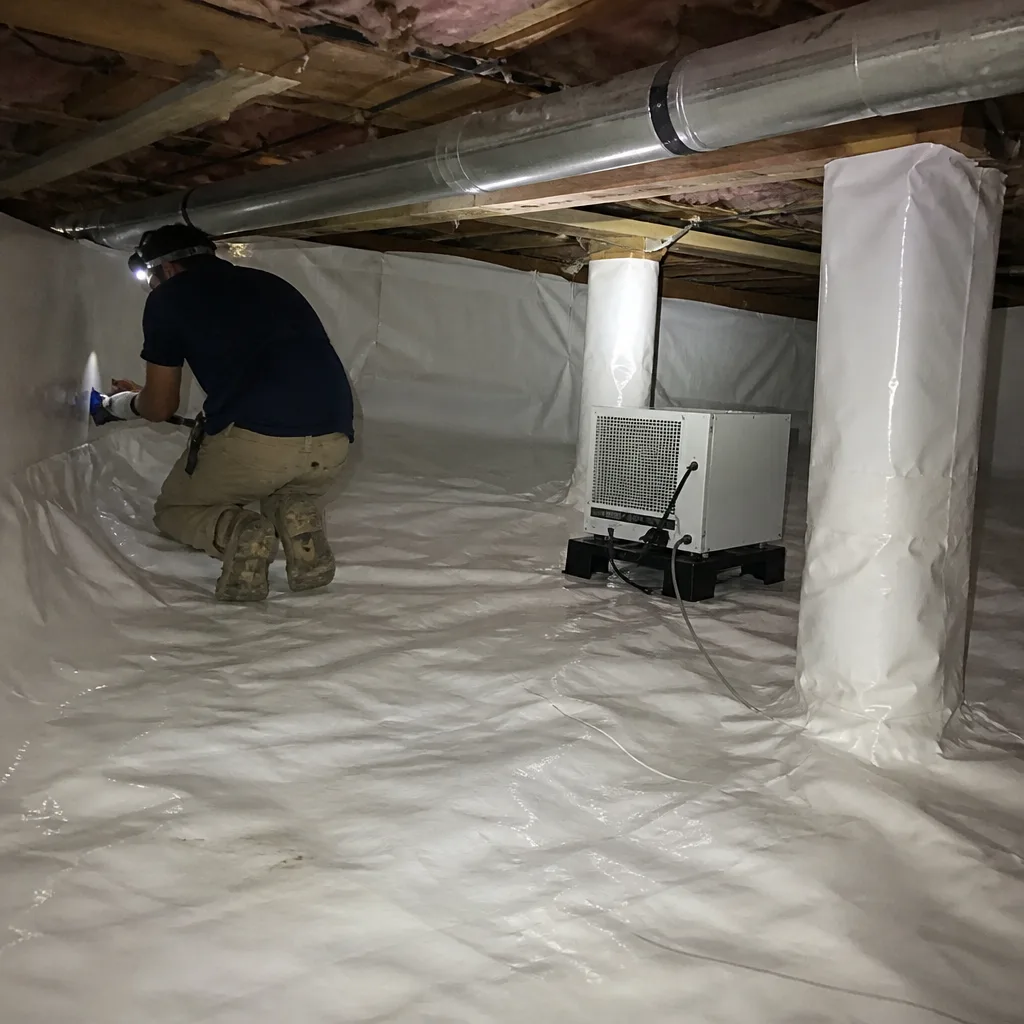
Three programs currently reduce net insulation cost for Boerne homeowners. Each requires specific contractor documentation. We provide this documentation as part of our standard deliverable; you do not need to request it separately. For details on permits and code requirements, see Insulation Permits, Codes & Inspections in TX: What You Need to Know.
CPS Energy Rebates
CPS Energy offers attic insulation rebates for customers within its service territory, which includes most of Boerne and Kendall County. The 2026 structure provides:
- $0.15 per square foot for attic insulation upgrades meeting minimum R-30 in previously under-insulated attics
- $0.25 per square foot for upgrades including air sealing with pre- and post-blower-door documentation
- Maximum rebate: $500 per account per year
The air-sealing bonus requires a minimum 15% reduction in CFM50. Our before-and-after blower-door numbers satisfy this requirement automatically. Rebate applications require the contractor’s CPS Energy participation number, installation date, and product specifications - all included in our written scope and final documentation packet.
Federal 25C Tax Credit (Energy Efficient Home Improvement Credit)
The Inflation Reduction Act extended and modified the 25C credit through 2032. For 2026:
- 30% of qualifying insulation and air sealing costs
- Annual maximum: $1,200 for all energy property combined
- Insulation products must meet applicable IECC standards - R-38 or greater for attics in Climate Zone 2, which includes Boerne
Critical documentation requirement: IRS Form 5695 requires the manufacturer’s certification statement for products installed. We source from Owens Corning, Johns Manville, Knauf, and GreenFiber - all provide these statements on request, and we include copies with your final packet. A contractor using unbranded or proprietary products may not be able to produce this documentation, invalidating your credit.
Additional Considerations
Some Boerne homeowners in the Cordillera Ranch and Menger Springs areas have accessed Texas PACE financing for comprehensive energy upgrades, though program availability varies by municipality. We do not administer PACE directly but can provide the blower-door documentation and scope of work required for program applications.
Under Haven Standard, your written price before any work starts includes a line-item estimate of eligible rebates and credits. You know your net cost before committing, not after installation when documentation deadlines may have passed.
Common Mistakes to Avoid
- Accepting a quote that bundles insulation and air sealing into a single line item. You cannot verify what was done or compare scope. Every component should be priced separately.
- Installing insulation over existing material without testing for moisture or pest contamination. In Boerne’s humid spring seasons, compressed or urine-contaminated insulation becomes a mold substrate. We inspect and document condition before covering.
- Ignoring baffles in homes with soffit vents. Blocking intake ventilation with new insulation creates the exact moisture problems insulation is meant to prevent. We see this in Heritage Ranch and River Road area homes regularly.
- Choosing spray foam based on R-value alone without considering vapor management. Open-cell spray foam is not a vapor barrier. In Boerne’s mixed-humid climate, unvented attic assemblies with open-cell require additional vapor control or conditioned air supply. Spray Foam Insulation in Boerne requires climate-specific design.
- Failing to verify post-installation depth and density. A visual inspection from the attic hatch is insufficient. Our Documented Photo Record includes depth measurements at minimum six locations with visible measuring reference.
- Neglecting to claim available credits due to missing contractor documentation. The 25C credit expires if you lack manufacturer certification statements. We deliver these with your final packet; you should not need to chase them.
- Hiring based on lowest bid without verifying insurance and workers’ compensation coverage. Attic work involves heat exposure, electrical proximity, and fall hazards. Our technicians are background-checked, uniformed, and fully covered. Ask any competitor for certificate of insurance before signing.
When to Call a Professional
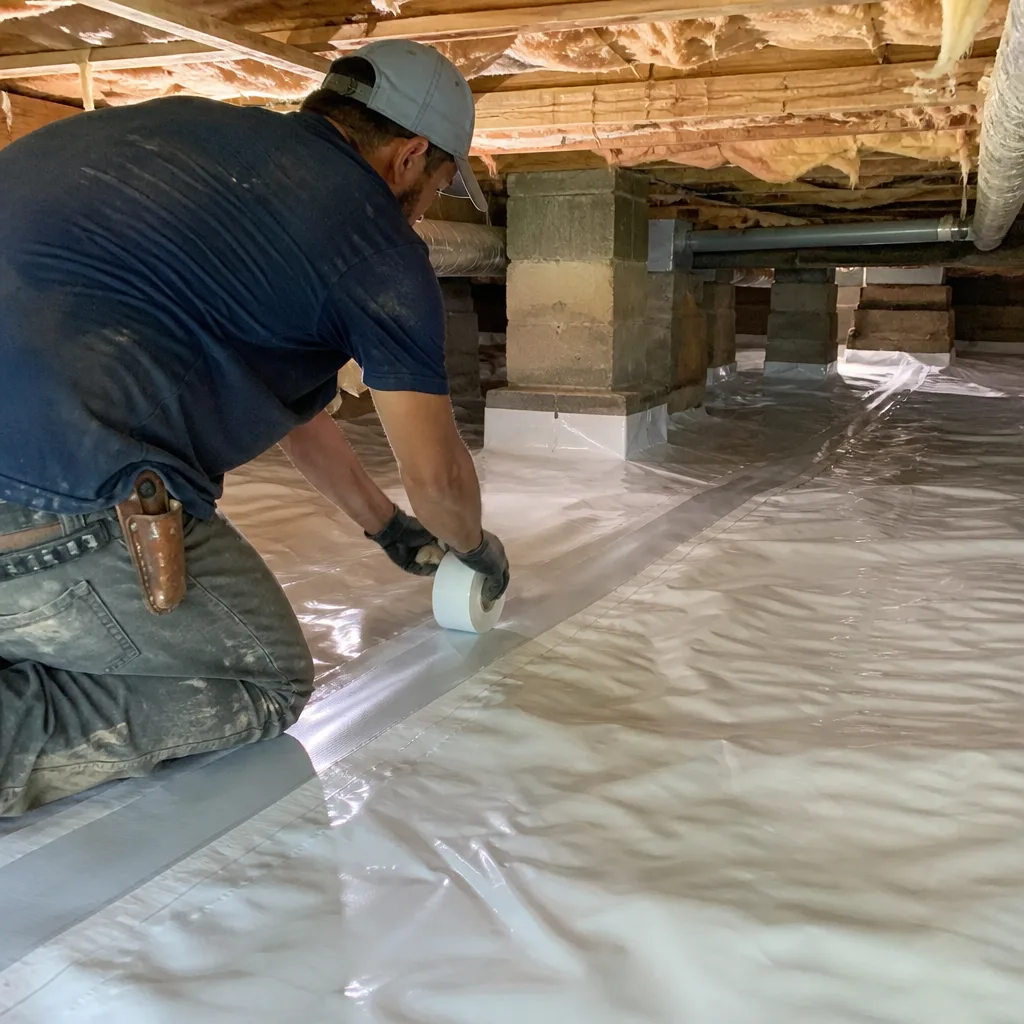
Call for assessment before any of these conditions worsen: uneven temperatures between rooms that persist after HVAC service; visible insulation compression or displacement; moisture staining on ceiling drywall; energy bills that increase without rate changes or usage increases; or planning any roof replacement, which is the optimal timing for comprehensive attic air sealing and insulation. For a full checklist of what to watch for, see our Insulation Warning Signs: A Boerne Homeowner’s Reference Guide.
In Boerne’s escalating summer heat, attics reach 140-160 degrees Fahrenheit. Workers in these conditions require hydration protocols, heat-illness training, and scheduled recovery periods. This is not casual weekend work. For guidance on protecting your attic through every season, read our Seasonal Insulation Care for Boerne: Year-Round Homeowner’s Guide. Topside Attic Insulation Boerne offers free estimates in Boerne - call (830) 529-7780. Every estimate includes a written scope, written price, and explanation of what documentation you will receive if you proceed. No work starts without these three items.
Frequently Asked Questions
Most complete attic insulation jobs in Boerne for a 2,000 square foot home range from $2,400 to $5,800 depending on material and whether air sealing and verification are included. A bare insulation-only quote may run $1,700-$2,100 but typically excludes the sealing and documentation that deliver actual performance. Call (830) 529-7780 for a written price specific to your home - estimates are free.
Repair is rarely cost-effective if existing insulation is compressed, contaminated, or installed without air sealing. Spot-adding R-19 over compressed R-11 does not restore performance because the compressed layer has lost its loft and trapped air pockets. In most Boerne homes built before 2010, full removal and replacement with integrated air sealing delivers better payback than partial repair. We assess existing conditions and document with photos before recommending either approach.
Same-day installation is possible for straightforward attic jobs with accessible hatch locations and no removal required. Complex scopes involving existing insulation removal, extensive air sealing, or spray foam require scheduling based on cure times and crew availability. We answer calls 24/7 and can typically assess and schedule within 48 hours. Call (830) 529-7780 to discuss your timeline.
Different products achieve R-38 at different depths based on their labeled R-value per inch and required density. Blown fiberglass at R-2.5 per inch needs 15.2 inches. Dense-pack cellulose at R-3.2 per inch needs 11.9 inches. A bid that does not specify product and depth is not comparable to one that does. Always request the manufacturer data sheet and verify the math.
You need the manufacturer’s certification statement for insulation products, proof of payment, and a description of the property improved. We include manufacturer certifications in your final documentation packet and itemize qualifying costs on your written scope. The credit is claimed on IRS Form 5695; we do not provide tax advice but ensure you have the documents required to claim it.
Every attic in Boerne needs air sealing before insulation. The only question is extent. Signs of significant leakage include dusty insulation top surfaces (indicating air movement), visible gaps around chimney chases or duct penetrations, and rooms that are consistently warmer or cooler than others. Our assessment includes a visual inspection for these indicators and, on request, blower-door testing to quantify leakage. Under Haven Standard, we do not install insulation over unsealed attic floors - the performance penalty is too severe and the remediation cost too high.
The Bottom Line
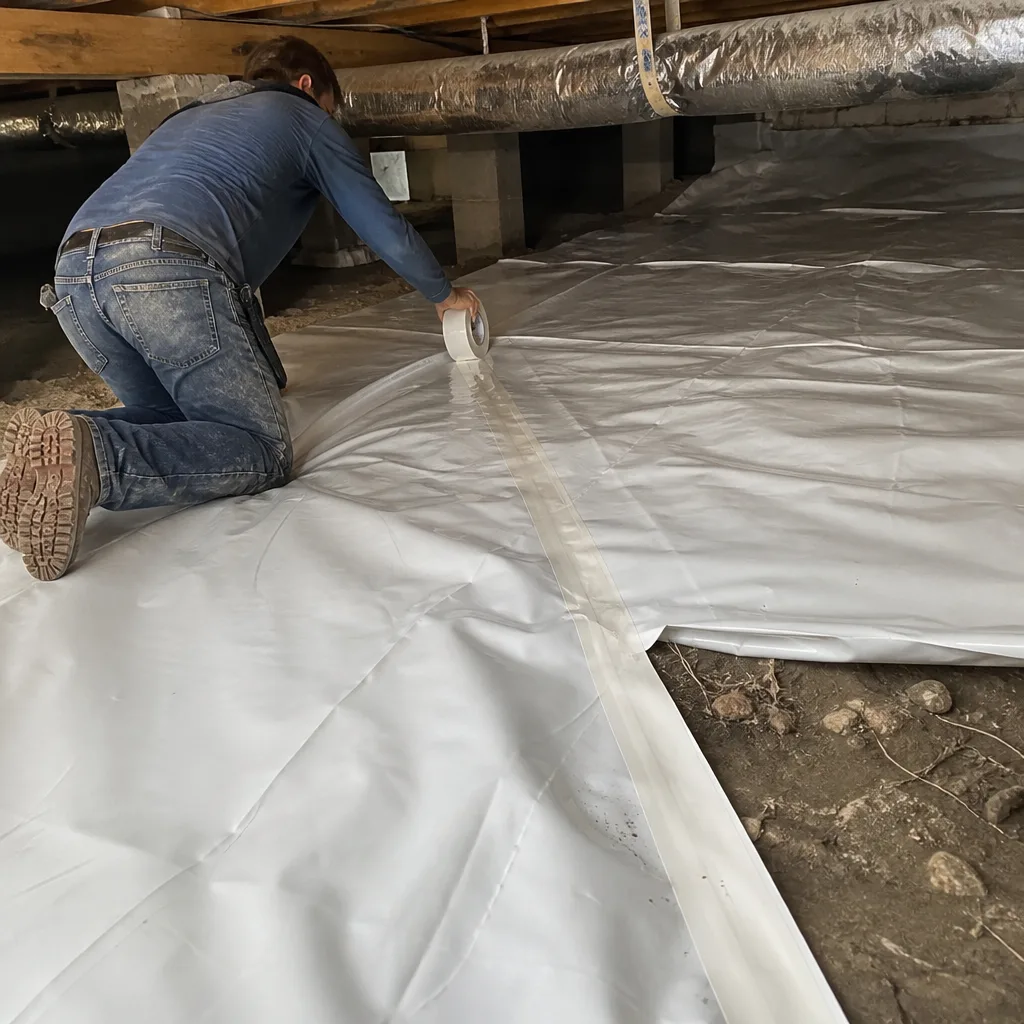
Insulation cost in Boerne is not a single number. It is a range determined by scope, material, and verification. The legitimate spread for a complete attic job in 2026 runs $2,400-$5,800, with the lower end representing basic blown fiberglass over minimal prep and the upper end representing spray foam or complex removal-and-replace with full air sealing and blower-door documentation. The $1,700 bid exists in the market but carries risk: unsealed bypasses, unverified depth, and no performance record. The $6,400 remediation cost is real, documented in our files, and avoidable with proper initial scope. Request itemized quotes, verify product specifications, and demand documentation of results. The record you receive at job completion is the only proof that the work performed matches the work promised. Explore more guides & resources to help you plan your project.
Written by Wes Okafor, Owner at Topside Attic Insulation Boerne, serving Boerne since 2016.