
Last updated September 24, 2026
Insulation Permits, Codes & Inspections in TX: What You Need to Know
A spray foam job on a conditioned attic conversion in Boerne requires a building permit and a framing inspection before foam is applied - but the same scope in unincorporated Kendall County does not, and a contractor who doesn’t ask your address before pulling permits may be operating in the wrong rulebook. Texas adopts the IECC energy code statewide but lets local jurisdictions amend or decline to enforce it, which means your permit obligation can change across a single property line. In this guide, we’ll map the actual triggers by jurisdiction, explain what inspectors verify, and show how unpermitted work can derail a home sale or insurance claim in Boerne and the surrounding Hill Country.
Quick Answer
In Texas, insulation permits are governed by local jurisdiction, not state law. Boerne requires a building permit for spray foam in conditioned attics, insulation removal exposing structural members, and any R-value change in exterior walls; unincorporated Kendall County generally exempts like-for-like insulation replacement but requires permits for spray foam conversions and new construction. Inspections verify code-minimum R-values, air barrier continuity, and combustion safety - and unpermitted work can trigger lender appraisal flags or insurance claim denials at resale.
Table of Contents
- How Texas Adopts and Amends the IECC Energy Code
- What Triggers a Building Permit in Boerne vs. Kendall County
- Climate Zone 2 vs. Zone 3: The R-Value Requirements That Actually Apply
- What Inspectors Actually Check: Framing, Rough-In, and Final
- The Real Cost of Unpermitted Work: Insurance and Resale
- Who Pulls the Permit: Contractor vs. Homeowner Liability
- Common Mistakes to Avoid
- When to Call a Professional
- Frequently Asked Questions
- The Bottom Line
How Texas Adopts and Amends the IECC Energy Code
Texas is a home-rule state for building codes. The legislature adopts a version of the International Energy Conservation Code (IECC) through the Texas State Energy Conservation Office (SECO), but enforcement sits with local governments. They can adopt the code as written, amend it, or in some cases decline to enforce residential energy provisions altogether.
Here’s what that means on the ground in the Boerne area:
- Boerne (incorporated city): Adopted IECC 2021 with local amendments, enforced through the City of Boerne Building Inspections Division. Residential energy compliance is mandatory for permitted work.
- Unincorporated Kendall County: Adopted IECC 2021 for new construction but does not actively enforce energy code compliance on existing-home insulation retrofits unless the work triggers a building permit through structural, electrical, or plumbing changes.
- Extra-Territorial Jurisdiction (ETJ): Parcels within Boerne’s ETJ may fall under city permit requirements if the property is later annexed, or county rules if not. The jurisdiction in force at the time of construction governs.
Most insulation contractors operating across these boundaries carry a single mental model - usually the one that requires the least paperwork. We’ve reviewed competitor estimates in Fair Oaks Ranch and Cordillera Ranch that assumed no permit was needed when the property sat inside Boerne city limits. The homeowner discovers the gap when the listing agent requests permit history during resale.
The IECC 2021 adoption matters because it changed R-value tables and added air barrier verification requirements that did not exist in the 2015 code many contractors still reference. A contractor quoting “R-38 in the attic” may be working from outdated tables. The 2021 code specifies R-49 for ceilings in climate zone 2 (most of Kendall County and Boerne proper) and R-60 for climate zone 3 (higher elevations northwest toward Comfort and Kerrville). More on this in the climate zone section below.
Texas also maintains a residential energy efficiency compliance path through the Texas Residential Construction Commission (TRCC) legacy framework, though post-2009 legislation shifted most authority to local jurisdictions. The practical effect: your city or county building official is the final arbiter of whether your insulation job needs a permit and what documentation satisfies compliance.
What Triggers a Building Permit in Boerne vs. Kendall County
Permit triggers differ by jurisdiction and by the type of insulation work. Below is the actual breakdown based on current municipal code and county practices as of 2025.
City of Boerne: Permit Required
- Spray foam insulation in any conditioned attic or crawl space conversion (changes thermal envelope definition)
- Insulation removal that exposes structural members, roof decking, or wall framing
- Any change to exterior wall insulation R-value in additions or renovations
- Radiant barrier installation when combined with electrical work (attic fans, powered vents)
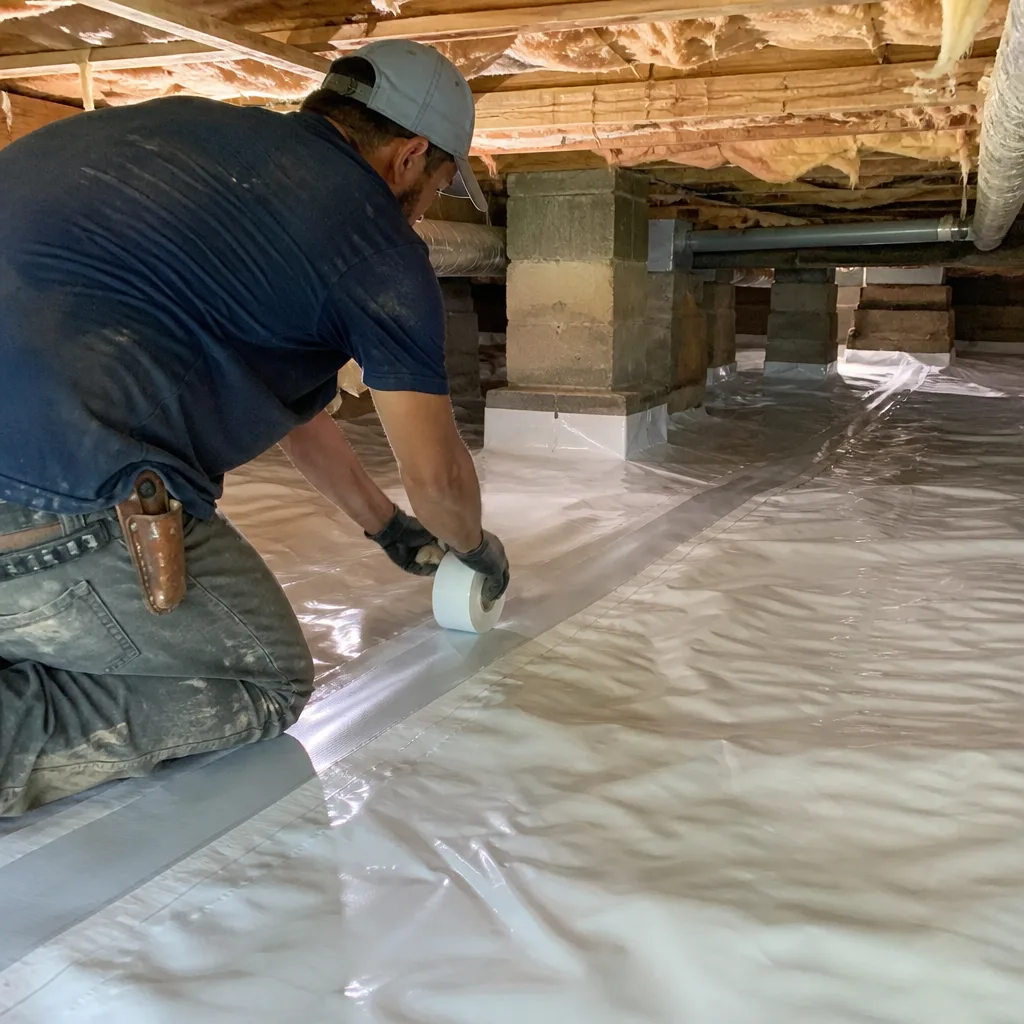
- Crawl space encapsulation with vapor barrier when conditioned air is extended into the space
- All new construction and additions
City of Boerne: Typically Exempt
- Like-for-like blown-in insulation topping (adding material over existing without exposing structure)
- Replacement of damaged insulation in accessible attics where structure remains covered
- Radiant barrier retrofit without electrical modifications
Unincorporated Kendall County: Permit Required
- New construction and additions
- Spray foam in conditioned attic or crawl space conversions
- Work involving structural modification, electrical, or plumbing
Unincorporated Kendall County: Typically Exempt
- Like-for-like insulation replacement or topping in existing attics
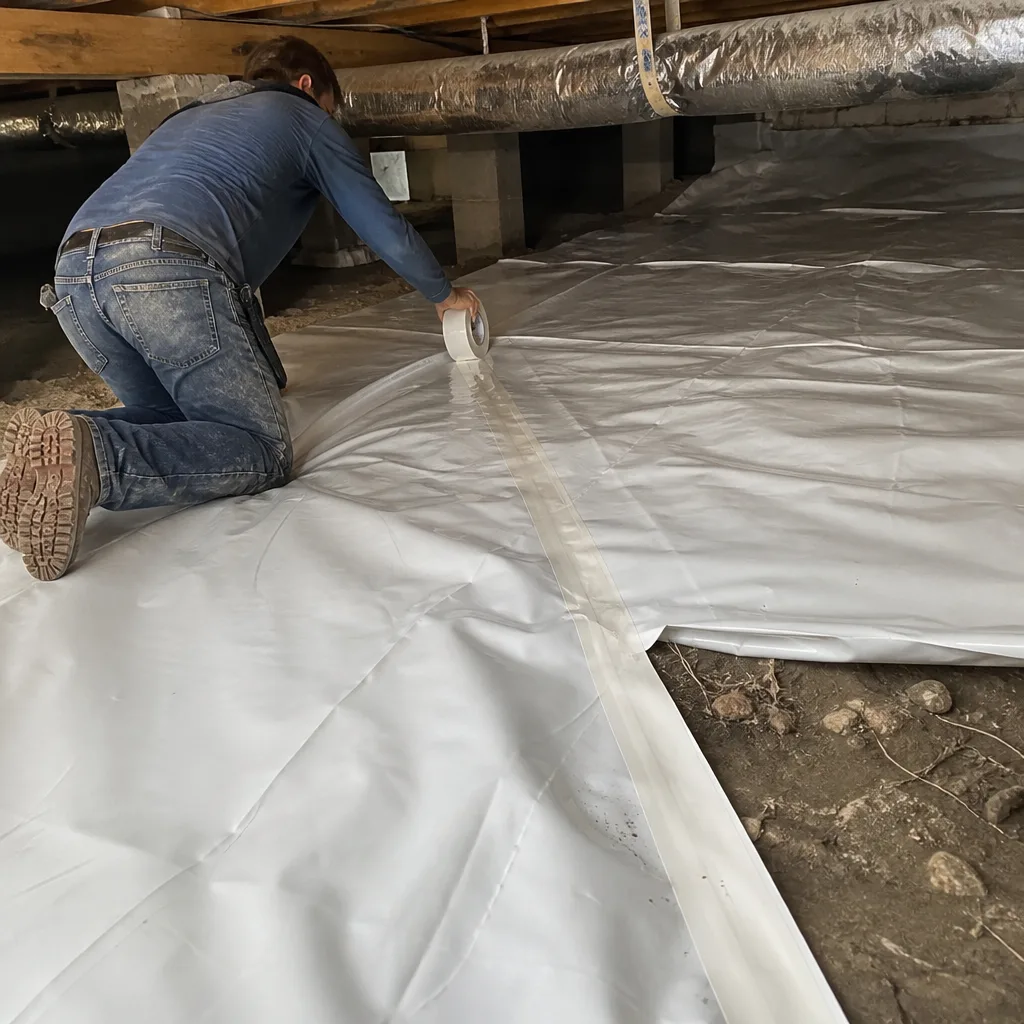
- Crawl space vapor barrier installation without conditioning the space
- Blown-in wall insulation through existing exterior sheathing (dense-pack) where no wall finish is removed
The City of Boerne’s permit fee schedule as of 2025 runs approximately $85-$175 for residential insulation scopes, depending on valuation. A conditioned attic conversion with spray foam typically falls in the $150-$175 range due to the structural and mechanical scope involved. Re-inspection fees apply if the inspector finds deficiencies - $75 per re-inspection in 2025.
One Boerne-specific wrinkle: properties in the Historic Landmark District near Main Street and The Diagonal require Historic Review Commission approval for any exterior modification, including insulation work that changes window placement, venting, or visible envelope details. This runs parallel to building permit requirements, not in place of them.
We’ve worked on homes in Boerne Heights and along Bandera Road where the property straddled annexation boundaries. The title search showed county jurisdiction, but utility records indicated city water service - a reliable indicator of ETJ status. In these cases, we verify permit requirements directly with the City of Boerne Building Inspections Division before work begins. Under Haven Standard: Have it in writing. We document the jurisdiction determination in the project file.
Climate Zone 2 vs. Zone 3: The R-Value Requirements That Actually Apply
Most of Boerne sits in IECC climate zone 2 (hot-humid). Higher elevations northwest of the city, toward Comfort and the Kerr County line, fall into climate zone 3 (mixed-humid). The R-value requirements differ, and the 2021 code tightened both zones from the 2015 baseline many contractors still carry in their heads.
IECC 2021 Prescriptive R-Values: Wood-Frame Construction
| Component | Climate Zone 2 (Most of Boerne) | Climate Zone 3 (Northwest Hill Country) |
|---|---|---|
| Ceiling/Attic | R-49 | R-60 |
| Wood Frame Wall | R-20 or R-13 + R-5 ci | R-20 or R-13 + R-5 ci |
| Floor (over unconditioned space) | R-19 | R-19 |
| Basement Wall | R-10 ci | R-10 ci |
| Slab (heated) | R-10, 24″ depth | R-10, 24″ depth |
| Crawl Space Wall | R-10 ci | R-10 ci |
The “ci” designation means continuous insulation - rigid foam or similar applied over framing, not cavity-fill alone. A contractor installing R-13 fiberglass batts in a 2×4 wall meets the cavity requirement but not the total assembly requirement unless additional continuous insulation is added.
For attics, the R-49 zone 2 requirement represents a change from IECC 2015’s R-38. We’ve encountered homes in Herff Ranch and Balcones Creek where prior contractors installed R-38 blown fiberglass in 2018, compliant at the time, but now below current code for permitted work. Our Insulation Warning Signs: A Boerne Homeowner’s Reference Guide covers how to spot outdated insulation before it becomes a resale issue. This matters when:
- The homeowner adds square footage and triggers full-code compliance for the existing envelope
- A lender or insurer requires current-code verification
- The work is part of a city-permitted renovation scope
Spray foam complicates R-value verification because its performance depends on installation quality and thickness uniformity. IECC 2021 requires thermal insulation inspection to verify minimum thickness and coverage, plus air barrier inspection to verify continuity. Open-cell spray foam (like Icynene products we install) must achieve labeled density and thickness; closed-cell foam (like Demilec Heatlok HFO High Lift) must show no voids exceeding 2% of surface area.
In climate zone 2, vapor retarder requirements also changed. IECC 2021 requires Class I or II vapor retarders on the interior side of frame walls in climate zone 2, with exceptions for certain foam plastic insulations and vented cladding assemblies. A contractor spraying open-cell foam directly against roof decking in a conditioned attic must verify the assembly meets vapor permeance requirements - typically by using vapor-permeable foam or ensuring the roof assembly can dry to the exterior.
We’ve measured attic conditions in Random Oaks homes where improper vapor management led to moisture accumulation on roof decking within 18 months of spray foam installation. The blower-door test showed excellent air sealing - 2,800 CFM50 down from 5,100 - but the moisture data told a different story. Under Haven Standard, we publish before-and-after blower-door numbers on every job, and we include moisture meter readings when foam is applied to roof decks.
What Inspectors Actually Check: Framing, Rough-In, and Final
Inspection requirements vary by scope, but conditioned attic conversions and spray foam jobs in Boerne follow a predictable sequence. Understanding what each inspection verifies helps you schedule work efficiently and avoid re-inspection fees.
Step 1: Framing/Rough-In Inspection (Spray Foam Conditioned Attics)
This is the inspection competitors most often miss. Before spray foam is applied to roof decking or rafter bays in a conditioned attic conversion, the framing inspector verifies:
- Structural adequacy of rafters for added dead load (foam weight, plus any mechanical equipment)
- Proper venting pathways if a hybrid vented/unvented approach is used
- Combustion air supply for gas appliances now located within the conditioned envelope
- Recessed light fixture IC (insulation contact) rating or proper enclosure
- Electrical rough-in completeness - foam encapsulates wiring, so corrections after application are destructive
Scheduling this inspection before foam application is non-negotiable. Once foam covers framing and mechanicals, the inspector cannot verify concealed elements without destructive removal. We’ve been called to homes in Falling Water where foam was sprayed over non-IC can lights and unenclosed junction boxes - the inspector failed the rough-in, and the correction required cutting away cured foam at $3-$5 per board foot to remove and replace.
The framing inspection also verifies fire-blocking at penetrations between conditioned attic and living space. Spray foam is not an approved fire-blocking material by itself; intumescent coating or physical barriers are required at certain assemblies.
Step 2: Insulation Inspection
Conducted after insulation installation but before wall/ceiling finish. The inspector verifies:
- Minimum R-value by measuring insulation thickness and checking product labels
- Complete coverage - no gaps, voids, or compression in cavity fills
- Proper installation of air barriers and vapor retarders per climate zone
- Clearance around heat-producing fixtures (recessed lights, flues, chimneys)
- Attic access insulation and weatherstripping
For blown-in fiberglass or cellulose (like GreenFiber products), the inspector checks settled density against manufacturer specifications. Settled R-value can run 10-15% below installed thickness if density is insufficient. We document installed weight per square foot on every blown-in job - part of our Documented Photo Record - so the inspector has verification beyond visual thickness.
Step 3: Final Inspection
Verifies completion of all prior corrections and functional testing of mechanical systems affected by envelope changes. For conditioned attics, this includes:
- HVAC commissioning - airflow and temperature split verification
- Combustion appliance zone (CAZ) testing for gas equipment
- Exhaust fan termination verification
- Documentation of insulation R-values and air barrier details for the certificate of occupancy
In unincorporated Kendall County, inspection rigor varies by project. New construction receives full inspection sequences. Existing-home retrofits without structural or mechanical scope may receive no inspection at all, which shifts compliance burden to the contractor and homeowner.
Our practice: even when not required, we photograph every stage and provide the homeowner with a Documented Photo Record showing insulation thickness measurements, air barrier details, and mechanical clearances. We follow the same documentation protocol outlined in our Attic Insulation Maintenance Checklist for Boerne Homeowners. If a future buyer or insurer questions the work, documentation exists. Under Haven Standard: Have it in writing - and in this case, in images.
The Real Cost of Unpermitted Work: Insurance and Resale
Unpermitted insulation work creates two concrete financial risks that generic “permits protect you” warnings fail to explain.
Insurance Claim Denials
Texas follows a cause-and-approximation framework for fire insurance claims. If unpermitted work contributed to or complicated a loss, the insurer may deny or reduce the claim. Specific scenarios we’ve seen in the Hill Country:
- Spray foam without fire-blocking inspection: Fire traveled through an unblocked chase from conditioned attic to living space. The insurer’s forensic engineer noted the absence of permit and inspection records for the foam installation. Claim payment was reduced by 40% for “contributory unpermitted modification.”
- Insulation contact with non-IC recessed lights: Thermal event in a Cordillera Ranch attic. The insulation retrofit had no permit; the light fixtures predated IC requirements but were buried in blown fiberglass. Insurer denied the structural portion of the claim, citing unpermitted alteration of the electrical-thermal envelope.
Texas insurance code does not automatically void coverage for unpermitted work, but it permits insurers to adjust for increased hazard. The burden shifts to the homeowner to prove the unpermitted work did not contribute.
Lender Appraisal Flags at Resale
Conventional lenders in Texas increasingly require Certificate of Occupancy (CO) verification or permit history for properties with recent improvements. Fannie Mae and Freddie Mac guidelines allow appraisers to flag “unpermitted additions or alterations” as conditions requiring further investigation.
Specific impacts on Boerne-area sales:
- VA and FHA loans: More stringent. Unpermitted conditioned attic conversions may be classified as “non-conforming” if the appraisal notes living space square footage does not match tax records. We’ve seen $15,000-$25,000 sale price adjustments in Boerne Heights when unpermitted attic conversions required retroactive permitting or square footage removal from listings.
- Cash buyers and investors: Often discount offers by estimated permit remediation cost plus contingency. A $5,000 spray foam job without permits can trigger a $10,000-$15,000 price reduction.
- Title insurance exceptions: Some title underwriters in Kendall County now exclude unpermitted work from coverage, particularly for properties with municipal utility service that suggests city jurisdiction.
The resale impact is concentrated in Boerne’s 2015-2025 construction cohort - the same buyer demographic we serve. These homeowners purchased new or near-new, made improvements without permit awareness, and face discovery at first resale. A permit history search, now standard for listing agents in the San Antonio metro, surfaces the gap.
Who Pulls the Permit: Contractor vs. Homeowner Liability
Texas Occupations Code Chapter 1302 and local ordinances assign permit responsibility based on project type and contracting arrangement. The practical rules:
New Construction and Additions
The builder or general contractor pulls the permit. Subcontractors (including insulation contractors) work under the GC’s permit. The GC is liable for compliance; subcontractors are liable to the GC contractually.
Existing Home Renovations and Retrofits
The property owner is the permit applicant of record unless the contractor holds a valid Responsible Master Plumber, Master Electrician, or HVAC Contractor license that authorizes direct permitting. Insulation contractors in Texas do not hold a trade license category that permits direct application for building permits - we apply as the owner’s agent or the owner applies directly.
This creates a critical liability split:
- If the contractor pulls the permit as owner’s agent: The contractor is responsible for code-compliant work and inspection scheduling. The owner remains liable for permit fees and any fines for false statements on the application. In Boerne, the contractor’s license number (if applicable) and insurance certificate must accompany the application.
- If no permit is pulled: Under Texas Local Government Code Chapter 214, the property owner is primarily liable for unpermitted work. The contractor faces disciplinary action through the Texas Department of Licensing and Regulation (TDLR) if licensed, or civil liability for breach of contract. Criminal penalties are rare for residential insulation but possible for willful evasion in commercial work.
We’ve reviewed contracts from competitors in Fair Oaks Ranch that contained a permit disclaimer - “permits are homeowner’s responsibility” buried in fine print. This does not shield the contractor from TDLR complaint or negligence liability if the work required a permit and the contractor knew or should have known. Texas courts have held that contractors with specialized knowledge have a duty to inform owners of permit requirements.
Our practice at Topside Attic Insulation Boerne: we identify permit requirements in our written scope, specify who will apply, and include permit fees in our upfront pricing or call them out as owner-responsible with documentation. Under Haven Standard Clause 1: flat price, written scope, written warranty before anyone lifts a tool. No surprises at inspection.
For homeowners in unincorporated Kendall County, we still recommend permitting for spray foam and conditioned space conversions even when not strictly required. The permit record protects resale value and provides third-party verification of code compliance. The $85-$175 permit cost is recovered many times over in avoided transaction friction.
Common Mistakes to Avoid
- Assuming no permit means no inspection risk. In Boerne, code enforcement responds to complaints and can issue correction orders or stop-work notices. A neighbor’s complaint about dust or noise can trigger a permit history review that surfaces unpermitted work.
- Using 2015 R-values for 2024 work. Contractors quoting R-38 attics in climate zone 2 are working from outdated code. Verify your contractor references IECC 2021 tables, not old habit.
- Skipping the framing inspection before spray foam. Once foam covers roof decking and rafters, structural and mechanical verification is impossible without destruction. Schedule the framing inspection; confirm IC ratings and fire-blocking before the rig arrives.
- Ignoring ETJ status. Properties on Boerne Stage Road, RM 474, and Bandera Road corridor often have ambiguous jurisdiction. Verify with the City of Boerne before assuming county rules apply.
- Accepting verbal permit assurances. “My guy says we don’t need one” is not documentation. Request the permit application number and verify it through the city’s online portal or inspection scheduling line.
- Overlooking combustion safety in conditioned attics. Moving the thermal envelope to the roofline brings gas water heaters and furnaces inside conditioned space. They need combustion air supply, and the inspector will check. We’ve found units in Random Oaks operating in negative pressure after attic conversions, with CO spillage at startup.
- Neglecting to document work that didn’t require a permit. Even exempt work benefits from photos, product labels, and thickness measurements. Future buyers and insurers appreciate verification, and our Documented Photo Record provides it on every job regardless of permit status.
When to Call a Professional
Call a professional when your project involves spray foam, conditioned space conversion, or any work that changes the thermal envelope’s location. The permit and inspection sequence for these scopes is not intuitive, and the cost of error - failed inspection, destructive rework, or unpermitted status at resale - exceeds any savings from skipping professional guidance.
Specific scenarios where professional assessment pays for itself:
- You’re converting a vented attic to conditioned storage or living space
- Your home has gas appliances in the attic or crawl space
- You’re replacing insulation after water damage or rodent activity, and structural exposure is likely
- You’re selling within 3-5 years and need clean permit history
- You’ve received competing estimates with conflicting permit advice
Topside Attic Insulation Boerne offers free estimates in Boerne and Kendall County. We identify your jurisdiction, specify permit requirements in writing, and include permit fees in our upfront pricing where applicable. Every job begins with a written price and ends with a Documented Photo Record. Call (830) 529-7780 to schedule.
Frequently Asked Questions
Not if it’s like-for-like material added over existing insulation without exposing structure. Topping blown fiberglass or cellulose in an accessible attic is typically exempt. If you’re removing old insulation, exposing framing, or changing insulation type to spray foam, a permit is required. Call (830) 529-7780 and we’ll verify your specific scope and address.
Residential insulation permits in Boerne run $85-$175 as of 2025, depending on project valuation. A spray foam conditioned attic conversion with mechanical scope typically falls at the high end. Re-inspection fees are $75 if corrections are needed. We include permit costs in our written price when we’re pulling the permit as your agent.
Most of Boerne and Kendall County is climate zone 2 (hot-humid), requiring R-49 attic insulation under IECC 2021. Higher elevations northwest toward Comfort and Kerrville fall in zone 3 (mixed-humid), requiring R-60. A contractor should verify your specific address against the IECC climate zone map, not assume based on general location.
Yes, but the unpermitted status may trigger buyer concessions, lender appraisal conditions, or title exceptions. The most common resolution is retroactive permitting, which in Boerne requires exposing work for inspector verification - often impractical for spray foam. Documentation of the work scope and materials can reduce but not eliminate the impact. We provide free second opinions on written estimates, including permit strategy.
Under Texas law, the property owner holds primary liability for unpermitted work. The contractor faces TDLR discipline if licensed, plus civil liability for breach of contract or negligence. A contractor’s “homeowner responsibility” clause does not eliminate their duty to inform you of requirements their trade knowledge should reveal. We specify permit responsibility in every written scope.
A blower-door test is a pressurization reading that shows, in one number, how much air your building envelope is losing. It is not required for Boerne insulation permits, but IECC 2021 includes an optional air leakage rate compliance path (3.0 ACH50 or 5.0 ACH50 depending on methodology) that can substitute for certain prescriptive requirements. We perform blower-door testing on every air-sealing job and publish before-and-after numbers so you can verify performance. In homes we’ve worked near Boerne City Lake, typical pre-work readings run 4,500-6,500 CFM50; post-sealing and insulating, 2,000-3,200 CFM50.
The Bottom Line
Texas insulation permitting is local, not state, and the rules change across Boerne’s city limits, its ETJ, and unincorporated Kendall County. IECC 2021 raised R-values and added air barrier requirements that many contractors haven’t internalized. Spray foam conditioned attic conversions need framing inspection before application - a sequencing requirement that protects you from destructive rework. Unpermitted work can reduce insurance claims and complicate resale, particularly for the 2015-2025 home cohort now entering first resale. The contractor’s duty is to inform; the homeowner’s is to verify. Document everything, permit what requires permitting, and keep the record with your title papers.
Written by Wes Okafor, Owner at Topside Attic Insulation Boerne, serving Boerne since 2016.