
Last updated September 24, 2026
How to Hire a Insulation Contractor in Boerne: A Step-by-Step Guide
Ask any five Boerne insulation contractors what blower-door number their last attic job produced, and four will not have one - because they never measured it. That single question separates contractors who sell installed inches from contractors who sell delivered performance. In this guide, you’ll learn how to vet insulation contractors in Boerne using verifiable outputs, not quoted inputs: the four questions to put in writing before any site visit, how to read a Certificate of Insurance for completed-operations coverage, why ASTM-labeled R-values matter more than generic descriptions, and the red-flag phrases that signal a bid structured to skip labor-intensive steps. By the end, you’ll know how to hire based on what you’ll receive, not what you’re promised.
Quick Answer
To hire an insulation contractor in Boerne, request a written scope that specifies pre-installation air sealing, ASTM C-518 labeled R-values, installed depth at eaves versus field, and post-installation documentation format including depth verification. Verify their Certificate of Insurance includes completed-operations liability coverage, and never accept a bid priced only in square feet of coverage area without these performance details.
Table of Contents
- Why Square-Foot Bids Fail in Boerne’s Climate
- The Four Questions to Put in Writing Before Any Site Visit
- How to Read a Certificate of Insurance for an Insulation Contractor
- Why ASTM C-518 Labeled R-Values Belong in Every Scope
- Red Flags in Bid Language
- What HERS Ratings and BPI Certification Actually Mean
- Common Mistakes to Avoid
- When to Call a Professional
- Frequently Asked Questions
- The Bottom Line
Why Square-Foot Bids Fail in Boerne’s Climate
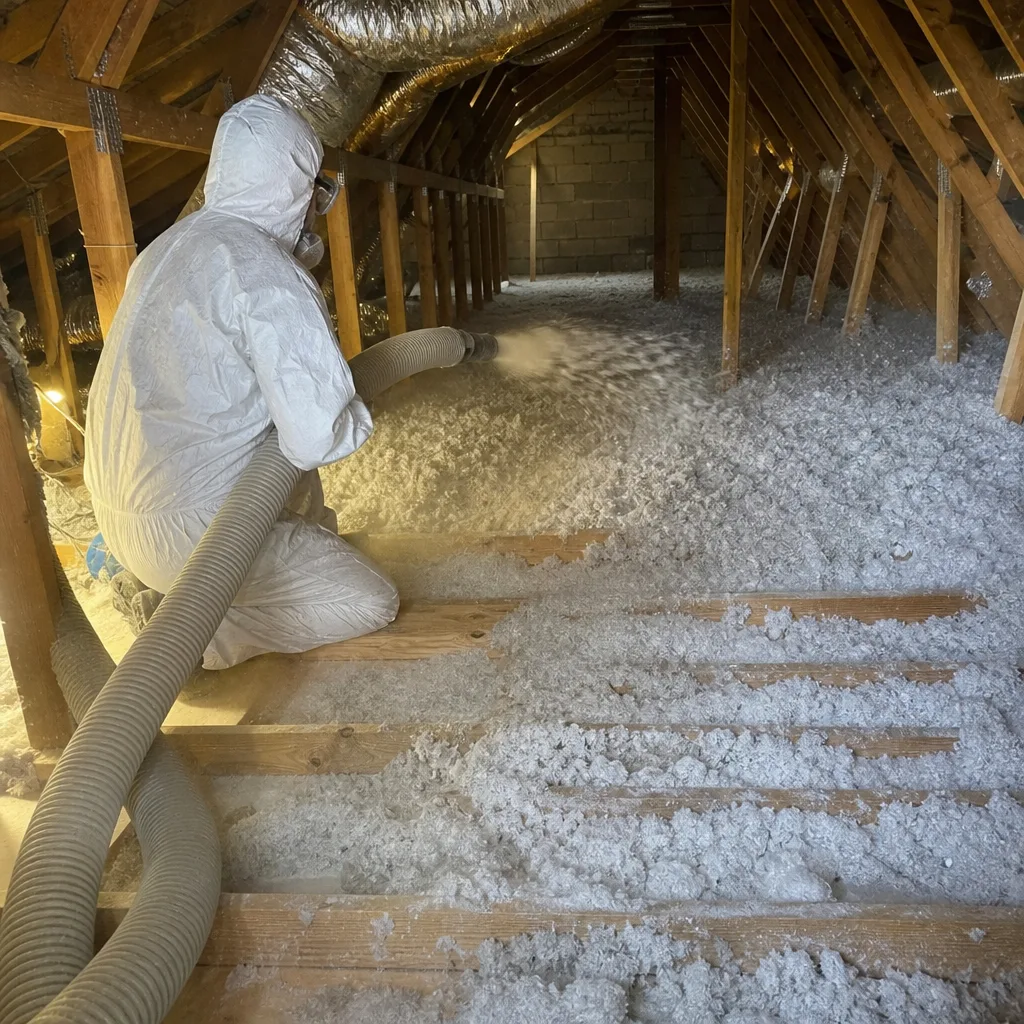
Boerne sits at the edge of the Texas Hill Country, where summer attic temperatures routinely exceed 140°F and winter cold fronts drop overnight lows into the 20s. This thermal swing range - among the widest in the state - makes installed insulation depth and air-sealing quality far more consequential than in milder climates. Yet most insulation bids in Boerne are quoted in square feet of coverage area, a metric that tells you nothing about whether the finished assembly will perform.
Here’s the structural problem. A contractor bidding $1.20 per square foot for blown fiberglass has every incentive to minimize labor time: skip sealing top plates, blow quickly past eaves where depth is hardest to verify, and move to the next job. The homeowner receives what looks like a complete installation but retains the same air leakage paths that were wasting conditioned air before the truck arrived. In Boerne’s climate, unsealed attic floors with fresh blown insulation often perform only marginally better than the original bare joists - because the heat transfer mechanism that mattered most was convection, not conduction, and convection requires air sealing to address.
We see this regularly in Boerne neighborhoods like Topside Attic Insulation Boerne home and Fair Oaks Ranch, where homeowners call us two winters after a “complete” attic job because rooms stay cold and energy bills barely moved. The common thread: no blower-door test before or after, no written air-sealing scope, and a bid that quoted only coverage area and a target R-value with no depth verification protocol.
The alternative is to reframe hiring around verifiable outputs. Instead of asking “how much per square foot,” ask:
- What blower-door number will this job produce, and how will you verify it?
- What specific air-leakage paths will be sealed before insulation goes in?
- How will installed depth be measured and documented at eaves, field, and around penetrations?
- What documentation will I receive when the crew leaves?
These questions shift the transaction from inputs (square feet, bags of material) to outputs (measured air leakage reduction, verified depth, documented record). In our experience across 9,000+ homes sealed and insulated since 2016, homeowners who ask these questions before hiring receive installations that perform as specified - and those who don’t often pay twice.
The Four Questions to Put in Writing Before Any Site Visit
Every insulation contractor who visits your Boerne home should leave a written scope, not a verbal estimate. Before that visit, send these four questions in writing - email is fine - and evaluate the response before scheduling.
1. What is the pre-work air-sealing scope, and is it itemized separately?
Air sealing - the process of closing gaps, cracks, and penetrations in the building envelope before adding insulation - is the single largest determinant of whether an attic insulation job performs. In Boerne’s climate, with its combination of high summer attic temperatures and winter cold snaps, unsealed top plates, can lights, plumbing penetrations, and chimney chases act as thermal bypasses that render insulation nearly irrelevant.
A proper scope specifies each leakage path to be addressed: top plates (the horizontal framing member where walls meet the ceiling), recessed can lights, bathroom fan housings, plumbing vent stacks, electrical penetrations, and chimney chases. It also states the materials: fire-rated caulk for high-temperature penetrations, expanding foam for larger gaps, rigid foam baffles at eaves to maintain ventilation paths. If the response is “air sealing included as needed” or a similarly vague phrase, the contractor has not scoped the labor and likely intends to minimize it.
At Envelope Insulation Co., operating under The Haven Standard since 2016, air sealing is never optional and never billed as an add-on. Every attic job begins with sealing, documented with before-and-after blower-door numbers, before any insulation is installed. Attic Insulation in Boerne requires this sequence to perform in our climate.
2. What post-installation documentation will I receive, and in what format?
The documentation you receive when the crew leaves defines what you actually purchased. A proper job record includes: installed depth measurements at multiple locations (eave, field, center), photos of critical details (sealed penetrations, baffle placement, clearance around heat sources), product labels or cut sheets showing ASTM C-518 labeled R-value, and on applicable jobs, before-and-after blower-door test results - a pressurization reading that shows, in one number, how much air your building envelope was losing before and after the work.
Under Haven Standard Clause 1, every job receives a written price before work starts and a Documented Photo Record when the crew leaves. No exceptions. If a contractor cannot describe their documentation format before the visit, they likely do not produce consistent records.
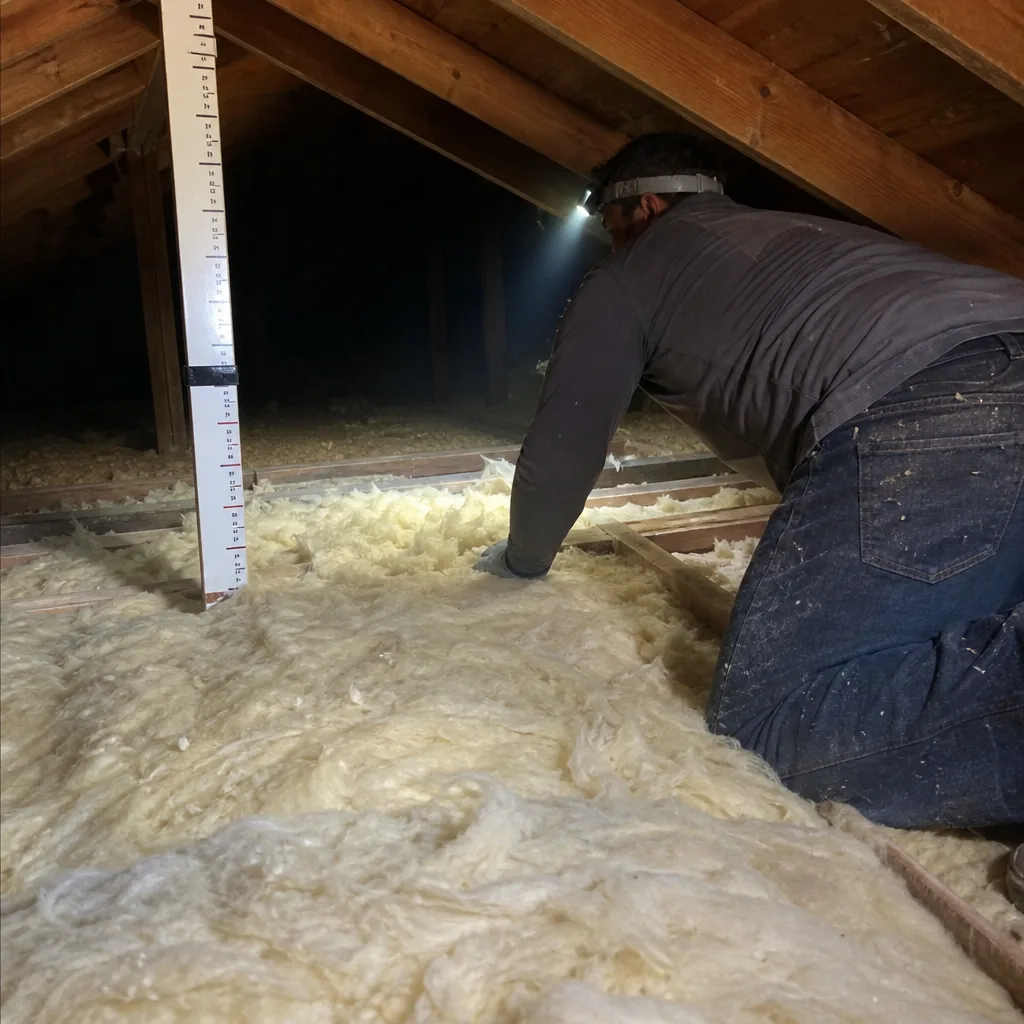
3. What installed depth is specified at eaves versus field, and how is it verified?
Attic insulation depth varies by location. Eaves - the lower portion near the exterior walls - are hardest to access and most often underfilled. Field areas, the open center sections, are easiest to blow and typically receive adequate depth. A proper scope specifies minimum depth at each location: for example, 14 inches at field, 12 inches at eaves, with verification by depth probe at minimum five locations per 1,000 square feet.
Without this specification, a contractor can meet a generic “R-38” claim with 10 inches at eaves and 16 inches at field, averaging to an apparent compliance while the home’s thermal boundary fails at its most vulnerable edge. In Boerne, where summer sun heats roof decks for months, shallow eave depth creates a thermal short circuit that makes upstairs rooms unusable.
4. What are the warranty terms on labor versus material, and what triggers each?
Material warranties come from manufacturers - Owens Corning, Johns Manville, Knauf, CertainTeed, Icynene, Demilec, GreenFiber - and typically cover product defects for 10 years to lifetime depending on product and installation. Labor warranties come from the contractor and cover installation quality: depth, coverage, air-sealing completeness. These are separate obligations with separate triggers.
A proper warranty response specifies: labor warranty term (our 365-Day Done Right Promise covers all completed work), what constitutes a valid claim (settling below specified depth, visible gaps, failed air seal), response timeline, and whether remediation includes removal and reinstallation or only topping off. Vague language like “satisfaction guaranteed” without defined terms is not a warranty; it’s a marketing phrase.
How to Read a Certificate of Insurance for an Insulation Contractor
Every legitimate insulation contractor in Boerne carries general liability insurance. Few homeowners know how to read the Certificate of Insurance (COI) that proves it, or what coverage gaps shift remediation costs to the homeowner after the crew leaves.
Request a current COI directly from the contractor’s insurance agent, not from the contractor. The document should name you as certificate holder. Verify these elements:
- Policy dates: Coverage must be current through your project completion date. Request a new COI if the policy expires during your job window.
- General aggregate and per-occurrence limits: Minimum $1 million per occurrence is standard for residential work in Boerne. Lower limits suggest a contractor operating at the edge of insurability.
- Completed-operations coverage: This is the critical element most homeowners miss. General liability policies cover damage during active work - a technician stepping through a ceiling, for example. Completed-operations coverage extends to defects that manifest after the crew leaves: moisture damage from blocked soffit vents, fire hazard from insulation contacting recessed lights, structural damage from overloading joists with dense-pack cellulose. Without this endorsement, you bear the cost of post-installation failures that trace to installation error.
- No exclusion for insulation work: Some general contractor policies exclude specialty trades. Verify the classification code includes insulation application.
In Boerne’s Hill Country building environment, where many homes combine spray foam, fiberglass, and radiant barrier in complex assemblies, completed-operations coverage is not optional. A contractor who cannot produce a COI showing this endorsement, or who treats the request as suspicious, is telling you something about their risk profile. Under Haven Standard, we provide current COIs on request without hesitation - documentation before arrival, not after a problem.
Why ASTM C-518 Labeled R-Values Belong in Every Scope
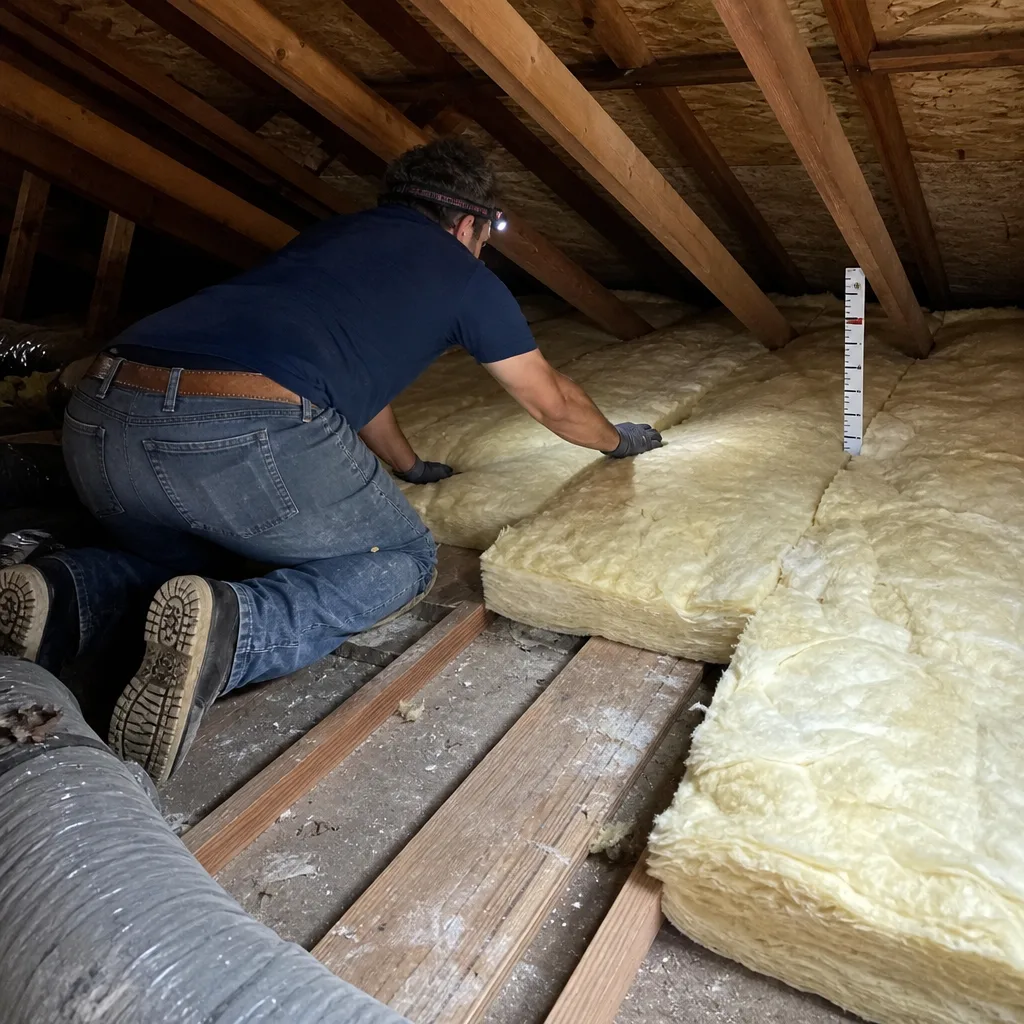
R-value measures thermal resistance - the insulating property of a material. But not all R-values are measured the same way, and generic descriptions like “blown fiberglass” or “spray foam” mean nothing without a labeled test standard.
ASTM C-518 is the standardized test method for steady-state thermal transmission properties. Products tested to this standard carry a labeled R-value at a specified thickness, measured under controlled conditions. This label is what you’re paying for: a verified performance claim, not a material description.
Here’s why this matters in Boerne. A bid specifying “R-38 blown fiberglass” without ASTM labeling could mean:
- Low-density product that achieves R-38 only at impractical depth (20+ inches)
- Product tested to a different standard with less rigorous conditions
- Generic material with no verified thermal performance at all
The proper specification reads: “Install [manufacturer] [product name], ASTM C-518 labeled R-[value] at [specified] inches.” For example: “Install Owens Corning AttiCat Expanding Blown-In PINK Fiberglas Insulation, ASTM C-518 labeled R-38 at 12 inches.” This gives you a verifiable claim: if the installed product does not match this specification, the scope has not been met.
We specify labeled products from our supplier list - Owens Corning, Johns Manville, Knauf, CertainTeed, Icynene, Demilec, GreenFiber - with no proprietary lock-in. The homeowner receives product cut sheets with the ASTM label as part of the job documentation. Spray Foam Insulation in Boerne requires this specificity even more critically, since foam performance varies dramatically by density and application thickness.
Boerne’s climate amplifies the cost of R-value inflation. A product claimed at R-6 per inch that actually delivers R-5.2 will underperform by 15% - the difference between a comfortable upstairs bedroom and one that requires supplemental cooling all summer. The ASTM label is your protection against this gap.
Red Flags in Bid Language
Certain phrases in insulation bids are structurally designed to create wiggle room. Learn to spot them.
“Up to R-38”
This phrase permits any depth from zero to the specified value. A proper bid states minimum depth at each location, not a ceiling. “Up to” language appears in bids from contractors who intend to blow quickly and move on, knowing depth verification is unlikely.
“Air sealing included as needed”
“As needed” is determined by the installer, not the homeowner, and creates no enforceable standard. A proper scope itemizes each penetration to be sealed, with materials specified. In Boerne’s climate, where air leakage can account for 40% of cooling load in older Hill Country homes, “as needed” typically means “minimized to save labor.”
Omission of post-installation depth verification
If the bid does not specify how depth will be measured, how many locations, and who witnesses the measurement, depth verification is not part of the contractor’s process. A proper protocol: depth probe at minimum five locations per 1,000 square feet, with photos of each measurement, included in the Documented Photo Record delivered at job completion.
No mention of baffles or ventilation maintenance
Blown insulation without baffles at eaves blocks soffit ventilation, creating moisture problems that manifest as ceiling stains or mold within two to three years in Boerne’s humidity. A proper scope specifies baffle installation at all eave locations where soffit vents exist.
“Price per square foot” without scope details
As discussed above, this metric strips away every variable that determines performance. It is not a red flag in isolation - it is a category error that should disqualify the bid from consideration unless accompanied by full scope documentation.
Vague warranty language
“Satisfaction guaranteed,” “done right promise” without defined terms, or material-only warranties with no labor coverage. A proper warranty specifies term, triggers, response process, and remediation scope. Our 365-Day Done Right Promise applies to all completed work with written terms delivered before any work starts - Haven Standard Clause 1.
What HERS Ratings and BPI Certification Actually Mean
Credentials matter, but only if you understand what they certify and what they don’t. Two credentials appear frequently in insulation contractor marketing: HERS ratings and BPI certification.
HERS (Home Energy Rating System)
A HERS rating is a whole-house energy performance score, typically used for new construction compliance with energy codes or mortgage incentives. The HERS Index compares the rated home to a reference home; lower scores indicate better performance. A HERS Rater is certified to perform these whole-house assessments using standardized software and field testing.
What HERS does not certify: installation quality of individual components, air-sealing workmanship, or post-installation verification of insulation depth. A HERS Rater can identify that a home scores poorly; they are not certified to specify or verify that insulation was installed correctly. If a contractor advertises “HERS-rated” work, ask what aspect was rated and when. A pre-installation rating tells you about existing conditions, not about the contractor’s work.
BPI (Building Performance Institute) Certification
BPI certifies individual technicians in building science principles and diagnostic testing: blower-door operation, infrared camera use, combustion safety. BPI Building Analysts are trained to evaluate whole-system performance and identify improvement opportunities.
What BPI does not certify: installation skill with specific materials, quality of air-sealing execution, or depth verification protocols. A BPI-certified technician understands why air sealing matters; certification does not mean they performed it correctly on your job. The credential is valuable as evidence of training, but it is not a substitute for job-specific documentation.
In our assessment, these credentials are useful filters: a contractor with no building science training is unlikely to understand why air sealing precedes insulation. But they are insufficient guarantees. The questions in this guide - written scope, labeled R-values, depth verification, blower-door numbers - verify what credentials only suggest. We’ve employed BPI-certified technicians since 2016 and publish blower-door results on every applicable job because certification without documentation is just a wall plaque.
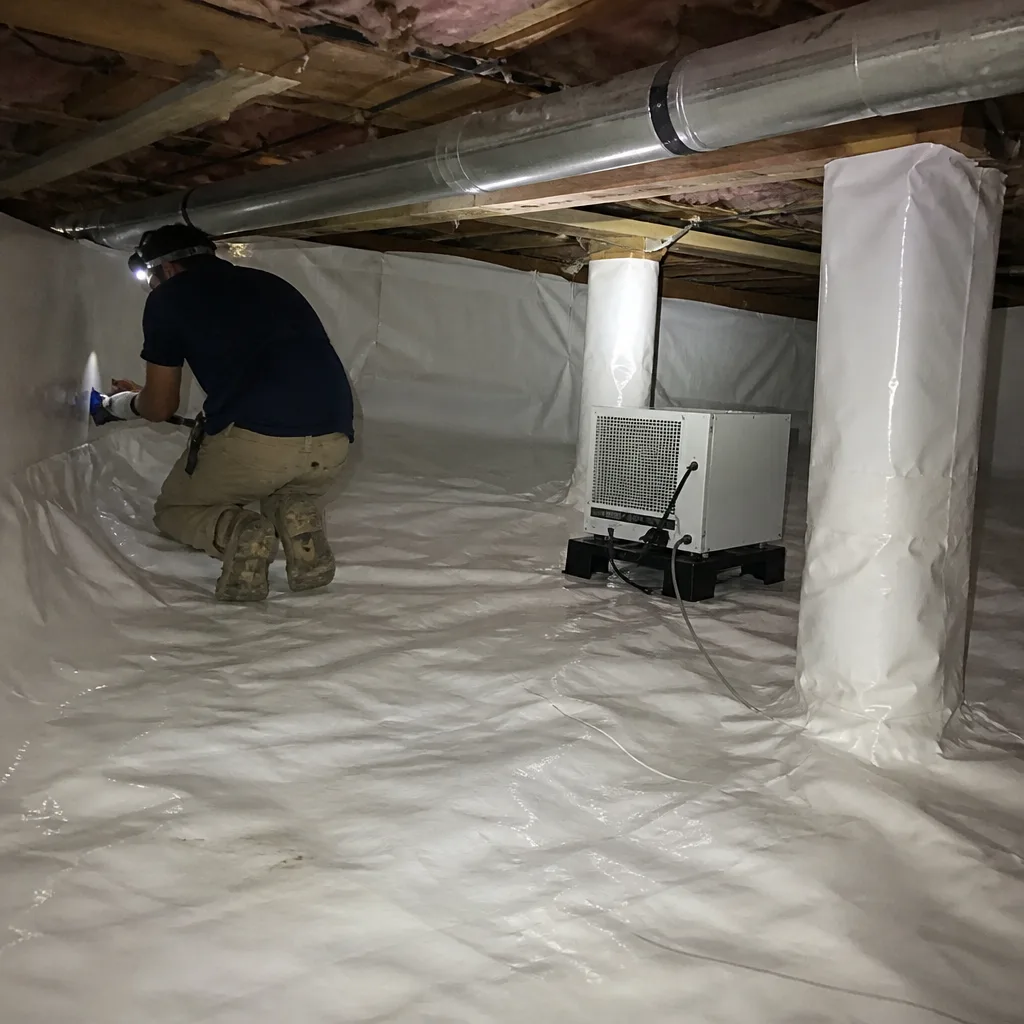
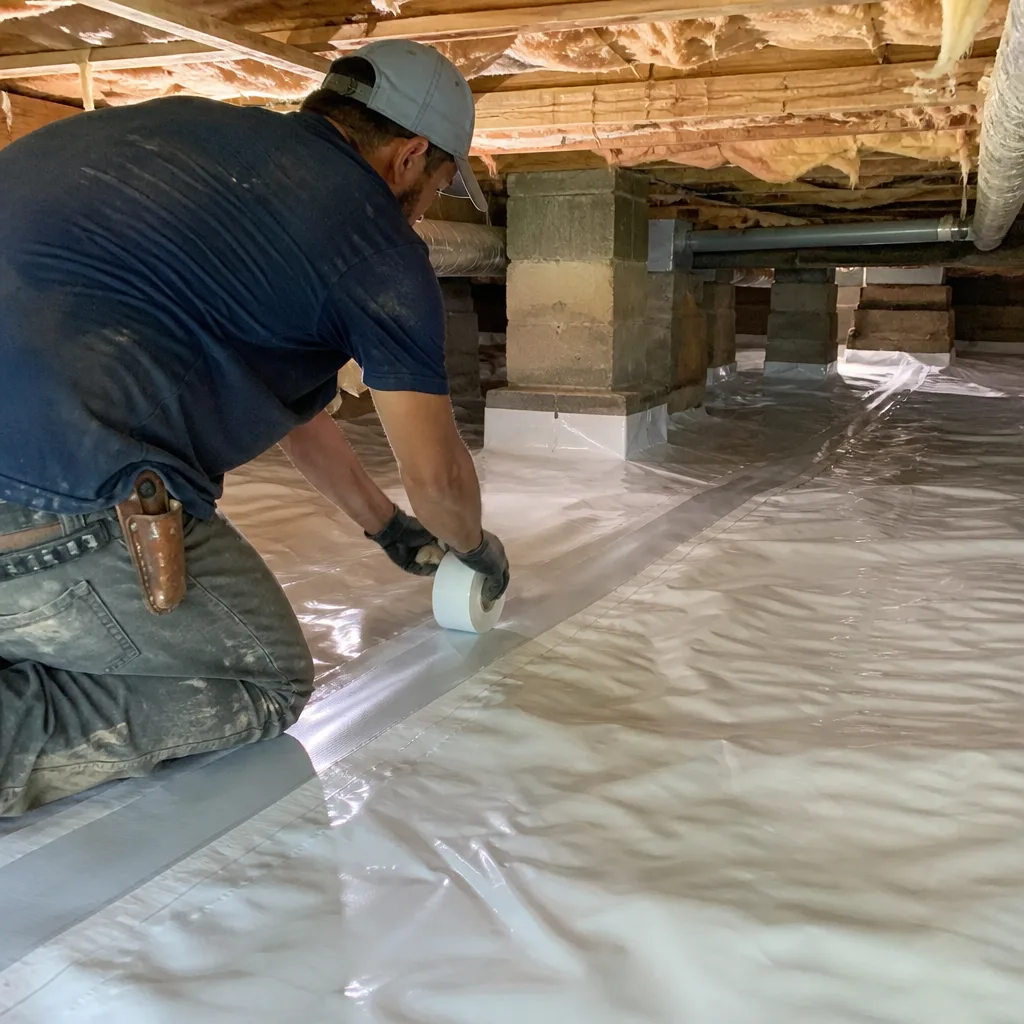
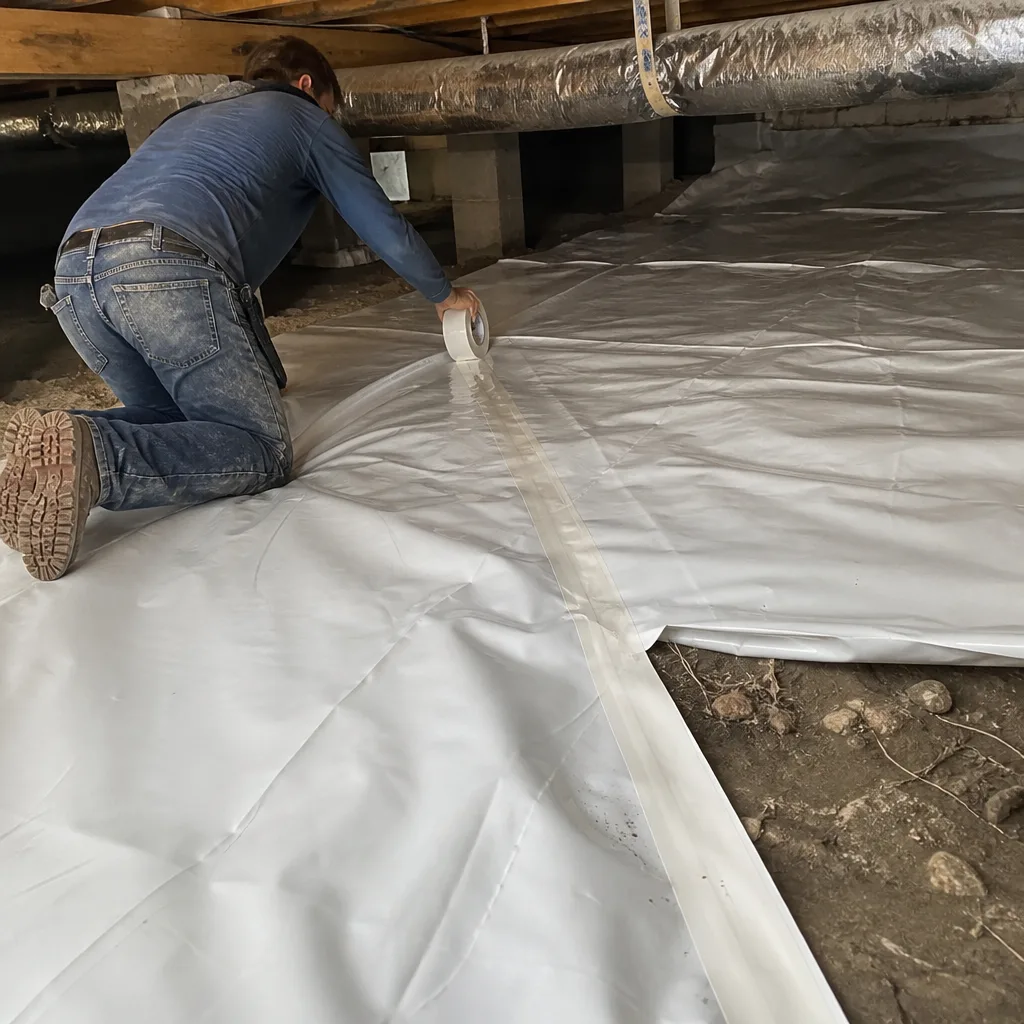
For Crawl Space Encapsulation & Vapor Barrier in Boerne, these credentials are even more relevant, since crawl space work involves moisture dynamics that untrained contractors routinely misdiagnose.
Common Mistakes to Avoid
- Hiring based on lowest square-foot price without scope comparison. A $0.90/sq ft bid with no air sealing and unverified depth will cost more over five years than a $1.40/sq ft bid with sealed penetrations, labeled R-values, and documented performance. In Boerne’s climate, the energy cost of underperformance compounds every summer.
- Accepting verbal warranties or “we’ll make it right” promises. Without written terms, a warranty is unenforceable. Under Haven Standard, written scope, written price, and written warranty precede every job.
- Ignoring the completed-operations insurance endorsement. Boerne homeowners have paid tens of thousands for moisture remediation after insulation blocked ventilation paths - costs that fall to the homeowner when the contractor’s policy lacks this coverage.
- Scheduling insulation before air sealing is scoped. Insulation over unsealed leaks is money spent twice: once for the insulation, again to remove or work around it when sealing is finally addressed. Sequence matters.
- Not requesting the previous blower-door number. Any contractor who has performed air sealing should have this figure. Absence suggests absence of measurement, which suggests absence of quality control.
- Assuming all spray foam is equivalent. Open-cell and closed-cell foams differ by a factor of two in R-value per inch, vapor permeability, and cost. A bid specifying only “spray foam” without density and product name is incomplete.
- Neglecting to verify soffit baffle installation in finished attics. In Boerne’s older neighborhoods like Old Town and River Road, original soffit vents are often buried in decades of accumulated insulation. Without baffles, new insulation blocks them again.
When to Call a Professional
Call a professional when you observe temperature stratification between floors, energy bills increasing without rate changes, visible insulation settling below joist tops, moisture stains on ceilings, or drafts in rooms below attic kneewalls. In Boerne’s climate, these symptoms typically indicate air leakage combined with insufficient or uneven insulation depth - conditions that DIY assessment rarely diagnoses correctly.
Topside Attic Insulation Boerne offers free estimates in Boerne - call (830) 529-7780. Every estimate includes a written scope, written price, and explanation of what documentation you’ll receive if you proceed. We also provide a Free Second Opinion on any written estimate: bring us a competing quote and we’ll read it with you, line by line, to identify what’s specified and what’s omitted. Under Haven Standard, you get a named technician, a text when they’re on the way, and a Documented Photo Record on every visit - no voicemail loops, no callback windows measured in business days.
Frequently Asked Questions
Most complete attic jobs in Boerne run between $2,800 and $6,500 depending on square footage, existing insulation condition, and air-sealing scope - see our Insulation Cost Breakdown: The Boerne Homeowner’s Reference for 2026 for detailed pricing factors. Spray foam applications range higher, typically $4,500 to $12,000 for open-cell and $7,000 to $18,000 for closed-cell depending on thickness and application area. Call (830) 529-7780 for a written price on your specific home - estimates are free, and we provide a Free Second Opinion on any written estimate you bring us.
Request before-and-after blower-door test results - a pressurization reading that shows, in one number, how much air your building envelope was losing before and after the work. A meaningful attic air-sealing job in a typical Boerne home should reduce CFM50 by 15% to 35%. Without this measurement, you have only the contractor’s word. At Envelope Insulation Co., we publish these numbers on every applicable job as part of our Documented Photo Record.
Repair - adding material over existing - is cheaper upfront but rarely cost-effective if the original insulation is contaminated, unevenly distributed, or installed over unsealed air leaks. In Boerne’s climate, we typically recommend removal and replacement when existing depth is below 6 inches, when rodent contamination is present, or when the attic has never been air-sealed. The energy payback on proper replacement with sealing usually runs 4 to 7 years. Call (830) 529-7780 and we’ll assess your specific conditions with a written scope and price.
Yes, and it’s often preferable. Attic temperatures in Boerne peak above 140°F in July and August, which is uncomfortable for technicians but reveals air-leakage paths clearly when blower-door testing with infrared cameras. We schedule early-morning starts in summer months and complete air sealing before the attic peaks in temperature. The work itself is not temperature-dependent - spray foam requires controlled conditions during application, which our crews manage with ventilation equipment.
Current IECC code for Boerne’s climate zone specifies R-38 minimum for attic floors, R-13 for framed walls, and R-19 for floors over unconditioned spaces. However, code minimums are not performance optimums. Given Boerne’s thermal swing range and summer attic temperatures, we typically specify R-49 to R-60 for attics where budget permits, with the critical caveat that depth without air sealing delivers only a fraction of labeled performance. The R-value on the bag matters less than the airtightness of the assembly it’s installed in.
A typical attic insulation job in Boerne - including air sealing, baffle installation, and blown fiberglass to R-38 - takes one day for crews working under 1,500 square feet, and two days for larger or more complex attics with multiple penetrations, kneewalls, or conditioned storage areas. Spray foam applications require additional cure time before occupancy, typically 24 hours for open-cell and 24 to 48 hours for closed-cell depending on thickness and ventilation. We specify timeline in every written scope before work starts.
The Bottom Line
Hiring an insulation contractor in Boerne is not about finding the lowest price per square foot. It’s about securing verifiable outputs: a written scope that specifies air-sealing detail, ASTM-labeled R-values, and depth verification; a Certificate of Insurance with completed-operations coverage; and documentation - photos, measurements, blower-door numbers - that proves what was delivered. Ask the four questions before any site visit. Read the bid language for red flags. Treat credentials as starting points, not guarantees. The contractor who can answer these specifics is the contractor who will deliver performance, not just installed inches.
Written by Wes Okafor, Owner at Topside Attic Insulation Boerne, serving Boerne since 2016.