
Last updated September 24, 2026
DIY vs Professional Insulation: The Boerne Homeowner’s Decision Guide
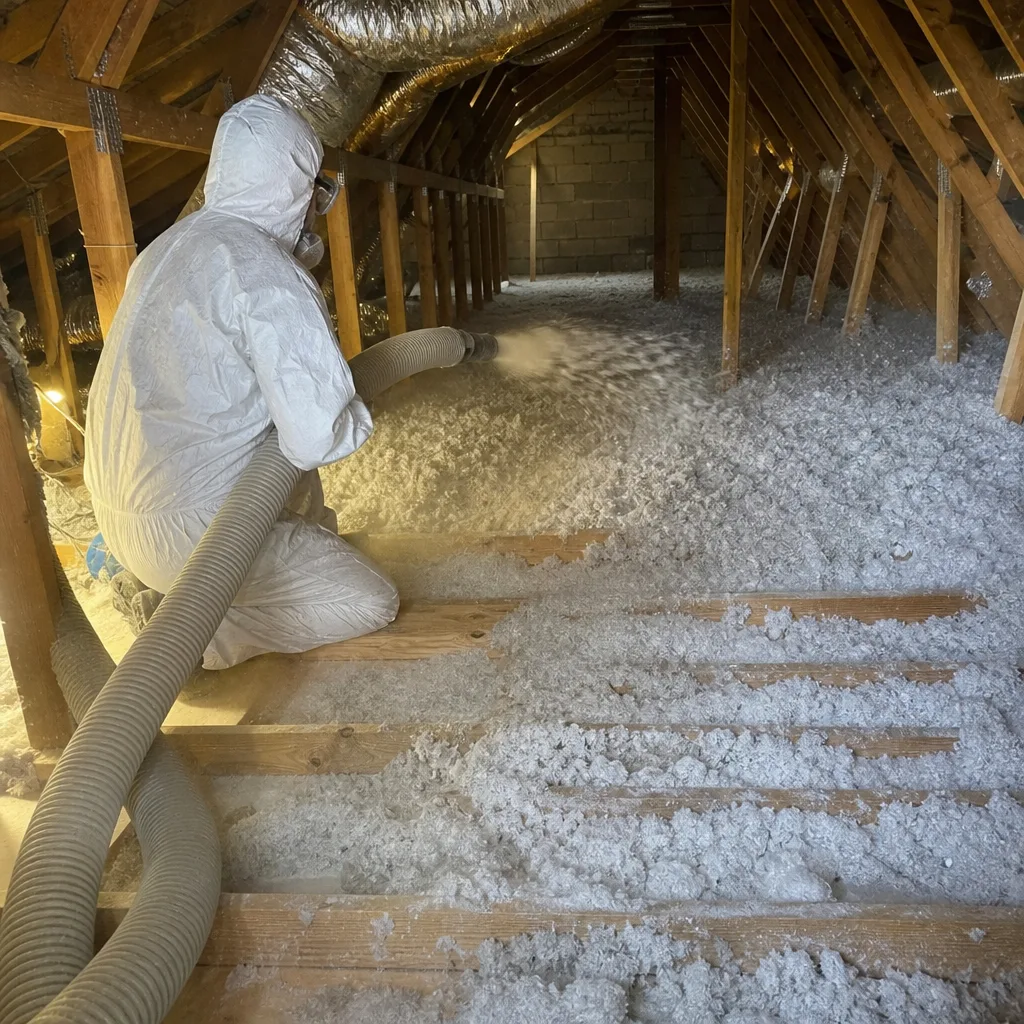
A homeowner in Boerne rents a blow-in machine from a San Antonio hardware store, spends a Saturday installing R-30 fiberglass over an unsealed attic, and pays roughly $400 in materials. The same home, with professional air sealing to cut leakage from 8 ACH50 to 4 ACH50 followed by R-38 blown insulation, typically sees more than double the cooling-load reduction. The difference isn’t the insulation product; it’s the prerequisite work that most DIY guides skip entirely. In this guide and our more guides & resources, we’ll walk through when doing it yourself is genuinely reasonable, when professional air sealing is non-negotiable, what documentation matters for resale and rebates, and how to think about hybrid approaches that split the work without sacrificing performance.
Quick Answer
DIY insulation in Boerne is a reasonable option only when the attic is already well-sealed, the footprint is simple, and no existing insulation needs removal. For most homes built before 2015, professional air sealing is a prerequisite that DIY cannot replicate without a blower-door test and pressurized sealing protocol. The performance gap between insulation over unsealed leaks and insulation over a sealed envelope is typically 15-20 percentage points in cooling-load reduction.
Table of Contents
- When DIY Insulation Makes Sense in Boerne
- Why Air Sealing Is the Real Prerequisite
- The DIY Equipment Reality: What You Actually Need
- Insurance, Liability, and Resale Disclosure in Texas
- The Hybrid Approach: Professional Sealing, DIY Insulation
- The Documentation Gap: What DIY Cannot Produce
- Cost Comparison: Real Numbers for Boerne Homes
- Common Mistakes to Avoid
- When to Call a Professional
- Frequently Asked Questions
- The Bottom Line
When DIY Insulation Makes Sense in Boerne
We’ve walked attics in Boerne for nearly a decade, and we can count on one hand the number that didn’t need sealing before insulating. But they exist. Here’s what makes a DIY insulation project genuinely viable:
- New construction with visible, accessible top plates. Homes built 2020 or later in developments like Esperanza or Herff Ranch often have spray-foam-sealed top plates and electrical penetrations already closed. If you can see continuous foam at every wall-to-ceiling junction, the air-sealing work may already be done.
- Simple rectangular footprint, no dormers or vaulted ceilings. A single ridge line, no knee walls, no conditioned attic space. The blower-door test on these homes reads closer to 5 ACH50 out of the gate, and the leakage that remains is often in the crawl space or exterior walls, not the attic plane.
- No existing insulation to remove. If there’s nothing to extract, you skip the hazmat considerations, the bagging, and the disposal fees. Blown fiberglass or cellulose goes directly over the deck.
- Accessible attic with solid flooring or clear joist bays. Steep pitches, truss webs, and recessed can lights turn a simple blow-in job into a contortion exercise with real fall risk.
The climate factor matters too. Boerne sits at roughly 1,400 feet elevation with 30-35 annual cooling degree days more than San Antonio proper. That elevation means slightly wider daily temperature swings and more hours where attic heat drives downward through a leaky ceiling plane. A sealed attic in Fair Oaks Ranch performs measurably better than the same construction in lower-lying Bexar County because the stack effect is stronger with cooler night air. DIY insulation without sealing leaves that pressure differential working against you.
If your attic meets all four conditions above, renting a blow-in machine and installing Owens Corning AttiCat or GreenFiber cellulose yourself is a defensible project. Expect material costs of $0.65-$1.10 per square foot for R-38 blown fiberglass, depending on whether you need baffles or damming at the eaves. The machine rental runs $75-$125 per day in the San Antonio market, though some retailers waive the fee with a minimum material purchase.
Why Air Sealing Is the Real Prerequisite
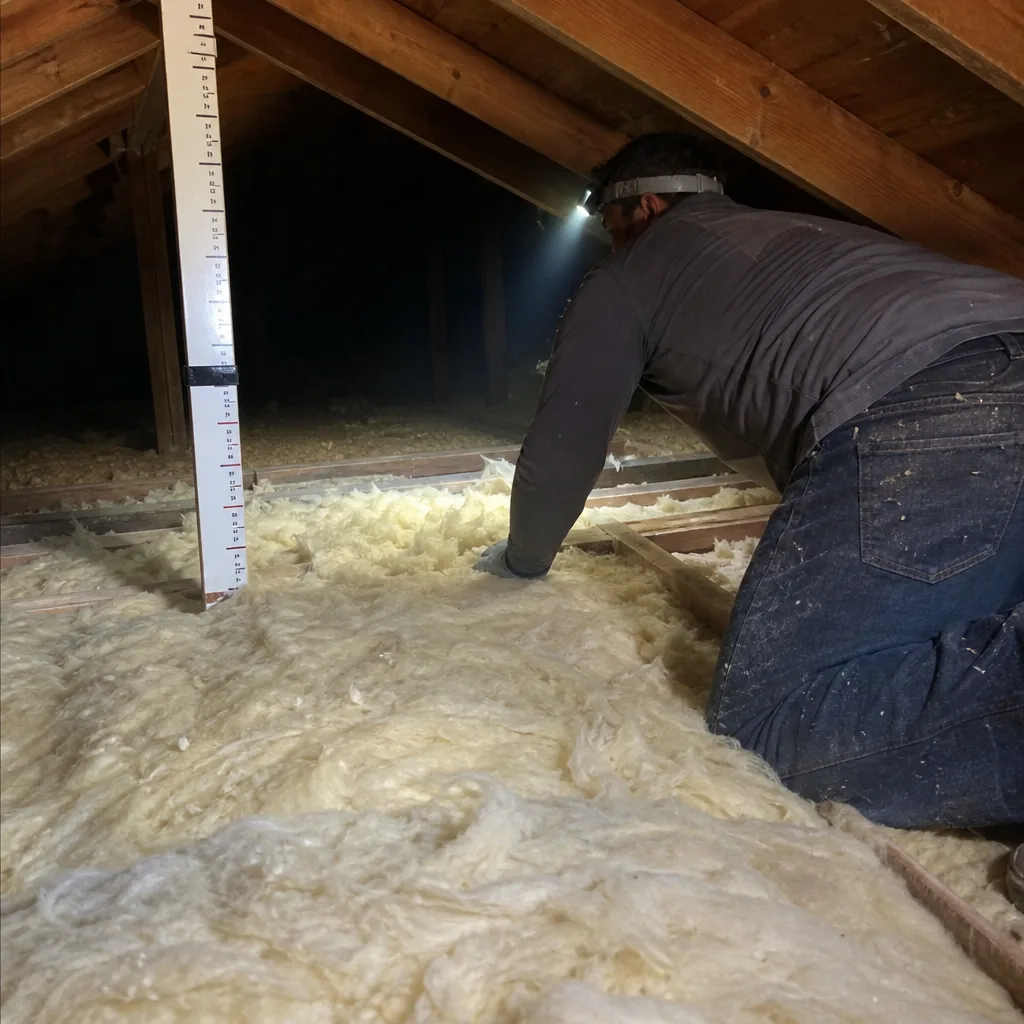
Insulation does not stop air movement. It slows conductive heat transfer through solid materials. When conditioned air leaks through the ceiling plane, it bypasses the insulation entirely, carrying moisture and heat directly into the attic space. In Boerne’s humid subtropical climate, that moisture condenses on cooler roof sheathing in shoulder seasons and can drive mold growth in winter when attic temperatures drop below the dew point.
Here’s what we find in a typical pre-2015 Boerne attic:
- Unsealed top plates. The horizontal framing member where interior walls meet the ceiling drywall. Every linear foot is a gap, often 1/8 to 3/8 inch, that communicates directly into the wall cavity below. In a 2,400 square foot home, this can total 150+ linear feet of unsealed joint.
- Recessed can lights. Older IC-rated fixtures still leak; non-IC fixtures are open chimneys. A single unsealed can light can add 2-4 CFM50 to a blower-door reading.
- Electrical and plumbing penetrations. Romex bundles, vent stacks, and HVAC refrigerant lines pass through the ceiling plane with no firestop foam or mastic sealing.
- Dropped soffits and chases. Kitchen soffits, fireplace chases, and tub surrounds create open pathways from conditioned space to attic.
- Attic access hatch. Often the single largest leak in the ceiling plane, especially pull-down stairs with no weatherstripping or insulated cover.
We measure this with a blower-door test - a pressurization reading that shows, in one number, how much air your building envelope is losing. The test depressurizes the house to -50 Pascals and measures airflow in cubic feet per minute (CFM50). Divide by conditioned volume and multiply by 60, and you get ACH50: air changes per hour at -50 Pascals.
Code minimum for new Texas construction is 5 ACH50. We routinely test Boerne homes built 1980-2010 at 8-12 ACH50. One home in The Dominion of Boerne read 14.2 ACH50 before we started; the homeowner had added R-30 blown insulation himself two years prior and couldn’t understand why his summer electric bills hadn’t moved. The insulation was doing its job. The air was going around it.
After sealing top plates with two-component foam, wrapping can lights with sealed covers, foaming all penetrations, and installing an insulated attic hatch, that same home tested at 4.1 ACH50. Then we added R-38 blown fiberglass. His July electric bill dropped 34% the following summer.
The insulation wasn’t different. The prerequisite was.
The DIY Equipment Reality: What You Actually Need
Most DIY insulation guides show a homeowner in safety glasses feeding a hopper. They don’t show the equipment needed to do the job that actually matters: the air sealing.
To replicate professional-grade air sealing, you need:
- Blower-door rental: $180-$250 per day in the San Antonio market. Retrotec and Minneapolis Blower Door are the two systems you’ll find. You’ll also need someone trained to operate it; the setup isn’t intuitive, and an improperly sealed fan ring gives false readings.
- Two-component polyurethane foam kit: $350-$500 for a 200-board-foot kit (enough for roughly 150 linear feet of top plate at 1 inch depth). Dow Froth-Pak and Touch ‘n Foam are common retail brands. These are not the same as single-component gap-filler cans; they require proper mixing temperature, substrate preparation, and ventilation.
- Duct mastic and mesh: For sealing larger gaps and irregular penetrations. $30-$50 per gallon.
- Infrared thermometer or thermal camera: To locate leakage paths during blower-door operation. A FLIR ONE Pro attaches to a smartphone for $400; professional-grade cameras run $2,000+.
- Pressure gauge and manometer: To verify your sealing progress in real time as the blower door runs.
- Proper PPE: Respirator with organic vapor cartridges, not a dust mask, for foam application. Full coverage clothing; isocyanate sensitization is permanent and career-ending for professionals who get sloppy.
The skill ceiling is real. We’ve trained technicians for weeks before they’re competent to run a blower door unsupervised and interpret the results. A homeowner can learn the basics from manufacturer videos, but recognizing whether a 15% reduction in CFM50 is “good enough” or whether a specific chase still needs attention requires pattern recognition from hundreds of homes.
There’s also the safety issue. A Boerne attic in August runs 130-145°F. Working at that temperature for the 6-10 hours a proper air sealing job requires is genuinely hazardous without acclimatization, hydration protocols, and a buddy system. We’ve had technicians need IV fluids after underestimating the heat load in a Timberwood Park attic with poor ventilation.
For most homeowners, the equipment rental and learning curve push the DIY air sealing cost toward $800-$1,200, approaching what a professional charges for the sealing portion alone. The difference is the documentation and the performance guarantee.
Insurance, Liability, and Resale Disclosure in Texas
This is the conversation DIY guides never have. For a deeper look at requirements, see Insulation Permits, Codes & Inspections in TX: What You Need to Know. In Texas, a homeowner’s fire insurance policy requires that any modifications to the building envelope be performed in accordance with applicable codes and manufacturer specifications. Self-installed insulation that contributes to a fire or moisture damage event can trigger coverage disputes, particularly in conditioned attic spaces where spray foam is involved.
Here’s the specific risk: conditioned attics - spaces where HVAC equipment and ductwork operate within the thermal envelope - require ignition barriers over certain foam products per IRC Section R316.5. A homeowner who installs open-cell spray foam in a conditioned attic without the proper thermal or ignition barrier coating has created a code violation that may not be discovered until an insurance adjuster reviews the file after a fire.
At resale, Texas sellers must complete a Seller’s Disclosure Notice (TAR-1406) that includes a question about known defects in insulation and HVAC systems. A self-installed insulation job with no documentation becomes a disclosure liability. The buyer’s inspector sees new insulation with no permit, no documentation, and no visible air-sealing work. The buyer demands a credit for professional remediation. The deal stalls or dies.
Professional work in Boerne carries permits where required by Kendall County or city code, written scopes, and documented completion. Our crews photograph every sealed penetration, every top plate, every can light cover. The homeowner receives a Documented Photo Record as part of the project closeout. That file has real dollar value at resale.
We’ve been called to homes in Cordillera Ranch and Balcones Creek where DIY spray foam jobs had to be fully removed and reinstalled to satisfy a buyer’s lender requirements. The “savings” evaporated, and the homeowner paid for removal plus professional installation.
The Hybrid Approach: Professional Sealing, DIY Insulation
There is a legitimate middle path that preserves most of the cost savings of DIY while capturing the performance benefit of professional air sealing. We call it the sealed-deck hybrid, and we’ve documented it for several Boerne homeowners who wanted to participate in the labor.
The approach works like this:
- Professional blower-door test and air sealing. We perform the diagnostic work, seal all penetrations, top plates, can lights, and access points, then run a post-sealing blower-door test to document the ACH50 reduction. Typical cost for a 2,400 square foot Boerne home: $1,400-$2,200 depending on complexity.
- Written scope and photo documentation delivered. The homeowner receives the full Documented Photo Record, the before-and-after blower-door report, and a written statement that the ceiling plane is sealed to performance standard.
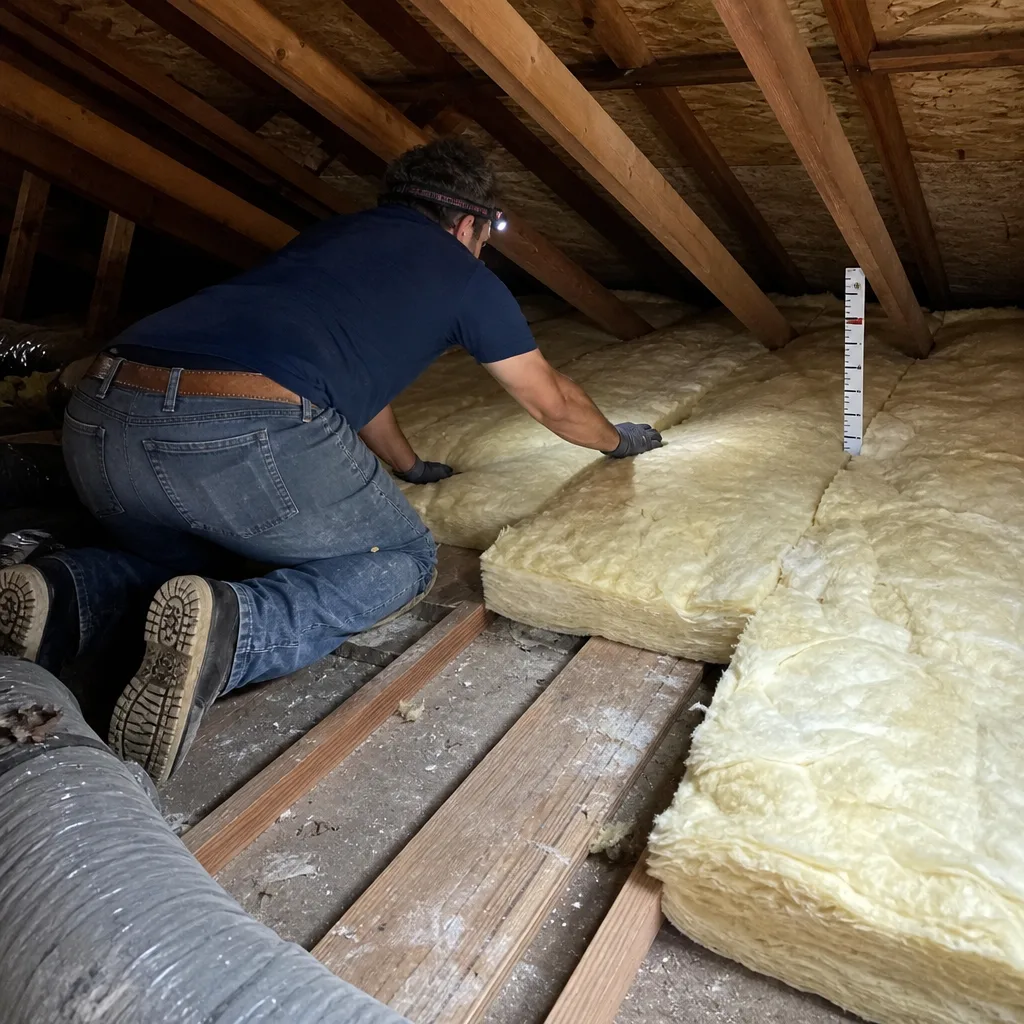
- Homeowner-installed insulation. With the air sealing complete, the homeowner rents the blow-in machine and installs Owens Corning AttiCat, Johns Manville Climate Pro, or Knauf Jet Stream themselves. The insulation now performs as designed because there’s no bypass airflow.
- Optional post-installation verification. We can return for a final blower-door test to confirm the insulation installation didn’t disturb the sealing work. This is a 1-hour visit at reduced rate.
The hybrid approach typically saves $800-$1,500 versus full professional installation while delivering 90%+ of the performance benefit. The critical element is the documentation chain: the blower-door report proves the prerequisite was met, and the photo record protects resale value.
We’ve guided three homeowners in Boerne through this process in the past two years. One in Fallbrook used the hybrid approach for a 3,200 square foot home, spent $1,890 on professional sealing plus $680 on self-installed R-38 blown fiberglass, and achieved a final ACH50 of 3.8. His prior summer electric bill was $487; the following July was $312. The documentation package was accepted without question when he refinanced in 2024.
The Documentation Gap: What DIY Cannot Produce
Documentation is where professional and DIY paths diverge most sharply. Here’s what a properly executed professional job delivers that DIY cannot replicate:
- Before-and-after blower-door report with ACH50 readings. This single document is required for many utility rebates, some mortgage products (including certain FHA Energy Efficient Mortgages), and increasingly, buyer due diligence in Boerne’s competitive resale market.
- Documented Photo Record of all sealed penetrations. Not a phone snapshot of the finished attic, but timestamped, geotagged photographs of every top plate, every can light, every access point, with the technician’s identification. This is evidence that work was performed to scope.
- Written scope and written warranty delivered before work starts. Under Haven Standard Clause 1: flat price, written scope, written warranty before anyone lifts a tool. The homeowner knows exactly what they’re buying and exactly what guarantee backs it.
- 365-Day Done Right Promise. If the performance doesn’t match the promise, we make it right. DIY has no equivalent recourse except starting over at full cost.
- Material certification and chain of custody. Professional invoices from Owens Corning, Johns Manville, Knauf, or Rockwool distributors establish that the product installed matches the product specified. Bulk retail purchases don’t provide this trail.
The rebate scenario is worth specific attention. CPS Energy’s Save Now program and some Texas gas utility rebates require pre- and post-work blower-door documentation for attic insulation incentives. A DIY job without blower-door testing is ineligible. The rebate value on a typical Boerne home can run $300-$800, which often covers a significant portion of the professional air sealing cost.
At resale, the documentation package functions as a verified upgrade. A home with a 2023 blower-door report showing 4.2 ACH50 and R-38 insulation reads differently to buyers than a home with new-looking insulation and no paperwork. In Boerne’s market, where homes in The Rim and Balcones Creek often sell to relocating professionals from Houston or Dallas who don’t know local contractors, that documentation is a trust signal with real negotiating power.
Cost Comparison: Real Numbers for Boerne Homes
These ranges reflect our experience pricing jobs in Kendall County and the northern San Antonio metro. For a detailed breakdown, see our Insulation Cost Breakdown: The Boerne Homeowner’s Reference for 2026. Every home is different; these are typical brackets for a 2,000-2,500 square foot single-story home with accessible attic.
| Approach | Cost Range | Typical ACH50 Result | Cooling Load Reduction | Documentation Delivered |
|---|---|---|---|---|
| DIY insulation only (no sealing) | $400-$700 | Unchanged (8-12 typical) | 10-15% | None |
| DIY air sealing + DIY insulation | $1,200-$1,800 | Variable (5-8 if done well) | 18-25% | None formal |
| Hybrid: pro sealing, DIY insulation | $2,100-$2,900 | 3.5-5.0 | 25-32% | Blower-door report, photo record |
| Professional sealing + blown insulation | $2,800-$4,200 | 3.0-4.5 | 28-35% | Full documentation package |
| Professional sealing + spray foam | $4,500-$7,500 | 2.5-4.0 | 30-40% | Full documentation package |
The gap between row one and row three is the story of this guide. For roughly triple the cost of DIY-only, the hybrid approach delivers 2-3x the performance improvement plus documentation that has standalone value. The gap between row three and row four is primarily labor efficiency and material sourcing; professional installation typically achieves more consistent depth and coverage, which matters for long-term performance.
Boerne’s specific market conditions affect these numbers. Labor rates in Kendall County run 8-12% below Austin metro but material costs are essentially identical due to distribution from San Antonio. Homes in older neighborhoods like Old No. 9 or River Road often need insulation removal before new product can go in, which adds $1.00-$1.50 per square foot for extraction and disposal.
For attic insulation in Boerne, most jobs in a home this size run between $2,800 and $4,200 when professional air sealing is included. Spray foam insulation in Boerne starts higher due to material cost and application complexity, but delivers the tightest envelope and best performance in conditioned attic applications.
Common Mistakes to Avoid
- Installing insulation over wet or moldy decking. Boerne’s spring storms can drive moisture through compromised shingles. Insulating over wet OSB traps moisture and accelerates rot. Always verify decking condition first; we use moisture meters on every job.
- Blocking soffit vents with insulation. Attic ventilation in Texas code requires continuous airflow from soffit to ridge. Homeowners who blow insulation deep at the eaves without baffles choke that airflow, creating heat buildup and premature shingle failure. Baffles cost $2-$4 each and take 10 minutes to install.
- Ignoring recessed can lights. In Boerne, we find unsealed can lights in roughly 70% of pre-2010 homes. Covering them with insulation without a sealed enclosure is a fire hazard and a massive thermal bypass. Ten-minute fix with a proper cover; most DIYers don’t know to look.
- Using the wrong product for the application. Fiberglass batts in a crawl space with seasonal moisture become mold farms. Open-cell spray foam against roof decking in a vented attic traps moisture against sheathing. Product selection follows application; application follows building science.
- Skipping the attic hatch. A 1/2-inch gap around a pull-down stair is equivalent to a 6-inch hole in the ceiling plane. An uninsulated hatch is a thermal bridge that undermines everything below it. Proper weatherstripping and an insulated cover box cost $150-$300 and deliver disproportionate return.
- No photos, no records, no recourse. The homeowner who calls us two years after a DIY job with high bills and comfort complaints has no diagnostic baseline. We start from zero. Documentation isn’t bureaucracy; it’s the ability to troubleshoot.
When to Call a Professional
Call a professional when the attic has any of the following: existing insulation to remove, recessed lighting, a conditioned attic space, HVAC equipment or ductwork in the attic, a complex footprint with dormers or knee walls, or a blower-door reading above 6 ACH50 that you cannot confidently reduce yourself. Also call when you need documentation for rebates, resale, or refinancing. Not sure where to start? Read How to Hire a Insulation Contractor in Boerne: A Step-by-Step Guide.
Topside Attic Insulation Boerne offers free estimates in Boerne - call (830) 529-7780. Every estimate includes a walkthrough assessment, a written price before any work starts, and an explanation of what documentation you’ll receive. We also offer a Free Second Opinion on any written estimate from another contractor; bring us their scope and we’ll review it with you, line by line.
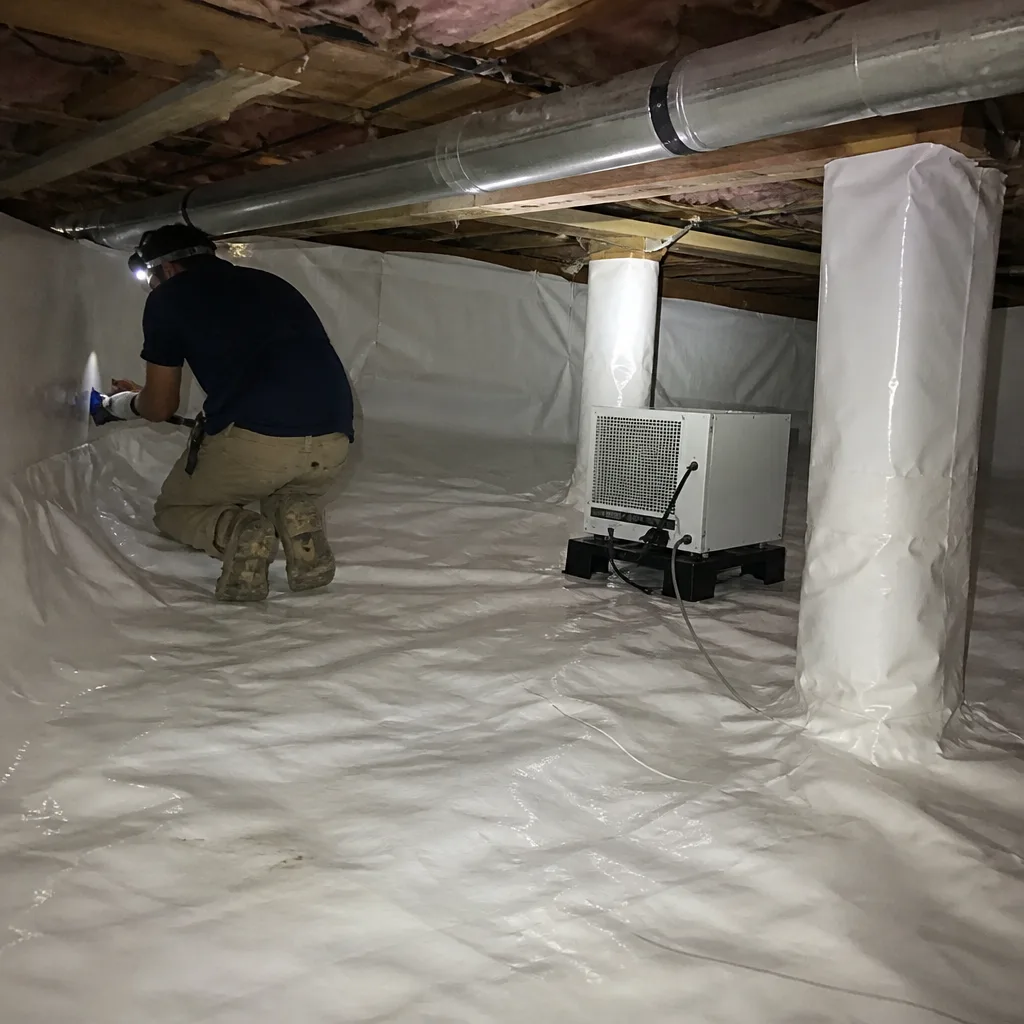
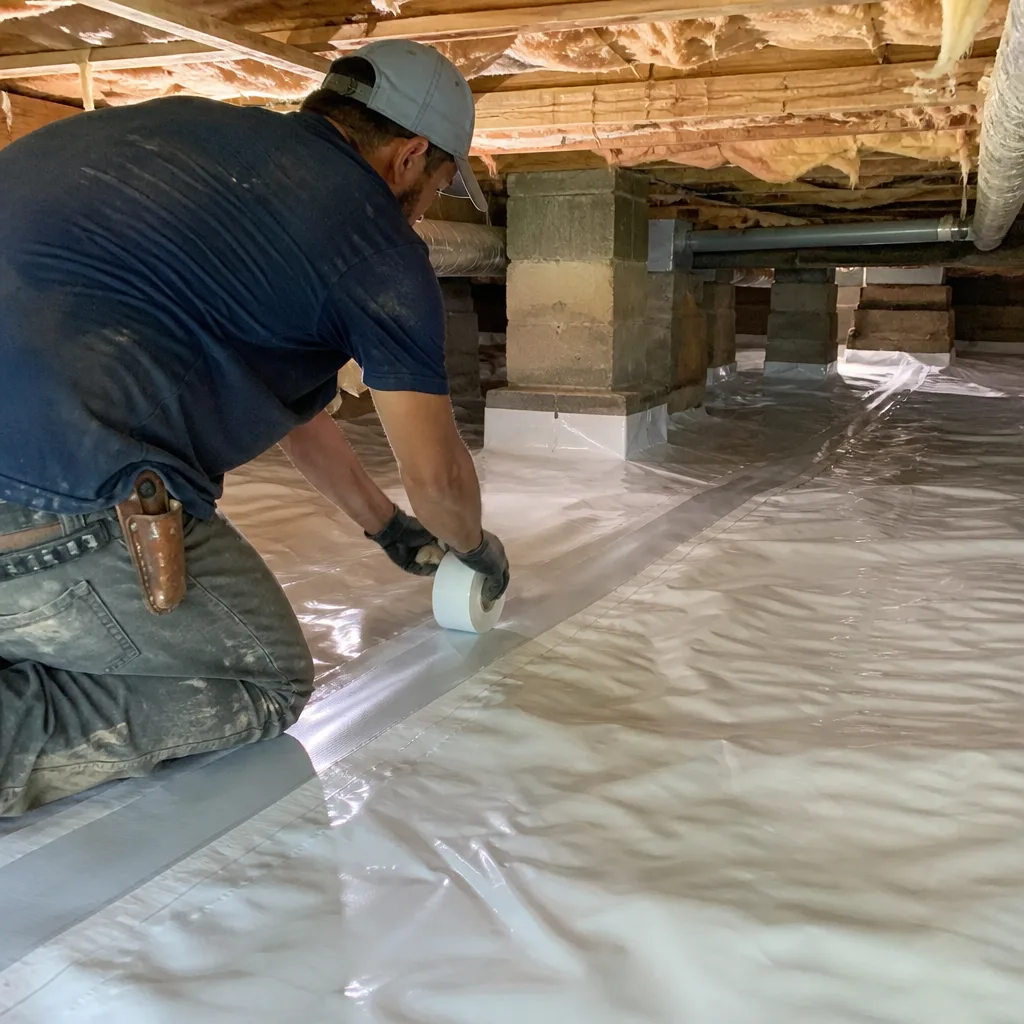
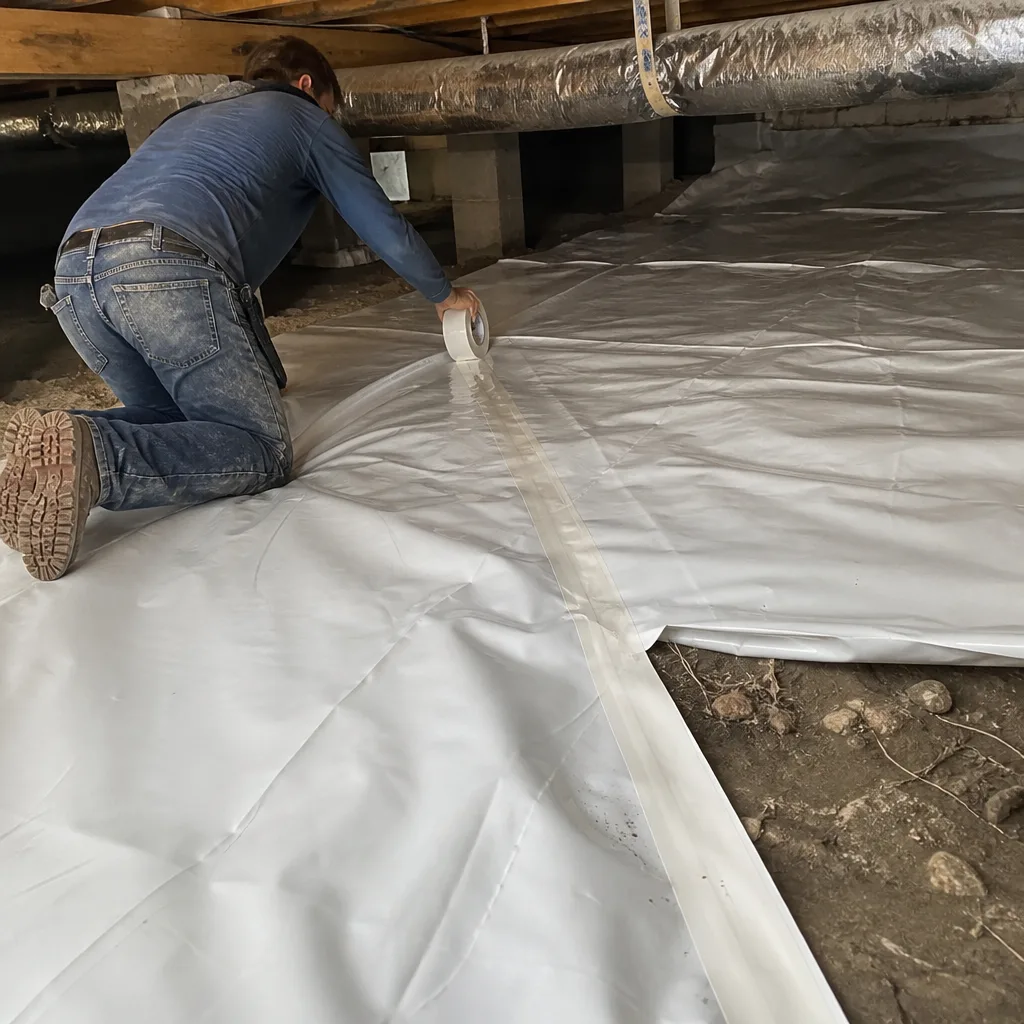
For homes with crawl space moisture issues, crawl space encapsulation and vapor barrier in Boerne is often the prerequisite to effective attic work; pressure differentials between crawl space and attic can undermine envelope performance even when the attic is well-sealed.
Frequently Asked Questions
Most attic insulation jobs in a 2,000-2,500 square foot Boerne home run between $2,800 and $4,200 when professional air sealing is included. Spray foam applications run higher, typically $4,500-$7,500 for the same footprint. Call (830) 529-7780 for a written estimate specific to your home - estimates are free and include a documented assessment.
You can, but it’s inefficient. Insulation installed over unsealed leaks must be disturbed or removed to access the ceiling plane for proper sealing. The correct sequence is seal first, then insulate. Doing it in reverse typically adds 30-50% to the sealing labor cost.
ACH50 measures how many times per hour your home’s entire air volume would be replaced when depressurized to -50 Pascals - a standard test pressure. Lower is tighter. Code minimum in Texas is 5 ACH50 for new construction. We typically see 8-12 in older Boerne homes before work, and 3-5 after proper air sealing and insulation. That number determines your actual energy performance more than R-value alone.
Self-installed insulation can affect coverage if it contributes to a loss and was not installed to code or manufacturer specification. Conditioned attic spaces with spray foam are particularly sensitive; missing ignition barriers or thermal barriers can void coverage for fire damage. Professional installation with permits and documentation eliminates this ambiguity. Check your specific policy or call your agent before proceeding with DIY spray foam.
CPS Energy offers rebates for attic insulation and air sealing that require pre- and post-work blower-door documentation. Some Texas gas utilities run seasonal programs. The rebate value typically runs $300-$800 for a home of typical size. DIY jobs without blower-door testing are ineligible. Professional jobs from Topside Attic Insulation Boerne include all required documentation as standard.
Signs include: visible gaps at top plates or electrical penetrations, recessed can lights without sealed covers, a pull-down attic stair without weatherstripping, rooms that are consistently hotter or colder than others, or dust streaks on insulation (indicating air movement through the material). The definitive answer comes from a blower-door test. We offer this as part of our free estimate in Boerne.
Yes, when the sealing work is documented and verified. We’ve guided multiple Boerne homeowners through this approach with results within 10% of full professional installation performance. The key is the post-sealing blower-door report that proves the prerequisite was met. Without that verification, you’re guessing at performance.
The Bottom Line
The DIY-versus-professional question for Boerne homeowners is not about whether you can rent a machine and blow fiberglass. It’s about whether you can perform and document air sealing to a performance standard before the insulation goes in. For simple, sealed, accessible attics in newer construction, DIY is reasonable. For the majority of Boerne homes - particularly those built before 2015 in neighborhoods from Old No. 9 to Cordillera Ranch - professional air sealing is the prerequisite that determines whether your insulation investment actually pays back. The hybrid approach splits the difference for hands-on homeowners who want performance without paying for labor they can provide themselves. Whatever path you choose, get the documentation. A blower-door report and photo record are the only proof that the work was done right, and they’re the only protection you have at resale, rebate time, or when the energy bill arrives.
Written by Wes Okafor, Owner at Topside Attic Insulation Boerne, serving Boerne since 2016.